


Wydawcy
Katalog tematyczny
- Archeologia (109)
- Ekonomia, finanse, business (13704)
- Filozofia (1445)
- Historia (3040)
- Języki i językoznawstwo (2356)
- Lifestyle, hobby i rozrywka (475)
- Medycyna (9704)
- Nauki humanistyczne (4)
- Nauki o Ziemi i środowisku (2638)
- Nauki ścisłe (20412)
- Astronomia (294)
- Biologia (5119)
- Chemia (6540)
- Chemia analityczna (361)
- Chemia fizyczna (346)
- Chemia nieorganiczna (137)
- Chemia organiczna (535)
- Krystalografia (27)
- Minerologia (46)
- Fizyka (3309)
- Matematyka (4574)
- Nauki ścisłe, ogólnie (503)
- Nauki społeczne (8486)
- Nauki techniczne (13450)
- Prawo (1696)
- Publikacje informacyjne i interdyscyplinarne (1288)
- Religia i wierzenia (917)
- Technika komputerowa (4067)
- Zdrowie, relacje międzyludzkie i rozwój osobisty (657)





Informacje szczegółowe o książce
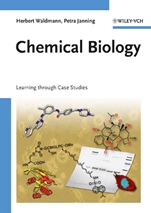
Chemical Biology: Learning through Case Studies
ISBN 9783527323302
Autor: Herbert Waldmann, Petra Janning
Wydawca: Wiley
Dostępność: 3-6 tygodni
Cena: 313,95 zł
Przed złożeniem zamówienia prosimy o kontakt mailowy celem potwierdzenia ceny.
ISBN13: |
9783527323302 |
ISBN10: |
3527323309 |
Autor: |
Herbert Waldmann, Petra Janning |
Oprawa: |
Paperback |
Rok Wydania: |
2009-03-18 |
Ilość stron: |
304 |
Wymiary: |
242x172 |
Tematy: |
PN |
Chemical biology is a rapidly growing and exciting interdisciplinary science, combining chemical tools for the study of biological problems and the development of innovative solutions that would not be possible by applying methodology from one field only.
This first book to adopt a problem–based approach teaches the true basics of the subject by way of illustrated case studies. The editor′s extensive experience in chemical biology education and their close relationship to the authors ensure that the contributions here are presented in a pedagogically uniform and highly motivating fashion.
From the contents:
∗ Ras Proteins, Synthesis, Ras Cycle, Biochemistry
∗ Proteases, Proteasome
∗ Activity–Based Proteomics
∗ FK506
∗ Regulation of Gene Expression, Transcription
∗ Protein Synthesis, Native Chemical Ligation
∗ Expressed Protein Ligation
∗ Microarray Technologies
∗ APT1, Ras Palmitoylation
∗ Carbohydrates
∗ Yeast Based Chemical Genomics
∗ Target Identification
∗ BIOS, PSSC, Natural Products
∗ Alzheimer
∗ Diversity Oriented Synthesis
∗ Kinases, Orthogonal Chemical Genetics
Each chapter introduces a different biological problem, so that students learn how to think in order to solve problems in biology by using powerful techniques and tools taken from chemistry.
Spis treści:
Introduction and Preface.
List of Contributors.
Abbreviations.
List of Boxes and Definitions.
1 Yeast–Based Chemical Genomic Approaches (Katja Hübel).
1.1 Introduction.
1.2 The Biological Problem.
1.2.1 Interplay between Organic Chemistry and Biology.
1.2.2 Chemical Genomics.
1.2.3 Small Molecules in Chemical Genomics.
1.2.4 Cell–based Genomic Approaches.
1.2.5 Yeast–Based Chemical Genomic Approaches.
1.3
The Chemical Approach.
1.4 Chemical Biological Research/Evaluation – Chemogenomic Profiling: Elucidating the Mode of Action of Small Molecules.
1.4.1 Assay Principle.
1.4.2 The Yeast Deletion Strain Collection.
1.4.2.1 Homozygous Deletion Strains.
1.4.2.2 Heterozygous Deletion Strains.
1.4.3 Advantages and Disadvantages.
1.4.4 Case Studies.
1.5 Conclusions.
References.
2 Microarray–Based Strategies to Identify Unknown Protein Interactions (Sabine Borgmann and Christof M. Niemeyer).
2.1 Introduction.
2.2 The Biological Problem.
2.3 The Chemical Approach.
2.3.1 Introduction to Microarray Technology.
2.3.2 Antibody Microarray for Protein Profiling.
2.3.3 Self–Assembled Protein Microarrays.
2.3.4 Self–Assembled Small–Molecule Microarrays.
2.4 Chemical Biological Research/Evaluation.
2.4.1 Antibody Microarray for Protein Profiling.
2.4.2 Self–Assembled Protein Microarrays.
2.4.3 Self–Assembled Small–Molecule Microarrays.
2.5 Conclusions.
References.
3 Compound Collection Synthesis for Chemical Biology (Kamal Kumar).
3.1 Introduction.
3.2 Chemical Probes – a Chemical Question with Biological Consequences.
3.3 Diversity Oriented Synthesis (DOS).
3.3.1 Aims of Diversity Oriented Synthesis.
3.3.2 DOS Based Library Synthesis and Evaluation.
3.4 Biology Oriented Synthesis (BIOS).
3.4.1 Aims of Biology Oriented Synthesis.
3.4.2 BIOS–Based Library Synthesis and Evaluation.
3.5 Conclusions.
References.
4 Target Identification and Validation of a WNT/ß–Catenin Pathway Modulator (Petra Janning).
4.1 Introduction.
4.2 The Biological Problem.
4.2.1 Target Identification and Validation.
4.2.2 WNT/ß–Catenin Pathway.
4.2.3 Modulation of the WNT/ß–Catenin Pathway by Small Molecules.
4.3 The Chemical Approach.
4.3.1 High Thr
oughput Screens.
4.3.2 Synthesis of QS11, QS11–NC and Coupling to Solid Support.
4.4 Chemical Biological Research/Evaluation.
4.4.1 Target Identification.
4.4.2 Target Validation.
4.4.3 Mechanism of Action.
4.5 Conclusions.
References.
5 Activity–Based Protein Profiling of Cys Proteases (Renier van der Hoorn).
5.1 Introduction.
5.2 The Biological Problem.
5.3 The Chemical Approach.
5.3.1 Epoxide Probes for Papain–Like Cys Proteases.
5.3.2 Acyloxymethylketones for Caspase–like Proteases.
5.3.3 Vinyl Sulfones for Ubiquitin–Specific Proteases.
5.4 Chemical Biological Research/Evaluation.
5.5 Conclusions.
References.
6 The Use of Photoaffinity Labeling for the Identification of the Binding Site of the Antibiotic Linezolid (Rolf Breinbauer and Matthias Mentel).
6.1 Introduction.
6.2 The Biological Problem.
6.3 The Chemical Approach.
6.3.1 Synthesis of Oxazolidinone Antibiotics.
6.3.2 Synthesis of Photoaffinity–Labeled Probes.
6.4 Chemical Biological Research/Evaluation.
6.5 Conclusions.
References.
7 Surgical Strikes: Uses of Analog Sensitive Technologies to Target Kinases of Interest (Matthias Rabiller and Daniel Rauh).
7.1 Introduction.
7.2 The Biological Problem.
7.3 The Chemical Genetic Approach.
7.3.1 Aim of the Chemical Genetic Approach.
7.3.2 Engineering ASKA Ligand–Kinase Pairs.
7.4 Chemical Biological Research/Evaluation: ASKA Technology – Applications in Molecular Biology.
7.4.1 Kinase Substrate Identification.
7.4.2 Kinase Inhibition Studies.
7.5 Conclusions.
References.
8 Modulation of Protein–Protein Interactions by Small Molecules (Stefanie Bovens and Christian Ottmann).
8.1 Introduction.
8.2 The Biological Problem.
8.3 The Chemical Approach.
8.4 Chemical Biological Research/Evaluation.
8.4.1 Homodimerization.
8.4.2 He
terodimerization.
8.4.3 Engineering the Protein–Ligand Interaction.
8.5 Conclusions.
References.
9 Targeted Protein Degradation in Live Cells (Markus Kaiser).
9.1 Introduction.
9.2 The Biological Problem.
9.3 The Chemical Approach.
9.3.1 The PROTAC Approach.
9.3.2 Conditional Control of Engineered Protein Stability.
9.4 Chemical Biological Research/Evaluation.
9.4.1 In Vivo Targeted Protein Degradation by PROTACs.
9.4.2 In Vivo Evaluation of Shld–1–Controlled Degradation of DD–POI Fusion Proteins.
9.5 Conclusions.
References.
10 Trapoxin B: From Total Synthesis to Epigenetics (Bruno Bulic).
10.1 Introduction.
10.2 The Biological Problem.
10.3 The Chemical Approach.
10.3.1 Properties of Trapoxin B.
10.3.2 Synthesis of the K–trap Affinity Matrix.
10.4 Chemical Biological Research/Evaluation.
10.5 Conclusions.
References.
11 Native Chemical Ligation – A Tool for Chemical Protein Synthesis (Christian F.W. Becker).
11.1 Introduction.
11.2 The Synthetic Challenge.
11.3 The Chemical Approach – Native Chemical Ligation.
11.3.1 Principles of Native Chemical Ligation.
11.3.2 Challenges and Limitations.
11.4 Chemical Biological Research/Evaluation – The Ras–RBD System.
11.4.1 Chemical Synthesis of the Ras Protein and Its Effector RBD.
11.4.2 In Vitro Analysis of Synthetic Ras and RBD.
11.5 Conclusions.
References.
12 Using Split Inteins to Prepare Semi–synthetic Proteins and to Study the Mechanism of Protein trans–Splicing (Henning D. Mootz).
12.1 Introduction.
12.2 The Biological Problem.
12.3 The Chemical Approach.
12.3.1 Traditional Protein Bioconjugation.
12.3.2 Reprogramming Protein Biosynthesis.
12.3.3 Chemical Ligation Methods for Protein Semi̵
Koszyk
Książek w koszyku: 0 szt.
Wartość zakupów: 0,00 zł
Informacje


Kontakt
Gambit
Centrum Oprogramowania
i Szkoleń Sp. z o.o.
Al. Pokoju 29b/22-24
31-564 Kraków
Siedziba Księgarni
ul. Kordylewskiego 1
31-542 Kraków
+48 12 410 5991
+48 12 410 5987
+48 12 410 5989
Subskrypcje
Administratorem danych osobowych jest firma Gambit COiS Sp. z o.o. Na podany adres będzie wysyłany wyłącznie biuletyn informacyjny.
Autoryzacja płatności

Informacje na temat autoryzacji płatności poprzez PayU.

© Copyright 2012: GAMBIT COiS Sp. z o.o. Wszelkie prawa zastrzeżone.
Projekt i wykonanie: Alchemia Studio Reklamy