


Wydawcy
Katalog tematyczny
- Archeologia (109)
- Ekonomia, finanse, business (13704)
- Filozofia (1445)
- Historia (3040)
- Języki i językoznawstwo (2356)
- Lifestyle, hobby i rozrywka (475)
- Medycyna (9704)
- Nauki humanistyczne (4)
- Nauki o Ziemi i środowisku (2638)
- Nauki ścisłe (20412)
- Astronomia (294)
- Biologia (5119)
- Chemia (6540)
- Chemia analityczna (361)
- Chemia fizyczna (346)
- Chemia nieorganiczna (137)
- Chemia organiczna (535)
- Krystalografia (27)
- Minerologia (46)
- Fizyka (3309)
- Matematyka (4574)
- Nauki ścisłe, ogólnie (503)
- Nauki społeczne (8486)
- Nauki techniczne (13450)
- Prawo (1696)
- Publikacje informacyjne i interdyscyplinarne (1288)
- Religia i wierzenia (917)
- Technika komputerowa (4067)
- Zdrowie, relacje międzyludzkie i rozwój osobisty (657)





Informacje szczegółowe o książce
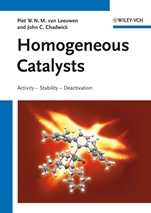
Homogeneous Catalysts: Activity – Stability – Deactivation
ISBN 9783527323296
Autor: John C. Chadwick, Rob Duchateau, Zoraida Freixa, Piet W. N. M. van Leeuwen
Wydawca: Wiley
Dostępność: 3-6 tygodni
Cena: 773,85 zł
Przed złożeniem zamówienia prosimy o kontakt mailowy celem potwierdzenia ceny.
ISBN13: |
9783527323296 |
ISBN10: |
3527323295 |
Autor: |
John C. Chadwick, Rob Duchateau, Zoraida Freixa, Piet W. N. M. van Leeuwen |
Oprawa: |
Hardback |
Rok Wydania: |
2011-06-01 |
Ilość stron: |
418 |
Wymiary: |
248x177 |
Tematy: |
PN |
Homogeneous catalysts have now established a vital position in organic synthesis, providing new and shortened routes to a large variety of known and new products. The many industrial applications already realized and those in the pipeline call for more stable catalysts and a better knowledge of their deactivation mechanisms. For the first time, this book addresses these issues explicitly for homogeneous catalysis. As the cover indicates, can the homogeneous catalyst be regenerated and arise as a Phoenix from its ashes or, as with the decomposed Grubbs catalyst shown, can it be used in a tandem reaction for the next catalytic step?
The book has been written by two leading experts in the field and is intended for all industrial and academic chemists using homogeneous catalysts. The book deals with activation, incubation, deactivation and reactivation of the most important organometallic homogeneous catalysts, including those used in olefin polymerization, and is a must–have for organic chemists, organometallic chemists and polymer chemists involved in catalysis.
Spis treści:
Preface XI
1 Elementary Steps 1
1.1 Introduction 1
1.2 Metal Deposition 2
1.2.1 Ligand Loss 2
1.2.2 Loss of Hþ, Reductive Elimination of HX 2
1.2.3 Reductive Elimination of C–, N–, O–Donor Fragments 5
1.2.4 Metallic Nanoparticles 6
1.3 Ligand Decomposition by Oxidation 7
1.3.1 General 7
1.3.2 Oxidation 7
1.3.2.1 Catalysis Using O2 7
1.3.2.2 Catalysis Using Hydroperoxides 8
1.4 Phosphines 8
1.4.1 Introduction 8
1.4.2 Oxidation of Phosphines 9
1.4.3 Oxidative Addition of a P–C Bond to a Low–Valent Metal 11
1.4.4 Nucleophilic Attack at Phosphorus 16
1.4.5 Aryl Exchange Via Phosphonium Intermediates 19
1.4.6 Aryl Exchange Via Metallophosphoranes 21
1.5 Phosphites 23
1.6 Imines and Pyridines 26
1.7 Carbenes 27
1.7.1 Introduction to NHCs as Ligands 27
1.7.2 Reductive
Elimination of NHCs 28
1.7.3 Carbene Decomposition in Metathesis Catalysts 31
1.8 Reactions of Metal–Carbon and Metal–Hydride Bonds 36
1.8.1 Reactions with Protic Reagents 36
1.8.2 Reactions of Zirconium and Titanium Alkyl Catalysts 37
1.9 Reactions Blocking the Active Sites 38
1.9.1 Polar Impurities 38
1.9.2 Dimer Formation 39
1.9.3 Ligand Metallation 40
References 41
2 Early Transition Metal Catalysts for Olefin Polymerization 51
2.1 Ziegler–Natta Catalysts 51
2.1.1 Introduction 51
2.1.2 Effect of Catalyst Poisons 52
2.1.3 TiCl3 Catalysts 53
2.1.4 MgCl2–supported Catalysts 54
2.1.4.1 MgCl2/TiCl4/Ethyl Benzoate Catalysts 54
2.1.4.2 MgCl2/TiCl4/Diester Catalysts 56
2.1.4.3 MgCl2/TiCl4/Diether Catalysts 57
2.1.5 Ethene Polymerization 57
2.2 Metallocenes 58
2.2.1 Introduction 58
2.2.2 Metallocene/MAO Systems 62
2.2.3 Metallocene/Borate Systems 66
2.3 Other Single–Center Catalysts 69
2.3.1 Constrained Geometry and Half–Sandwich Complexes 69
2.3.2 Octahedral Complexes 73
2.3.3 Diamide and Other Complexes 75
2.4 Vanadium–Based Catalysts 76
2.5 Chromium–Based Catalysts 80
2.6 Conclusions 82
References 83
3 Late Transition Metal Catalysts for Olefin Polymerization 91
3.1 Nickel– and Palladium–based Catalysts 91
3.1.1 Diimine Complexes 91
3.1.2 Neutral Nickel(II) Complexes 94
3.1.3 Other Nickel(II) and Palladium(II) Complexes 98
3.2 Iron– and Cobalt–based Catalysts 98
3.2.1 Bis(imino)Pyridyl Complexes 98
3.3 Conclusions 101
References 102
4 Effects of Immobilization of Catalysts for Olefin Polymerization 105
4.1 Introduction 105
4.2 Metallocenes and Related Complexes 106
4.2.1 Immobilized MAO/Metallocene Systems 106
4.2.2 Immobilized Borane and Borate Activators 109
4.2.3 Superacidic Supports 110
4.2.4 MgCl2–Supported Systems 110
4.3 Other Titanium and Z
irconium Complexes 113
4.3.1 Constrained Geometry Complexes 113
4.3.2 Octahedral Complexes 115
4.4 Vanadium Complexes 117
4.5 Chromium Complexes 121
4.6 Nickel Complexes 122
4.7 Iron Complexes 124
4.8 Conclusions 125
References 126
5 Dormant Species in Transition Metal–Catalyzed Olefin Polymerization 131
5.1 Introduction 131
5.2 Ziegler–Natta Catalysts 132
5.2.1 Ethene Polymerization 132
5.2.2 Propene Polymerization 132
5.3 Metallocenes and Related Early Transition Metal Catalysts 134
5.3.1 Cation–Anion Interactions 134
5.3.2 Effects of AlMe3 136
5.3.3 Effects of 2,1–insertion in Propene Polymerization 137
5.3.4 Effects of Z3–allylic Species in Propene Polymerization 140
5.3.5 Chain Epimerization in Propene Polymerization 141
5.3.6 Effects of Dormant Site Formation on Polymerization Kinetics 142
5.4 Late Transition Metal Catalysts 143
5.4.1 Resting States in Nickel Diimine–Catalyzed Polymerization 143
5.4.2 Effects of Hydrogen in Bis(iminopyridyl) Iron–Catalyzed Polymerization 143
5.5 Reversible Chain Transfer in Olefin Polymerization 145
5.6 Conclusions 147
References 148
6 Transition Metal Catalyzed Olefin Oligomerization 151
6.1 Introduction 151
6.2 Zirconium Catalysts 152
6.3 Titanium Catalysts 153
6.4 Tantalum Catalysts 156
6.5 Chromium Catalysts 157
6.5.1 Chromium–catalyzed Trimerization 157
6.5.2 Chromium–catalyzed Tetramerization of Ethene 160
6.5.3 Chromium–Catalyzed Oligomerization 162
6.5.4 Single–component Chromium Catalysts 164
6.6 Nickel Catalysts 166
6.7 Iron Catalysts 168
6.8 Tandem Catalysis involving Oligomerization and Polymerization 170
6.9 Conclusions 171
References 172
7 Asymmetric Hydrogenation 177
7.1 Introduction 177
7.2 Incubation by Dienes in Rhodium Diene Precursors 179
7.3 Inhibition by Substrates, Solvents, Polar Additives, and Impurities
181
7.3.1 Inhibition by Substrates: Iridium 181
7.3.2 Inhibition by Substrates, Additives: Rhodium 182
7.3.3 Inhibition by Substrates: Ruthenium 187
7.4 Inhibition by Formation of Bridged Species 190
7.4.1 Inhibition by Formation of Bridged Species: Iridium 191
7.4.2 Inhibition by Formation of Bridged Species: Rhodium 195
7.5 Inhibition by Ligand Decomposition 198
7.6 Inhibition by the Product 199
7.6.1 Inhibition by the Product: Rhodium 199
7.6.2 Ruthenium 200
7.7 Inhibition by Metal Formation; Heterogeneous Catalysis by Metals 201
7.8 Selective Activation and Deactivation of Enantiomeric Catalysts 204
7.9 Conclusions 206
References 207
8 Carbonylation Reactions 213
8.1 Introduction 213
8.2 Cobalt–Catalyzed Hydroformylation 214
8.3 Rhodium–Catalyzed Hydroformylation 217
8.3.1 Introduction of Rhodium–Catalyzed Hydroformylation 217
8.3.2 Catalyst Formation 221
8.3.3 Incubation by Impurities: Dormant Sites 223
8.3.4 Decomposition of Phosphines 227
8.3.5 Decomposition of Phosphites 231
8.3.6 Decomposition of NHCs 235
8.3.7 Two–Phase Hydroformylation 238
8.3.8 Hydroformylation by Nanoparticle Precursors 244
8.4 Palladium–Catalyzed Alkene–CO Reactions 244
8.4.1 Introduction 244
8.4.2 Brief Mechanistic Overview 246
8.4.3 Early Reports on Decomposition and Reactivation 248
8.4.4 Copolymerization 250
8.4.5 Methoxy– and Hydroxy–carbonylation 253
8.5 Methanol Carbonylation 259
8.5.1 Introduction 259
8.5.2 Mechanism and Side Reactions of the Monsanto Rhodium–Based Process 260
8.5.3 The Mechanism of the Acetic Anhydride Process Using Rhodium as a Catalyst 261
8.5.4 Phosphine–Modified Rhodium Catalysts 263
8.5.5 Iridium Catalysts 265
8.6 Conclusions 268
References 269
9 Metal–Catalyzed Cross–Coupling Reactions 279
9.1 Introduction; A Few Historic Notes 279
9.2 On the Mechanism of
Initiation and Precursors 283
9.2.1 Initiation via Oxidative Addition to Pd(0) 283
9.2.2 Hydrocarbyl Pd Halide Initiators 290
9.2.3 Metallated Hydrocarbyl Pd Halide Initiators 293
9.3 Transmetallation 299
9.4 Reductive Elimination 303
9.4.1 Monodentate vs Bidentate Phosphines and Reductive Elimination 303
9.4.2 Reductive Elimination of C–F Bonds 313
9.5 Phosphine Decomposition 316
9.5.1 Phosphine Oxidation 316
9.5.2 P–C Cleavage of Ligands 317
9.6 Metal Impurities 322
9.7 Metal Nanoparticles and Supported Metal Catalysts 327
9.7.1 Supported Metal Catalysts 327
9.7.2 Metal Nanoparticles as Catalysts 330
9.7.3 Metal Precipitation 334
9.8 Conclusions 334
References 335
10 Alkene Metathesis 347
10.1 Introduction 347
10.2 Molybdenum and Tungsten Catalysts 349
10.2.1 Decomposition Routes of Alkene Metathesis Catalysts 349
10.2.2 Regeneration of Active Alkylidenes Species 356
10.2.3 Decomposition Routes of Alkyne Metathesis Catalysts 359
10.3 Rhenium Catalysts 363
10.3.1 Introduction 363
10.3.2 Catalyst Initiation and Decomposition 365
10.4 Ruthenium Catalysts 370
10.4.1 Introduction 370
10.4.2 Initiation and Incubation Phenomena 371
10.4.3 Decomposition of the Alkylidene Fragment 376
10.4.4 Reactions Involving the NHC Ligand 379
10.4.5 Reactions Involving Oxygenates 381
10.4.6 Tandem Metathesis/Hydrogenation Reactions 385
10.5 Conclusions 388
References 390
Index 397
Nota biograficzna:
Piet van Leeuwen is group leader in the Institute of Chemical Research of Catalonia, Tarragona, Spain, since 2004 and emeritus professor of homogeneous catalysis at the University of Amsterdam. Until 1994 he headed a research group at Shell Research in Amsterdam studying many aspects of homogeneous catalysis. He coauthored 300 publications, 30 patents, many book chapters, is author of the book "Homogeneous catalysis: Understanding the art". In 200
5 he won the Holleman Prize (for organic chemists), granted only every five years by the Royal Academy, and obtained a Marie Curie Chair of Excellence in Tarragona.
John Chadwick is employed by LyondellBasell Industries and since 2001 has been on secondment at Eindhoven University of Technology, where he is programme coordinator for Dutch Polymer Institute (DPI) projects on polymer catalysis and immobilization. Until 1995, he was at Shell Research in Amsterdam, after which he transferred to the LyondellBasell (at that time Montell, later Basell) research center in Ferrara, Italy, where he was involved in fundamental Ziegler–Natta catalyst R&D. His main research interests involve heterogeneous olefin polymerization catalysis, including Ziegler–Natta and immobilized single–site systems. He is author or co–author of more than 60 publications and 11 patents.
Okładka tylna:
Homogeneous catalysts have now established a vital position in organic synthesis, providing new and shortened routes to a large variety of known and new products. The many industrial applications already realized and those in the pipeline call for more stable catalysts and a better knowledge of their deactivation mechanisms. For the first time, this book addresses these issues explicitly for homogeneous catalysis. As the cover indicates, can the homogeneous catalyst be regenerated and arise as a Phoenix from its ashes or, as with the decomposed Grubbs catalyst shown, can it be used in a tandem reaction for the next catalytic step?
The book has been written by two leading experts in the field and is intended for all industrial and academic chemists using homogeneous catalysts. The book deals with activation, incubation, deactivation and reactivation of the most important organometallic homogeneous catalysts, including those used in olefin polymerization, and is a must–have for organic chemists, organometallic chemists and polymer
chemists involved in catalysis.
Koszyk
Książek w koszyku: 0 szt.
Wartość zakupów: 0,00 zł
Informacje


Kontakt
Gambit
Centrum Oprogramowania
i Szkoleń Sp. z o.o.
Al. Pokoju 29b/22-24
31-564 Kraków
Siedziba Księgarni
ul. Kordylewskiego 1
31-542 Kraków
+48 12 410 5991
+48 12 410 5987
+48 12 410 5989
Subskrypcje
Administratorem danych osobowych jest firma Gambit COiS Sp. z o.o. Na podany adres będzie wysyłany wyłącznie biuletyn informacyjny.
Autoryzacja płatności

Informacje na temat autoryzacji płatności poprzez PayU.

© Copyright 2012: GAMBIT COiS Sp. z o.o. Wszelkie prawa zastrzeżone.
Projekt i wykonanie: Alchemia Studio Reklamy