


Wydawcy
Katalog tematyczny
- Archeologia (109)
- Ekonomia, finanse, business (13704)
- Filozofia (1445)
- Historia (3040)
- Języki i językoznawstwo (2356)
- Lifestyle, hobby i rozrywka (475)
- Medycyna (9704)
- Nauki humanistyczne (4)
- Nauki o Ziemi i środowisku (2638)
- Nauki ścisłe (20412)
- Astronomia (294)
- Biologia (5119)
- Chemia (6540)
- Chemia analityczna (361)
- Chemia fizyczna (346)
- Chemia nieorganiczna (137)
- Chemia organiczna (535)
- Krystalografia (27)
- Minerologia (46)
- Fizyka (3309)
- Matematyka (4574)
- Nauki ścisłe, ogólnie (503)
- Nauki społeczne (8486)
- Nauki techniczne (13450)
- Prawo (1696)
- Publikacje informacyjne i interdyscyplinarne (1288)
- Religia i wierzenia (917)
- Technika komputerowa (4067)
- Zdrowie, relacje międzyludzkie i rozwój osobisty (657)





Informacje szczegółowe o książce
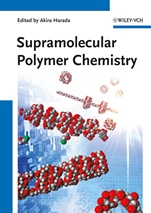
Supramolecular Polymer Chemistry
ISBN 9783527323210
Autor: Akira Harada
Wydawca: Wiley
Dostępność: 3-6 tygodni
Cena: 801,15 zł
Przed złożeniem zamówienia prosimy o kontakt mailowy celem potwierdzenia ceny.
ISBN13: |
9783527323210 |
ISBN10: |
352732321X |
Autor: |
Akira Harada |
Oprawa: |
Hardback |
Rok Wydania: |
2011-12-07 |
Ilość stron: |
390 |
Wymiary: |
247x174 |
Tematy: |
PN |
Supramolecular chemistry deals with some of the hottest current scientific advances within the field and polymer chemistry is now a multi–billion euro industry. Thus, enabling novel advances in polymer chemistry by taking innovative ideas from supramolecular chemistry is thus of profound interest.
Presenting the work of pioneering experts in the resulting exciting field of supramolecular polymer chemistry, this monograph covers an extensive range of applications, including drug delivery and catalysis. It focuses on new structures and phenomena of cyclodextrin–based supramolecular polymers and many other compound classes.
The contents are clearly divided into three parts that deal in turn with the formation of supramolecular polymers, supramolecular polymers with unique structures, and, lastly, their properties and functions.
While providing a deeper insight in macromolecular recognition and the mechanisms of living systems, this book also introduces breathtaking new phenomena beyond natural systems, making it fascinating reading for organic, polymer, catalytic, medicinal and biochemists, as well as for materials scientists.
Spis treści:
Preface XIII
List of Contributors XV
Part One Formation of Supramolecular Polymers 1
1 Multiple Hydrogen–Bonded Supramolecular Polymers 3
Wilco P.J. Appel, Marko M.L. Nieuwenhuizen, and E.W. Meijer
1.1 Introduction 3
1.1.1 Historical Background 3
1.1.2 Supramolecular Chemistry 4
1.1.3 Supramolecular Polymerization Mechanisms 4
1.2 General Concepts of Hydrogen–Bonding Motifs 6
1.2.1 Arrays of Multiple Hydrogen Bonds 6
1.2.2 Preorganization through Intramolecular Hydrogen Bonding 8
1.2.3 Tautomeric Equilibria 9
1.3 Hydrogen–Bonded Main–Chain Supramolecular Polymers 10
1.3.1 The Establishment of Supramolecular Polymers 10
1.3.2 Supramolecular Polymerizations 13
1.3.3 Hydrophobic Compartm
entalization 14
1.4 From Supramolecular Polymers to Supramolecular Materials 16
1.4.1 Thermoplastic Elastomers 16
1.4.2 Phase Separation and Additional Lateral Interactions in Supramolecular Polymers in the Solid State 18
1.4.3 Supramolecular Thermoplastic Elastomers Based on Additional Lateral Interactions and Phase Separation 19
1.5 Future Perspectives 23
References 25
2 Cyclodextrin–Based Supramolecular Polymers 29
Akira Harada and Yoshinori Takashima
2.1 Introduction 29
2.2 Supramolecular Polymers in the Solid State 29
2.2.1 Crystal Structures of CD Aliphatic Tethers 30
2.2.2 Crystal Structures of b–CDs Aromatic Tethers 31
2.3 Formation of Homo–Intramolecular and Intermolecular Complexes by CDs–Guest Conjugates 33
2.3.1 Supramolecular Structures Formed by 6–Modified a–CDs 33
2.3.2 Supramolecular Structures Formed by 6–Modified b–CDs 39
2.3.3 Supramolecular Structures Formed by 3–Modified a–CDs 40
2.3.4 Hetero–Supramolecular Structures Formed by Modified CDs 42
2.4 Formation of Intermolecular Complexes by CD and Guest Dimers 44
2.5 Artificial Molecular Muscle Based on c2–Daisy Chain 45
2.6 Conclusion and Outlook 48
References 48
3 Supra–Macromolecular Chemistry: Toward Design of New Organic Materials from Supramolecular Standpoints 51
Kazunori Sugiyasu and Seiji Shinkai
3.1 Introduction 51
3.2 Small Molecules, Macromolecules, and Supramolecules: Design of their Composite Materials 53
3.2.1 Interactions between Small Molecules and Macromolecules 53
3.2.2 Interactions between Small Molecules and Molecular Assemblies 56
3.2.3 Interactions between Molecular Assemblies 58
3.2.4 Interactions between Macromolecules 60
3.2.5 Interactions between Macromolecular Assemblies 63
3.2.6 Interactions between Macromolecules and Molecular Assemblies 65
3.3 Conclusion
and Outlook 67
References 68
4 Polymerization with Ditopic Cavitand Monomers 71
Francesca Tancini and Enrico Dalcanale
4.1 Introduction 71
4.2 Cavitands 72
4.3 Self–Assembly of Ditopic Cavitand Monomers 75
4.3.1 Structural Monomer Classification of Supramolecular Polymerization 75
4.3.2 Homoditopic Cavitands Self–Assembled via Solvophobic p–p Stacking Interactions 77
4.3.3 Heteroditopic Cavitands Combining Solvophobic Interactions and Metal–Ligand Coordination 78
4.3.4 Heteroditopic Cavitands Combining Solvophobic Interactions and Hydrogen Bonding 82
4.3.5 Heteroditopic Cavitands Self–assembled via Host–Guest Interactions 84
4.3.6 Homoditopic Cavitands Self–assembled via Host–Guest Interactions 88
4.4 Conclusions and Outlook 91
References 92
Part Two Supramolecular Polymers with Unique Structures 95
5 Polymers Containing Covalently Bonded and Supramolecularly Attached Cyclodextrins as Side Groups 97
Helmut Ritter, Monir Tabatabai, and Bernd–Kristof Müller
5.1 Polymers with Covalently Bonded Cyclodextrins as Side Groups 97
5.1.1 Synthesis and Polymerization of Monofunctional Cyclodextrin Monomers 98
5.1.2 Polymer–Analogous Reaction with Monofunctional Cyclodextrin 100
5.1.3 Structure–Property Relationship of Polymers Containing Cyclodextrins as Side Group 102
5.2 Side Chain Polyrotaxanes and Polypseudorotaxanes 105
5.2.1 Side Chain Polyrotaxanes 106
5.2.2 Side Chain Polypseudorotaxane (Polymer (Polyaxis)/Cyclodextrin (Rotor)) 111
References 120
6 Antibody Dendrimers and DNA Catenanes 127
Hiroyasu Yamaguchi and Akira Harada
6.1 Molecular Recognition in Biological Systems 127
6.1.1 Supramolecular Complex Formation of Antibodies 127
6.1.2 Supramolecular Complexes Prepared by DNAs 129
6.1.3 Observation of Topological Structures of Supramole
cular Complexes by Atomic Force Microscopy (AFM) 129
6.2 Antibody Supramolecules 130
6.2.1 Structural Properties of Individual Antibody Molecules 130
6.2.2 Supramolecular Formation of Antibodies with Multivalent Antigens 130
6.2.2.1 Supramolecular Formation of Antibodies with Divalent Antigens 131
6.2.2.2 Direct Observation of Supramolecular Complexes of Antibodies with Porphyrin Dimers 133
6.2.2.3 Applications for the Highly Sensitive Detection Method of Small Molecules by the Supramolecular Complexes between Antibodies and Multivalent Antigens 134
6.2.3 Supramolecular Dendrimers Constructed by IgM and Chemically Modified IgG 136
6.2.3.1 Preparation of Antibody Dendrimers and their Topological Structures 136
6.2.3.2 Binding Properties of Antibody Dendrimers for Antigens 136
6.3 DNA Supramolecules 139
6.3.1 Imaging of Individual Plasmid DNA Molecules 139
6.3.2 Preparation of Nicked DNA by the Addition of DNase I to Plasmid DNA 140
6.3.3 Catenation Reaction with Topoisomerase I 141
6.3.4 AFM Images of DNA Catenanes 143
6.3.5 DNA [n]Catenanes Prepared by Irreversible Reaction with DNA Ligase 144
6.4 Conclusions 145
References 146
7 Crown Ether–Based Polymeric Rotaxanes 151
Terry L. Price Jr. and Harry W. Gibson
7.1 Introduction 151
7.2 Daisy Chains 153
7.3 Supramolecular Polymers 156
7.4 Dendritic Rotaxanes 157
7.5 Dendronized Polymers 158
7.6 Main chain Rotaxanes Based on Polymeric Crowns (Including Crosslinked Systems) 161
7.7 Side Chain Rotaxanes Based on Pendent Crowns 166
7.8 Poly[2]rotaxanes 170
7.9 Poly[3]rotaxanes 173
7.10 Polymeric End Group Pseudorotaxanes 176
7.11 Chain Extension and Block Copolymers from End Groups 176
7.12 Star Polymers from Crown Functionalized Polymers 179
References 181
Part Three Properties and Functions 183
8 Processive Rotaxane Catalysts 185
Johannes A.A.W. Elemans, Alan
E. Rowan, and Roeland J.M. Nolte
8.1 Introduction 185
8.2 Results and Discussion 185
8.2.1 Catalysis 185
8.2.2 Threading 187
8.3 Conclusion 192
References 192
9 Emerging Biomedical Functions through ‘Mobile’ Polyrotaxanes 195
Nobuhiko Yui
9.1 Introduction 195
9.2 Multivalent Interaction using Ligand–Conjugated Polyrotaxanes 196
9.3 The Formation of Polyrotaxane Loops as a Dynamic Interface 197
9.4 Cytocleavable Polyrotaxanes for Gene Delivery 199
9.5 Conclusion 201
9.6 Appendix 203
References 204
10 Slide–Ring Materials Using Polyrotaxane 205
Kazuaki Kato and Kohzo Ito
10.1 Introduction 205
10.2 Pulley Effect of Slide–Ring Materials 208
10.3 Synthesis of Slide–Ring Materials 209
10.4 Scattering Studies of Slide–Ring Gels 211
10.5 Mechanical Properties of Slide–Ring Gels 213
10.6 Sliding Graft Copolymers 215
10.7 Recent Trends of Slide–Ring Materials 216
10.7.1 Introduction: Diversification of the Main Chain Polymer 216
10.7.2 Organic–Inorganic Hybrid Slide–Ring Materials 219
10.7.3 Design of Materials from Intramolecular Dynamics of Polyrotaxanes 224
10.8 Concluding Remarks 226
References 227
11 Stimuli–Responsive Systems 231
Akihito Hashidzume and Akira Harada
11.1 Introduction 231
11.2 Stimuli and Responses 231
11.2.1 Stimuli 231
11.2.1.1 Temperature 231
11.2.1.2 Pressure, Force, Stress, and Ultrasound 232
11.2.1.3 pH 233
11.2.1.4 Chemicals 233
11.2.1.5 Electromagnetic Waves or Light 233
11.2.1.6 Redox 234
11.2.2 Responses 234
11.2.2.1 Movement 235
11.2.2.2 Capture and Release of Chemicals 235
11.2.2.3 Chemical Reactions 235
11.2.2.4 Change in Viscoelastic Properties, or Gel–to–Sol and Sol–to–Gel Transitions 236
11.2.2.5 Change in Color 236
11.3 Examples of
Stimuli–Responsive Supramolecular Polymer Systems 236
11.3.1 Temperature–Responsive Systems 236
11.3.2 Pressure–, Force–, and Sonication–Responsive Systems 239
11.3.3 pH–Responsive Systems 241
11.3.4 Chemical–Responsive Systems 246
11.3.5 Photo–Responsive Systems 249
11.3.6 Redox–Responsive Systems 255
11.3.7 Multi–Stimuli–Responsive Systems 259
11.4 Concluding Remarks 261
References 261
12 Physical Organic Chemistry of Supramolecular Polymers 269
Stephen L. Craig and Donghua Xu
12.1 Introduction and Background 269
12.2 Linear Supramolecular Polymers 270
12.2.1 N,C,N–Pincer Metal Complexes 270
12.2.2 Linear SPs 272
12.2.3 Theory Related to the Properties of Linear SPs 274
12.2.4 Linear SPs in the Solid State 275
12.3 Cross–Linked SPs Networks 276
12.3.1 Reversibility in Semidilute Unentangled SPs Networks 276
12.3.2 Properties of Semidilute Entangled SPs Networks 283
12.3.3 The Sticky Reptation Model 285
12.4 Hybrid Polymer Gels 286
12.5 Conclusion 288
References 288
13 Topological Polymer Chemistry: A Quest for Strange Polymer Rings 293
Yasuyuki Tezuka
13.1 Introduction 293
13.2 Systematic Classification of Nonlinear Polymer Topologies 293
13.3 Topological Isomerism 296
13.4 Designing Unusual Polymer Rings by Electrostatic Self–Assembly and Covalent Fixation 298
13.5 Conclusion and Future Perspectives 302
References 303
14 Structure and Dynamic Behavior of Organometallic Rotaxanes 305
Yuji Suzaki, Tomoko Abe, Eriko Chihara, Shintaro Murata, Masaki Horie, and Kohtaro Osakada
14.1 Introduction 305
14.1.1 Crystals of Pseudorotaxanes 307
14.1.2 Synthesis of Ferrocene–Containing [2]Rotaxanes by the Threading–Followed–by–End–Capping Strategy 312
14.1.3 Dethreacting Reaction of Rotaxan
e–Like Complex 316
14.1.4 Photochemical Properties of Ferrocene–Containing Rotaxanes 318
14.1.5 Ferrocene–Containing [3]Rotaxane and Side–Chain Polyrotaxane 320
14.1.5.1 Strategies and Synthesis of [3]Rotaxanes 320
14.1.5.2 Strategies and Synthesis of Side–Chain Type Polyrotaxane 321
14.2 Conclusion 324
14.3 Appendix: Experimental Section 324
References 326
15 Polyrotaxane Network as a Topologically Cross–Linked Polymer: Synthesis and Properties 331
Toshikazu Takata, Takayuki Arai, Yasuhiro Kohsaka, Masahiro Shioya, and Yasuhito Koyama
15.1 Introduction 331
15.2 Linking of Wheels of Main–Chain–Type Polyrotaxane – Structurally Defined Polyrotaxane Network 331
15.3 Linking of Macrocyclic Units of Polymacrocycle with Axle Unit to Directly Yield a Polyrotaxane Network 336
15.3.1 Polyrotaxane Networks Having Crown Ethers as the Wheel at the Cross–link Points (I) 336
15.3.2 Polyrotaxane Network Having Crown Ethers as the Wheel at the Cross–link Points (II) 337
15.3.3 Polyrotaxane Network Having Cyclodextrins as Cross–link Points: Effective Use of Oligocyclodextrin 339
15.4 Linking of Wheels of Polyrotaxane Cross–linker to Afford Polyrotaxane Network: Design of the Cross–linker 342
15.5 Conclusion 344
References 345
16 From Chemical Topology to Molecular Machines 347
Jean–Pierre Sauvage
16.1 Introduction 347
16.2 Copper(I)–Templated Synthesis of Catenanes: the ‘Entwining’ Approach and the ‘Gathering and Threading’ Strategy 347
16.3 Molecular Knots 349
16.4 Molecular Machines Based on Catenanes and Rotaxanes 353
16.5 Two–Dimensional Interlocking Arrays 354
16.6 A [3]rotaxane Acting as an Adjustable Receptor: Toward a Molecular ‘Press’ 355
16.7 Conclusion 356
References 356
Index 361
Nota biograficzna:
Akira Harada is a Professor at the Graduate School of Science, Osaka University, where he gained his PhD in 1977. He began his career as a visiting scientist at IBM research in San Jose, followed by a postdoctoral fellowship at Colorado State University. He returned to Osaka University as an assistant professor in 1982, spent a year as a visiting scientist at The Scripps Institute in 1991, and became a full professor in 1998. He is the recipient of several awards, including the IBM Science Award, Osaka Science Award, Japan Polymer Society Award, Cyclodextrin Society Award, Izatt–Christensen International Award, and the Medal with Purple Ribbon from the Japanese Government. Professor Harada is a member of the Chemical Society of Japan, Polymer Society of Japan, the American Chemical Society, and the Society of Biochemistry, and is on the board of four scientific journals. His research interests cover supramolecular chemistry, polymer synthesis and assembly of bio–related polymers.
Okładka tylna:
Supramolecular chemistry deals with some of the hottest current scientific advances within the field and polymer chemistry is now a multi–billion euro industry. Thus, enabling novel advances in polymer chemistry by taking innovative ideas from supramolecular chemistry is thus of profound interest.
Presenting the work of pioneering experts in the resulting exciting field of supramolecular polymer chemistry, this monograph covers an extensive range of applications, including drug delivery and catalysis. It focuses on new structures and phenomena of cyclodextrin–based supramolecular polymers and many other compound classes.
The contents are clearly divided into three parts that deal in turn with the formation of supramolecular polymers, supramolecular polymers with unique structures, and, lastly, their properties and functions.
While providing a deeper insight in macromolecular recognition and the mechanisms of liv
Koszyk
Książek w koszyku: 0 szt.
Wartość zakupów: 0,00 zł
Informacje


Kontakt
Gambit
Centrum Oprogramowania
i Szkoleń Sp. z o.o.
Al. Pokoju 29b/22-24
31-564 Kraków
Siedziba Księgarni
ul. Kordylewskiego 1
31-542 Kraków
+48 12 410 5991
+48 12 410 5987
+48 12 410 5989
Subskrypcje
Administratorem danych osobowych jest firma Gambit COiS Sp. z o.o. Na podany adres będzie wysyłany wyłącznie biuletyn informacyjny.
Autoryzacja płatności

Informacje na temat autoryzacji płatności poprzez PayU.

© Copyright 2012: GAMBIT COiS Sp. z o.o. Wszelkie prawa zastrzeżone.
Projekt i wykonanie: Alchemia Studio Reklamy