


Wydawcy
Katalog tematyczny
- Archeologia (109)
- Ekonomia, finanse, business (13704)
- Filozofia (1445)
- Historia (3040)
- Języki i językoznawstwo (2356)
- Lifestyle, hobby i rozrywka (475)
- Medycyna (9704)
- Nauki humanistyczne (4)
- Nauki o Ziemi i środowisku (2638)
- Nauki ścisłe (20412)
- Astronomia (294)
- Biologia (5119)
- Chemia (6540)
- Chemia analityczna (361)
- Chemia fizyczna (346)
- Chemia nieorganiczna (137)
- Chemia organiczna (535)
- Krystalografia (27)
- Minerologia (46)
- Fizyka (3309)
- Matematyka (4574)
- Nauki ścisłe, ogólnie (503)
- Nauki społeczne (8486)
- Nauki techniczne (13450)
- Prawo (1696)
- Publikacje informacyjne i interdyscyplinarne (1288)
- Religia i wierzenia (917)
- Technika komputerowa (4067)
- Zdrowie, relacje międzyludzkie i rozwój osobisty (657)





Informacje szczegółowe o książce
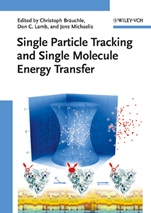
Single Particle Tracking and Single Molecule Energy Transfer
ISBN 9783527322961
Autor: Christoph Bräuchle, Don Carroll Lamb, Jens Michaelis
Wydawca: Wiley
Dostępność: 3-6 tygodni
Cena: 935,55 zł
Przed złożeniem zamówienia prosimy o kontakt mailowy celem potwierdzenia ceny.
ISBN13: |
9783527322961 |
ISBN10: |
3527322965 |
Autor: |
Christoph Bräuchle, Don Carroll Lamb, Jens Michaelis |
Oprawa: |
Hardback |
Rok Wydania: |
2009-11-11 |
Ilość stron: |
359 |
Wymiary: |
249x179 |
Tematy: |
PN |
Closing a gap in the literature, this handbook gathers extensive information on single particle tracking and single molecule energy transfer. In covers valuable aspects of these hot and modern topics, from detecting virus entry to membrane diffusion, and from protein folding using spFRET to coupled dye systems, as well as recent developments in the field. Throughout, the top international authors clearly present an overview of these developing fields and highlight many insightful examples, making this book a must–have for physical chemists, spectroscopists, biophysicists and biochemists, both for the experts as well as the new–comers to the fields.
Spis treści:
Preface.
List of Contributors.
Part I Single–Particle Imaging and Tracking.
1 Three–Dimensional Particle Tracking in a Laser Scanning Fluorescence Microscope (Valeria Levi and Enrico Gratton).
1.1 Introduction.
1.2 Image–Based Single–Particle Tracking Methods.
1.3 Advanced Fluorescence Microscopy Techniques for Single–Particle Tracking.
1.4 Two–Photon Excitation Microscopy.
1.5 3–D Tracking in Image–Based SPT Approaches.
1.6 3–D Tracking in Laser Scanning Microscopes.
1.7 Instrumentation.
1.8 Background Noise.
1.9 Simultaneous Two–Particle Tracking.
1.10 Application: Chromatin Dynamics in Interphase Cells.
1.11 Conclusions.
References.
2 The Tracking of Individual Molecules in Cells and Tissues (Laurent Holtzer and Thomas Schmidt).
2.1 Introduction.
2.2 Single–Molecule and Single–Particle Localization.
2.3 Positional Accuracy.
2.4 Tracking.
2.5 Trajectory Analysis.
2.6 Applications.
2.7 Conclusions.
References.
3 M
essenger RNA Trafficking in Living Cells (Ulrich Kubitscheck, Roman Veith, Jörg Ritter, and Jan–Peter Siebrasse).
3.1 Intranuclear Structure and Dynamics.
3.2 FCS and FRAP Studies of Nuclear mRNP Mobility.
3.3 Single–Particle Tracking of mRNA Molecules.
3.4 Single–Particle Tracking of Specific, Native mRNPs.
3.5 In Vivo Labeling of Native BR2 mRNPs.
3.6 Outlook: Light Sheet–Based Single–Molecule Microscopy.
References.
4 Quantum Dots: Inorganic Fluorescent Probes for Single–Molecule Tracking Experiments in Live Cells (Maxime Dahan, Paul Alivisatos, and Wolfgang J. Parak).
4.1 Introduction.
4.2 Fluorescent Labels for Single–Molecule Tracking in Cells.
4.3 Optical Properties of Colloidal Quantum Dots.
4.4 Synthesis of Colloidal Fluorescent Quantum Dots.
4.5 Surface Chemistry for the Water–Solubilization of Quantum Dots.
4.6 Interfacing Quantum Dots with Biology.
4.7 Single Quantum Dot Tracking Experiments in Live Cells.
4.8 Conclusions and Perspectives.
References.
Part II Energy Transfer on the Nanoscale.
5 Single–Pair FRET: An Overview with Recent Applications and Future Perspectives (Don C. Lamb).
5.1 Introduction.
5.2 Principles of FRET.
5.3 spFRET in Solution.
5.4 spFRET on Immobilized Molecules.
5.5 Future Prospects.
Abbreviations.
References.
6 Alternating–Laser Excitation and Pulsed–Interleaved Excitation of Single Molecules (Seamus J. Holden and Achillefs N. Kapanidis).
6.1 Introduction.
6.2 ALEX: The Principles of Operation.
6.3 usALEX.
6.4 Nanosecond–ALEX/Pulsed Interleaved Excitation (PIE).
6.5 msALEX.
6.6 Three–
;Color ALEX.
6.7 Conclusions and Outlook.
References.
7 Unraveling the Dynamics Bridging Protein Structure and Function One Molecule at a Time (Jeffery A. Hanson, Yan–Wen Tan, and Haw Yang).
7.1 Introduction.
7.2 Converting Chemical Energy to Mechanical Work: Molecular Motors.
7.3 Allostery in Proteins.
7.4 Enzyme Catalysis.
7.5 Conclusions.
References.
8 Quantitative Distance and Position Measurement Using Single–Molecule FRET (Jens Michaelis.
8.1 Introduction.
8.2 Fundamentals of FRET.
8.3 FRET as a Spectroscopic Ruler: Initial Experiments and Limitations.
8.4 Measuring the Quantum Yield.
8.5 The Orientation of Donor and Acceptor Molecules.
8.6 Accurate FRET Measurements Using Fluorescence Correlation Spectroscopy.
8.7 FRET–Based Triangulation and the Nanopositioning System.
8.8 Conclusions and Outlook.
References.
Part III Single Molecules in Nanosystems.
9 Coherent and Incoherent Coupling Between a Single Dipolar Emitter and Its Nanoenvironment (Vahid Sandoghdar).
9.1 Introduction.
9.2 Systems.
9.3 Coupling of Two Oscillating Dipoles.
9.4 A Dipole Close to a Surface.
9.5 A Single Molecule and a Single Nanoparticle.
9.6 Modification of the Spontaneous Emission and Quantum Efficiency by Nanoantennae.
9.7 Conclusions.
References.
10 Energy Transfer in Single Conjugated Polymer Chains (Manfred J. Walter and John M. Lupton).
10.1 Introduction.
10.2 Why Single Chain Spectroscopy?
10.3 Experimental Approach and Material Systems.
10.4 Photophysics of Single Conjugated Polymer Chains.
10.5 Energy Transfer in Single Chains.
10.6 Influence of Initial Excitation Energy on Ene
rgy Transfer.
10.7 Conclusions.
References.
11 Reactions at the Single–Molecule Level (Maarten B. J. Roeffaers, Gert De Cremer, Bert F. Sels, Dirk E. De Vos, and Johan Hofkens).
11.1 Introduction.
11.2 Biocatalysis at the Single–Molecule Level.
11.3 Chemocatalysis at the Single–Molecule Level.
References.
12 Visualizing Single–Molecule Diffusion in Nanochannel Systems (Christophe Jung and Christoph Bräuchle).
12.1 Introduction.
12.2 Correlation of Structural and Dynamic Properties Using TEM and SMT.
12.3 Phase Mixture.
12.4 Heterogeneous Dynamics of a Single Molecule.
12.5 Oriented Single Molecules with Switchable Mobility in Long Unidimensional Nanochannels.
12.6 High Localization Accuracy of Single Molecules Down to the Single Channel Limit.
12.7 Probing Chemical Interactions in Silica Thin Films Using Fluorescence Correlation Spectroscopy (FCS).
12.8 Functionalized Mesoporous Silica Structures.
12.9 Single–Molecule Studies of Mesoporous Silica Structures for Drug–Delivery Applications.
12.10 Conclusions and Outlook.
References.
Index.
Nota biograficzna:
Christoph Brauchle is Professor at the Ludwig–Maximilian–University (LMU) Munich. After his PhD, he spent one year as a postdoc at IBM in San Jose, California, USA. His research focuses on imaging, spectroscopy and manipulation of single molecules in bio– and nano–sciences. Besides numerous publications in international journals, Prof. Brauchle has won several honors, including the prestigious Philip Morris Research award and the Karl Heinz Beckurts Prize 2002. He also is a member of the Academia Europaea.
Don C. Lamb is Professor for Biophysical Chemistry at the LMU Munich.
He received hi
s PhD from the University of Illinois at Urbana–Champaign and was a research fellow at the Harvard Medical School, an Alexander von Humboldt Research Fellow at the TU Munich, a member of the Laboratory for Fluorescence Dynamics at the University of Illinois at Urbana–Champaign and a visiting scientist at the University of Ulm. His research centers around ultra–sensitive fluorescence methods, single molecule studies, protein function and dynamics, fluorescence fluctuation spectroscopies, live–cell imaging, single particle tracking and single virus tracing.
Jens Michaelis is an Assistant Professor at the LMU Munich. After receiving his PhD in physics in 2000, he spent several years as a postdoc at the University of California, Berkley, focusing on single–molecule studies of molecular motors. His research interests are the molecular mechanisms underlying the biological activity of proteins and mechanical properties of polymer molecules. In 2007 he was awarded the Romer Prize from the LMU for his habilitation work.
Okładka tylna:
Closing a gap in the literature, this handbook gathers extensive information on single particle tracking and single molecule energy transfer. In covers valuable aspects of these hot and modern topics, from detecting virus entry to membrane diffusion, and from protein folding using spFRET to coupled dye systems, as well as recent developments in the field. Throughout, the top international authors clearly present an overview of these developing fields and highlight many insightful examples, making this book a must–have for physical chemists, spectroscopists, biophysicists and biochemists, both for the experts as well as the new–comers to the fields.
Koszyk
Książek w koszyku: 0 szt.
Wartość zakupów: 0,00 zł
Informacje


Kontakt
Gambit
Centrum Oprogramowania
i Szkoleń Sp. z o.o.
Al. Pokoju 29b/22-24
31-564 Kraków
Siedziba Księgarni
ul. Kordylewskiego 1
31-542 Kraków
+48 12 410 5991
+48 12 410 5987
+48 12 410 5989
Subskrypcje
Administratorem danych osobowych jest firma Gambit COiS Sp. z o.o. Na podany adres będzie wysyłany wyłącznie biuletyn informacyjny.
Autoryzacja płatności

Informacje na temat autoryzacji płatności poprzez PayU.

© Copyright 2012: GAMBIT COiS Sp. z o.o. Wszelkie prawa zastrzeżone.
Projekt i wykonanie: Alchemia Studio Reklamy