


Wydawcy
Katalog tematyczny
- Archeologia (109)
- Ekonomia, finanse, business (13704)
- Filozofia (1445)
- Historia (3040)
- Języki i językoznawstwo (2356)
- Lifestyle, hobby i rozrywka (475)
- Medycyna (9704)
- Nauki humanistyczne (4)
- Nauki o Ziemi i środowisku (2638)
- Nauki ścisłe (20412)
- Astronomia (294)
- Biologia (5119)
- Chemia (6540)
- Chemia analityczna (361)
- Chemia fizyczna (346)
- Chemia nieorganiczna (137)
- Chemia organiczna (535)
- Krystalografia (27)
- Minerologia (46)
- Fizyka (3309)
- Matematyka (4574)
- Nauki ścisłe, ogólnie (503)
- Nauki społeczne (8486)
- Nauki techniczne (13450)
- Prawo (1696)
- Publikacje informacyjne i interdyscyplinarne (1288)
- Religia i wierzenia (917)
- Technika komputerowa (4067)
- Zdrowie, relacje międzyludzkie i rozwój osobisty (657)





Informacje szczegółowe o książce
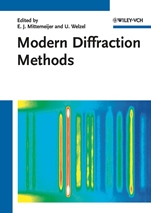
Modern Diffraction Methods
ISBN 9783527322794
Autor: E. J. Mittemeijer, U. Welzel
Wydawca: Wiley
Dostępność: 3-6 tygodni
Cena: 801,15 zł
Przed złożeniem zamówienia prosimy o kontakt mailowy celem potwierdzenia ceny.
ISBN13: |
9783527322794 |
ISBN10: |
3527322795 |
Autor: |
E. J. Mittemeijer, U. Welzel |
Oprawa: |
Hardback |
Rok Wydania: |
2012-10-15 |
Ilość stron: |
554 |
Wymiary: |
251x171 |
Tematy: |
PN |
The role of diffraction methods for the solid–state sciences has been pivotal to determining the (micro)structure of a material. Particularly, the expanding activities in materials science have led to the development of new methods for analysis by diffraction. This book offers an authoritative overview of the new developments in the field of analysis of matter by (in particular X–ray, electron and neutron) diffraction. It is composed of chapters written by leading experts on "modern diffraction methods". The focus in the various chapters of this book is on the current forefront of research on and applications for diffraction methods. This unique book provides descriptions of the "state of the art" and, at the same time, identifies avenues for future research. The book assumes only a basic knowledge of solid–state physics and allows the application of the described methods by the readers of the book (either graduate students or mature scientists). Prof. Mittemeijer and Dr. Welzel, who has been a Ph.D. student of Prof. Mittemeijer and a member of his department until shortly, are renowned scientists in the field of analysis of materials by diffraction methods. They have contributed considerably to this scientific discipline, as is shown, for example, by their many widely cited publications. This book presents a comprehensive overview based on their insights into the field, as well as those of the selection of key authors who contributed to this project.
Preface XV About the Editors XXI List of Contributors XXIII Part I Structure Determination 1 1 Structure Determination of Single Crystals 3 Sander van Smaalen 1.1 Introduction 3 1.2 The Electron Density 5 1.3 Diffraction and the Phase Problem 8 1.4 Fourier Cycling and Difference Fourier Maps 10 1.5 Statistical Properties of Diffracted Intensities 11 1.6 The Patterson Function 15 1.7 Patterson Search Methods 18 1.8 Direct Methods 19 1.9 Charge Flipping and Low–Density Elimination 21 1.10 Outlook and Summary 24 References 25 2 Modern Rietveld Refinement, a Practical Guide 27 Robert Dinnebier and Melanie M¨uller 2.1 The Peak Intensity 29 2.2 The Peak Position 30 2.3 The Peak Profile 31 2.4 The Background 38 2.5 The Mathematical Procedure 39 2.6 Agreement Factors 39 2.7 Global Optimization Method of Simulated Annealing 41 2.8 Rigid Bodies 44 2.9 Introduction of Penalty Functions 46 2.10 Parametric Rietveld Refinement 47 2.10.1 Parameterization of the Scale Factor Depending on Time for Kinetic Analysis 49 2.10.2 Parameterization of the Lattice Parameters Depending on Pressure for Determination of the Equations of State 50 2.10.3 Parameterization of Symmetry Modes Depending on Temperature for Determination of Order Parameters 53 References 58 3 Structure of Nanoparticles from Total Scattering 61 Katharine L. Page, Thomas Proffen, and Reinhard B. Neder 3.1 Introduction 61 3.2 Total Scattering Experiments 64 3.2.1 Using X–Rays 66 3.2.2 Using Neutrons 67 3.3 Structure Modeling and Refinement 69 3.3.1 Using a Particle Form Factor 69 3.3.2 Modeling Finite Nanoparticles 70 3.4 Examples 74 3.4.1 BaTiO3 74 3.4.2 CdSe/ZnS Core–Shell Particles 78 3.5 Outlook 82 References 83 Part II Analysis of the Microstructure 87 4 Diffraction Line–Profile Analysis 89 Eric J. Mittemeijer and Udo Welzel 4.1 Introduction 89 4.2 Instrumental Broadening 90 4.2.1 Determination of the Instrumental Profile Using a Reference (Standard) Specimen 92 4.2.2 Determination of the Instrumental Profile by Calculus 92 4.2.3 Subtraction/Incorporation of the Instrumental Broadening 93 4.3 Structural, Specimen Broadening 94 4.3.1 Measures of Line Broadening; Fourier Series Representation of Diffraction Lines 94 4.3.2 Column Length/Crystallite Size and Column–Length/Crystallite–Size Distribution 96 4.3.3 Microstrain Broadening 98 4.3.3.1 Assumptions in Integral–Breadth Methods 99 4.3.3.2 Assumptions in Fourier Methods 100 4.3.3.3 Microstrain–Broadening Descriptions Derived from a Microstructural Model 101 4.3.4 Anisotropic Size and Microstrain(–Like) Diffraction–Line Broadening 104 4.3.5 Macroscopic Anisotropy 106 4.3.6 Crystallite Size and Coherency of Diffraction 106 4.4 Practical Application of Line–Profile Analysis 111 4.4.1 Line–Profile Decomposition 111 4.4.1.1 Breadth Methods 111 4.4.1.2 Fourier Methods 115 4.4.1.3 Whole Powder–Pattern Fitting 116 4.4.2 Line–Profile Synthesis 116 4.4.2.1 General Strain–Field Method 117 4.4.2.2 Specific Microstructural Models: Whole Powder–Pattern Modeling (WPPM) and Multiple Whole–Profile Modeling/Fitting (MWP) 118 4.4.2.3 General Atomistic Structure: the Debye Scattering Function 120 4.5 Conclusions 122 References 123 5 Residual Stress Analysis by X–Ray Diffraction Methods 127 Christoph Genzel, Ingwer A. Denks, and Manuela Klaus 5.1 Introduction 127 5.2 Principles of Near–Surface X–Ray Residual Stress Analysis 129 5.2.1 Fundamental Relations 129 5.2.2 Concepts of Diffraction Data Acquisition: Angle–Dispersive and Energy–Dispersive Modes 130 5.2.3 Concepts of Strain Depth Profiling: LAPLACE and Real Space Approach 131 5.2.3.1 Definition of the Information Depth 131 5.2.3.2 Depth Profiling in the LAPLACE Space 133 5.2.3.3 Depth Profiling in Real Space 136 5.2.3.4 ‘‘Fixed’’ versus ‘‘Variable Depth’’ Methods 139 5.3 Near–Surface X–Ray Residual Stress Analysis by Advanced and Complementary Methods 141 5.3.1 Residual Stress Depth Profiling in Multilayered Coating Systems 141 5.3.1.1 The ‘‘Equivalence Thickness’’ Concept 141 5.3.1.2 The ‘‘Stress Scanning’’ Method 144 5.3.2 Residual Stress Gradient Evaluation in Surface–Treated Bulk Samples 147 5.3.2.1 Fixed Depth Analysis in the Real Space: Direct Access to σ(z) 147 5.3.2.2 Residual Stress Evaluation in the LAPLACE Space: From σ(τ) to σ(z) 149 5.4 Final Remarks 151 References 153 6 Stress Analysis by Neutron Diffraction 155 Lothar Pintschovius and Michael Hofmann 6.1 Introductory Remarks 155 6.2 Fundamentals of the Technique 155 6.2.1 The d0–Problem 156 6.2.2 Macrostrains versus Microstrains 157 6.2.3 Strain Tensors 158 6.2.4 Reflection Line Broadenings 158 6.3 Instrumentation 159 6.3.1 Angle–Dispersive Instruments 159 6.3.1.1 Monochromators 159 6.3.1.2 Beam–Defining Optics 160 6.3.1.3 Detectors 161 6.3.1.4 Auxilliaries 162 6.3.2 Time–of–Flight Instruments 162 6.3.3 Special Instruments 164 6.4 Capabilities 164 6.4.1 Types of Materials 164 6.4.2 Spatial Resolution 164 6.4.3 Penetration Depth 165 6.4.4 Accuracy 166 6.4.5 Throughput 166 6.5 Examples 166 6.5.1 Railway Rail 166 6.5.2 Weldments 167 6.5.3 Ceramics 168 6.5.4 Composite Materials 170 References 170 7 Texture Analysis by Advanced Diffraction Methods 173 Hans–Rudolf Wenk 7.1 Introduction and Background 173 7.2 Synchrotron X–Rays 177 7.2.1 General Approach 177 7.2.2 Hard Synchrotron X–Rays 178 7.2.3 In situ High–Pressure Experiments 180 7.2.4 From Diffraction Images to Orientation Distribution 183 7.2.5 Opportunities with the Laue Technique 188 7.2.6 Synchrotron Applications 188 7.3 Neutron Diffraction 190 7.3.1 General Comments 190 7.3.2 Monochromatic Neutrons 193 7.3.3 Polychromatic Time–of–Flight (TOF) Neutrons 194 7.3.4 Special Techniques 197 7.3.5 Data Analysis for TOF Neutrons 198 7.3.6 Neutron Applications 202 7.3.6.1 Grain Statistics 202 7.3.6.2 Polymineralic Rocks 202 7.3.6.3 In situ Experiments and Phase Transformations 203 7.3.6.4 Magnetic Textures 204 7.4 Electron Diffraction 204 7.4.1 Transmission Electron Microscope 204 7.4.2 Scanning Electron Microscope (SEM) 205 7.4.3 EBSD Applications 209 7.4.3.1 Misorientations 209 7.4.3.2 In situ Heating 209 7.4.3.3 In situ Deformation 210 7.4.3.4 3D Mapping 211 7.4.3.5 Residual Strain Analysis 211 7.5 Comparison of Methods 212 7.6 Conclusions 213 Acknowledgments 214 References 214 8 Surface–Sensitive X–Ray Diffraction Methods 221 Andreas Stierle and Elias Vlieg 8.1 Introduction 221 8.1.1 Structure Determination by X–Ray Diffraction 223 8.2 X–Ray Reflectivity 224 8.3 Bragg Scattering in Reduced Dimensions (Crystal Truncation Rod Scattering) 227 8.3.1 Thin–Film Diffraction 227 8.3.2 Surface Diffraction from Half–Infinite Systems 230 8.3.2.1 Surface Relaxations 232 8.3.2.2 Surface Reconstructions and Fourier Methods 234 8.3.2.3 Surface Roughness 237 8.3.2.4 Vicinal Surfaces 239 8.3.2.5 Two–Layer Roughness Model for Growth Studies 240 8.3.2.6 Interface Diffraction 245 8.3.2.7 The Specular Rod 247 8.4 Grazing Incidence X–Ray Diffraction 249 8.5 Experimental Geometries 252 8.6 Trends 254 Acknowledgments 255 References 255 9 The Micro– and Nanostructure of Imperfect Oxide Epitaxial Films 259 Alexandre Boulle, Florine Conchon, and Ren´e Guinebreti`ere 9.1 The Diffracted Amplitude and Intensity 260 9.1.1 Diffracted Amplitude 260 9.1.2 Diffracted Intensity 261 9.2 The Correlation Volume 262 9.2.1 Crystallite Size and Shape 262 9.2.2 Crystallite Size Fluctuations 265 9.2.3 Crystallite Shape Fluctuations 267 9.3 Lattice Strain 269 9.3.1 Statistical Properties 269 9.3.2 Spatial Properties 272 9.4 Example 274 9.5 Strain Gradients 277 9.5.1 Background 277 9.5.2 Strain Profile Retrieval 277 9.5.3 Example 278 9.6 Conclusions 279 References 281 Part III Phase Analysis and Phase Transformations 283 10 Quantitative Phase Analysis Using the Rietveld Method 285 Ian C. Madsen, Nicola V.Y. Scarlett, Daniel P. Riley, and Mark D. Raven 10.1 Introduction 285 10.2 Mathematical Basis 286 10.2.1 Rietveld–Based Methods 286 10.2.2 Improving Accuracy 290 10.2.3 Correlation with Thermal Parameters 292 10.3 Applications in Minerals and Materials Research 295 10.3.1 Crystallization from Hydrothermal Solutions 295 10.3.2 Energy–Dispersive Diffraction 298 10.3.2.1 Application of EDD to the Study of Inert Anodes for Light Metal Production 301 10.3.3 Quantitative Phase Analysis in Mineral Exploration 304 10.3.3.1 Particle Statistics 306 10.3.3.2 Preferred Orientation 306 10.3.3.3 Microabsorption 306 10.3.3.4 Identification of Mineral Types and Polytypes 307 10.3.3.5 Element Substitution and Solid Solution 307 10.3.3.6 Severe Peak Overlap 308 10.3.3.7 Poorly Crystalline Components 309 10.3.3.8 Clay and Disordered Structures 309 10.3.4 The Reynolds Cup 310 10.3.5 Use of QPA–Derived Kinetics in the Design of Novel Materials 312 10.3.5.1 Methodologies for Synthesis Optimization Using QPA 312 10.3.5.2 Design and Synthesis Optimization of Novel Materials: Mn+1AXn Phases 312 10.3.5.3 In situ Differential Thermal Analysis (DTA) Using QPA 316 10.4 Summary 318 Acknowledgments 318 References 318 11 Kinetics of Phase Transformations and of Other Time–Dependent Processes in Solids Analyzed by Powder Diffraction 321 Andreas Leineweber and Eric J. Mittemeijer 11.1 Introduction 321 11.2 Kinetic Concepts 323 11.2.1 Process Rates 323 11.2.2 The Temperature Dependence of the Process Rate 327 11.2.2.1 Arrhenius–Type Temperature Dependence of the Rate Constant k(T) 327 11.2.2.2 Non–Arrhenius–Type Process Kinetics 328 11.2.3 Rate Laws for Isothermally Conducted Processes 330 11.2.3.1 mth–Order Kinetics of Homogeneous Processes 330 11.2.3.2 Johnson–Mehl–Avrami–Kolmogorov Kinetics of Heterogeneous Phase Transformations 331 11.2.3.3 Grain Growth and Ostwald Ripening 332 11.2.3.4 Volume–Diffusion–Controlled Processes 333 11.2.3.5 Order–Disorder–Related Processes 333 11.2.4 Rate Laws for Nonisothermally Conducted Processes 336 11.3 Tracing the Process Kinetics by Powder Diffraction 337 11.4 Mode of Measurement: In Situ versus Ex Situ Methods 339 11.5 Types of Kinetic Processes and Examples 342 11.5.1 Local Composition in Solid is Retained 342 11.5.1.1 Reconstructive, Polymorphic Transformations α → β 342 11.5.1.2 Polymorphic Transformations of Order–Disorder Character and Related Processes 346 11.5.1.3 Polymorphic Transformations of Polytypic Character 347 11.5.1.4 Grain Growth 349 11.5.2 Local Concentration Variations within Isolated Solid Systems 350 11.5.2.1 Precipitation Processes 350 11.5.2.2 Solid–State Reaction between Different Phases 351 11.5.3 Composition Changes in Solids by Reaction with Fluid Matter 352 11.6 Concluding Remarks 354 References 354 Part IV Diffraction Methods and Instrumentation 359 12 Laboratory Instrumentation for X–Ray Powder Diffraction: Developments and Examples 361 Udo Welzel and Eric J. Mittemeijer 12.1 Introduction: Historical Sketch 361 12.2 Laboratory X–Ray Powder Diffraction: Instrumentation 365 12.2.1 Overview 365 12.2.2 Laboratory X–Ray Sources; Monochromatization 365 12.2.2.1 X–Ray Sources 365 12.2.2.2 Monochromatization/Filtering 368 12.2.3 Debye–Scherrer (−Hull) Geometry 370 12.2.4 Monochromatic Pinhole Techniques 371 12.2.5 (Para–)Focusing Geometries 371 12.2.5.1 Seemann–Bohlin Geometry 372 12.2.5.2 Bragg–Brentano Geometry 373 12.2.6 Instrumental Aberrations of (Para–)Focusing Geometries 376 12.2.7 Parallel–Beam Geometry 377 12.2.7.1 Polycapillary Collimators 378 12.2.7.2 X–Ray Mirrors 379 12.2.7.3 X–Ray Mirrors versus X–Ray Lenses; Comparative Discussion 381 12.2.7.4 Instrumental Aberrations of Parallel–Beam Geometry 383 12.2.8 Further, Recent Developments 384 12.2.8.1 Two–Dimensional Detectors 384 12.2.8.2 Microdiffraction 387 12.2.8.3 Energy–Dispersive Diffraction 388 12.3 Examples 388 12.3.1 Parallel–Beam Diffraction Methods 388 12.3.1.1 High Brilliance, Parallel–Beam Laboratory X–Ray Source 388 12.3.1.2 Applications 389 12.3.2 Two–Dimensional Diffraction Methods 391 Acknowledgments 394 References 394 13 The Calibration of Laboratory X–Ray Diffraction Equipment Using NIST Standard Reference Materials 399 James P. Cline, David Black, Donald Windover, and Albert Henins 13.1 Introduction 399 13.2 The Instrument Profile Function 400 13.3 SRMs, Instrumentation, and Data Collection Procedures 411 13.4 Data Analysis Methods 418 13.5 Instrument Qualification and Validation 423 13.6 Conclusions 436 References 437 14 Synchrotron Diffraction: Capabilities, Instrumentation, and Examples 439 Gene E. Ice 14.1 Introduction 439 14.2 The Underlying Physics of Synchrotron Sources 441 14.2.1 Storage Ring Sources 441 14.2.2 Free–Electron Lasers and Other Emerging X–Ray Sources 445 14.3 Diffraction Applications Exploiting High Source Brilliance 445 14.3.1 Microdiffraction 446 14.3.1.1 Microdiffraction Example 1: Stress–Driven Sn Whisker Growth 449 14.3.1.2 Microdiffraction Example 2: Damage in Ion–Implanted Si 451 14.3.1.3 Other Microdiffraction Applications 452 14.3.2 Surface and Interface Diffraction 452 14.3.2.1 Surface Diffraction Example 1: Truncation Rod Scattering (TRS) 453 14.3.2.2 Surface Diffraction Example 2: Surface Studies of Phase Transformations in Langmuir–Blodgett Films 455 14.4 High Q–Resolution Measurements 456 14.5 Applications of Tunability: Resonant Scattering 456 14.5.1 Resonant Scattering Example 1: Multiple Anomalous Diffraction, MAD 458 14.5.2 Resonant Scattering Example 2: 3λ Determination of Local Short–Range Correlation in Binary Alloys 461 14.5.3 Resonant Scattering Example 3: Determination of Magnetic Structure and Correlation Lengths 464 14.6 Future: Ultrafast Science and Coherence 465 14.6.1 Coherent Diffraction 466 14.6.2 Ultrafast Diffraction 466 References 467 15 High–Energy Electron Diffraction: Capabilities, Instrumentation, and Examples 469 Christoph T. Koch 15.1 Introduction 469 15.2 Instrumentation 470 15.2.1 Fundamentals 470 15.2.2 Diffraction Modes in a TEM 472 15.2.3 Femtosecond Electron Diffraction 474 15.3 Electron Diffraction Methods in the TEM 474 15.3.1 Precession Electron Diffraction (PED) 474 15.3.2 Quantitative Convergent–Beam Electron Diffraction (QCBED) 476 15.3.3 Large–Angle Convergent–Beam Electron Diffraction (LACBED) 477 15.3.4 Large–Angle Rocking–Beam Electron Diffraction (LARBED) 478 15.3.5 Diffraction Tomography 482 15.3.6 Real–Space Crystallography 482 15.3.7 Coherent Diffractive Imaging (CDI) with Electrons 483 15.3.8 Mapping Strain by Electron Diffraction 485 15.4 Summary and Outlook 486 Acknowledgment 486 References 486 16 In Situ Diffraction Measurements: Challenges, Instrumentation, and Examples 491 Helmut Ehrenberg, Anatoliy Senyshyn, Manuel Hinterstein, and Hartmut Fuess 16.1 Introduction 491 16.2 Instrumentation and Experimental Challenges 492 16.2.1 General Considerations 492 16.2.2 Absorption 493 16.2.3 Detection Challenges 494 16.3 Examples 497 16.3.1 Electrochemical In Situ Studies of Electrode Materials and In Operando Investigations of Li–Ion Batteries 497 16.3.2 In situ Studies of Piezoceramics in Electric Fields 502 Acknowledgment 515 References 515 Index 519
Professor Mittemeijer has led the department ′Phase Transformations in Solids′ at the Max Planck Institute for Metals Research since 1998. He has published more than 400 papers in international scientific journals and is a member of the editorial board of various journals, among them "International Materials Reviews", "Journal of Alloys and Compounds", "Zeitschrift für Metallkunde" and "Zeitschrift für Kristallographie". He is editor/publisher of the journal "HTM Zeitschrift für Werkstoffe Wärmebehandlung Fertigung" and co–editor of the journal "Current Opinion in Solid State & Materials Science". He acts as referee of numerous journals. Dr Welzel obtained his PhD in 2002 under the supervision of Professor Mittemeijer and serves now as a research scientist and the head of a service laboratory for X–ray diffraction investigations at the Max Planck Institute for Metals Research. His research activities are dedicated to the diffraction analysis of the microstructure of materials and have a strong methodological interest. He has been an editor of the Proceedings of the European Powder Diffraction Conference since 2002, a special issue of the journal "Zeitschrift für Kristallographie" dedicated to ′The State of the Art of Powder Diffration′ and acts as referee of numerous journals.
“It is also well written, covers many topics and conveys significant information. Therefore, it is highly recommended to all researchers in the field either in academia or industry.” ( Contemporary Physics , 13 August 2013)
Koszyk
Książek w koszyku: 0 szt.
Wartość zakupów: 0,00 zł
Informacje


Kontakt
Gambit
Centrum Oprogramowania
i Szkoleń Sp. z o.o.
Al. Pokoju 29b/22-24
31-564 Kraków
Siedziba Księgarni
ul. Kordylewskiego 1
31-542 Kraków
+48 12 410 5991
+48 12 410 5987
+48 12 410 5989
Subskrypcje
Administratorem danych osobowych jest firma Gambit COiS Sp. z o.o. Na podany adres będzie wysyłany wyłącznie biuletyn informacyjny.
Autoryzacja płatności

Informacje na temat autoryzacji płatności poprzez PayU.

© Copyright 2012: GAMBIT COiS Sp. z o.o. Wszelkie prawa zastrzeżone.
Projekt i wykonanie: Alchemia Studio Reklamy