


Wydawcy
Katalog tematyczny
- Archeologia (109)
- Ekonomia, finanse, business (13704)
- Filozofia (1445)
- Historia (3040)
- Języki i językoznawstwo (2356)
- Lifestyle, hobby i rozrywka (475)
- Medycyna (9704)
- Nauki humanistyczne (4)
- Nauki o Ziemi i środowisku (2638)
- Nauki ścisłe (20412)
- Astronomia (294)
- Biologia (5119)
- Biochemia (575)
- Biologia człowieka (14)
- Biologia komórkowa (377)
- Biologia molekularna (398)
- Biologia rozwoju (130)
- Biologia, ogólnie (1277)
- Botanika (280)
- Hydrobiologia (92)
- Mikrobiologia (363)
- Mykologia (22)
- Zoologia (303)
- Chemia (6540)
- Fizyka (3309)
- Matematyka (4574)
- Nauki ścisłe, ogólnie (503)
- Nauki społeczne (8486)
- Nauki techniczne (13450)
- Prawo (1696)
- Publikacje informacyjne i interdyscyplinarne (1288)
- Religia i wierzenia (917)
- Technika komputerowa (4067)
- Zdrowie, relacje międzyludzkie i rozwój osobisty (657)





Informacje szczegółowe o książce
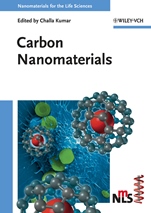
Carbon Nanomaterials
ISBN 9783527321698
Autor: Challa S. S. R. Kumar
Wydawca: Wiley
Dostępność: 3-6 tygodni
Cena: 882,00 zł
Przed złożeniem zamówienia prosimy o kontakt mailowy celem potwierdzenia ceny.
ISBN13: |
9783527321698 |
ISBN10: |
3527321691 |
Autor: |
Challa S. S. R. Kumar |
Oprawa: |
Hardback |
Rok Wydania: |
2011-01-26 |
Ilość stron: |
482 |
Wymiary: |
249x179 |
Tematy: |
PS |
The new book series Nanomaterials for the Life Sciences, successor to the highly acclaimed “Nanotechnology for the Life Sciences”, provides an in–depth overview of all nanomaterial types and their uses in the life sciences. Each volume is dedicated to a specific material class and covers fundamentals, synthesis and characterization strategies, structure–property relationships and biomedical applications. The new series brings nanomaterials to the life scientists and life science to the materials scientists so that synergies are seen and developed to the fullest.
Written by international experts of the various facets of this exciting field of research, the ten volumes of this single source of information comprehensively cover the complete range of nanomaterials for medical, biological and cybernetic applications. The series is aimed at scientists of the following disciplines: biology, chemistry, materials science, physics, bioengineering, and medicine, together with cell biology, biomedical engineering, pharmaceutical chemistry, and toxicology, both in academia and fundamental research as well as in pharmaceutical companies.
Volume 9: Carbon Nanomaterials
This volume describes Carbon Nanomaterials, from syntheses to characterization, as well as their application to the Life Sciences, Carbon Nanomaterials can be used in a variety of fields, from tissue engineering to cancer treatment.
For more information on NmLS, please visit www.NmLS.wiley–vch.de
Spis treści:
Preface.
List of Contributors.
Part One Overview of Synthesis, Characterization, and Applications in Biomedicine.
1 Carbon Nanomaterials: Synthetic Approaches (Jean–Philippe Tessonnier).
1.1 Introduction.
1.2 General Concepts on the Synthesis of Carbon (Nano–)Materials.
1.3 Synthesis from Solid Precursors.
1.
4 Catalytic Chemical Vapor Deposition.
1.5 Purification Techniques.
1.6 Importance of Defects and Curvature for Further Functionalization.
1.7 Functionalization: Creating Anchoring Points for Bioactive Molecules.
1.8 Conclusion and Outlook.
References.
2 Nanocarbons: Characterization Tools (Dang Sheng Su).
2.1 Introduction.
2.2 Diffraction Techniques.
2.3 Imaging.
2.4 Spectroscopy.
2.5 Summary.
References.
3 Synthesis, Characterization, and Biomedical Applications of Graphene (Albert Dato, Velimir Radmilovic and Michael Frenklach).
3.1 Introduction.
3.2 Synthesis of Graphene.
3.3 Characterization of Graphene.
3.4 Biomedical Applications of Graphene.
3.5 Conclusions.
References.
4 Carbon Nanohorns and Their Biomedical Applications (Shuyun Zhu and Guobao Xu).
4.1 Introduction.
4.2 Structure and Properties.
4.3 Functionalization.
4.4 Biomedical Applications.
4.5 Conclusions.
Acknowledgments.
References.
5 Bio–Inspired Magnetic Carbon Materials (Elby Titus, José Gracio, Duncan P. Fagg, Manjo K. Singh and Antonio C. M. Sousa).
5.1 Introduction.
5.2 Allotropic Forms of Carbon.
5.3 Magnetism in Diamond.
5.4 Magnetism in Graphite.
5.5 Magnetism in Carbon Nanotubes/Fullerenes.
5.6 Magnetism in Graphene.
5.7 Conclusion.
References.
6 Multi–Walled Carbon Nanotubes for Drug Delivery (Nicole Levi–Polyachenko).
6.1 Introduction.
6.2 Gene Therapy.
6.3 Antibacterial Therapy.
6.4 Wound Healing.
6.5 Chemotherapy.
6.6 Summary and Future Perspectives.
References.
7 Carbon Nanotube–Based Three–Dimensional Matrices for Tissue Engineering (Izabela Firkowska and Michael Giersig).
7.1 Introduction.
7.2 Carbon Nanotubes.
7.3 Carbon Nanotubes for Matrix Enhancement.
7.4 Cellular Responses to CNT–Based Matrices.
7.5 CNT En
gineering into Three–Dimensional Matrices.
7.6 Summary.
References.
8 Electrochemical Biosensors Based on Carbon Nanotubes (Jonathan C. Claussen, Jin Shi, Alfred R. Diggs, D. Marshall Porterfi eld and Timothy S. Fisher).
8.1 Introduction.
8.2 CNT Properties.
8.3 Electrochemical Biosensing.
8.4 CNT–Based Electrode Fabrication.
8.5 Applications.
8.6 Conclusions.
References.
9 Single–Walled Carbon Nanotube Biosensors (Jeong–O Lee and Hye–Mi So).
9.1 Introduction.
9.2 The Sensing Mechanisms of Nanotube Biosensors.
9.3 The Immobilization of Biomolecules on SWNTs.
9.4 Various Receptors for Nanotube Biosensors.
9.5 The Application of Nanotube Biosensors to Pathogen Detection.
9.6 The Future of Nanotube Biosensors.
References.
10 Environmental Impact of Fullerenes (Naohide Shinohara).
10.1 Introduction.
10.2 Methods Used to Prepare Fullerene Suspensions.
10.3 Toxicological Data Relating to Fullerenes.
10.4 Possible Emission Sources of C60.
10.5 The Environmental Fate of C60.
10.6 Fullerenes in the Environment.
10.7 Conclusion.
References.
11 Computational Tools for the Biomedical Application of Carbon Nanomaterials (Leela Rakesh).
11.1 Introduction.
11.2 Simulation Methods.
11.3 Results and Discussions.
11.4 Future Perspectives.
11.5 Executive Summary.
Acknowledgments.
References.
Part Two Overview of Applications in Cancer.
12 Carbon Nanotubes for Cancer Therapy (William H. Gmeiner).
12.1 Introduction.
12.2 Hyperthermia for Cancer Treatment.
12.3 CNTs for Drug Delivery.
12.4 Imaging Using CNTs.
12.5 CNT–Related Toxicity.
12.6 Summary and Future Perspective.
Acknowledgments.
Abbreviations.
References.
13 Cancer Treatment with Carbon Nanotubes, Using Thermal Ablation or Association with Anticancer Agents (Roger G.
Harrison, Luís F. F. Neves, Whitney M. Prickett and David Luu).
13.1 Introduction.
13.2 Use of Nanotubes as Heated Particles.
13.3 Use of Anticancer Agents Associated with Nanotubes.
13.4 Summary.
13.5 Future Perspective.
Acknowledgments.
References.
14 Carbon Nanotubes for Targeted Cancer Therapy (Reema Zeineldin).
14.1 Introduction.
14.2 Cancer.
14.3 Conventional Cancer Chemotherapy versus Nanocarrier–Mediated Drug Delivery.
14.4 Carbon Nanotubes as Drug–Delivery Vehicles.
14.5 Cellular Uptake of CNTs.
14.6 Functionalization of CNTs with Polyethylene Glycol.
14.7 Targeting of Cancers.
14.8 Targeted Cancer Therapy Employing CNTs and a Critique of Current Studies.
14.9 Summary and Future Perspective.
Acknowledgments.
References.
15 Application of Carbon Nanotubes to Brain Tumor Therapy (Dongchang Zhao and Behnam Badie).
15.1 Introduction.
15.2 The Current Challenge of Brain Tumor Therapy.
15.3 The Characteristics of CNTs for Biological Applications.
15.4 Strategies of Application of CNTs to Brain Tumor Therapy.
15.5 Toxicity Issues of CNTs in Brain Tumor Therapy.
15.6 Conclusions and Future Directions.
Acknowledgments.
References.
16 Carbon Nanotubes in Cancer Therapy, including Boron Neutron Capture Therapy (BNCT) (Amartya Chakrabarti, Hiren Patel, John Price, John A. Maguire and Narayan S. Hosmane).
16.1 Introduction.
16.2 Carbon Nanotubes in the Treatment of Cancer.
16.3 BNCT and Its Development through Nanotechnology.
16.4 The Role of Carbon Nanotubes in BNCT.
16.5 Summary and Future Outlook.
References.
17 Fullerenes in Photodynamic Therapy (Sulbha K. Sharma, Ying–Ying Huang, Pawel Mroz, Tim Wharton, Long Y. Chiang and Michael R. Hamblin).
17.1 Introduction.
17.2 Photodynamic Therapy.
17.3 Fullerenes as Photosensitizers.
17.4 Anticancer Effects of Fullerenes.17.5 Fullerenes for Antimicrobial Photoinactivation.
17.6 Summary and Future Perspectives.
Acknowledgments.
References.
Index.
Nota biograficzna:
Challa Kumar is currently the Director of Nanofabrication & Nanomaterials at the Center for Advanced Microstructures and Devicees (CAMD), Baton Rouge, USA. He is also the President and CEO of Magnano Technologies, a company established to commercialize nanomaterials for applications in life sciences. His research interests are in developing novel synthetic methods, including those based on microfluidic reactors, for multifunctional nanomaterials. He has also been involved in the development of innovative therapeutic & diagnostic tools based on nanotechnology. He has eight years of industrial R&D experience working for Imperial Chemical Industries and United Breweries. He is the founding Editor–in–Chief of the Journal of Biomedical Nanotechnology, published by American Scientific Publishers and Series editor for the ten–volume book series, Nanotechnologies for the Life Sciences (NtLS), published by Wiley–VCH.
Okładka tylna:
The new book series Nanomaterials for the Life Sciences, successor to the highly acclaimed “Nanotechnology for the Life Sciences”, provides an in–depth overview of all nanomaterial types and their uses in the life sciences. Each volume is dedicated to a specific material class and covers fundamentals, synthesis and characterization strategies, structure–property relationships and biomedical applications. The new series brings nanomaterials to the life scientists and life science to the materials scientists so that synergies are seen and developed to the fullest.
Written by international experts of the various facets of this exciting field of research, the ten volumes of this single source of information comprehensively cover the complete range of nanomateri
als for medical, biological and cybernetic applications. The series is aimed at scientists of the following disciplines: biology, chemistry, materials science, physics, bioengineering, and medicine, together with cell biology, biomedical engineering, pharmaceutical chemistry, and toxicology, both in academia and fundamental research as well as in pharmaceutical companies.
Volume 9: Carbon Nanomaterials
This volume describes Carbon Nanomaterials, from syntheses to characterization, as well as their application to the Life Sciences, Carbon Nanomaterials can be used in a variety of fields, from tissue engineering to cancer treatment.
For more information on NmLS, please visit www.NmLS.wiley–vch.de
Koszyk
Książek w koszyku: 0 szt.
Wartość zakupów: 0,00 zł
Informacje


Kontakt
Gambit
Centrum Oprogramowania
i Szkoleń Sp. z o.o.
Al. Pokoju 29b/22-24
31-564 Kraków
Siedziba Księgarni
ul. Kordylewskiego 1
31-542 Kraków
+48 12 410 5991
+48 12 410 5987
+48 12 410 5989
Subskrypcje
Administratorem danych osobowych jest firma Gambit COiS Sp. z o.o. Na podany adres będzie wysyłany wyłącznie biuletyn informacyjny.
Autoryzacja płatności

Informacje na temat autoryzacji płatności poprzez PayU.

© Copyright 2012: GAMBIT COiS Sp. z o.o. Wszelkie prawa zastrzeżone.
Projekt i wykonanie: Alchemia Studio Reklamy