


Wydawcy
Katalog tematyczny
- Archeologia (109)
- Ekonomia, finanse, business (13704)
- Filozofia (1445)
- Historia (3040)
- Języki i językoznawstwo (2356)
- Lifestyle, hobby i rozrywka (475)
- Medycyna (9704)
- Nauki humanistyczne (4)
- Nauki o Ziemi i środowisku (2638)
- Nauki ścisłe (20412)
- Astronomia (294)
- Biologia (5119)
- Chemia (6540)
- Chemia analityczna (361)
- Chemia fizyczna (346)
- Chemia nieorganiczna (137)
- Chemia organiczna (535)
- Krystalografia (27)
- Minerologia (46)
- Fizyka (3309)
- Matematyka (4574)
- Nauki ścisłe, ogólnie (503)
- Nauki społeczne (8486)
- Nauki techniczne (13450)
- Prawo (1696)
- Publikacje informacyjne i interdyscyplinarne (1288)
- Religia i wierzenia (917)
- Technika komputerowa (4067)
- Zdrowie, relacje międzyludzkie i rozwój osobisty (657)





Informacje szczegółowe o książce
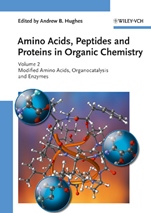
Amino Acids, Peptides and Proteins in Organic Chemistry: Modified Amino Acids, Organocatalysis and Enzymes
ISBN 9783527320981
Autor: Andrew B. Hughes
Wydawca: Wiley
Dostępność: 3-6 tygodni
Cena: 962,85 zł
Przed złożeniem zamówienia prosimy o kontakt mailowy celem potwierdzenia ceny.
ISBN13: |
9783527320981 |
ISBN10: |
3527320989 |
Autor: |
Andrew B. Hughes |
Oprawa: |
Hardback |
Rok Wydania: |
2009-09-23 |
Ilość stron: |
705 |
Wymiary: |
249x176 |
Tematy: |
PN |
Closing a gap in the literature, this is the only series to cover this important topic in organic and biochemistry. Drawing upon the combined expertise of the international "who′s who" in amino acid research, these volumes represent a real benchmark for amino acid chemistry, providing a comprehensive discussion of the occurrence, uses and applications of amino acids and, by extension, their polymeric forms, peptides and proteins. The practical value of each volume is heightened by the inclusion of experimental procedures.
Volume 1: Origins and Synthesis of Amino Acids
Volume 2: Modified Amino Acids, Organocatalysis and Enzymes
Volume 3: Building Blocks, Catalysis and Coupling Chemistry
Volume 4: Protection Reactions, Medicinal Chemistry, Combinatorial Synthesis
Volume 5: Analysis and Function of Amino Acids and Peptides
Volume 6: Peptide Natural Products and Amino Acid Chemistry Development
Clearly structured in three main sections, this second volume in the series begins with the synthesis and chemistry of modified amino acids. The second part deals with the catalysis of reactions by amino acids, while the final section is devoted to enzymes, including proteases as catalysts, semisynthetic enzymes, catalysis by peptide–based enzyme models, substrate and protein recognition, as well as mammalian and insect peptide hormones.
Spis treści:
List of Contributors.
Part One. Synthesis and Chemistry of Modified Amino Acids.
1. Synthesis and Chemistry of α,ß–Didehydroamino Acids (Uli Kazmaier).
1.1 Introduction.
1.2 Synthesis of DDAAs.
1.3 Reactions of DDAAs.
1.4 Conclusions.
1.5 Experimental Procedures.
References.
2. Synthesis and Chemistry of α–Hydrazino Acids (Joëlle Vidal).
2.1 Indroduction.
2.2 Synthesis.
2.3 Chemistry.
2.4 Conclusions.
2.5 Experimental Procedures.
References.
3. Hydroxamic Aci
ds: Chemistry, Bioactivity, and Solution–and Solid–Phase Synthesis (Darren Griffith, Marc Devocelle, and Celine J. Marmion).
3.1 Introduction.
3.2 Chemistry, Bioactivity, and Clinical Utility.
3.3 Solution–Phase Synthesis of Hydroxamic Acids.
3.4 Solid–Phase Synthesis of Hydroxamic Acids.
3.5 Conclusions.
3.6 Experimental Procedures.
References.
4. Chemistry of α–Aminoboronic Acids and their Deriatives (Valery M. Dembitsky and Morris Srebnick).
4.1 Introduction.
4.2 Synthesis of α–Aminoboronic Acids.
4.3 Synthesis of α–Aminoboronic Acid Derivatives.
4.4 Asymmetric of Synthesis via α–Haloalkylboronic Esters.
4.5 Synthesis of Glycine α–Aminoboronic Acids.
4.6 Synthesis of Proline α–Aminoboronic Acids.
4.7 Synthesis of Alanine α–Aminoboronic Acids.
4.8 Synthesis of Ornithine α–Aminoboronic Acids.
4.9 Synthesis of Arginine α–Aminoboronic Acids.
4.10 Synthesis of Phenethyl Peptide Boronic Acids.
4.11 Synthesis via Zirconocene Species.
4.12 Synthesis and Activity of Amine–Carboxyboranes and their Derivations,
4.13 Synthesis of Boron Analogs of Phosphonoacetates.
4.14 Conclusions.
References.
5. Chemistry of Aminophosphonic Acids and Phosphonopeptides (Valery P. Kukhar and Vadim D. Romanenko).
5.1 Introduction.
5.2 Physical/Chemical Properties and Analysis.
5.3 Synthesis of α–Aminophosphonic Acids.
5.4 Synthesis of ß–Aminophosphonates.
5.5 Synthesis of γ–Aminophosphonates and Higher Homologs.
5.6 Phosphono– and Phosphinopeptides.
5.7 Remarks on the Practical Utility of Aminophosphonates.
5.8 Conclusions.
5.9 Experimental Procedures.
References.
6. Chemistry of Silicon–Containing Amino Acids (Yingmei Qi and Scott McN. Sieburth).
6.1 Introduction.
6.2 Synthesis of Silic
on–Containing Amino Acids.
6.3 Reactions of Silicon–Containing Amino Acids.
6.4 Bioactive Peptides Incorporating Silicon–Substituted Amino Acids.
6.5 Conclusions.
References.
Part Two. Amino Acid Organocatalysis.
7. Catalysis of Reactions by Amino Acids (Haibo Xie, Thomas Hayes, and Nicholas Gathergood).
7.1 Introduction.
7.2 Aldol Reaction.
7.3 Mannich Reaction.
7.4 α–Amination Reaction.
7.5 Michael Reaction.
7.6 Morita–Baylis–Hillman Reaction and Its Aza–Counterpart.
7.7 Miscellaneous Amino Acid–Catalyzed Reactions.
7.8 Sustainability of Amino Acid Catalysis.
7.9 Conclusions and Expectations.
7.10 Typical Procedures for Preferred Catalysis of Reactions by Amino Acids.
References.
Part Three. Enzymes.
8. Proteases as Powerful Catalysts for Organic Synthesis (Andrés Illanes, Fanny Guzmán, and Sonia Barberis).
8.1 Enzyme Biocatalysis.
8.2 Proteolytic Enzymes: Mechanisms and Characteristics.
8.3 Proteases as Process Catalysts.
8.4 Proteases in Organic Synthesis.
8.5 Peptide Synthesis.
8.6 Conclusions.
References.
9. Semisynthetic Enzymes (Usama M. Hegazy and Bengt Mannevik).
9.1 Usefulness of Semisynthetic Enzymes.
9.2 Natural Protein Biosynthesis.
9.3 Sense Codon Reassignment.
9.4 Missense Suppression.
9.5 Evolving the Orthogonal aaRS/tRNA Pair.
9.6 Nonsense Suppression.
9.7 Mischarging of tRNA by Ribozyme.
9.8 Evolving the Orthogonal Ribosome/mRNA Pair.
9.9 Frame–Shift Suppression.
9.10 Noncanonical Base Pairs.
9.11 Chemical Ligation.
9.12 Inteins.
9.13 EPL.
9.14 Post–Translational Chemical Modification.
9.15 Examples of Semisynthetic Enzymes.
9.16 Conclusions.
References.
10. Catalysis by Peptide–Based Enzyme Models (Giovanna Ghirlanda, Leonard J. Prins, and Paolo Scimin).
10.1 Introduction.
10.2 Peptide
Models of Hydrolytic Enzymes.
10.3 Peptide Models of Heme Proteins.
10.4 Conclusions.
References.
11. Substate Recognition (Keith Brocklehurst, Sheraz Gul, and Richard W. Pickersgill).
11.1 Recognition, Specificity, Catalysis, Inhibition, and Linguistics.
11.2 Serine Proteinases.
11.3 Cysteine Proteinases.
11.4 Glycoside Hydrolases.
11.5 Protein Kinases.
11.6 aaRSs.
11.7 Lipases.
11.8 Conclusions.
References.
12. Protein Recognition (Robyn E. Mansfield, Arwen J. Cross, Jacqueline M. Matthews, and Joel P. Mackay).
12.1 General Introduction.
12.2 Nature of Protein Interfaces.
12.3 Affinity of Protein Interactions.
12.4 Measuring Protein Interactions.
12.5 Coupled Folding and Binding.
12.6 Regulation of Interactions by PTMs.
12.7 Engineering and Inhibiting Protein–Protein Interactions.
12.8 Conclusions.
References.
13. Mammalian Peptide Hormones: Biosynthesis and Inhibition (Karen Brand and Annette G. Beck–Sickinger).
13.1 Introduction.
13.2 Mammalian Peptide Hormones.
13.3 Biosynthesis of Peptide Hormones.
13.4 Inhibition of Biosynthesis.
13.5 Conclusions.
References.
14. Insect Peptide Hormones (R. Elwyn Isaac and Neil Audsley).
14.1 Introduction.
14.2 Structure and Biosynthesis of Insect Peptide Hormones.
14.3 Proctolin.
14.4 Sex Peptide.
14.5 A–Type Allatostatins.
14.6 CRF–Related Diuretic Hormones (DH).
14.7 Insect Peptide Hormones and Insect Control.
14.8 Conclusions.
References.
15. Plant Peptide Signals (Javier Narváez–Vásquez, Martha L. Orozco–Cárdenas, and Gregory Pearce).
15.1 Introduction.
15.2 Defense–Related Peptides.
15.3 Peptides Involved in Growth and Development.
15.4 Peptides Involved in Self–Recognition.
15.5 Methods in Plant Regulatory Peptide Research.
15.6 Conclusions.
References.
16. Nonribosom
al Peptide Synthesis (Sean Doyle).
16.1 Introduction.
16.2 NRPs.
16.3 NRP Synthetase Domains.
16.4 PPTases.
16.5 Experimental Strategies for NRPS Investigations.
16.6 Non–NRPS.
16.7 Conclusions.
References.
Index.
Nota biograficzna:
Andrew Hughes is a reader and Head of the Department of Chemistry at La Trobe University, Melbourne, Australia. He obtained his degrees from the University of Western Australia, before taking up post–doctoral appointments at the University of Cambridge starting 1989. After three years working with Professor Andrew Holmes, he joined Professor Steven Ley´s group. While at Cambridge he was appointed the Shell Research Fellow at Robinson College. His interests lie in the general field of asymmetric synthesis and methodology, with a recent focus on amino acid chemistry.
Okładka tylna:
Closing a gap in the literature, this is the only series to cover this important topic in organic and biochemistry. Drawing upon the combined expertise of the international "who′s who" in amino acid research, these volumes represent a real benchmark for amino acid chemistry, providing a comprehensive discussion of the occurrence, uses and applications of amino acids and, by extension, their polymeric forms, peptides and proteins. The practical value of each volume is heightened by the inclusion of experimental procedures.
Volume 1: Origins and Synthesis of Amino Acids
Volume 2: Modified Amino Acids, Organocatalysis and Enzymes
Volume 3: Building Blocks, Catalysis and Coupling Chemistry
Volume 4: Protection Reactions, Medicinal Chemistry, Combinatorial Synthesis
Volume 5: Analysis and Function of Amino Acids and Peptides
Volume 6: Peptide Natural Products and Amino Acid Chemistry Development
Clearly structured in three main sections, this second volume in the series begins with the synthesis and chemistry of modified amino ac
ids. The second part deals with the catalysis of reactions by amino acids, while the final section is devoted to enzymes, including proteases as catalysts, semisynthetic enzymes, catalysis by peptide–based enzyme models, substrate and protein recognition, as well as mammalian and insect peptide hormones.
Koszyk
Książek w koszyku: 0 szt.
Wartość zakupów: 0,00 zł
Informacje


Kontakt
Gambit
Centrum Oprogramowania
i Szkoleń Sp. z o.o.
Al. Pokoju 29b/22-24
31-564 Kraków
Siedziba Księgarni
ul. Kordylewskiego 1
31-542 Kraków
+48 12 410 5991
+48 12 410 5987
+48 12 410 5989
Subskrypcje
Administratorem danych osobowych jest firma Gambit COiS Sp. z o.o. Na podany adres będzie wysyłany wyłącznie biuletyn informacyjny.
Autoryzacja płatności

Informacje na temat autoryzacji płatności poprzez PayU.

© Copyright 2012: GAMBIT COiS Sp. z o.o. Wszelkie prawa zastrzeżone.
Projekt i wykonanie: Alchemia Studio Reklamy