


Wydawcy
Katalog tematyczny
- Archeologia (109)
- Ekonomia, finanse, business (13704)
- Filozofia (1445)
- Historia (3040)
- Języki i językoznawstwo (2356)
- Lifestyle, hobby i rozrywka (475)
- Medycyna (9704)
- Nauki humanistyczne (4)
- Nauki o Ziemi i środowisku (2638)
- Nauki ścisłe (20412)
- Astronomia (294)
- Biologia (5119)
- Chemia (6540)
- Chemia analityczna (361)
- Chemia fizyczna (346)
- Chemia nieorganiczna (137)
- Chemia organiczna (535)
- Krystalografia (27)
- Minerologia (46)
- Fizyka (3309)
- Matematyka (4574)
- Nauki ścisłe, ogólnie (503)
- Nauki społeczne (8486)
- Nauki techniczne (13450)
- Prawo (1696)
- Publikacje informacyjne i interdyscyplinarne (1288)
- Religia i wierzenia (917)
- Technika komputerowa (4067)
- Zdrowie, relacje międzyludzkie i rozwój osobisty (657)





Informacje szczegółowe o książce
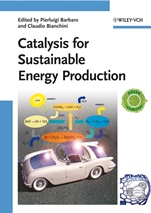
Catalysis for Sustainable Energy Production
ISBN 9783527320950
Autor: Pierluigi Barbaro, Claudio Bianchini
Wydawca: Wiley
Dostępność: 3-6 tygodni
Cena: 962,85 zł
Przed złożeniem zamówienia prosimy o kontakt mailowy celem potwierdzenia ceny.
ISBN13: |
9783527320950 |
ISBN10: |
3527320954 |
Autor: |
Pierluigi Barbaro, Claudio Bianchini |
Oprawa: |
Hardback |
Rok Wydania: |
2009-03-18 |
Ilość stron: |
474 |
Wymiary: |
247x180 |
Tematy: |
PN |
With the depletion of the world′s natural resources, the field of chemistry is moving towards other methods for the generation of sustainable energy. This book examines the various catalytic approaches to energy generation, covering everything from fuel cells to hydrogen storage and provides in–depth information on the principles behind an approach and the variations of them.
The authority behind this reference book is the IDECAT Networks of Excellence and it is clearly divided into four parts covering fuel cells, hydrogen and methane storage, hydrogen and hydrogen vectors production and industrial catalysis for sustainable energy.
Theoretical and practical chemistry is combined incorporating industrial, governmental and academic points of view.
An invaluable information source for a variety of chemists, engineers and libraries and anyone with an interest in the use of catalysis for energy production.
The world–renowned industrial chemist Professor Gabriele Centi provides the foreword to this lovely edition to any bookshelf.
Spis treści:
Foreword.
Epilogue.
List of Contributors.
Part One: Fuel Cells.
1 The Direct Ethanol Fuel Cell: a Challenge to Convert Bioethanol Cleanly into Electric Energy. (Claude Lamy, Christophe Coutanceau, and Jean–Michel Leger).
1.1 Introduction.
1.2 Principles and Different Kinds of Fuel Cells.
1.3 Low–temperature Fuel Cells (PEMFCs and DAFCs).
1.4 Solid Alkaline Membrane Fuel Cell (SAMFC).
1.5 Conclusion.
References.
2 Performance of Direct Methanol Fuel Cells for Portable Power Applications (Xiaoming Ren).
2.1 Introduction.
2.2 Experimental.
2.3 Results and Discussion.
2.4 Conclusions.
References.
3 Selective Synthesis of Carbon Nanofibers as Better Catalyst Supports for Low–temperature Fuel Cells (Seong–Hwa Hong, Mun–Suk Jun, Isao Mo
chida, and Seong–Ho Yoon).
3.1 Introduction.
3.2 Preparation and Characterization of CNFs and Fuel Cell Catalysts.
3.3 Results.
3.4 Discussion.
References.
4 Towards Full Electric Mobility: Energy and Power Systems (Pietro Perlo, Marco Ottella, Nicola Corino, Francesco Pitzalis, Mauro Brignone, Daniele Zanello, Gianfranco Innocenti, Luca Belforte, and Alessandro Ziggiotti).
4.1 Introduction.
4.2 The Current Grand Challenges.
4.3 Power–Energy Needed in Vehicles.
4.4 A Great New Opportunity for True Zero Emissions.
4.5 Advanced Systems Integration.
4.6 Conclusion and Perspectives.
References.
Part Two: Hydrogen Storage.
5 Materials for Hydrogen Storage (Andreas Züttel).
5.1 The Primitive Phase Diagram of Hydrogen.
5.2 Hydrogen Storage Methods.
5.3 Pressurized Hydrogen.
5.4 Liquid Hydrogen.
5.5 Physisorption.
5.6 Metal Hydrides.
5.7 Complex Hydrides.
5.8 Chemical Hydrides (Hydrolysis).
5.9 New Hydrogen Storage Materials.
References.
Part Three: H2 and Hydrogen Vectors Production.
6 Catalyst Design for Reforming of Oxygenates (Loredana De Rogatis and Paolo Fornasiero).
6.1 Introduction.
6.2 Catalyst Design.
6.3 Reforming Reactions: Process Principles.
6.4 Key Examples of Oxygenate Reforming Reactions.
6.5 Conclusions.
6.6 List of Abbreviations.
References.
7 Electrocatalysis in Water Electrolysis (Edoardo Guerrini and Sergio Trasatti).
7.1 Introduction.
7.2 Thermodynamic Considerations.
7.3 Kinetic Considerations.
7.4 The Hydrogen Evolution Reaction.
7.5 The Oxygen Evolution Reaction.
7.6 Electrocatalysts: State–of–the–Art.
7.7 Water Electrolysis: State–of–the–Art.
7.8 Beyond Oxygen Evolution.
References.
8 Energy from Organic Waste: Influence of the Process Parameters o
n the Production of Methane and Hydrogen (Michele Aresta and Angela Dibenedetto).
8.1 Introduction.
8.2 Experimental.
8.3 Results and Discussion.
References.
9 Natural Gas Autothermal Reforming: an Effective Option for a Sustainable Distributed Production of Hydrogen (Paolo Ciambelli, Vincenzo Palma, Emma Palo, and Gaetano Iaquaniello).
9.1 Introduction.
9.2 Autothermal Reforming: from Chemistry to Engineering.
9.3 Thermodynamic Analysis.
9.4 A Case Study.
9.5 Economic Aspects.
9.6 Conclusions and Perspectives.
References.
Part Four: Industrial Catalysis for Sustainable Energy.
10 The Use of Catalysis in the Production of High–quality Biodiesel (Nicoletta Ravasio, Federica Zaccheria, and Rinaldo Psaro).
10.1 Introduction.
10.2 Heterogeneous Transesterification and Esterification Catalysts.
10.3 Selective Hydrogenation in Biodiesel Production.
10.4 Conclusions and Perspectives.
References.
11 Photovoltaics – Current Trends and Vision for the Future (Francesca Ferrazza).
11.1 Introduction.
11.2 Market: Present Situation and Challenges Ahead.
11.3 Crystalline Silicon Technology.
11.4 Thin Films.
11.5 Other Technology–related Aspects.
11.6 Advanced and Emerging Technologies.
11.7 System Aspects.
11.8 Conclusions.
References.
12 Catalytic Combustion for the Production of Energy (Gianpiero Groppi, Cinzia Cristiani, Alessandra Beretta, and Pio Forzatti).
12.1 Introduction.
12.2 Lean Catalytic Combustion for Gas Turbines.
12.3 Fuel–rich Catalytic Combustion.
12.4 Oxy–fuel Combustion.
12.5 Microcombustors.
12.6 Catalytic Materials.
12.7 Conclusions.
References.
13 Catalytic Removal of NOx Under Lean Conditions from Stationary and Mobile Sources (Pio Forzatti, Luca Lietti, and Enrico Tronc
oni).
13.1 Introduction.
13.2 Selective Catalytic Reduction.
13.3 NOx Storage Reduction.
13.4 Open Issues and Future Opportunities.
References.
Index.
Nota biograficzna:
Pierluigi Barbaro obtained his PhD from the University of Florence and completed his Post–Doctoral work at ETH in Zurich, later becoming a permanent Researcher at the Istituto di Chimica dei Composti Organo Metallici in Florence. Since 2005 he has been a member of the Governing Board of the VI° FP Network of Excellence IDECAT "Integrated Design of Catalytic Nanomaterials for a Sustainable Production". His main research interest is in the field of homogeneous, heterogeneous and asymmetric catalysis, in particular nanostructured catalysts for application in sustainable production processes. He is the author of more than 60 research papers and 6 patents. In 1991 he was awarded the National award "Federchimica".
Claudio Bianchini is Director of the Institute of Chemistry of Organometallics of the Italian National Research Council. He is author of approximately 430 publications and 43 patents. His research fields include catalysis, polymerization, electrocatalysts and membranes for fuel cells, hydrogen production and storage, asymmetric synthesis, solid–gas organometallic reactions, (high–pressure) IR and NMR spectroscopy. He is the recipient of several awards including the G.I.C.O. Senior Award, the Arthur D. Little Award, the Seaborg Memorial Lecture and the National award "Federchimica".
Okładka tylna:
With the depletion of the world′s natural resources, the field of chemistry is moving towards other methods for the generation of sustainable energy. This book examines the various catalytic approaches to energy generation, covering everything from fuel cells to hydrogen storage and provides in–depth information on the principles behind an approach and the variation
Koszyk
Książek w koszyku: 0 szt.
Wartość zakupów: 0,00 zł
Informacje


Kontakt
Gambit
Centrum Oprogramowania
i Szkoleń Sp. z o.o.
Al. Pokoju 29b/22-24
31-564 Kraków
Siedziba Księgarni
ul. Kordylewskiego 1
31-542 Kraków
+48 12 410 5991
+48 12 410 5987
+48 12 410 5989
Subskrypcje
Administratorem danych osobowych jest firma Gambit COiS Sp. z o.o. Na podany adres będzie wysyłany wyłącznie biuletyn informacyjny.
Autoryzacja płatności

Informacje na temat autoryzacji płatności poprzez PayU.

© Copyright 2012: GAMBIT COiS Sp. z o.o. Wszelkie prawa zastrzeżone.
Projekt i wykonanie: Alchemia Studio Reklamy