


Wydawcy
Katalog tematyczny
- Archeologia (109)
- Ekonomia, finanse, business (13704)
- Filozofia (1445)
- Historia (3040)
- Języki i językoznawstwo (2356)
- Lifestyle, hobby i rozrywka (475)
- Medycyna (9704)
- Nauki humanistyczne (4)
- Nauki o Ziemi i środowisku (2638)
- Nauki ścisłe (20412)
- Astronomia (294)
- Biologia (5119)
- Chemia (6540)
- Chemia analityczna (361)
- Chemia fizyczna (346)
- Chemia nieorganiczna (137)
- Chemia organiczna (535)
- Krystalografia (27)
- Minerologia (46)
- Fizyka (3309)
- Matematyka (4574)
- Nauki ścisłe, ogólnie (503)
- Nauki społeczne (8486)
- Nauki techniczne (13450)
- Prawo (1696)
- Publikacje informacyjne i interdyscyplinarne (1288)
- Religia i wierzenia (917)
- Technika komputerowa (4067)
- Zdrowie, relacje międzyludzkie i rozwój osobisty (657)





Informacje szczegółowe o książce
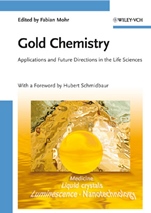
Gold Chemistry: Applications and Future Directions in the Life Sciences
ISBN 9783527320868
Autor: Fabian Mohr, Hubert Schmidbaur
Wydawca: Wiley
Dostępność: 3-6 tygodni
Cena: 962,85 zł
Przed złożeniem zamówienia prosimy o kontakt mailowy celem potwierdzenia ceny.
ISBN13: |
9783527320868 |
ISBN10: |
3527320865 |
Autor: |
Fabian Mohr, Hubert Schmidbaur |
Oprawa: |
Hardback |
Rok Wydania: |
2009-03-18 |
Ilość stron: |
424 |
Wymiary: |
248x180 |
Tematy: |
PN |
Gold has been known to humanity for over three millennia, yet the chemistry of this element has only been studied seriously in the last thirty years. Nonetheless, enormous advances have been made over this period and gold compounds now find applications in medicine, technology and, more recently, catalysis.
Written by world–class authors, this guide to covers hot topics in gold chemistry, highlighting new and current trends as well as future directions. It is comprehensive in its scope, ranging from supramolecular assemblies to sensors and medicinal applications. The result is an invaluable work for both organic and inorganic chemists working in academia and industry, as well as material scientists.
Spis treści:
Preface.
Foreword.
List of Contributors.
1 Gold(I) Nitrogen Chemistry (Hanan E. Abdou, Ahmed A. Mohamed, and John P. Fackler Jr).
1.1 Introduction.
1.2 Tetra–, Tri–, and Dinuclear Gold(I) Amidinate Complexes.
1.3 Oxidative–Addition Reactions to the Dinuclear Gold(I) Amidinate Complex.
1.4 Mercury(II) Cyanide Coordination Polymer.
1.5 Formation of Mixed–Ligand Tetranuclear Gold(I) Nitrogen Clusters.
1.6 Solvent Influences on Oxidation and Nuclearity of Gold Guanidinate Derivatives.
1.7 Cyclic Trinuclear Gold(I) Nitrogen Compounds.
1.8 Oxidative–Addition Reactions to the Cyclic Trinuclear Gold(I)–Nitrogen Compounds.
1.9 Supramolecular Entities of Trinuclear Gold(I) Complexes Sandwiching Small Organic Acids.
1.10 Gold(I) and Silver(I) Mixed–Metal Trinuclear Complexes.
1.11 CO Oxidation Over Au/TiO2 Prepared from Gold Nitrogen Complexes.
1.12 Miscellaneous Observations.
References.
2 Chemistry of Gold(III) Complexes with Nitrogen and Oxygen Ligands (Maria Agostina Cinellu).
2.1 Introduction.
2.2 Nitrogen Donor Ligands.
2.3 Oxygen Donor Ligands.
References.
3 Pent
afluorophenyl Gold Complexes (A. Luquin, E. Cerrada, and M. Laguna).
3.1 Introduction.
3.2 Pentafluorophenylgold(I) Derivatives.
3.3 Pentafluorophenylgold(III) Derivatives.
3.4 Gold Clusters.
3.5 Pentafluorophenylgold(II) Derivatives.
3.6 Outlook and Future Trends.
References.
4 Theoretical Chemistry of Gold – From Atoms to Molecules, Clusters, Surfaces and the Solid State (Peter Schwerdtfeger and Matthias Lein).
4.1 Introduction.
4.2 The Origin of the Relativistic Maximum at Gold Along the 6th Period of Elements in the Periodic Table.
4.3 Calculations on Atomic Gold.
4.4 Relativistic Methods for Molecular Calculations and Diatomic Gold Compounds.
4.5 Calculations on Inorganic and Organometallic Gold Compounds.
4.6 Calculations on Gold Clusters.
4.7 Calculations on Infinite Systems: from Surfaces to the Solid State of Gold.
4.8 Summary.
References.
5 Luminescence and Photophysics of Gold Complexes (Chi–Ming Che and Siu–Wai Lai).
5.1 Introduction.
5.2 Spectroscopic Properties of Gold(I) Complexes.
5.3 Spectroscopic Properties of Gold(III) Complexes.
5.4 Photoinduced Electron Transfer Reactions of Gold Complexes.
5.5 Concluding Remarks.
References.
6 Gold Compounds and Their Applications in Medicine (Elizabeth A. Pacheco, Edward R.T. Tiekink, and Michael W. Whitehouse).
6.1 Introduction.
6.2 The Aqueous Chemistry of Gold Compounds.
6.3 Medicinally Important Gold Complexes, Their Analogs and Reactions.
6.4 Gold–Protein Reactions and Complexes.
6.5 Physiological and Cellular Biochemistry.
6.6 Conclusions.
References.
7 Nanoscience of Gold and Gold Surfaces (M.B Cortie and A. McDonagh).
7.1 Introduction.
7.2 Forms of Gold at the Nanoscale.
7.3 Onset of New Phenomena.
7.4 Surface Chemistry of Gold.
7.5 Conclusions.
References.
8
Liquid Crystals Based on Gold Compounds (Silverio Coco and Pablo Espinet).
8.1 Introduction.
8.2 Pyridine Complexes.
8.3 Dithiobenzoate Complexes.
8.4 Isocyanide Complexes.
8.5 Carbene Complexes.
8.6 Complexes Containing Pyrazole–Type Ligands.
8.7 Ionic Imidazolium Derivatives.
8.8 Liquid Crystalline Gold Nanoparticles.
8.9 Conclusions.
References.
Index.
Nota biograficzna:
Fabian Mohr is assistant professor ("Juniorprofessor") at the University of Wuppertal in Germany. He obtained his chemistry honours degree from RMIT University in Melbourne, Australia, where he also completed his PhD on an Australian Government Scholarship under the guidance of Suresh Bhargava and Martin Bennett from the Australian National University. Postdoctoral appointments led him to work with Richard Puddephatt (University of Western Ontario, London, Canada) and Andrei Vedernikov (University of Maryland, College Park, USA). In 2004 he accepted a research grant from the Spanish Government to work with Mariano Laguna in Zaragoza. Upon completion of his contract in Zaragoza, he was appointed visiting professor at the University of Burgos before he took up his current position in Wuppertal in October 2006. In October 2007 Fabian spent two months as visiting professor at the University of Vienna in the group of Bernhard Keppler. Fabian has authored more than 35 papers and reviews, most of them on various aspects of gold chemistry. Outside the laboratory, Fabian is an accomplished harpsichordist and organist, specializing in historic performance practices and performing regularly both as soloist and with ensembles.
Okładka tylna:
Gold has been known to humanity for over three millennia, yet the chemistry of this element has only been studied seriously in the last thirty years. Nonetheless, enormous advances have been made over this period and gold compounds now find applications in medicine, te
chnology and, more recently, catalysis.
Written by world–class authors, this guide to covers hot topics in gold chemistry, highlighting new and current trends as well as future directions. It is comprehensive in its scope, ranging from supramolecular assemblies to sensors and medicinal applications. The result is an invaluable work for both organic and inorganic chemists working in academia and industry, as well as material scientists.
Koszyk
Książek w koszyku: 0 szt.
Wartość zakupów: 0,00 zł
Informacje


Kontakt
Gambit
Centrum Oprogramowania
i Szkoleń Sp. z o.o.
Al. Pokoju 29b/22-24
31-564 Kraków
Siedziba Księgarni
ul. Kordylewskiego 1
31-542 Kraków
+48 12 410 5991
+48 12 410 5987
+48 12 410 5989
Subskrypcje
Administratorem danych osobowych jest firma Gambit COiS Sp. z o.o. Na podany adres będzie wysyłany wyłącznie biuletyn informacyjny.
Autoryzacja płatności

Informacje na temat autoryzacji płatności poprzez PayU.

© Copyright 2012: GAMBIT COiS Sp. z o.o. Wszelkie prawa zastrzeżone.
Projekt i wykonanie: Alchemia Studio Reklamy