


Wydawcy
Katalog tematyczny
- Archeologia (109)
- Ekonomia, finanse, business (13704)
- Filozofia (1445)
- Historia (3040)
- Języki i językoznawstwo (2356)
- Lifestyle, hobby i rozrywka (475)
- Medycyna (9704)
- Nauki humanistyczne (4)
- Nauki o Ziemi i środowisku (2638)
- Nauki ścisłe (20412)
- Astronomia (294)
- Biologia (5119)
- Chemia (6540)
- Chemia analityczna (361)
- Chemia fizyczna (346)
- Chemia nieorganiczna (137)
- Chemia organiczna (535)
- Krystalografia (27)
- Minerologia (46)
- Fizyka (3309)
- Matematyka (4574)
- Nauki ścisłe, ogólnie (503)
- Nauki społeczne (8486)
- Nauki techniczne (13450)
- Prawo (1696)
- Publikacje informacyjne i interdyscyplinarne (1288)
- Religia i wierzenia (917)
- Technika komputerowa (4067)
- Zdrowie, relacje międzyludzkie i rozwój osobisty (657)





Informacje szczegółowe o książce
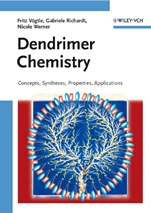
Dendrimer Chemistry: Concepts, Syntheses, Properties, Applications
ISBN 9783527320660
Autor: Fritz Vögtle, Gabriele Richardt, Nicole Werner, Anthony J. Rackstraw
Wydawca: Wiley
Dostępność: 3-6 tygodni
Cena: 557,55 zł
Przed złożeniem zamówienia prosimy o kontakt mailowy celem potwierdzenia ceny.
ISBN13: |
9783527320660 |
ISBN10: |
3527320660 |
Autor: |
Fritz Vögtle, Gabriele Richardt, Nicole Werner, Anthony J. Rackstraw |
Oprawa: |
Paperback |
Rok Wydania: |
2009-02-18 |
Ilość stron: |
354 |
Wymiary: |
240x172 |
Tematy: |
PN |
Written by internationally acclaimed authors, this textbook contains everything you need to know about this versatile class of compounds. Starting with a historical overview, definitions, nomenclature and other fundamentals, it goes on to look at characterization, and properties of dendrimers. While the focus is on synthesis and applications, the book also contains chapters on analytics and special applications in such fields as physics, medicine and technology.
Essential reading for organic, inorganic, Supramolecular and polymer chemists, undergraduate and graduate students, as well as for students and lecturers in chemistry and industrial chemists.
From the contents:
∗Historical overview
∗Definition and classification of dendritic molecules
∗Synthesis of dendritic molecules
∗Functional dendrimers
∗Special chemical reactions: host–guest interactions, molecular imprinting, metathesis, etc.
∗Photophysical and other properties
∗Characterization and analysis
∗Applications: in catalysis, (opto)electronics, sensor technology, medical diagnostics and therapy (carrier system), nanotechnology etc.
Spis treści:
Preface.
1 Introduction.
1.1 Historical – Cascade molecules and dendrimers.
1.2 Dendritic architectures.
1.3 Perfection, defects, dispersity.
1.4 Definition and classification of dendritic molecules.
1.5 Nomenclature of dendritic molecules.
1.5.1 Newkome nomenclature.
1.5.2 Cascadane nomenclature.
Bibliography and Notes for Chapter 1 "Introduction".
2 Synthetic methods for dendritic molecules.
2.1 Divergent synthesis.
2.2 Convergent synthesis.
2.3 Recent synthetic methods.
2.3.1 Orthogonal synthesis.
2.3.2 Double–stage convergent method.
2.3.3 Double–expone
ntial method.
2.3.4 Hypermonomer method.
2.3.5 Click chemistry.
2.4 Solid phase synthesis.
2.5 Coordination–chemical synthesis.
2.5.1 Metal complex as core unit.
2.5.2 Metal complexes as branching unit.
2.6 Supramolecular synthesis.
2.7 Hyperbranched polymers.
2.8 Dendronised linear polymers.
2.8.1 Polymer–analogous method.
2.8.2 Macromonomer method.
2.9 Dendro–Isomers.
Bibliography and Notes for Chapter 2.
"Synthetic methods for dendritic molecules".
3 Functional dendrimers.
3.1 Monofunctional dendrimers.
3.1.1 Functional core.
3.1.2 Functional periphery.
3.1.2.1 Functionalisation of terminal groups.
3.1.2.2 Introduction of peripheral groups prior to dendrimer growth.
3.1.3 Functional units in the dendrimer scaffold.
3.1.3.1 Modification prior to dendrimer growth.
3.1.3.2 Internal modification on conclusion of dendrimer growth.
3.2 Multifunctional dendrimers.
3.2.1 Bifunctionalised molecular periphery.
3.2.2 Two different functional units in different parts of the molecule.
3.2.3 More than two different functional units.
3.2.4 Overview of functional dendrimers and their synthesis.
Bibliography and Notes for Chapter 3 "Functional dendrimers".
4 Types of dendrimers and their syntheses.
4.1 Achiral dendrimers.
4.1.1 POPAM.
4.1.2 PAMAM.
4.1.3 POMAM.
4.1.4 Polylysine dendrimers.
4.1.5 Dendritic hydrocarbons.
4.1.5.1 Condensed arene components – Iptyceness.
4.1.5.2 Dendrimers from arene and multiply bonded building blocks.
4.1.5.3 Stilbenoid dendrimers.
4.1.5.4 Hyperbranched polybenzenes.
4.1.6 Carbon/oxygen–based (and Fréchet
) dendrimers.
4.1.6.1 Polyether dendrimers.
4.1.6.2 Polyester dendrimers.
4.1.6.3 Carbohydrate dendrimers (glycodendrimers).
4.1.7 Porphyrin–based dendrimers.
4.1.8 Ionic dendrimers.
4.1.8.1 Polyanionic dendrimers.
4.1.8.2 Polycationic dendrimers.
4.1.9 Silicon–based dendrimers.
4.1.9.1 Silane dendrimers.
4.1.9.2 Carbosilane dendrimers.
4.1.9.3 Carbosiloxane dendrimers.
4.1.9.4 Siloxane dendrimers.
4.1.9.5 Hyperbranched silicon–based polymers.
4.1.10 Phosphorus–based dendrimers.
4.1.11 Metallodendrimers (and Newkome dendrimers).
Bibliography and Notes for Section 4.1 "Achiral dendrimers".
4.2 Chiral dendrimers.
4.2.1 Classification of chiral dendrimers.
4.2.2 Studies on the chirality of dendritic molecules.
4.2.2.1 Chiroptical studies.
4.2.2.2 Possible applications of chiral dendrimers.
4.2.3 Dendrimers with chiral core and achiral branching scaffold.
4.2.3.1 Chiroptical studies on dendrimers with chiral cores.
4.2.3.2 Possible applications of chiral–core dendrimers.
4.2.4 Dendrimers with chiral building blocks as spacers or branching units.
4.2.4.1 Chiroptical studies on dendrimers with chiral dendrimer scaffold.
4.2.4.2 Possible applications of dendrimers with chiral branching scaffold.
4.2.5 Chirality in the periphery.
4.2.5.1 Chiroptical studies on dendrimers with peripheral chiral units.
4.2.5.2 Possible applications of dendrimers with peripheral chiral units.
4.2.6 Chiral dendrimers for asymmetric catalysis.
4.2.7 Interpretation of the chirality of dendritic molecules.
Bibliography and Notes for Section 4.2 "Chiral Dendrimers".
5 Photophysical properties of dendritic molecules.
5
.1 Luminescence and energy transfer.
5.1.1 Luminescence.
5.1.2 Energy transfer.
5.1.2.1 Dexter mechanism: Energy transfer by radiative emission.
5.1.2.2 Förster mechanism: Energy transfer by dipole–dipole interactions.
5.1.2.3 Examples from the field of dendritic molecules.
5.2 Antenna effect and photoisomerisation of dendrimers.
5.2.1 Antenna effect.
5.2.2 Photoisomerisation.
Bibliography and Notes for Chapter 5.
"Photophysical properties of dendritic molecules".
6 (Special) chemical reactions of dendritic molecules.
6.1 Covalent chemical reactions.
6.1.1 Metathesis.
6.1.2 Molecular imprinting.
6.1.3 Covalent introduction of functionalities in the interior of dendritic molecules.
6.2 Supramolecular (host/guest) interactions.
6.2.1 Non–covalent modification of a dendrimer periphery.
6.2.2 Self–assembly of dendrimers.
6.2.3 Inclusion of guest species in dendritic host molecules.
6.2.3.1 Dendrimers with multiple receptor units.
6.2.3.2 Guest inclusion by steric compression.
6.2.3.3 Guest inclusion by dynamic processes (diffusion).
6.2.4 Self–assembly of dendrimers.
6.2.5 Dendritic stopper groups (in rotaxanes).
6.3 Dendritic effects.
6.3.1 Dendritic effect on inclusion of guests.
6.3.2 Dendritic effects in catalysis.
6.3.2.1 Metal–containing dendritic catalysts.
6.3.2.2 Metal–free dendritic catalysts.
6.3.3 Dendritic effects on electrochemical properties.
6.3.3.1 Metal–free dendritic catalysts.
6.3.3.2 Redox gradients.
6.3.3.3 Redox sensors.
6.3.3.4 Redox potential and redox transfer kinetics.
6.3.3.5 Charge–separation processes.
6.3.4 Summary of the dendritic e
Koszyk
Książek w koszyku: 0 szt.
Wartość zakupów: 0,00 zł
Informacje


Kontakt
Gambit
Centrum Oprogramowania
i Szkoleń Sp. z o.o.
Al. Pokoju 29b/22-24
31-564 Kraków
Siedziba Księgarni
ul. Kordylewskiego 1
31-542 Kraków
+48 12 410 5991
+48 12 410 5987
+48 12 410 5989
Subskrypcje
Administratorem danych osobowych jest firma Gambit COiS Sp. z o.o. Na podany adres będzie wysyłany wyłącznie biuletyn informacyjny.
Autoryzacja płatności

Informacje na temat autoryzacji płatności poprzez PayU.

© Copyright 2012: GAMBIT COiS Sp. z o.o. Wszelkie prawa zastrzeżone.
Projekt i wykonanie: Alchemia Studio Reklamy