


Wydawcy
Katalog tematyczny
- Archeologia (109)
- Ekonomia, finanse, business (13704)
- Filozofia (1445)
- Historia (3040)
- Języki i językoznawstwo (2356)
- Lifestyle, hobby i rozrywka (475)
- Medycyna (9704)
- Nauki humanistyczne (4)
- Nauki o Ziemi i środowisku (2638)
- Nauki ścisłe (20412)
- Astronomia (294)
- Biologia (5119)
- Chemia (6540)
- Chemia analityczna (361)
- Chemia fizyczna (346)
- Chemia nieorganiczna (137)
- Chemia organiczna (535)
- Krystalografia (27)
- Minerologia (46)
- Fizyka (3309)
- Matematyka (4574)
- Nauki ścisłe, ogólnie (503)
- Nauki społeczne (8486)
- Nauki techniczne (13450)
- Prawo (1696)
- Publikacje informacyjne i interdyscyplinarne (1288)
- Religia i wierzenia (917)
- Technika komputerowa (4067)
- Zdrowie, relacje międzyludzkie i rozwój osobisty (657)




Informacje szczegółowe o książce
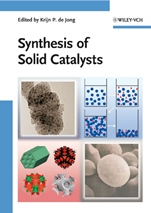
Synthesis of Solid Catalysts
ISBN 9783527320400
Autor: Krijn P. de Jong
Wydawca: Wiley
Dostępność: 3-6 tygodni
Cena: 882,00 zł
Przed złożeniem zamówienia prosimy o kontakt mailowy celem potwierdzenia ceny.
ISBN13: |
9783527320400 |
ISBN10: |
3527320407 |
Autor: |
Krijn P. de Jong |
Oprawa: |
Hardback |
Rok Wydania: |
2009-05-13 |
Ilość stron: |
422 |
Wymiary: |
244x181 |
Tematy: |
PN |
This practical book combines recent progress with a discussion of the general aspects of catalyst preparation. The first part deals with the basic principles of solid catalyst preparation, explaining the main aspects of sol–gel chemistry and interfacial chemistry, followed by such techniques as co–precipitation and immobilization. New tools for catalyst preparation research, including microspectroscopy and high–throughput experimentation, are also taken into account. The second part heightens the practical relevance by providing six case studies on such topics as the preparation of zeolites, hydrotreating catalysts, methanol catalysts and gold catalysts.
Spis treści:
Preface.
List of Contributors.
Abbreviations.
Part I Basic Principles and Tools.
1 General Aspects (Krijn P. de Jong).
1.1 Importance of Solid Catalysts.
1.2 Development of Solid Catalysts.
1.3 Development of Solid Catalyst Synthesis.
1.4 About This Book.
References.
2 Interfacial Chemistry (Alexis Lycourghiotis).
2.1 Introduction.
2.2 Interfacial and Bulk Deposition.
2.3 The Surface of the Oxidic Supports: Surface Ionization Models.
2.4 The Size and the Structure of the Interface.
2.5 The Arrangement of the Ions Inside the Interface and the Deposition Modes.
2.6 Determining the Mode of Interfacial Deposition and the Surface Speciation/Structure of the Deposited Precursor Species.
2.7 A Case Study: The Deposition of Co(H2O)6²+ Aqua Complex on the Titania Surface.
References.
3 Electrostatic Adsorption (John R. Regalbuto).
3.1 Introduction.
3.2 Purely Electrostatic Adsorption.
3.3 Electrostatic Adsorption with Metal Respeciation.
3.4 Electrostatic Adsorption and Ion Exchange.
3.5 Electrostatic Adsorption and Deposition–Precipitation.
3.6 Electrostatic Adsorption and Surface Reaction.
3.7 Electrostatics and Dissolution, Reaction, and Redeposition.
3.8 Electrostatics–Based Design.
3.9 Summary.
References.
4 Impregnation and Drying (Eric Marceau, Xavier Carrier, and Michel Che).
4.1 Introduction.
4.2 Impregnation.
4.3 Drying.
4.4 The Chemistry.
4.5 Impregnation and Drying of an MoOx/Al2O3 Catalyst.
4.6 Conclusions.
References.
5 Sol–Gel Processing (Miron V. Landau).
5.1 Introduction.
5.2 Physicochemical Basis and Principles of Sol–Gel Processing.
5.3 Application of Sol–Gel Processing for the Preparation of Solid Catalysts.
5.4 Summary.
References.
6 Deposition Precipitation (Krijn P. de Jong).
6.1 Introduction.
6.2 Theory and Practice.
6.3 Mechanistic Studies.
6.4 Case Studies.
6.5 Summary, Conclusions, and Outlook.
Acknowledgments.
References.
7 Coprecipitation (Martin Lok).
7.1 Introduction.
7.2 Basic Principles of Precipitation and Nucleation.
7.3 Raw Materials.
7.4 Precipitation Conditions.
7.5 Process Operation.
7.6 Examples.
7.7 New Developments in Process Monitoring.
Acknowledgments.
References.
8 Clusters and Immobilization (Sophie Hermans).
8.1 Introduction.
8.2 The Surface of Common Supports.
8.3 Clusters in Catalysis.
8.4 Reaction with Unmodified Surface.
8.5 ‘‘Ship–in–a–Bottle’’ Synthesis.
8.6 Tethering.
8.7 Concluding Remarks.
References.
9 Shaping of Solid Catalysts (Bettina Kraushaar–Czarnetzki and Steffen Peter Müller).
9.1 Objectives of Catalyst Shaping.
9.2 Fixed–Bed Reactors – Particle Beds.
9.3 Fixed–Bed Reactors – Monoliths.
9.4 Catalysts for Moving–Bed Reactors.
9.5 Catalysts for Fluidized Beds.
References.
10 Space and Time–Resolved Spectroscopy of Catalyst Bodies (Bert M. Weckhuysen).
10.1 Introduction.
10.2 Space– and Time–Resolved Methods Applied to Catalyst Bodies.
10.3 Case Studies.
10.4 Future Prospects.
Acknowledgments.
References.
11 High–Throughput Experimentation (Uwe Rodemerck and David Linke).
11.1 Introduction.
11.2 Synthesis Strategies.
11.3 Catalyst Libraries for Primary Screening.
11.4 Catalyst Libraries for Secondary Screening.
11.5 Catalyst Libraries for Special Reactor Types.
11.6 An Industrial Point of View.
11.7 Conclusions.
References.
Part II Case Studies.
12 Concepts for Preparation of Zeolite–Based Catalysts (Metin Bulut and Pierre A. Jacobs).
12.1 Introduction and Scope.
12.2 Zeolite Effects in Catalysis.
12.3 Zeolitization.
References.
Further Reading.
13 Ordered Mesoporous Materials (Ying Wan and Dongyuan Zhao).
13.1 Introduction.
13.2 Mesoporous Silica.
13.3 Organic Group Functionalized Mesoporous Silicates.
13.4 Metal–Substituted Mesoporous Silica Molecular Sieves.
13.5 Carbon.
13.6 Nonsiliceous Oxides.
13.7 Nonoxides.
13.8 Summary and Remarks.
Acknowledgments.
References.
14 Hydrotreating Catalysts (Sonja Eijs
bouts).
14.1 Introduction.
14.2 Typical Hydrotreating Catalyst.
14.3 Support Preparation.
14.4 Metal Comixing/Coextrusion and Coprecipitation Routes.
14.5 Impregnation of Metals.
14.6 Presulfiding as the Last Stage in Hydrotreating Catalyst Preparation.
14.7 Industrial Process for the Production of the Oxidic Catalyst.
14.8 Summary.
References.
15 Methanol Catalysts (S. Schimpf and M. Muhler).
15.1 Binary Cu/ZnO Catalysts.
15.2 Coprecipitation.
15.3 The Role of Alumina in Ternary Catalysts.
15.4 Alternative Preparation Routes.
15.5 Conclusions.
Acknowledgment.
References.
16 Case Studies of Nobel–Metal Catalysts (Stuart Soled).
16.1 Introduction.
16.2 Optimization of Catalyst Preparation.
Acknowledgments.
References.
17 Gold Catalysts (Catherine Louis).
17.1 Introduction.
17.2 Preparations Involving Aqueous Solutions.
17.3 Preparations Involving Organometallic Precursors.
17.4 Deposition of Gold Nanoparticles.
17.5 One–Step Preparations.
17.6 Special Methods.
17.7 Conclusion.
References.
Index.
Nota biograficzna:
Since 1997 Krijn de Jong is Full Professor of Inorganic Chemistry and Catalysis at Utrecht University. Before that he worked in industry for 15 years. His current research interests are catalyst preparation, electron tomography (3D–TEM), diffusion and catalysis with zeolites and mesoporous materials, solid base catalysts, nanostructured carbon materials, Fischer–Tropsch catalysis and hydrogen storage. He has authored over 150 papers and is the inventor for more than 25 patents.
Okładka tylna:
This practical book combines recent progre
Koszyk
Książek w koszyku: 0 szt.
Wartość zakupów: 0,00 zł
Informacje


Kontakt
Gambit
Centrum Oprogramowania
i Szkoleń Sp. z o.o.
Al. Pokoju 29b/22-24
31-564 Kraków
Siedziba Księgarni
ul. Kordylewskiego 1
31-542 Kraków
+48 12 410 5991
+48 12 410 5987
+48 12 410 5989
Subskrypcje
Administratorem danych osobowych jest firma Gambit COiS Sp. z o.o. Na podany adres będzie wysyłany wyłącznie biuletyn informacyjny.
Autoryzacja płatności

Informacje na temat autoryzacji płatności poprzez PayU.

© Copyright 2012: GAMBIT COiS Sp. z o.o. Wszelkie prawa zastrzeżone.
Projekt i wykonanie: Alchemia Studio Reklamy