


Wydawcy
Katalog tematyczny
- Archeologia (109)
- Ekonomia, finanse, business (13704)
- Filozofia (1445)
- Historia (3040)
- Języki i językoznawstwo (2356)
- Lifestyle, hobby i rozrywka (475)
- Medycyna (9704)
- Nauki humanistyczne (4)
- Nauki o Ziemi i środowisku (2638)
- Nauki ścisłe (20412)
- Astronomia (294)
- Biologia (5119)
- Chemia (6540)
- Chemia analityczna (361)
- Chemia fizyczna (346)
- Chemia nieorganiczna (137)
- Chemia organiczna (535)
- Krystalografia (27)
- Minerologia (46)
- Fizyka (3309)
- Matematyka (4574)
- Nauki ścisłe, ogólnie (503)
- Nauki społeczne (8486)
- Nauki techniczne (13450)
- Prawo (1696)
- Publikacje informacyjne i interdyscyplinarne (1288)
- Religia i wierzenia (917)
- Technika komputerowa (4067)
- Zdrowie, relacje międzyludzkie i rozwój osobisty (657)





Informacje szczegółowe o książce
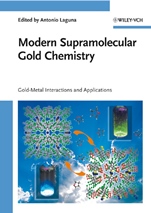
Modern Supramolecular Gold Chemistry: Gold–Metal Interactions and Applications
ISBN 9783527320295
Autor: Antonio Laguna
Wydawca: Wiley
Dostępność: 3-6 tygodni
Cena: 1 043,70 zł
Przed złożeniem zamówienia prosimy o kontakt mailowy celem potwierdzenia ceny.
ISBN13: |
9783527320295 |
ISBN10: |
3527320296 |
Autor: |
Antonio Laguna |
Oprawa: |
Hardback |
Rok Wydania: |
2008-10-08 |
Ilość stron: |
525 |
Wymiary: |
248x180 |
Tematy: |
PN |
Filling a gap in our systematic knowledge of gold, this book covers the fundamental aspects, while also considering new applications of gold compounds in catalysis, as nanoparticles, and their potential application as luminescent compounds.
Written by an eminent team of authors from academia, the book analyzes the current status of gold chemistry, its special characteristics, oxidation states and main type of complexes, before going on to look at the synthesis of supramolecular aggregates due to the formation of gold–gold, gold–metal interactions or other secondary bonds. Final sections deal with LEDs, solvoluminescent and electroluminescent materials, liquid crystals and catalysis.
While of interest to advanced chemistry students, this book is also useful for researchers interested in the chemistry of gold and its applications, as well as those involved in metal–metal interactions, heteronuclear chemistry or in the optical properties of coordination compounds.
Spis treści:
Preface.
Abbreviation.
List of Contributors.
1. The Chemistry of Gold (M. Concepción Gimeno).
1.1 Introduction.
1.2 Chemistry.
References.
2. Gold–Gold Interactions (Olga Crespo).
2.1 Introduction.
2.2 Gold(I)–Gold(I) Interactions.
2.3 Gold(I)–Gold(III) Interactions.
2.4 Concluding Remarks.
References.
3. Gold Nanomaterials (Eduardo J. Fernández and Miguel Monge).
3.1 Introduction.
3.2 Molecular Gold Clusters.
3.3 Large–Size Gold Clusters. The Au55 Case.
3.4 Gold Nanoparticles.
3.5 Properties and Applications of Gold Nanoparticles.
3.6 Concluding Remarks.
References.
4. Gold–Heterometal Interactions and Bonds.
4.1 Introduction.
4.2 Main Group Metal–Gold Compounds.
4.3 Transition Metal–Gold Compounds.
4.4 Concluding Remarks.
References.
5. Supramolecular Architecture
by Secondary Bonds (MarÃa Elena Olmos).
5.1 Introduction.
5.2 Supramolecular Gold Entities Built with Gold–Non–Metal Secondary Bonds.
5.3 Supramolecular Gold Entities Built with Non–Metal–Non–Metal Secondary Bonds.
5.4 Concluding Remarks.
References.
6. Luminescence of Supramolecular Gold–Containing Materials (José MarÃa López–de–Luzuriaga).
6.1 Introduction. Conditions for Luminescence in Gold Complexes.
6.2 Luminescent Supramolecular Gold Entities.
6.3 Luminescent Supramolecular Gold–Heterometal Entities.
6.4 Concluding Remarks.
References.
7. Liquid Crystals (Manuel BardajÃ).
7.1 Introduction.
7.2 Gold Mesogens.
7.3 Concluding Remarks.
References.
8. Catalysis (M. Carmen Blanco Ortiz).
8.1 Introduction.
8.2 Homogeneous Catalysis.
8.3 Heterogenerous Catalysis.
8.4 Concluding Remarks.
References.
9. Concluding Remarks (M. Concepción Gimeno and Antonio Laguna).
References.
Index.
Nota biograficzna:
Antonio Laguna was born in 1948 in Huesca, Spain. He studied Chemistry at the University of Zaragoza (summa cum laude) and completed his PhD degree with Professor Rafael Usón in 1973, working in the field of organometallic chemistry of gold(III). He completed a postdoctoral stay at the University of Bristol in 1975 under the supervision of Professor F. G. A. Stone, working in palladium and platinum chemistry. Since 1976 he has been at the University of Zaragoza as "Profesor Titular" or Professor of Inorganic Chemistry. He is author of more than 340 scientific papers on the organometallic and coordination chemistry of silver and gold. He has been invited to give talks at different International Conferences or Universities in America, Asia and Europe.
Okładka tylna:
Filling a gap in our systematic knowledge of g
old, this book covers the fundamental aspects, while also considering new applications of gold compounds in catalysis, as nanoparticles, and their potential application as luminescent compounds.
Written by an eminent team of authors from academia, the book analyzes the current status of gold chemistry, its special characteristics, oxidation states and main type of complexes, before going on to look at the synthesis of supramolecular aggregates due to the formation of gold–gold, gold–metal interactions or other secondary bonds. Final sections deal with LEDs, solvoluminescent and electroluminescent materials, liquid crystals and catalysis.
While of interest to advanced chemistry students, this book is also useful for researchers interested in the chemistry of gold and its applications, as well as those involved in metal–metal interactions, heteronuclear chemistry or in the optical properties of coordination compounds.
Koszyk
Książek w koszyku: 0 szt.
Wartość zakupów: 0,00 zł
Informacje


Kontakt
Gambit
Centrum Oprogramowania
i Szkoleń Sp. z o.o.
Al. Pokoju 29b/22-24
31-564 Kraków
Siedziba Księgarni
ul. Kordylewskiego 1
31-542 Kraków
+48 12 410 5991
+48 12 410 5987
+48 12 410 5989
Subskrypcje
Administratorem danych osobowych jest firma Gambit COiS Sp. z o.o. Na podany adres będzie wysyłany wyłącznie biuletyn informacyjny.
Autoryzacja płatności

Informacje na temat autoryzacji płatności poprzez PayU.

© Copyright 2012: GAMBIT COiS Sp. z o.o. Wszelkie prawa zastrzeżone.
Projekt i wykonanie: Alchemia Studio Reklamy