


Wydawcy
Katalog tematyczny
- Archeologia (109)
- Ekonomia, finanse, business (13704)
- Filozofia (1445)
- Historia (3040)
- Języki i językoznawstwo (2356)
- Lifestyle, hobby i rozrywka (475)
- Medycyna (9704)
- Nauki humanistyczne (4)
- Nauki o Ziemi i środowisku (2638)
- Nauki ścisłe (20412)
- Astronomia (294)
- Biologia (5119)
- Chemia (6540)
- Chemia analityczna (361)
- Chemia fizyczna (346)
- Chemia nieorganiczna (137)
- Chemia organiczna (535)
- Krystalografia (27)
- Minerologia (46)
- Fizyka (3309)
- Matematyka (4574)
- Nauki ścisłe, ogólnie (503)
- Nauki społeczne (8486)
- Nauki techniczne (13450)
- Prawo (1696)
- Publikacje informacyjne i interdyscyplinarne (1288)
- Religia i wierzenia (917)
- Technika komputerowa (4067)
- Zdrowie, relacje międzyludzkie i rozwój osobisty (657)





Informacje szczegółowe o książce
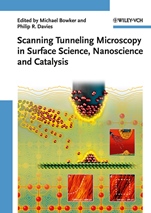
Scanning Tunneling Microscopy in Surface Science, Nanoscience, and Catalysis
ISBN 9783527319824
Autor: Michael Bowker, Philip R. Davies
Wydawca: Wiley
Dostępność: 3-6 tygodni
Cena: 746,55 zł
Przed złożeniem zamówienia prosimy o kontakt mailowy celem potwierdzenia ceny.
ISBN13: |
9783527319824 |
ISBN10: |
3527319824 |
Autor: |
Michael Bowker, Philip R. Davies |
Oprawa: |
Hardback |
Rok Wydania: |
2009-12-16 |
Ilość stron: |
258 |
Wymiary: |
248x179 |
Tematy: |
PN |
Since the scanning tunneling microscope allows scientists to visualize regions of high electron density and hence infer the position of individual atoms and molecules on the surface of a lattice, STM nowadays has numerous applications in nanoscience, catalysis and surface science.
Here, top international authors in the field of STM and surface science present first–class contributions on this hot topic, bringing the reader up to date with the latest developments in this rapidly advancing field. The focus is on the nanoscale, particularly in relation to catalysis, involving developments in our understanding of the nature of the surfaces of oxides and nanoparticulate materials, as well as adsorption, and includes in–situ studies of catalysis on such model materials.
Of great interest to practitioners of surface science, nanoscience,STM and catalysis.
Spis treści:
Preface
CHIRALITY AT METAL SURFACES
Introduction
Surface Chirality Following Molecular Adsorption
Chiral Amplification and Recognition
Conclusions
THE TEMPLATE TO NANOSTRUCTURED MODEL CATALYSTS
Introduction
Surfaces as Two–Dimensional Templates
STM Imaging of Oxide Films
STM Imaging of Metal Particles on Oxide Films
Template–Controlled Growth of Model Catalysts
Conclusions
IN SITU STM STUDIES OF MODEL CATALYSTS
Introduction
Instrumentation
Visualizing the Pathway of Catalytic Reactions
Metal Surfaces at High Pressures
In Situ Studies of Supported Model Catalysts
Outlook
THEORY OF SCANNING TUNNELING MICROSCOPY AND APPLICATIONS IN CATALYSIS
Catalysis and Scanning Tunneling Microscopy
Image Formation in an STM
Simulating Tunneling Currents
Simulating Chemical Reactivity
Catalytic Water Production
Outlook
CHARACTERIZATION AND MODIFICATION OF ELECTRODE SURFACES BY IN SITU STM
Introduction
In Situ STM: Principle, Technical Realization and Limitations
Imaging Simple–Cry
stal Surfaces of Catalytically Relevant Systems
Strategies for Nanostructuring Surfaces
STM IMAGING OF OXIDE NANOLAYER MODEL SYSTEMS
Introduction
Experimental Aspects and Technical Developments
Case Studies: Selected Oxide–Metal Systems
Synopsis and Outlook
SURFACE MOBILITY OF ATOMS AND MOLECULES STUDIED WITH HIGH–PRESSURE SCANNING TUNNELING MICROSCOPY
Introduction
Characterization of Surface Mobility of Molecules and Atoms
High–Pressure STM Technique and Instrumentation
Mobility and Flexibility of Catalyst Surfaces at High–Pressure
Adsorbate Mobility During Catalytic Reactions
Summary
POINT DEFECTS ON RUTILE TiO2(1 1 0): REACTIVITY, DYNAMICS, AND TUNABILITY
Introduction
Methods
Water Dissociation at Oxygen Vacancies and the Identification of Point Defects
O2 Dissociation at Oxygen Vacancies
Diffusion of Oxygen Vacancies and Surface Hydroxy
Tuning the Densities of Oxygen Vacancies and Surface Hydroxyl on TiO2(1 1 0)
Outlook
Nota biograficzna:
Michael Bowker has worked in surface science and catalysis for the last 25 years and has approximately 250 publications. He has worked in both industry (ICI) and academia. He leads the Heterogeneous Catalysis and Surface Science group in Cardiff, consisting of nine academic members of staff and 70 researchers. He founded the Wolfson Nanoscience Laboratory at Cardiff in 2006 and is Deputy Director of the recently established Cardiff Catalysis Institute. His research has focused on adsorption and surface reactivity, ranging from theo–retical studies of the effect of sintering, to selective oxidation catalysis, to studies of adsorption on well–defined surfaces. He has used STM for 20 years to study various aspects of surface structure and reactivity, pioneering the use of high temperature STM in this field. The group continues to focus on aspects of surface science and catalysis, now extending to nanoengineering an
d bio–surface interactions.
Philip R. Davies studied chemistry and mathematics in Southampton University. Undergraduate projects on surface electrochemistry with Prof. Laurence Peter and the modelling of adsorption at fractal surfaces with Professor Dominic Tildesley stopped him from becoming an accountant and led to his interest in surface processes. After graduating with double honours in 1986, he moved to Cardiff to study reactions at surfaces with surface–sensitive spectroscopy under the supervision of Prof. Wyn Roberts. After being awarded a PhD, he was appointed to a lectureship in the Department of Chemistry at Cardiff and continued to study surface reaction mechanisms and particularly the role of short lived intermediates. Since 1997, his interests have centred largely on the influence of local atomic structure on reaction mechanisms studied with scanning probe microscopies.
Okładka tylna:
Since the scanning tunneling microscope allows scientists to visualize regions of high electron density and hence infer the position of individual atoms and molecules on the surface of a lattice, STM nowadays has numerous applications in nanoscience, catalysis and surface science.
Here, top international authors in the field of STM and surface science present first–class contributions on this hot topic, bringing the reader up to date with the latest developments in this rapidly advancing field. The focus is on the nanoscale, particularly in relation to catalysis, involving developments in our understanding of the nature of the surfaces of oxides and nanoparticulate materials, as well as adsorption, and includes in–situ studies of catalysis on such model materials.
Of great interest to practitioners of surface science, nanoscience,STM and catalysis.
Koszyk
Książek w koszyku: 0 szt.
Wartość zakupów: 0,00 zł
Informacje


Kontakt
Gambit
Centrum Oprogramowania
i Szkoleń Sp. z o.o.
Al. Pokoju 29b/22-24
31-564 Kraków
Siedziba Księgarni
ul. Kordylewskiego 1
31-542 Kraków
+48 12 410 5991
+48 12 410 5987
+48 12 410 5989
Subskrypcje
Administratorem danych osobowych jest firma Gambit COiS Sp. z o.o. Na podany adres będzie wysyłany wyłącznie biuletyn informacyjny.
Autoryzacja płatności

Informacje na temat autoryzacji płatności poprzez PayU.

© Copyright 2012: GAMBIT COiS Sp. z o.o. Wszelkie prawa zastrzeżone.
Projekt i wykonanie: Alchemia Studio Reklamy