


Wydawcy
Katalog tematyczny
- Archeologia (109)
- Ekonomia, finanse, business (13704)
- Filozofia (1445)
- Historia (3040)
- Języki i językoznawstwo (2356)
- Lifestyle, hobby i rozrywka (475)
- Medycyna (9704)
- Nauki humanistyczne (4)
- Nauki o Ziemi i środowisku (2638)
- Nauki ścisłe (20412)
- Astronomia (294)
- Biologia (5119)
- Chemia (6540)
- Chemia analityczna (361)
- Chemia fizyczna (346)
- Chemia nieorganiczna (137)
- Chemia organiczna (535)
- Krystalografia (27)
- Minerologia (46)
- Fizyka (3309)
- Matematyka (4574)
- Nauki ścisłe, ogólnie (503)
- Nauki społeczne (8486)
- Nauki techniczne (13450)
- Prawo (1696)
- Publikacje informacyjne i interdyscyplinarne (1288)
- Religia i wierzenia (917)
- Technika komputerowa (4067)
- Zdrowie, relacje międzyludzkie i rozwój osobisty (657)





Informacje szczegółowe o książce
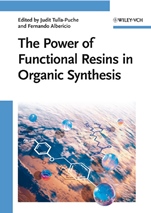
The Power of Functional Resins in Organic Synthesis
ISBN 9783527319367
Autor: Fernando Albericio, Judit Tulla–Puche
Wydawca: Wiley
Dostępność: 3-6 tygodni
Cena: 1 179,15 zł
Przed złożeniem zamówienia prosimy o kontakt mailowy celem potwierdzenia ceny.
ISBN13: |
9783527319367 |
ISBN10: |
3527319360 |
Autor: |
Fernando Albericio, Judit Tulla–Puche |
Oprawa: |
Hardback |
Rok Wydania: |
2008-10-08 |
Ilość stron: |
683 |
Wymiary: |
249x180 |
Tematy: |
PN |
Since work–up procedures in industry are both time– and energy consuming processes, the interest in solid phases for industrial purposes is very high. For this reason, fast and simple synthesis has become a major focus of research over the last few years. Applications of solid–phase synthesis range from biomolecules and small molecules to high–throughput separation purification, combinatorial high–throughput chemistry right up to nanotechnologies.
While many books cover solid phase synthesis and combinatorial synthesis, this is unique in exclusively covering the other aspects of solid–phase synthesis. As such, it contains everything you need to know – from supported reagents, to scavengers, resins, and the synthesis of natural products.
An invaluable companion for all chemists and biochemists working in university research and industry.
Spis treści:
Preface.
PART ONE: INTRODUCTION.
1. The (Classical Concept of) Solid Support (Fernando Albericio and Judit Tulla–Puche).
1.1 Introduction.
1.2 Linkers/Handles.
1.3 Solid Supports.
2. Molecularly Imprinted Polymers (Henrik Kempe and Maria Kempe).
2.1 Introduction.
2.2 The Concept of Molecular Imprinting.
2.3 Formats of Molecularly Imprinted Polymers.
2.4 Design of MIPs.
2.5 Characterization of Molecularly Imprinted Polymers.
2.6 Applications of Molecularly Imprinted Polymers.
2.7 Conclusions.
References.
3. Nanoparticles Functionalized with Bioactive Molecules: Biomedical Applications (Ivonne Olmedo, Ariel R. Guerrero, Eyleen Araya and Marcelo J. Kogan).
3.1 Introduction.
3.2 MNPs.
3.3 CNTs.
3.4 Organic Nanoparticles (ONPs).
3.5 Conclusions.
Acknowledgments.
List of Abbreviations.
References.
PART TWO: SOLID–SUPPOSED REAGENTS AND SCAVENGERS.
4. Oxidizing and Reducing Agents (Samuel Beligny and Jörg Rademann).
4.1 Introduction.
4.2 Considerations Concerning the Nature of the Solid Support Used for Polymer–Supported Redox Reagents.
4.3 Oxidizing Resins.
4.4 Polymer–Supported Reducing Reagents.
4.5 Conclusion.
References.
5. Base and Acid Reagents (Tadashi Aoyama).
5.1 Base Reagents.
5.2 Acid Reagents.
5.3 Applications.
5.4 Conclusions.
List of Abbreviations.
References.
6. Nucleophilic, Electrophilic and Radical Reactions (Magnus Johansson and Nina Kann).
6.1 Introduction.
6.2 Polymer–Supported Nucleophilic Reagents.
6.3 Reagents for Electrophilic Reactions.
6.4 Radical Reactions Using Supported Reagents.
6.5 Conclusions.
List of Abbreviations.
References.
7. Coupling and Introducing Building Block Reagents (Rafael Chinchilla and Carmen Nájera).
7.1 Introduction.
7.2 Supported Carbodiimide and Isourea Reagents.
7.3 Supported Aminium and Uronium Reagents.
7.4 Supported Phosphorous–Containing Reagents.
7.5 Other Supported Coupling Reagents.
7.6 Active Ester–Forming Polymeric Reagents.
7.7 Conclusions.
References.
8. Supposed/Tagged Scavengers for Facilitating High–Throughout Chemistry (Paul R. Hanson, Thiwanka Samarakoon and Alan Rolfe).
8.1 Introduction.
8.2 Supported/Tagged Reactive Functionalities for the Sequestration of Nucleophiles (Nucleophile/Electrophilic Scavengers).
8.3 Supported/Tagged Reactive Functionalities for the Sequestration of Electrophiles (Electrophile/Nucleophilic Scavengers).
8.4 Conclusion.
References.
9. Metal Scavengers (Aubrey Mendonca).
9.1 Background.
9.2 Medicinal Chemistry Uses of Metals.
9.3 Process Chemistry Uses of Metals.
9.4 Players in the Field.
9.5 Silica Manufacture of the Metal Scavenger Resins.
9.6 Polymer Manufacture of the Metal Scavenger Resins.
9.7 Palladium Removal in Organic Chemistry.
9.8 Platinum Removal in Organic
Chemistry.
9.9 Ruthenium and Tin Removal in Organic Chemistry.
9.10 Other Metals Removal.
9.11 Conclusion.
List of Abbreviations.
References.
PART THREE: RESIN–BOUND CATALYSTS.
10. Polymer–Supported Organocatalysts (Belén Altava, M. Isabel Burguete and Santiago V. Luis).
10.1 Introduction.
10.2 Polymer–Supported Acidic Catalysts.
10.3 Polymer–Supported Basic Catalysts.
10.4 Polymer–Supported Phase Transfer Catalysts.
10.5 Polymer–Supported Oxidation Catalysts.
10.6 Polymer–Supported Organocatalysts Based on Amino Acids.
10.7 Polymer–Supported Imidazolium, Thiazolium and Related Structures.
10.8 Miscellaneous Organocatalysts.
10.9 Conclusions.
List of Abbreviations.
References.
11. Transition Metal Catalysts (Rajiv Banavali, Martin J. Deetz and Alfred K. Schultz).
11.1 Introduction.
11.2 Synthetic Avenues for Producing Metal Loaded Organic Resins.
11.3 Reactions Utilizing Transition Metal Catalysts Supported on Organic Resins.
11.4 Commercial Interest in Transition Metal Catalysts.
11.5 Conclusions and Future Outlook.
Acknowledgments.
References.
12. Chiral Auxiliaries on Solid Support (Peter Gaertner and Amitava Kundu).
12.1 Introduction.
12.2 Carbohydrate Derived Auxiliaries.
12.3 Alcohols as Chiral Auxiliaries.
12.4 Amine Derived Auxiliaries.
12.5 Oxazolidinones, Oxazolidines and Oxazolines as Auxiliaries.
12.6 Sulfoxide, Sulfinamide and Sulfoximine Auxiliaries.
12.7 Cyclohexanone as a Chiral Auxiliary.
12.8 An Enone as a Chiral Auxiliary.
12.9 Hydrobenzoin Derived Auxiliaries.
12.10 Conclusion.
References.
13. Immobilized Enzymes in Organic Synthesis (Jesper Brask).
13.1 Introduction.
13.2 Immobilized Enzymes.
13.3 Applications.
13.4 Concluding Remarks.
References.
PART IV: RESINS FOR SOLID PHASE SYNTHESIS.
14. Acid–L
abile Resins (Peter D. White).
14.1 Introduction: Linker Design.
14.2 Linker Types.
14.3 The Cleavage Reaction.
14.4 Functional Group and Linker Combinations.
List of Abbreviations.
References.
15. Base/Nucleophile–Labile Resins (Francesc Rabanal).
15.1 Introdeuction.
15.2 Nucleophile–Labile Resins.
15.3 Base–Labile Linkers and Resins.
Acknowledgments.
List of Abbreviations.
References.
16. Safety–Catch and Traceless Linkers in Solid Phase Organic Synthesis (Matthias Sebastian Wiehn, Nicole Jung, and Stefan Bräse).
16.1 Introduction.
16.2 Safety–Catch Linkers.
16.3 Traceless Linkers.
16.4 Conclusions.
List of Abbreviations.
References.
17. Photolabile and Miscellaneous Linker/Resins (Sao Sung Kang and Mark A. Lipton).
17.1 Introduction.
17.2 Types of Photolabile Linker.
17.3 Miscellaneous Linkers.
17.4 Conclusion.
List of Abbreviations.
References.
PART FIVE: SOLID PHASE SYNTHESIS OF BIOMOLECULES. THE STATE OF THE ART (FROM THE RESIN POINT OF VIEW).
18. Peptides (Judit Tulla–Puche and Fernando Albericio).
18.1 Introduction.
18.2 Methodological Remarks.
18.3 Coupling Reagents.
18.4 Synthesis of Long Peptides.
18.5 Native Chemical Ligation.
18.6 Cyclic Peptides.
18.7 Depsipeptides.
18.8 Click Chemistry.
List of Abbreviations.
References.
19. Oligonucleotides and Their Derivatives (Dmitry A. Stetsenko).
19.1 Polymer Supported Oligonucleotide Synthesis: An Overview and History.
19.2 Supports for the Polymer–Supported Synthesis of Oligonucleotides.
19.3 Linkers and Anchor Groups for Solid Phase Oligonucleotide Synthesis.
19.4 Oligonucleotide Synthesis on Soluble Polymer Supports.
19.5 Oligonucleotide Synthesis with Polymer–Supported Reagents.
19.6 Conclusions.
List of Abbreviations.
References.
20. Oligosaccharides (Pet
Koszyk
Książek w koszyku: 0 szt.
Wartość zakupów: 0,00 zł
Informacje


Kontakt
Gambit
Centrum Oprogramowania
i Szkoleń Sp. z o.o.
Al. Pokoju 29b/22-24
31-564 Kraków
Siedziba Księgarni
ul. Kordylewskiego 1
31-542 Kraków
+48 12 410 5991
+48 12 410 5987
+48 12 410 5989
Subskrypcje
Administratorem danych osobowych jest firma Gambit COiS Sp. z o.o. Na podany adres będzie wysyłany wyłącznie biuletyn informacyjny.
Autoryzacja płatności

Informacje na temat autoryzacji płatności poprzez PayU.

© Copyright 2012: GAMBIT COiS Sp. z o.o. Wszelkie prawa zastrzeżone.
Projekt i wykonanie: Alchemia Studio Reklamy