


Wydawcy
Katalog tematyczny
- Archeologia (109)
- Ekonomia, finanse, business (13704)
- Filozofia (1445)
- Historia (3040)
- Języki i językoznawstwo (2356)
- Lifestyle, hobby i rozrywka (475)
- Medycyna (9704)
- Chirurgia (272)
- Inne gałęzie medycyny (1871)
- Medycyna kliniczna (4187)
- Medycyna niekonwencjonalna (14)
- Medycyna przedkliniczna (269)
- Medycyna, ogólnie (1740)
- Historia medycyny (3)
- Lekarze, sprawy zawodowe (8)
- Medycyna, aspekty prawne (10)
- Służba zdrowia (36)
- Wyposażenie medyczne (157)
- Zdrowie publiczne (460)
- Medyczne służby pomocnicze (745)
- Studia medyczne (16)
- Weterynaria (548)
- Nauki humanistyczne (4)
- Nauki o Ziemi i środowisku (2638)
- Nauki ścisłe (20412)
- Nauki społeczne (8486)
- Nauki techniczne (13450)
- Prawo (1696)
- Publikacje informacyjne i interdyscyplinarne (1288)
- Religia i wierzenia (917)
- Technika komputerowa (4067)
- Zdrowie, relacje międzyludzkie i rozwój osobisty (657)





Informacje szczegółowe o książce
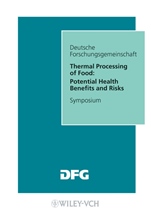
Thermal Processing of Food: Potential Health Benefits and Risks
ISBN 9783527319091
Autor: Senate Commission on Food Safety SKLM
Wydawca: Wiley
Dostępność: 3-6 tygodni
Cena: 827,40 zł
Przed złożeniem zamówienia prosimy o kontakt mailowy celem potwierdzenia ceny.
ISBN13: |
9783527319091 |
ISBN10: |
3527319093 |
Autor: |
Senate Commission on Food Safety SKLM |
Oprawa: |
Paperback |
Rok Wydania: |
2007-02-23 |
Ilość stron: |
294 |
Wymiary: |
237x169 |
Tematy: |
MB |
This is the latest and most authoritative documentation of current scientific knowledge regarding the health effects of thermal food processing. Authors from all over Europe and the USA provide an international perspective, weighing up the risks and benefits. In addition, the contributors outline those areas where further research is necessary.
Spis treści:
Vorwort.
Preface.
I Bericht und Schlussfolgerungen.
1 Einleitung.
2 Allgemeine und lebensmitteltechnologische Aspekte.
3 Gesundheitliche Aspekte thermischer Behandlung von Lebensmitteln.
4 Fazit.
5 Forschungsbedarf.
II Report and Conclusions.
1 Foreword.
2 General and Food Technological Aspects.
3 Health Aspects of Thermal Food Processing.
4 Conclusions.
5 Research Needs.
III Contributions.
1 Thermal Processing of Foods: Technological Aspects (Dietrich Knorr, Volker Heinz, and Cornelius Luscher).
2 Thermal Processing: More than Extending the Shelf Life of Foods (Thomas Hofmann and Peter Schieberle).
3 Nutritional Aspects (Gerhard Rechkemmer).
4 Biological Activities of Maillard Reaction Products (Doris Marko).
5 Risk Assessment of Acrylamide (Erik Dybing).
6 An Ex–vivo Approach to Assess Low Dose Effects of Acrylamide (Matthias Baum, Daniel Bertow, Evelyne Fauth, Silke Thielen,
and Gerhard Eisenbrand).
7 Risk Assessment of Furan (Josef Schlatter).
8 Heterocyclic Aromatic Amines: Potent Genotoxicants Formed in Cooked Meats (Robert J. Turesky and Ricky D. Holland).
9 Molecular Epidemiology of Food Pyrolysis Products in Relation to Colon, Breast, and Prostate Cancer (Susan A. Nowell, Rashmi Sinha, Luke Ratnasinghe, Nicholas P. Lang, and Fred F. Kadlubar).
10 The Formation of 3–Monochloropropane–1,2–diol (3–MCPD) in Food and Potential Measures of Control (Richard H. Stadler, Viviane Theurillat, Alfr
ed Studer, Francis Scanlan, and Walburga Seefelder).
11 Minimization Strategies: Acrylamide (Norbert U. Haase).
12 Deep–fat Frying as Food Heating Process: Product Quality, Safety and Process Control (Knut Franke and Ernst H. Reimerdes).
13 Thermal Processing of Food: Allergenicity (Lars K. Poulsen).
14 The Acrylamide Minimisation Concept – A Risk Management Tool (Andreas Kliemant and Angela Göbel).
15 The Consequences of Cooking: How the Origin of Cuisine Shaped Human Culture, Ecology, and Biology (Greg Laden).
IV Posters.
1 Formation, Structural Elucidation, Analysis and Toxicity of Thermal Degradation Products of the Fusarium Mycotoxin Nivalenol (Michael Bretz, Anja Knecht, Simon Göckler, and Hans–Ulrich Humpf).
2 Influence of Different Heating Processes on the Formation of Nucleotides, Nucleosides and Free Bases in Vegetables (Isabelle Kölling–Speer and Alfred Montag).
3 Determination of Free 3–Monochloropropane–1,2–Diol in Coffee and Coffee Surrogates (Torsten Kurzrock and Karl Speer).
4 Minimisation Concept – A Reaction on the Potential Health Risk of Acrylamide (Andreas Kliemant and Hartmut Waldner).
5 Isomerisation of Lycopene Due to Thermal Treatment of Carrot Homogenates: Increased Bioavailability of Total Lycopene and Generation of 5–cis–Lycopene in the Human Intestine (Esther Mayer–Miebach, Diana Behsnilian, Heike P. Schuchmann, and Achim Bub).
6 Influence of High Hydrostatic Pressure on the Formation of N<sup>&#949;</sup>– Carboxymethyllysine and N<sup>&#949;</sup>–Carboxyethyllysine in Maillard–type Reactions (Martina Kasper and Peter Schieberle).
7 Effect of Acrylamide from a Heated Potato Product on the Acrylamide Content in Eggs, Breast Muscl
e Meat, Liver and Kidney of Hens (Ingrid Halle, Gerhard Flachowsky, Marcus Ihling, Monika Lahrssen–Wiederholt, and Horst Klaffke).
8 PAH in Oil and Tocopherols – Analytical Challenges in Complying with EC Recommendations (Sonja Schittko, Holger Fritz, Robert Gatermann, and Ansgar Ruthenschrör).
9 Acrylamide in Fried Potato Products – Influence of Process Conditions and Precursor Contents (Knut Franke and Ernst H. Reimerdes).
10 Thermal Stability of Zeaxanthin in Potato Homogenates (Diana Behsnilian, Esther Mayer–Miebach, Ping Idda, and Heike P. Schuchmann).
11 Osmotic Treatment as a Pre–Step to Drying and Frying (Diana Behsnilian, Esther Mayer–Miebach, and Wolf–D. Koller).
12 Influence of Maillard Reaction Products on the Inflammatory Cellular Response of Macrophages (Sonja Muscat and Monika Pischetsrieder).
13 Dosimetry of Acrylamide and Glycidamide Binding to Proteins in Human Blood (Daniel Bertow, Matthias Baum, and Gerhard Eisenbrand).
14 DNA Strand Breaking Capacity of Acrylamide and Glycidamide in Mammalian Cells (Doris Marko, Zeina Tjaden, Florian Fueller, and Nicole Puppel).
15 2–Dodecylcyclobutanone, the Radiolytic Product of Palmitic Acid, is Genotoxic in the Comet Assay and Induces Chromosomal Aberrations in Preneoplastic Cells Using 24–Color–FISH (Nadine Knoll, Anja Weise, Michael Glei, Uwe Claussen, Brigitte Marian, and Beatrice L. Pool–Zobel).
V Participants and Contributors of the Symposium.
Nota biograficzna:
The Senate Commission on Food Safety of the Deutsche Forschungsgemeinschaft (DFG, German Research Foundation) advises parliaments and public authorities at their request and also acts independently to address questions of food safety. Priority is given to issues relating to the safety of foods, additives, food supplements and novel processing methods. Comm
ission statements are based solely on a scientific perspective. The 20 selected members come from Germany and other European countries.
Koszyk
Książek w koszyku: 0 szt.
Wartość zakupów: 0,00 zł
Informacje


Kontakt
Gambit
Centrum Oprogramowania
i Szkoleń Sp. z o.o.
Al. Pokoju 29b/22-24
31-564 Kraków
Siedziba Księgarni
ul. Kordylewskiego 1
31-542 Kraków
+48 12 410 5991
+48 12 410 5987
+48 12 410 5989
Subskrypcje
Administratorem danych osobowych jest firma Gambit COiS Sp. z o.o. Na podany adres będzie wysyłany wyłącznie biuletyn informacyjny.
Autoryzacja płatności

Informacje na temat autoryzacji płatności poprzez PayU.

© Copyright 2012: GAMBIT COiS Sp. z o.o. Wszelkie prawa zastrzeżone.
Projekt i wykonanie: Alchemia Studio Reklamy