


Wydawcy
Katalog tematyczny
- Archeologia (109)
- Ekonomia, finanse, business (13704)
- Filozofia (1445)
- Historia (3040)
- Języki i językoznawstwo (2356)
- Lifestyle, hobby i rozrywka (475)
- Medycyna (9704)
- Nauki humanistyczne (4)
- Nauki o Ziemi i środowisku (2638)
- Nauki ścisłe (20412)
- Astronomia (294)
- Biologia (5119)
- Chemia (6540)
- Chemia analityczna (361)
- Chemia fizyczna (346)
- Chemia nieorganiczna (137)
- Chemia organiczna (535)
- Krystalografia (27)
- Minerologia (46)
- Fizyka (3309)
- Matematyka (4574)
- Nauki ścisłe, ogólnie (503)
- Nauki społeczne (8486)
- Nauki techniczne (13450)
- Prawo (1696)
- Publikacje informacyjne i interdyscyplinarne (1288)
- Religia i wierzenia (917)
- Technika komputerowa (4067)
- Zdrowie, relacje międzyludzkie i rozwój osobisty (657)





Informacje szczegółowe o książce
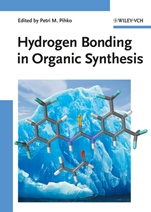
Hydrogen Bonding in Organic Synthesis
ISBN 9783527318957
Autor: Petri M. Pihko
Wydawca: Wiley
Dostępność: 3-6 tygodni
Cena: 935,55 zł
Przed złożeniem zamówienia prosimy o kontakt mailowy celem potwierdzenia ceny.
ISBN13: |
9783527318957 |
ISBN10: |
352731895X |
Autor: |
Petri M. Pihko |
Oprawa: |
Hardback |
Rok Wydania: |
2009-10-14 |
Ilość stron: |
395 |
Wymiary: |
247x181 |
Tematy: |
PN |
Snow and ice, water droplets, and all key materials of life –– the double strands of DNA and all proteins –– are held together by intermolecular forces called hydrogen bonds. These bonds, although weaker than bonds within molecules, are still strong enough to chaperone molecules into desired orientations, allowing chemists to use them as tools to perform reactions with high selectivity. In addition, hydrogen bonding can lead to metal–free catalysts, thus saving chemicals and energy in an otherwise lengthy purification process while also reducing the heavy metal output in the environment.
This first comprehensive overview of the rapidly growing field emphasizes the use of hydrogen bonding as a tool for organic synthesis, especially catalysis. As such, it covers such topics as enzyme chemistry, organocatalysis and total synthesis, all unified by the unique advantages of hydrogen bonding in the construction of complex molecules from simple precursors.
From the contents:
∗ Introduction
∗ Hydrogen Bond Catalysis or Br?nsted Acid Catalysis? General Considerations
∗ Computational Studies of Organocatalytic Processes Based on Hydrogen Bonding
∗ Oxyanion holes and their mimics
∗ Br?nsted Acids, H–Bond Donors, and Combined Acid Systems in Asymmetric Catalysis
∗ Hydrogen Bonding in Organic Synthesis – (Thio)urea Organocatalysts
∗ Highlights of Hydrogen Bonding in Total Synthesis
Providing everything you need to know, this is a definite must for every synthetic chemist in academia and industry.
Spis treści:
Preface
INTRODUCTION
Introduction
Hydrogen Bonding in Organic Synthesis
HYDROGEN–BOND CATALYSIS OR BRONSTED–ACID CATALYSIS? GENERAL CONSIDERATIONS
Introduction
What is the Hydrogen Bond?
Hydrogen–Bond Catalysis or Bronsted–Acid Catalysis
Bronsted–Acid Catalysis
Hydrogen–Bond
Catalysis
COMPUTATIONAL STUDIES OF ORGANOCATALYTIC PROCESSED BASED ON HYDROGEN BONDING
Introduction
Dynamic Kinetic Resolution (DKR) of Azlactones–Thioureas Can Act as Oxyanion Holes Comparable to Serine Hydrolases
On the Bifunctionality of Chiral Thiourea–Tert–Amine–Based Organocatalysts: Competing Routes to C–C Bond Formation in a Michael Addition
Dramatic Acceleration of Olefin Epoxidation in Fluorinated Alcohols: Activation of Hydrogen Peroxide by Multiple Hydrogen Bond Networks
TADDOL–Promoted Enantioselective Hetero–Diels–Alder Reaction of Danishefsky?s Diene with Benzaldehyde ? Another Example for Catalysis by Cooperative Hydrogen Bonding
Epilog
OXYANION HOLES AND THEIR MIMICS
Introduction
What are Oxyanion Holes?
A More Detailed Description of the Two Classes of Oxyanion Holes in Enzymes
Oxyanion Hole Mimics
Concluding Remarks
BRONSTED ACIDS, H–BOND DONORS, AND COMBINED ACID SYSTEMS IN ASYMMETRIC CATALYSIS
Introduction
Bronsted Acid (Phosphoric Acid and Derivatives)
N–H Hydrogen Bond Catalysts
Combined Acid Catalysis
(THIO)UREA ORGANOCATALYSTS
Introduction and Background
Synthetic Applications of Hydrogen–Bonding (Thio)urea Organocatalysts
Summary and Outlook
HIGHLIGHTS OF HYDROGEN BONDING IN TOTAL SYNTHESIS
Introduction
Intramolecular Hydrogen Bonding in Total Syntheses
Intermolecular Hydrogen Bondings in Total Syntheses
Conclusions
Nota biograficzna:
Petri Pihko was born in 1971 in Oulu, Finland. He became interested in chemistry several years before entering the university, assisted by inspiring teachers, Maija Aksela (currently a Professor of Chemical Education at the University of Helsinki) and Prof. Hans Krieger, who also taught him organic chemistry at the University of Oulu before his retirement. Petri Pihko then joined the research group of Professor Ari Koskinen, graduating with a
Ph.D. in 1999. Between 1999 and 2001, he enjoyed nearly two years of a wonderful time as a postdoctoral associate with Professor K. C. Nicolaou at the Scripps Research Institute in La Jolla, California, USA. In 2001, he joined the faculty of Helsinki University of Technology (TKK), and in 2008, his research group moved to the University of Jyvaskyla, Finland. His research interests include organocatalysis, catalyst design, and total synthesis of natural products.
Okładka tylna:
Snow and ice, water droplets, and all key materials of life –– the double strands of DNA and all proteins –– are held together by intermolecular forces called hydrogen bonds. These bonds, although weaker than bonds within molecules, are still strong enough to chaperone molecules into desired orientations, allowing chemists to use them as tools to perform reactions with high selectivity. In addition, hydrogen bonding can lead to metal–free catalysts, thus saving chemicals and energy in an otherwise lengthy purification process while also reducing the heavy metal output in the environment.
This first comprehensive overview of the rapidly growing field emphasizes the use of hydrogen bonding as a tool for organic synthesis, especially catalysis. As such, it covers such topics as enzyme chemistry, organocatalysis and total synthesis, all unified by the unique advantages of hydrogen bonding in the construction of complex molecules from simple precursors.
From the contents:
∗ Introduction
∗ Hydrogen Bond Catalysis or Br?nsted Acid Catalysis? General Considerations
∗ Computational Studies of Organocatalytic Processes Based on Hydrogen Bonding
∗ Oxyanion holes and their mimics
∗ Br?nsted Acids, H–Bond Donors, and Combined Acid Systems in Asymmetric Catalysis
∗ Hydrogen Bonding in Organic Synthesis – (Thio)urea Organocatalysts
∗ Highlights of Hydrogen Bonding in Total Sy
nthesis
Providing everything you need to know, this is a definite must for every synthetic chemist in academia and industry.
Koszyk
Książek w koszyku: 0 szt.
Wartość zakupów: 0,00 zł
Informacje


Kontakt
Gambit
Centrum Oprogramowania
i Szkoleń Sp. z o.o.
Al. Pokoju 29b/22-24
31-564 Kraków
Siedziba Księgarni
ul. Kordylewskiego 1
31-542 Kraków
+48 12 410 5991
+48 12 410 5987
+48 12 410 5989
Subskrypcje
Administratorem danych osobowych jest firma Gambit COiS Sp. z o.o. Na podany adres będzie wysyłany wyłącznie biuletyn informacyjny.
Autoryzacja płatności

Informacje na temat autoryzacji płatności poprzez PayU.

© Copyright 2012: GAMBIT COiS Sp. z o.o. Wszelkie prawa zastrzeżone.
Projekt i wykonanie: Alchemia Studio Reklamy