


Wydawcy
Katalog tematyczny
- Archeologia (109)
- Ekonomia, finanse, business (13704)
- Filozofia (1445)
- Historia (3040)
- Języki i językoznawstwo (2356)
- Lifestyle, hobby i rozrywka (475)
- Medycyna (9704)
- Chirurgia (272)
- Inne gałęzie medycyny (1871)
- Medycyna kliniczna (4187)
- Choroby wewnętrzne (514)
- Dermatologia (51)
- Diagnostyka medyczna (3)
- Endokrynologia (144)
- Gastroenterologia (27)
- Geriatria (50)
- Ginekologia i położnictwo (134)
- Hematologia (46)
- Hepatologia (10)
- Kardiologia (71)
- Laryngologia (12)
- Nefrologia (10)
- Neurologia (500)
- Oftalmologia (50)
- Pediatria (33)
- Pulmunologia (32)
- Reumatologia (14)
- Terapia genowa (1)
- Układ mięśniowo-szkieletowy (1)
- Urologia (14)
- Medycyna niekonwencjonalna (14)
- Medycyna przedkliniczna (269)
- Medycyna, ogólnie (1740)
- Medyczne służby pomocnicze (745)
- Studia medyczne (16)
- Weterynaria (548)
- Nauki humanistyczne (4)
- Nauki o Ziemi i środowisku (2638)
- Nauki ścisłe (20412)
- Nauki społeczne (8486)
- Nauki techniczne (13450)
- Prawo (1696)
- Publikacje informacyjne i interdyscyplinarne (1288)
- Religia i wierzenia (917)
- Technika komputerowa (4067)
- Zdrowie, relacje międzyludzkie i rozwój osobisty (657)





Informacje szczegółowe o książce
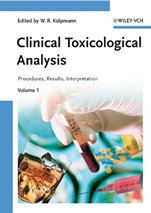
Clinical Toxicological Analysis: Methods, Procedures, Interpretation, 2 Volumes
ISBN 9783527318902
Autor: Wolf R¿diger K¿lpmann
Wydawca: Wiley
Dostępność: 3-6 tygodni
Cena: 1 584,45 zł
Przed złożeniem zamówienia prosimy o kontakt mailowy celem potwierdzenia ceny.
ISBN13: |
9783527318902 |
ISBN10: |
3527318909 |
Autor: |
Wolf R¿diger K¿lpmann |
Oprawa: |
Hardback |
Rok Wydania: |
2009-03-18 |
Numer Wydania: |
2 Volume Set |
Ilość stron: |
976 |
Wymiary: |
249x180 |
Tematy: |
MJ |
This first, complete reference on standardized methods for laboratory analysis is tailor–made for clinical toxicologists, containing all relevant data and protocols for routine and specialized laboratory analysis. All the procedures described conform to standards stipulated by the International Standards Organisation (ISO) and academic societies, such as the IUPAC and ICC.
Neatly divided into two volumes, the first chapters deal with requirements for toxicological analyses, quality assessment, the evaluation of analytical results, forensic aspects, clinical chemistry and therapeutic drug monitoring, while the majority of chapters contain detailed protocols for the analysis of all classes of toxicants.
A handy desktop reference for the practitioner.
Spis treści:
Foreword.
Preface.
List of Contributors.
Disclaimer.
Volume 1.
1 Introduction (W.R. Külpmann).
References.
2 Requirements for Toxicological Analyses (F. Degel).
2.1 General Aspects.
2.2 Devices.
2.3 Rooms and Facilities.
2.4 Management and Technical Requirements.
2.5 Chemicals and Reagents.
2.6 Personnel.
References.
3 Materials for Investigation (H.J. Gibitz and F. Pluisch).
3.1 Introduction.
3.2 Judicial Preconditions for Taking and Surrendering Materials for Investigation.
3.3 Containers for Sampling and Storage.
3.4 Kind of Materials.
3.5 Identification of Materials.
3.6 Request Form.
3.7 Transport of Materials.
3.8 Evaluation of Materials.
3.9 Storage of Materials.
3.10 Sampling and Storage of Materials for Forensic Investigation.
References.
4 Methods for Clinical Toxicological Analysis.
4.1 Immunoassays (W.R. Külpmann and D. Hannak).
4.2 Thin–Layer Chromatography (F. Degel).
4.3 High–Performance Liquid Chromatography (H. Käferstein).
4.4 Gas Chromato
graphy (H.H. Maurer).
4.5 Gas Chromatography–Mass Spectrometry (H.H. Maurer).
4.6 Headspace Gas Chromatography (F. Degel).
4.7 Liquid Chromatography–Mass Spectrometry (H.H. Maurer).
4.8 Electrochemical Methods (F. Pragst).
4.9 Capillary Electrophoresis (H. König).
References.
5 Practicability of Clinical Toxicological Analyses (H.J. Gibitz).
5.1 Introduction.
5.2 Aspects of Practicability.
5.3 Personnel Cost.
5.4 Conclusion.
References.
6 Quality Assurance .
6.1 Quantitative Measurements (W.R. Külpmann).
6.2 Qualitative Examinations (L. von Meyer and M. Geldmacher–von Mallinckrodt).
References.
7 Assessment of Analytical Results (W.R. Külpmann, M. Geldmacher–von Mallinckrodt, and J. Hallbach).
7.1 Introduction.
7.2 Technical Level: Analytical Assessment.
7.3 Biological Level: Plausibility Check.
7.4 Nosological Level.
References.
8 The Analytical Toxicological Report (J. Hallbach, M. Geldmacher–von Mallinckrodt, and W.R. Külpmann).
8.1 Introduction.
8.2 The Analytical Toxicological Report.
References.
9 Medical Interpretation (J. Hallbach, N. Felgenhauer, M. Geldmacher–von Mallinckrodt, and H.H. Maurer).
9.1 Overview.
9.2 Differential Diagnosis.
9.3 Poison Information Center.
9.4 Interpretation of Blood, Plasma, or Serum Concentrations.
9.5 Conclusion.
References.
10 Forensic Aspects (W.R. Külpmann).
10.1 Overview.
References.
11 Strategy of Clinical Toxicological Investigations(J. Hallbach, W.R. Külpmann, H.H. Maurer, F. Pragst, and N. Felgenhauer).
11.1 Epidemiology of Poisoning.
11.2 Diagnosis of Poisoning.
11.3 Investigation Request.
11.4 Clinical Toxicological Requirements.
11.5 Documen
tation.
References.
12 Screening Procedures for ‘‘General Unknown’’ Analysis (F. Pragst, H.H. Maurer, J. Hallbach, W.R. Külpmann, U. Staerk, F. Degel, and M. Lappenberg–Pelzer).
12.1 High–Performance Liquid Chromatography with Photodiode Array Detector (F. Pragst).
12.2 Gas Chromatography (H. H. Maurer).
12.3 Gas Chromatography–Mass Spectrometry (H.H. Maurer).
12.4 Gas Chromatographic Headspace Analysis (F. Degel).
12.5 Color Test: Tetrabromophenolphthalein Ethyl Ester (M. Lappenberg–Pelzer).
References.
13 Nonopioid Analgesics and Antirheumatics (H. König and J. Hallbach).
13.1 Detection of Nonopioid Analgesics and Antirheumatics in Serum and Urine.
13.2 Diclofenac.
13.3 Ibuprofen.
13.4 Metamizole (Dipyrone).
13.5 Paracetamol (Acetaminophen).
13.6 Phenazone (Antipyrine).
13.7 Salicylates.
References.
14 Analgesics: Opiates and Opioids (H. Käferstein).
14.1 Group Assays.
14.2 Buprenorphine (W.R. Külpmann).
14.3 Dextropropoxyphene (H. Käferstein).
14.4 Fentanyl (G. Sticht, H. Käferstein, and L. von Meyer).
14.5 Meperidine (Pethidine) (H. König).
14.6 Methadone (H. Käferstein and A. Schmoldt).
14.7 Morphine and Morphine Derivatives (H. Käferstein and G. Sticht).
14.8 Oxycodone (F. Degel).
14.9 Pentazocine (T. Binscheck).
14.10 Tilidine (T. Binscheck).
14.11 Tramadol (J. Hallbach and H. Käferstein).
References.
15 Antidysrhythmic Agents (H. König and A. Schmoldt).
15.1 Immunoassay.
15.2 High–Performance Liquid Chromatography.
15.3 Gas Chromatography.
15.4 Medical Assessment and Clinical Interpretation.
References.
16 Anticonvulsants (D. Hannak).<
br>16.1 Immunoassay (W.R. Külpmann).
16.2 High–Performance Liquid Chromatography (D. Hannak).
16.3 Gas Chromatography–Mass Spectrometry (J. Hallbach).
16.4 Medical Assessment and Clinical Interpretation (D. Hannak).
References.
17 Anticoagulants (L. von Meyer and M. Geldmacher–von Mallinckrodt).
17.1 Coumarin Derivatives Used in Therapy.
17.2 Rodenticide Coumarin Derivatives.
References.
18 Bronchodilators (W.R. Külpmann).
18.1 Group Assay.
18.2 Caffeine.
18.3 Theophylline.
References.
19 Calcium Channel Blockers (J. Hallbach and A. Schmoldt).
19.1 Nifedipine.
19.2 Verapamil.
References.
20 Cardiac Glycosides (J. Hallbach).
20.1 Digitoxin.
20.2 Digoxin.
References.
21 Hypnotics: Barbiturates (W.R. Külpmann and A. Schmoldt).
21.1 Detection of Barbiturates.
21.2 Methohexital (A. Schmoldt and W.R. Külpmann).
21.3 Phenobarbital (W.R. Külpmann).
21.4 Thiopental (W.R. Külpmann).
References.
22 Hypnotics and Sedatives: Benzodiazepines (L. von Meyer, A. Schmoldt, and W.R. Külpmann).
22.1 Immunoassay.
22.2 High–Performance Liquid Chromatography.
22.3 Gas Chromatography.
22.4 Medical Assessment and Clinical Interpretation.
References.
23 Hypnotics and Sedatives (Except for Barbiturates and Benzodiazepines) (H. König and H. Käferstein).
23.1 Immunoassay.
23.2 High–Performance Liquid Chromatography.
23.3 Gas Chromatography.
23.4 Ion–Selective Electrodes (F. Pragst).
23.5 Photometry (Color Test) (H. J. Gibitz).
23.6 Medical Assessment and Clinical Interpretation.
References.
24 Neuroleptic Drugs and Antidepressants.
24.1 Group Assays.
24.2 High–Perfo
Koszyk
Książek w koszyku: 0 szt.
Wartość zakupów: 0,00 zł
Informacje


Kontakt
Gambit
Centrum Oprogramowania
i Szkoleń Sp. z o.o.
Al. Pokoju 29b/22-24
31-564 Kraków
Siedziba Księgarni
ul. Kordylewskiego 1
31-542 Kraków
+48 12 410 5991
+48 12 410 5987
+48 12 410 5989
Subskrypcje
Administratorem danych osobowych jest firma Gambit COiS Sp. z o.o. Na podany adres będzie wysyłany wyłącznie biuletyn informacyjny.
Autoryzacja płatności

Informacje na temat autoryzacji płatności poprzez PayU.

© Copyright 2012: GAMBIT COiS Sp. z o.o. Wszelkie prawa zastrzeżone.
Projekt i wykonanie: Alchemia Studio Reklamy