


Wydawcy
Katalog tematyczny
- Archeologia (109)
- Ekonomia, finanse, business (13704)
- Filozofia (1445)
- Historia (3040)
- Języki i językoznawstwo (2356)
- Lifestyle, hobby i rozrywka (475)
- Medycyna (9704)
- Nauki humanistyczne (4)
- Nauki o Ziemi i środowisku (2638)
- Nauki ścisłe (20412)
- Astronomia (294)
- Biologia (5119)
- Chemia (6540)
- Chemia analityczna (361)
- Chemia fizyczna (346)
- Chemia nieorganiczna (137)
- Chemia organiczna (535)
- Krystalografia (27)
- Minerologia (46)
- Fizyka (3309)
- Matematyka (4574)
- Nauki ścisłe, ogólnie (503)
- Nauki społeczne (8486)
- Nauki techniczne (13450)
- Prawo (1696)
- Publikacje informacyjne i interdyscyplinarne (1288)
- Religia i wierzenia (917)
- Technika komputerowa (4067)
- Zdrowie, relacje międzyludzkie i rozwój osobisty (657)





Informacje szczegółowe o książce
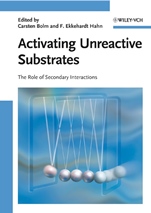
Activating Unreactive Substrates: The Role of Secondary Interactions
ISBN 9783527318230
Autor: Carsten Bolm, F. Ekkehardt Hahn
Wydawca: Wiley
Dostępność: 3-6 tygodni
Cena: 962,85 zł
Przed złożeniem zamówienia prosimy o kontakt mailowy celem potwierdzenia ceny.
ISBN13: |
9783527318230 |
ISBN10: |
3527318232 |
Autor: |
Carsten Bolm, F. Ekkehardt Hahn |
Oprawa: |
Hardback |
Rok Wydania: |
2009-01-28 |
Ilość stron: |
481 |
Wymiary: |
243x177 |
Tematy: |
PN |
Current knowledge about the reaction mechanisms of various metalloenzymes and catalysts demonstrates that substrate conversions occurring at the metal center are controlled by secondary interactions. Such secondary interactions comprise all properties within the ligands of a coordination compound –– yet outside of the first coordination sphere –– which influence the reaction profile at the metal center. Direct utilization of the variable "secondary interactions" allows the electronic structure, geometry and reactivity of coordination compounds to be controlled, allowing a catalytic activation and functionalization of natural and unreactive bulk gases of the atmosphere and simple hydrocarbons.
This first comprehensive treatment of this important approach in catalysis research covers the entire field and reveals the links between the various chemical disciplines. It thus adopts an interdisciplinary approach, making it of interest to the whole chemical community.
A must for chemists.
Spis treści:
CHEMISTRY OF METALATED CONTAINER MOLECULES
Introduction
Metalated Container Molecules: A Brief Overview
Metalated Container Molecules of Binucleating Supporting Ligands
THE CHEMISTRY OF SUPERBASIC GUANIDINES
Properties of the Guanidine Functionality
Design of Superbasic Proton Sponges
Some Perspectives in Proton Sponge Chemistry
Multidentate Superbasic Guanidine Ligands as Receptors for Metal Cations
The Chemistry of Guanidine Copper Complexes
The Chemistry of Guanidine Zinc Complexes
IRON COMPLEXES AND DIOXYGEN ACTIVATION
Introduction
Dinuclear Iron Peroxo Complexes
Tripodal Tetradentate Ligands and Derivatives
Monomuclear Iron Peroxo Complexes
Mononuclear Iron Oxo Species
Work in Progress
TUNING OF STRUCTURES AND PROPERTIES OF BISPIDINE COMPLEXES
Introduction
Jahn–Teller Isomerism with Copper(II) Bispidines
Stabilization of High–Spin Ferryl Complex
es
Jahn–Teller–Distorted Cobalt(III) Complexes
NOVEL PHOSPHORUS AND NITROGEN DONOR LIGANDS BEARING SECONDARY FUNCTIONALITIES FOR APPLICATIONS IN HOMOGENEOUS CATALYSIS
Introduction
Phosphine Ligands
Nitrogen Donor Ligands Without Phosphorus Sites
SQUARE–PYRAMIDAL COORDINATED PHOSPHINE IRON FRAGMENTS: A TALE OF THE UNEXPECTED
Introduction
Polyphosphine Ligands with Three and Four Coordinating Arms
C–P Bond Activation and Agostic Interactions in Iron Complexes of Polypodal Phosphine Ligands
Mechanistic Considerations
REGIOSELECTIVE CATALYTIC ACTIVITY OF COMPLEXES WITH NH,NR–SUBSTIUTED HETEROCYCLIC CARBENE LIGANDS
Introduction
Concept of Regioselective Substrate Activation
Synthesis of Complexes with NH,NR–Stabilized NHC Ligands
Preparation of Substrates for Catalytic Experiments
Catalysis Experiments
FUNCTIONALIZED CYCLOHEPTATRIENYL–CYCLOPENTADIENYL SANDWICH COMPLEXES AS BUILDING BLOCKS IN METALLO–SUPRAMOLECULAR CHEMISTRY
Introduction
Syntheses and Electronic Structure of Group 4 Cycloheptatrienyl–Cyclopentadienyl Sandwich Complexes
Syntheses and Reactivity of Ansa–Cycloheptatrienyl–Cyclopentadienyl Complexes
Ring–Opening Reactions of Ansa–Cycloheptatrienyl–Cyclopentadienyl Complexes
Phosphine–Functionalized Cycloheptatrienyl–Cyclopentadienyl Sandwich Complexes
MONOSACCHARIDE LIGANDS IN ORGANOTITANIUM AND ORGANOZIRCONIUM CHEMISTRY
Introduction
Synthesis of Organotitanium Carbohydrate Compounds
Organotitanium Carbohydrate Compounds for Use in Catalytic Reactions: Polymerization of Ethylene
Intramolecular Hydroamination of Aminoalkenes
Organozirconium Carbohydrate Compounds
Amine Exchange
Chiral Recognition
REACTIONS OF C–F BONDS WITH TITANOCENE AND ZIRCONOCENE: FROM SECONDARY INTERACTION VIA BOND CLEAVAGE TO CATALYSIS
Introduction and Background
Secondary Interactions wit
h C–F Bonds
Formation of M–F Bonds
Stoichiometric Formation of Zr–H Bonds
Catalytic Formation of Zr–H Bonds
BISAZINES IN THE COORDINATION SPHERE OF EARLY TRANSITION METALS
Introduction
Results and Discussion
BIFUNCTIONAL MOLECULAR SYSTEMS WITH PENDANT BIS(PENTAFLUOROPHENYL)BORYL GROUPS: FROM INTRAMOLECULAR CH–ACTIVATION TO HETEROLYTIC DIHYDROGEN SPLITTING
Introduction
Bifunctional Zirconum/Boron Systems
Bifunctional Group 9 Metal/Boron Systems
Bifunctional Phosphorus/Boron Systems
RUTHENIUM–CONTAINING POLYOXOTUNGSTATES: STRUCTURE AND REDOX ACTIVITY
Introduction
The Organoruthenium(II)–Containing 49–Tungsto–8–Phosphate[{K(H2O)}3{Ro(p–cymene)()H2O)}4P8W49O186(H2O)2]27–
The Mono–Ruthenium(III)–Substituted Keggin–Type 11–Tungstosilicate [alpha–SiW11O39Ru111(H2=)]5– and its Dimerization
FROM NO TO PEROXIDE ACTIVATION BY MODEL IRON(III) COMPLEXES
Introduction
NO Activation by Fe(III) Complexes
Peroxide Activation by Fe(III) Complexes
SYNTHETIC NITROGEN FIXATION WITH MOLYBDENUM AND TUNGSTEN PHOSPHINE COMPLEXES: NEW DEVELOPMENTS
Introduction
Mechanistic Investigation of the Chatt Cycle
New Phosphine and Mixed P/N Ligands for Synthetic Nitrogen Fixation
DIRECTED C–H FUNCTIONALIZATIONS
Introduction
Results and Discussion
DEVELOPMENT OF NOVEL RUTHENIUM AND IRON CATALYSTS FOR EPOXIDATION WITH HYDROGEN PEROXIDE
Introduction
Development of Epoxidation Catalysts Using H2O2
PENTACOORDINATING BIS(OXAZOLINE) LIGANDS WITH SECONDARY BINDING SITES
FLAVIN PHOTOCATALYSTS WITH SUBSTRATE BINDING SITES
Introduction
Templated Flavin Photoreductions
Templated Flavin Photooxidations
NEW CATALYTIC CU–, PD– AND STOICHIOMETRIC MG–, ZN–MEDIATED BOND ACTIVATIONS
Introduction
Catalytic Activation
Stoichiometric Activation
FROM COBALT(II)–ACTI
VATED MOLECULAR OXYGEN TO HYDROCYMETHYL–SUBSTITUTED TETRAHYDROFURANS
Introduction
Thermochemical Considerations
Cobalt(II)–Diketonate Complexes
Reactivity
Stereoselectivity Survey
A Derivative of Magnosalicin
Expanding the Scope
REGIODIVERGENT EPOXIDE OPENING
Epoxide Opening via Nucleophilic Substitution: Limitations Arising from the SN2–Mechanism
Regiodivergent Epoxide Opening (REO): Mechanistic Implications, Synthetic Potential, and Aspects of Catalyst Design
Reductive Epoxide Opening via Electron Transfer from Titanocene(III) Reagents
Synthetic Realization of Titanocene–Catalyzed REO
SUPRAMOLECULAR CONTAINERS: HOST–GUEST CHEMISTRY AND REACTIVITY
Introduction
M4L4Tetrahedra
Amino Acid–Bridged Dinuclear Titanium(IV) Complexes as Metalloenzyme Mimicry
SELF–ASSEMBLY OF DINUCLEAR HELICAL METALLOSUPRAMOLECULAR COORDINATION COMPOUNDS
Introduction
The Concept of Diastereoselective Self–Assembly of Dinuclear Helicates
Synthesis of Building Blocks for the Covalent Assembly of Bis(Chelating) Ligands
Synthesis of Bis(Chelating) Ligands and Their Dinuclear Metal Complexes
Nota biograficzna:
Carsten Bolm became Professor of Organic Chemistry at the University of Marburg (Germany) in 1993, and since 1996 he has been full professor for Organic Chemistry at the RWTH Aachen University (Germany). He held visiting professorships at universities in Madison, Wisconsin (USA), Paris (France), Florence (Italy), Milan (Italy), Namur (Belgium) and Tokyo (Japan). His list of awards include the Heinz–Maier–Leibnitz prize, the ADUC–Jahrespreis for habilitands, the annual prize for Chemistry of the Akademie der Wissenschaften zu Gottingen, the Otto–Klung prize, the Otto–Bayer award, a fellowship of the Japan Society for the Promotion of Science, and the Prix Franco–Allemand. With Wiley–VCH he edited books (together with M
Koszyk
Książek w koszyku: 0 szt.
Wartość zakupów: 0,00 zł
Informacje


Kontakt
Gambit
Centrum Oprogramowania
i Szkoleń Sp. z o.o.
Al. Pokoju 29b/22-24
31-564 Kraków
Siedziba Księgarni
ul. Kordylewskiego 1
31-542 Kraków
+48 12 410 5991
+48 12 410 5987
+48 12 410 5989
Subskrypcje
Administratorem danych osobowych jest firma Gambit COiS Sp. z o.o. Na podany adres będzie wysyłany wyłącznie biuletyn informacyjny.
Autoryzacja płatności

Informacje na temat autoryzacji płatności poprzez PayU.

© Copyright 2012: GAMBIT COiS Sp. z o.o. Wszelkie prawa zastrzeżone.
Projekt i wykonanie: Alchemia Studio Reklamy