


Wydawcy
Katalog tematyczny
- Archeologia (109)
- Ekonomia, finanse, business (13704)
- Filozofia (1445)
- Historia (3040)
- Języki i językoznawstwo (2356)
- Lifestyle, hobby i rozrywka (475)
- Medycyna (9704)
- Nauki humanistyczne (4)
- Nauki o Ziemi i środowisku (2638)
- Nauki ścisłe (20412)
- Nauki społeczne (8486)
- Nauki techniczne (13450)
- Prawo (1696)
- Publikacje informacyjne i interdyscyplinarne (1288)
- Religia i wierzenia (917)
- Technika komputerowa (4067)
- Zdrowie, relacje międzyludzkie i rozwój osobisty (657)





Informacje szczegółowe o książce
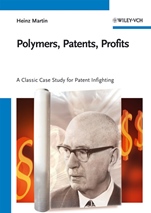
Polymers, Patents, Profits: A Classic Case Study for Patent Infighting
ISBN 9783527318094
Autor: Heinz Martin
Wydawca: Wiley
Dostępność: 3-6 tygodni
Cena: 449,40 zł
Przed złożeniem zamówienia prosimy o kontakt mailowy celem potwierdzenia ceny.
ISBN13: |
9783527318094 |
ISBN10: |
3527318097 |
Autor: |
Heinz Martin |
Oprawa: |
Paperback |
Rok Wydania: |
2007-02-09 |
Ilość stron: |
294 |
Wymiary: |
242x169 |
Tematy: |
LA |
Any groundbreaking scientific discovery or invention is potentially of general interest and is therefore also the basis for profitable follow–up developments and innovations. From the scientist′s point of view it is desirable to save his innovative achievements for his own profit. This why the state grants exclusive rights to the scientist in the form of patents. In turn, the scientist has to disclose the details of the discovery.
In the mid 1950s, Nobel prizewinner Karl Ziegler and his colleagues at the Max Planck Institute of Carbon Research established a technology that had an outstanding impact on the worldwide production of polypropylenes and polyethylenes, the fundamental components of the plastics industry.
This is the fascinating, first–hand story of the patent fights between the research team and the "giants" of the petrochemicals industry, such as Du Pont and Esso. The author was part of Ziegler′s group throughout the entire period, resulting here in an entertaining case study of an innovative chemical discovery, presenting interesting historical as well as scientific information.
An impressive example of the fights between academia and industry concerning patent rights and the economic utilization of academic research innovations.
Spis treści:
1 The Invention.
1.1 First Observations 1950/1953.
1.1.1 Standard Oil of Indiana.
1.1.2 Phillips Petroleum Company.
1.1.3 Du Pont.
1.1.3.1 From the Beginning up to the Patent Application.
1.3.1.2 Only a Scant Experimental "Polypropylene."
1.2 Max–Planck–Institute, Mülheim on the Ruhr.
1.2.1 K. Ziegler, H. Breil, E. Holzkamp and H. Martin.
1.2.2 Experiments between May and December, 1953.
1.2.2.1 Montecatini Points to the Contractual Rights and Obligations.
1.2.3 Experiments from December 1953 through April 1954.
1.2.4 Letter from Ziegler to his Patent Attorney von Kreisler.
1.3 Montecatini, Milano/G
. Natta and Co–workers.
1.3.1 The First Experiments with Ziegler catalysts.
1.3.2 Natta, Orsoni and DeVarda’s Visit to Ziegler at Mülheim on May 19, 1954.
1.4 K. Ziegler and Co–workers.
1.4.1 H. Martin: Experiments May–July 6, 1954; H. Breil: Masters Thesis.
1.4.2 H. Martin, July 1954: Polypropylene.
1.5 1952–1954 Polypropylene (Review).
1.5.1 Appraising the Historical Course of the Invention from a Year–2000 Vantage Point.
References.
2 The Chemical Industry Connection.
2.1 Farbwerke Hoechst.
2.2 Petrochemicals Limited.
2.3 Steinkohlenbergbauverein (Hard Coal Mining Society)/Bergwerksverband (Mine Association)/Ruhr Area Coal Industry.
2.4 The “Run” of Prospective US Licensees.
2.4.1 Hercules Powder Company.
2.4.2 Gulf Oil, Koppers, Dow, Union Carbide and Monsanto.
2.4.3 Esso, the Straggler.
2.4.4 Du Pont.
2.5 Mitsui Chemical, the First Japanese Licensee.
2.6 Summary.
2.7 Back to the Ruhr: Ruhrcoal and Bergwerksverband.
2.8 August through December 1954: Montecatini steps up its own Developments.
2.9 The first Ziegler/Montecatini Pool–Agreements.
2.10 Polydiene.
2.10.1 Karl Ziegler and H. Martin/Max–Planck–Institute for Coal Research; S. E. Horne/Goodrich Gulf Chemicals Inc.; Giulio Natta and Co–Workers/ Montecatini; D.R. Smith and R.P. Zelinski/Phillips Petroleum Co.
References.
3 Patent Rights Worldwide, Patent Applications: Prosecution, Oppositions, Priority Rights.
3.1 The Package of the First Six German Patent Applications.
3.2 Foreign Patent Protection for the Inventions of Ziegler and Co–Workers.
3.3 The Situation in the United States.
3.4 Polypropylene: Ziegler/Natta, Conflict as to the Priority.
3.5 Contention Proceedings.
3.5.1 Montecatini.
3.5.2 Du Pont.
3.5.3 Compromise and Concessions.
3.5.4 Du Pont Sought Further Advantages.
3.6 The History of Patent
Issuance from a Year–2000 Vantage Point.
References.
4 Innovation, Market Development, Production.
4.1 The Market Situation.
4.2 The Rush for Licenses 1953–1972, Lucrative Second Half 1970–1990.
4.3 The Marketing of Ziegler Polyolefins.
4.4 Montecatini’s Pool Polyolefin Licenses.
4.5 Research and Production.
4.6 Early “New”, So–Called Independent Catalysts.
4.6.1 Case 1.
4.6.2 Case 2.
4.6.3 Case 3.
4.6.4 Case 4.
4.6.5 Case 5.
4.6.6 Case 6.
4.6.7 Case 7.
4.6.8 Case 8.
4.6.9 Case 9.
4.6.10 Case 10.
4.6.11 Case 11.
4.7 The Split between Montecatini and Ziegler in the United States.
4.8 Review.
References.
5 The American Challenge.
5.1 Hercules, Esso, Phillips, and Dart seek Advantages.
5.1.1 Infringement Action Ziegler versus Phillips Petroleum.
5.1.2 Hercules forces Ziegler into Legal Action against Dart.
5.2 Between Dallas and New Orleans.
5.3 Eastman Kodak.
5.4 Max Fischer, Over and Over.
5.5 Amoco, Arco and Novamomt launch New Attacks.
5.6 18 Years of Feud with Dart.
5.6.1 Determination of Liability.
5.6.2 Decision Concerning the Amount of Damages.
5.7 A Tentative Record of the "115 Patent".
5.8 Lex Ziegler.
5.9 Product Patent Protection for "Polypropylene."
5.10 "High Speed" or "High Mileage" or "Ziegler Catalysts of the Second and Third Generation."
5.11 Japanese Export of Automobiles to the United States.
5.12 "The Last Chapter."
5.13 Epilog.
References.
Index.
Nota biograficzna:
Heinz Martin has been a close colleague of Prof. Ziegler at the Max–Planck–Institute of Carbon Research in Muhlheim/Ruhr (Germany) and played an important key role in the invention of Ziegler′s Polyolefine catalysts in 1953/54. In 1970 he became Co–director of the Studien– und Verwertungs GmbH (founded in 1925), which became the Studiengesellschaft Kohle
GmbH in 1955, a trustee of the MPI in Muhlheim, with H. Martin as director.
Okładka tylna:
Any groundbreaking scientific discovery or invention is potentially of general interest and is therefore also the basis for profitable follow–up developments and innovations. From the scientist′s point of view it is desirable to save his innovative achievements for his own profit. This why the state grants exclusive rights to the scientist in the form of patents. In turn, the scientist has to disclose the details of the discovery.
In the mid 1950s, Nobel prizewinner Karl Ziegler and his colleagues at the Max Planck Institute of Carbon Research established a technology that had an outstanding impact on the worldwide production of polypropylenes and polyethylenes, the fundamental components of the plastics industry.
This is the fascinating, first–hand story of the patent fights between the research team and the "giants" of the petrochemicals industry, such as Du Pont and Esso. The author was part of Ziegler′s group throughout the entire period, resulting here in an entertaining case study of an innovative chemical discovery, presenting interesting historical as well as scientific information.
An impressive example of the fights between academia and industry concerning patent rights and the economic utilization of academic research innovations.
Koszyk
Książek w koszyku: 0 szt.
Wartość zakupów: 0,00 zł
Informacje


Kontakt
Gambit
Centrum Oprogramowania
i Szkoleń Sp. z o.o.
Al. Pokoju 29b/22-24
31-564 Kraków
Siedziba Księgarni
ul. Kordylewskiego 1
31-542 Kraków
+48 12 410 5991
+48 12 410 5987
+48 12 410 5989
Subskrypcje
Administratorem danych osobowych jest firma Gambit COiS Sp. z o.o. Na podany adres będzie wysyłany wyłącznie biuletyn informacyjny.
Autoryzacja płatności

Informacje na temat autoryzacji płatności poprzez PayU.

© Copyright 2012: GAMBIT COiS Sp. z o.o. Wszelkie prawa zastrzeżone.
Projekt i wykonanie: Alchemia Studio Reklamy