


Wydawcy
Katalog tematyczny
- Archeologia (109)
- Ekonomia, finanse, business (13704)
- Filozofia (1445)
- Historia (3040)
- Języki i językoznawstwo (2356)
- Lifestyle, hobby i rozrywka (475)
- Medycyna (9704)
- Nauki humanistyczne (4)
- Nauki o Ziemi i środowisku (2638)
- Nauki ścisłe (20412)
- Astronomia (294)
- Biologia (5119)
- Chemia (6540)
- Chemia analityczna (361)
- Chemia fizyczna (346)
- Chemia nieorganiczna (137)
- Chemia organiczna (535)
- Krystalografia (27)
- Minerologia (46)
- Fizyka (3309)
- Matematyka (4574)
- Nauki ścisłe, ogólnie (503)
- Nauki społeczne (8486)
- Nauki techniczne (13450)
- Prawo (1696)
- Publikacje informacyjne i interdyscyplinarne (1288)
- Religia i wierzenia (917)
- Technika komputerowa (4067)
- Zdrowie, relacje międzyludzkie i rozwój osobisty (657)





Informacje szczegółowe o książce
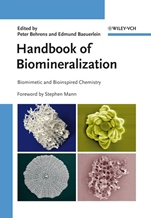
Handbook of Biomineralization: Biomimetic and Bioinspired Chemistry
ISBN 9783527318056
Autor: Peter Behrens, Edmund Bäuerlein, Stephen Mann
Wydawca: Wiley
Dostępność: 3-6 tygodni
Cena: 1 260,00 zł
Przed złożeniem zamówienia prosimy o kontakt mailowy celem potwierdzenia ceny.
ISBN13: |
9783527318056 |
ISBN10: |
3527318054 |
Autor: |
Peter Behrens, Edmund Bäuerlein, Stephen Mann |
Oprawa: |
Hardback |
Rok Wydania: |
2009-01-14 |
Ilość stron: |
443 |
Wymiary: |
248x175 |
Tematy: |
PN |
This first comprehensive overview of the modern aspects of biomineralization represents life and materials science at its best: Bioinspired pathways are the hot topics in many disciplines and this holds especially true for biomineralization.
Here, the editors – well–known members of associations and prestigious institutes – have assembled an international team of renowned authors to provide first–hand research results.
This second volume deals with biometic model systems in biomineralization, including the biomineral approach to bionics, bioinspired materials synthesis and bio–supported materials chemistry, encapsulation and the imaging of internal nanostructures of biominerals.
An interdisciplinary must–have account, for biochemists, bioinorganic chemists, lecturers in chemistry and biochemistry, materials scientists, biologists, and solid state physicists.
Spis treści:
Preface.
Foreword.
List of Contributors.
Part I: Biomimetic Model Systems in Biomineralization.
1. The Polyamine Silica System: A Biomimetic Model for the Biomineralization of Silica (Peter Behrens, Michael Jahns, and Henning Menzel).
1.1 Introduction.
1.2 Mechanisms of Biomineralization in Diatoms.
1.3 Polyamine–Silica Systems.
1.4 Synthesis of Linear Polyamines.
1.5 Kinetic Investigations on Polyamine–Silica Systems.
1.6 Investigations of the Aggregation Behavior in Polyamine–Silica Systems.
1.7 Conclusions.
References.
2. Solid–State NMR in Biomimetic Silica Formation and Silica Biomineralization (Eike Brunner and Katharina Lutz).
2.1 Introduction.
2.2 General Remarks on Solid–State NMR Spectroscopy.
2.3 Multinuclear NMR Studies of Diatom Cell Walls.
2.4 Silica Precipitation and self–Assembly of Silaffins and Polyamines.
2.5 Summary.
References.
3. Mesocrystals: Examples of non–Classi
cal Crystallization (Helmut Cölfen).
3.1 Introduction.
3.2 Classical and Non–Classical Crystallization.
3.3 Mesocrystals.
3.4 Mesocrystal Formation Mechanisms.
3.5 Conclusions.
References.
4. Biologically Inspired Crystallization of Calcium Carbonate beneath Monolayers: A Critical Overview (Dirk Volkmer).
4.1 Introduction.
4.2 Nacre Formation.
4.3 Biomimetic Crystallization of CaCO<sub>3</sub> beneath Monolayers: Experimental Set–Up.
4.4 CaCO<sub>3</sub> Crystallization beneath Monolayers of Macrocyclic Amphiphiles.
4.5 Formation of Tabular Aragonite Crystals via a Non–Epitaxial Growth Mechanism.
4.6 Conclusions.
References.
5. The Hierarchical Architecture of Nacre and its Mimetic Materials (Hiroaki Imai and Yuya Oaki).
5.1 Introduction.
5.2 The Hierarchical Structures of the Nacreous Layers.
5.3 Hierarchical Structures of Other Biominerals.
5.4 Nacre–Mimetic CaCO<sub>3</sub> with Organic Polymers.
5.5 Nacre–Mimetic Aragonite–Type Carbonate Crystals with Organic and Inorganic Polymeric Agents.
5.6 Nacre–Mimetic Hierarchical Structure of Potassium Sulfate and PAA.
5.7 Self–Organization of Nacre–Mimetic Crystal Growth.
5.8 Conclusions.
References.
6. Avian Eggshell as a Template for Biomimetic Synthesis of New Materials (Jos&eacute; Luis Arias, Jos&eacute; Ignacio Arias, and Mar&iacute;a Soledad Fernandez).
6.1 Introduction.
6.2 Eggshell Organization and General Composition.
6.3 The Eggshell Membrane as an Immobilization Support and Adsorbent.
6.4 The Eggshell Membrane or Matrix as a Template for Crystal Growth.
6.5 Composite Reinforcement with Eggshell.
6.6 Biomedical Applications of Eggshell.
6.7 Summary and Future Prospects.
References.
7. Biomemetic Mineralizatio
n and Shear Modulation Force Microscopy of Self–Assembled Protein Fibers (Elaine DiMasi, Seo–Young Kwak, Nadine Pernodet, Xiaolan Ba, Yizhi Meng, Vladimir Zeitsev, Karthikeyan Subburaman, and Miriam Rafailovich).
7.1 Introduction.
7.2 Self–Assembled ECM Protein Networks.
7.3 Shear Modulation Force Microscopy.
7.4 Comparative CaCO<sub>3</sub> Mineralization of Elastin and Fibronectin Networks.
7.5 Mineralization of ECM Produced by Cells.
7.6 Outlook.
References.
8. Model Systems for Formation and Dissolution of Calcium Phosphate Minerals (Christine A. Orme and Jennifer L. Giocondi).
8.1 Introduction.
8.2 Calcium Phosphate Phases Found in Biology.
8.3 Solution Chemistry in the Body.
8.4 Measuring Crystal Growth.
8.5 Impurity Interactions.
8.6 Outlook.
References.
9. Biomimetic Formation Magnetite Naoparticles (Damien Faivre).
9.1 The Ubiquitous Interest for Magnetite Nanoparticles.
9.2 Biogenic Magnetite Nanocrystals.
9.3 Biomimetics.
9.4 Abiomimetics.
9.5 Future Considerations.
References.
Part II: Bio–Inspired Materials Synthesis.
10. Using Ice to Mimic Nacre: From Structural Applications to Artificial Bone (Sylvain Deville, Eduardo Saiz, and Antoni P. Tomsia).
10.1 Nacre as a Blueprint.
10.2 A Natural Segregation Principle.
10.3 Type of Materials Processed and Mechanical Properties.
10.4 Control of the Structure: Influence of Processing Parameters.
10.5 Conclusions.
References.
11. Bio–Inspired Construction of Silica Surface Patterns (Olaf Helmecke, Peter Behrens, and Henning Menzel).
11.1 Bioorganic Molecules and their Influence on Silica Condensation.
11.2 Structure Formation Models.
11.3 Silica Deposition on Patterned Surfaces.
11.4 Summary.
References.
12. Template Surfaces for the Formation of Calcium Carbonate (Wolfgang Tremel, J&
amp;ouml;rg K&uuml;ther, Mathias Balz, Niklas Loges, and Stephan E. Wolf).
12.1 Introduction.
12.2 In–Vitro Models.
12.3 Control of Polymorphism in Homogeneous Crystallization.
12.4 Control of Nucleation and Structure Formation Processes at Interfaces: Langmuir Monolayers.
12.5 Control of Nucleation and Structure Formation Processes at Interfaces: Self–Assembled Monolayers.
12.6 Mechanistic Studies of the Crystallization on SAMs.
12.7 Studies of Cooperative Interactions in Template–Induced Crystallization Processes.
References.
Part III: Bio–Supported Materials Chemistry.
13. Inorganic Performs of Biological Origin: Shape–Preserving Reactive Conversion of Biosilica Microshells (Diatoms) (Kenneth H. Sandhage, Shawn M. Allan, Matthew B. Dickerson, Eric M. Ernst, Christopher S. Gaddis, Samuel Shian, Michael R. Weatherspoon, Gul Ahmad, Ye Cai, Michael S. Haluska, Robert L. Snyder, Raymond R. Unocic, and Frank M. Zalar).
13.1 Attractive Characteristics and Limitations of Biological Self–Assembly.
13.2 The Bioclastic and Shape–Preserving Inorganic Conversion (BaSIC) Process.
13.3 Shape–Preserving Reactive Conversion of 3–D Synthetic Ceramic Macrostructures.
13.4 Shape–Preserving Chemical Conversion of Diatom Frustules via Oxidation–Reduction Reactions.
13.5 Shape–Preserving Chemical Conversion of Diatom Frustules via Metathetic Reactions.
13.6 Shape–Preserving Chemical Conversion of Diatom Frustules via Sequential Displacement Reactions.
13.7 Summary and Future Opportunities.
References.
14. Organic Preforms of Biological Origin: Natural Plant Tissues as Templates for Inorganic and Zeolitic Macrostructures (Alessandro Zampieri, Wilhelm Schwieger, Cordt Zollfrank, and Peter Greil).
14.1 Introduction.
14.2 Conversion of Lignocellulosics into Ceramic Substrate.
14.3 Hierarchical Porous Zeolite–Cont
aining Macrostructures.
14.4 Conclusion.
References.
15. “Bio–Casting”: Biomineralized Skeletons as Templates for Macroporous Structures (Fiona Meldrum).
15.1 Introduction.
15.2 Amorphous and Polycrystalline Macroporous Solids.
15.3 Macroporous Single Crystals.
15.4 Summary.
References.
Part IV: Protein Cages as Size–Constrained Reaction Vessels.
16. Constrained Metal Oxide Mineralization: Lessons from Ferritin Applied to other Protein Cage Architectures (Mark A. Allen, M. Matthew Prissel, Mark J. Young, and Trevor Douglas).
16.1 Introduction.
16.2 Biomineralization of Iron Oxide in Mammalian Ferritin.
16.3 Mineralization.
16.4 Iron oxidation.
16.5 Iron Oxide Nucleation and Mineral Growth.
16.6 Summary of Ferritin Mineralization Reaction.
16.7 Model for Synthetic Nucleation–Driven Mineralization.
16.8 Mineralization in Dps: A 12–Subunit Protein Cage.
16.9 Icosahedral Protein Cages: Viruses.
16.10 Cowpea Chlorotic Mottle Virus: A Model Protein Cage.
16.11. Redesigning CCMV to Make a Fn Mimic.
16.12. Conclusions.
References.
17. The Tobacco Mosaic Virus as Template.
17.1 Introduction.
17.2 Biomolecules as Templates for nanostructures.
17.3 The Surface Chemistry of TMV.
17.4 Nanostructures on the Exterior TMV Surface.
17.5 Clusters and Wires inside the 4–nm–Wide Channel of TMV.
17.6 Perspectives.
References.
Part V: Encapsulation.
18. Biomimetic Biopolymer/Silica Capsules for Biomedical Applications (Michel Boissi&egrave;re, Joachim Allouche, and Thibaud Coradin).
18.1 Introduction.
18.2 Biomimetic Alginate/Silica Hybrid Capsules.
18.3 Biomimetic Gelatin/Silica Hybrid Capsules.
18.4 Alginate Versus Gelatin.
18.5 Perspectives.
References.
Part VI: Imaging of Internal Nanostructures of Biominerals.
19. Energy–Variable X–Ray Diffrac
tion with High Depth Resolution Used for Mollusk Shell Analysis (Emil Zolotoyabko).
19.1 Introduction.
19.2 The Theory of EVD.
19.3 Experimental Results for Artificial Multilayers.
19.4 Studies with Mollusk Shells: Strain Analysis.
19.5 Studies with Mollusk Shells: Preferred Orientation.
19.6 Studies with Mollusk Shells: Diffraction Profile Analysis.
19.7 Conclusion.
References.
20. X–Ray Phase Microadriography and X–Ray Absorption Micro–Computed Tomography, Compared in Studies of Biominerals (Stuart R. Stock).
20.1 Introduction.
20.2 Absorption MicroCT.
20.3 Phase Radiography.
20.4 Sea Urchin Ossicles.
20.5 Methods.
20.6 Examples.
20.7 Discussion and Future Directions.
References.
Index.
Nota biograficzna:
Edmund Bäuerlein was was born in 1932, studied chemistry in Saarbrücken, Munich, and Frankfurt (Germany) and he completed his PhD with Prof. Th. Wieland on biologically relevant hydroquinones. He then moved to the Max Planck Institute for medical research, Heidelberg (Germany), as a research group leader, completed his Habilitation at the University of Heidelberg in 1974, where he was appointed Professor in 1980. In 1984 he moved to the Max Planck Institute for Biochemistry in Munich, department membrane biochemistry, where he was research group leader. He edited two successful books about biomineralization.
Peter Behrens, born in 1957, studied chemistry and did his Ph.D. at the University of Hamburg. He did his Habilitation at the University of Constance and University of California (Prof. Stucky). In 1994 he was appointed Professor for Inorganic Chemistry at the University of Munich, afterwards in Hannover. He is member of the Braunschweigische Scientific Society, President of the German Zeolite Association and member of the Board of the European Zeolite Associations and reviewer for several national and international foundations and jour
nals. His research interests include porous materials, biomaterials, hybrid and composite materials, synthesis of materials as well as biomineralization.
Matthias Epple is born in 1966, studied chemistry at the University of Braunschweig, did his Diploma and Ph. D. in physical and theoretical chemistry (Prof. Cammenga). For postdocs he moved to Prof. Berg, Univeristy of Washington, Seattle, Prof. Reller, University of Hamburg, and Sir J. M. Thomas, London. He was appointedProfessor at the University of Augsburg, Bochum and now Duisburg–Essen for Inorganic Chemistry. He received several awards, e.g. Netzsch–GEFTA Young Scientist Award, Heisenberg Grant and Heinz Maier–Leibnitz Award by the Deutsche Forschungsgemeinschaft. His research interests include the development and application of biomaterials, biomimetic crystallization, application of synchrotron–based methods, synthesis of nanoparticles and reactivity of solid compounds.
Okładka tylna:
This first comprehensive overview of the modern aspects of biomineralization represents life and materials science at its best: Bioinspired pathways are the hot topics in many disciplines and this holds especially true for biomineralization.
Here, the editors – well–known members of associations and prestigious institutes – have assembled an international team of renowned authors to provide first–hand research results.
This second volume deals with biometic model systems in biomineralization, including the biomineral approach to bionics, bioinspired materials synthesis and bio–supported materials chemistry, encapsulation and the imaging of internal nanostructures of biominerals.
An interdisciplinary must–have account, for biochemists, bioinorganic chemists, lecturers in chemistry and biochemistry, materials scientists, biologists, and solid state physicists.
Koszyk
Książek w koszyku: 0 szt.
Wartość zakupów: 0,00 zł
Informacje


Kontakt
Gambit
Centrum Oprogramowania
i Szkoleń Sp. z o.o.
Al. Pokoju 29b/22-24
31-564 Kraków
Siedziba Księgarni
ul. Kordylewskiego 1
31-542 Kraków
+48 12 410 5991
+48 12 410 5987
+48 12 410 5989
Subskrypcje
Administratorem danych osobowych jest firma Gambit COiS Sp. z o.o. Na podany adres będzie wysyłany wyłącznie biuletyn informacyjny.
Autoryzacja płatności

Informacje na temat autoryzacji płatności poprzez PayU.

© Copyright 2012: GAMBIT COiS Sp. z o.o. Wszelkie prawa zastrzeżone.
Projekt i wykonanie: Alchemia Studio Reklamy