


Wydawcy
Katalog tematyczny
- Archeologia (109)
- Ekonomia, finanse, business (13704)
- Filozofia (1445)
- Historia (3040)
- Języki i językoznawstwo (2356)
- Lifestyle, hobby i rozrywka (475)
- Medycyna (9704)
- Nauki humanistyczne (4)
- Nauki o Ziemi i środowisku (2638)
- Nauki ścisłe (20412)
- Astronomia (294)
- Biologia (5119)
- Chemia (6540)
- Fizyka (3309)
- Elektryczność i magnetyzm (90)
- Fizyka atomowa i molekularna (110)
- Fizyka cząstek elementarnych (36)
- Fizyka jądra atomowego (36)
- Fizyka kwantowa (210)
- Fizyka matematyczna (121)
- Fizyka relatywistyczna (36)
- Fizyka statystyczna (51)
- Fizyka stosowana (498)
- Mechanika klasyczna (186)
- Optyka i światło (133)
- Stany materii (202)
- Matematyka (4574)
- Nauki ścisłe, ogólnie (503)
- Nauki społeczne (8486)
- Nauki techniczne (13450)
- Prawo (1696)
- Publikacje informacyjne i interdyscyplinarne (1288)
- Religia i wierzenia (917)
- Technika komputerowa (4067)
- Zdrowie, relacje międzyludzkie i rozwój osobisty (657)





Informacje szczegółowe o książce
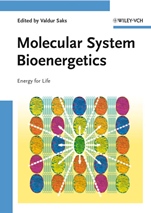
Molecular System Bioenergetics: Energy for Life
ISBN 9783527317875
Autor: Valdur Saks
Wydawca: Wiley
Dostępność: 3-6 tygodni
Cena: 1 287,30 zł
Przed złożeniem zamówienia prosimy o kontakt mailowy celem potwierdzenia ceny.
ISBN13: |
9783527317875 |
ISBN10: |
3527317872 |
Autor: |
Valdur Saks |
Oprawa: |
Hardback |
Rok Wydania: |
2007-09-19 |
Ilość stron: |
633 |
Wymiary: |
242x182 |
Tematy: |
PH |
Every organism must consume energy to survive. The food we eat is ultimately converted into chemical fuel for our cells, and the availability (or non–availability) of these fuels determines whether cells may grow and divide or starve and die. Not surprisingly, the energy metabolism is a key factor in sustaining or blocking the unlimited growth of cancer cells.
In this first integrated view, practically each of the world′s leading experts has contributed to this one and only authoritative resource on the topic.
Following an introduction, they go on to discuss the basic principles, organization and dynamics of cellular energetics, as well as energy transfer networks, metabolic feedback regulation and modeling, finishing off with a section on applied molecular system bioenergetics.
With its combination of systems biology and cellular energetics, this is an invaluable reference for biochemists, biophysicists, cell and molecular biologists, as well as bioengineers.
Spis treści:
Preface.
List of Contributors.
Introduction: From the Discovery of Biological Oxidation to Molecular System Bioenergetics (Valdur Saks).
References.
Part I Molecular System Bioenergetics: Basic Principles, Organization, and Dynamics of Cellular Energetics.
1 Cellular Energy Metabolism and Integrated Oxidative Phosphorylation (Xavier M. Leverve, Nellie Taleux, Roland Favier, Cécile Batandier, Dominique Detaille, Anne Devin, Eric Fontaine, and Michel Rigoulet).
Abstract.
1.1 Introduction.
1.2 Membrane Transport and Initial Activation.
1.3 Cytosolic Pathway.
1.4 Mitochondrial Transport and Metabolism.
1.5 Respiratory Chain and Oxidative Phosphorylation.
1.6 Electron Supply.
1.7 Reducing Power Shuttling Across the Mitochondrial Membrane.
1.8 Electron Transfer in the Respiratory Chain: Prominent Role of Complex I in the Regulation of the Nature of Substrate.
1.9 Modulation of Oxi
dative Phosphorylation by Respiratory Chain Slipping and Proton Leak.
1.10 The Nature of Cellular Substrates Interferes with the Metabolic Consequences of Uncoupling.
1.11 Dynamic Supramolecular Arrangement of Respiratory Chain and Regulation of Oxidative Phosphorylation.
References.
2 Organization and Regulation of Mitochondrial Oxidative Phosphorylation (Michel Rigoulet, Arnaud Mourier, and Anne Devin).
Abstract.
2.1 Introduction.
2.2 Oxidative Phosphorylation and the Chemiosmotic Theory.
2.3 The Various Mechanisms of Energy Waste.
2.4 Mechanisms of Coupling in Proton Pumps.
2.5 Oxidative Phosphorylation Control and Regulation.
2.6 Supramolecular Organization of the Respiratory Chain.
2.7 Conclusions.
References.
3 Integrated and Organized Cellular Energetic Systems: Theories of Cell Energetics, Compartmentation, and Metabolic Channeling (Valdur Saks, Claire Monge, Tiia Anmann, and Petras P. Dzeja).
Abstract.
3.1 Introduction.
3.2 Theoretical Basis of Cellular Metabolism and Bioenergetics.
3.3 Compartmentalized Energy Transfer and Metabolic Sensing.
4 On the Network Properties of Mitochondria (Miguel A. Aon, Sonia Cortassa, and Brian O’Rourke).
Abstract.
4.1 Introduction.
4.2 The Study of (Sub)Cellular Networks and the Emerging View of Cells as Dynamic Mass Energy Information Networks.
4.3 Mitochondrial Morphodynamics.
4.4 The Key Role of Inner and Outer Membrane Ion Channels on Mitochondrial Network Dynamics.
4.5 Mitochondrial Network Behavior Associated with Intracellular Signaling.
4.6 Mitochondria as a Network of Coupled Oscillators.
4.7 Discussion.
4.8 Concluding Remarks.
References.
5 Structural Organization and Dynamics of Mitochondria in the Cells in Vivo (Andrey V. Kuznetsov).
Abstract.
5.1 Introduction.
5.2 Intracellular Organization of Mitochondria.
5.3 Mitochondrial Dynamics: Regulation of Mitochondrial Morphology.
5.4 Mitochondrial Dynamics: Mitochondrial Movement (Motility) in the Cell.
5.5 Concluding Remarks.
References.
Part II Energy Transfer Networks, Metabolic Feedback Regulation, and Modeling of Cellular Energetics.
6 Mitochondrial VDAC and Its Complexes (Dieter Brdiczka).
Abstract.
6.1 The Role of VDAC in Controlling the Interaction of Mitochondria with the Cytosol.
6.2 Molecular Structure and Membrane Topology of VDAC.
6.3 VDAC Conductance, Voltage Dependence, and Ion Selectivity.
6.4 The Physiological Signi.cance of VDAC Voltage Gating.
6.5 VDAC Isoforms and Functions.
6.6 Mitochondria and Apoptosis.
6.7 VDAC and ANT May Form the Mitochondrial Permeability Transition Pore.
6.8 Accessory MPT Pore Subunits.
6.9 ANT Knockout Studies.
6.10 The Role of VDAC in Organizing Kinases at the Mitochondrial Surface.
6.11 Hexokinase–VDAC–ANT Complexes in Tumor Cells.
6.12 Hexokinase as a Marker Enzyme of Contact Sites.
6.13 VDAC–ANT Complexes.
6.14 VDAC–ANT Complexes Contain Cytochrome c.
6.15 VDAC Oligomerization and Cytochrome c Binding.
6.16 Possible Function of Cytochrome c in the Contact Sites.
6.17 Cholesterol and Cardiolipin In.uence VDAC Structure and Function.
6.18 The Importance of VDAC Complexes in Regulation of Energy Metabolism and Apoptosis.
6.19 Suppression of Bax–dependent Cytochrome c Release and Permeability Transition by Hexokinase.
6.20 Suppression of Permeability Transition and Cytochrome c Release by Mitochondrial Creatine Kinase.
6.21 The General Importance of the Creatine Kinase System in Heart Performance.
6.22 The Central Regulatory Role of ANT.
References.
7 The Phosphocreatine Circuit: Molecular and Cellular Physiology of Creatine Kinases, Sensitivity to Free Radicals, and Enhancement by Creatine Supplementation (Theo Wallimann, Malgorzata Tokarska–Schlattner, Dietbert Neumann, Richard M. Epand,
Raquel F. Epand, Robert H. Andres, Hans Rudolf Widmer, Thorsten Hornemann, Valdur Saks, Irina Agarkova, and Uwe Schlattner).
Abstract.
7.1 Phosphotransfer Enzymes: The Creatine Kinase System.
7.2 Creatine Kinases and Cell Pathology.
7.3 Novel Membrane–related Functions of MtCK.
7.4 Exquisite Sensitivity of the Creatine Kinase System to Oxidative Damage.
7.5 Enhancement of Brain Functions and Neuroprotection by Creatine Supplementation.
References.
8 Integration of Adenylate Kinase and Glycolytic and Glycogenolytic Circuits in Cellular Energetics (Petras P. Dzeja, Susan Chung, and Andre Terzic).
Abstract.
8.1 Introduction.
8.2 The Adenylate Kinase Phosphotransfer System in Cell Energetics and AMP Metabolic Signaling.
8.3 Glycolysis as a Network of Phosphotransfer Circuits and Metabolite Shuttles.
8.4 Glycogen Energy Transfer Network: Adding a Spatial Dimension to Glycogenolysis.
8.5 Concluding Remarks: Integration of Phosphotransfer Pathways.
References.
9 Signaling by AMP–activated Protein Kinase (Dietbert Neumann, Theo Wallimann, Mark H. Rider, Malgorzata Tokarska–Schlattner, D. Grahame Hardie, and Uwe Schlattner).
Abstract.
9.1 Metabolism and Cell Signaling.
9.2 Sensing and Signaling of Cellular Energy Stress Situations.
9.3 Mammalian AMPK Is a Member of an Ancient, Conserved Protein Kinase Family.
9.4 Regulation of AMPK.
9.5 Signaling Downstream of AMPK.
9.6 Conclusions and Perspectives.
References.
10 Developmental and Functional Consequences of Disturbed Energetic Communication in Brain of Creatine Kinase–deficient Mice: Understanding CK’s Role in the Fuelling of Behavior and Learning (Femke Streijger, René in ‘t Zandt, Klaas Jan Renema, Frank Oerlemans, Arend Heerschap, Jan Kuiper, Helma Pluk, Caroline Jost, Ineke van der Zee, and Bé Wieringa).
Abstract.
10.1 Use of Reverse Genetics to Study C
Koszyk
Książek w koszyku: 0 szt.
Wartość zakupów: 0,00 zł
Informacje


Kontakt
Gambit
Centrum Oprogramowania
i Szkoleń Sp. z o.o.
Al. Pokoju 29b/22-24
31-564 Kraków
Siedziba Księgarni
ul. Kordylewskiego 1
31-542 Kraków
+48 12 410 5991
+48 12 410 5987
+48 12 410 5989
Subskrypcje
Administratorem danych osobowych jest firma Gambit COiS Sp. z o.o. Na podany adres będzie wysyłany wyłącznie biuletyn informacyjny.
Autoryzacja płatności

Informacje na temat autoryzacji płatności poprzez PayU.

© Copyright 2012: GAMBIT COiS Sp. z o.o. Wszelkie prawa zastrzeżone.
Projekt i wykonanie: Alchemia Studio Reklamy