


Wydawcy
Katalog tematyczny
- Archeologia (109)
- Ekonomia, finanse, business (13704)
- Filozofia (1445)
- Historia (3040)
- Języki i językoznawstwo (2356)
- Lifestyle, hobby i rozrywka (475)
- Medycyna (9704)
- Nauki humanistyczne (4)
- Nauki o Ziemi i środowisku (2638)
- Nauki ścisłe (20412)
- Astronomia (294)
- Biologia (5119)
- Chemia (6540)
- Chemia analityczna (361)
- Chemia fizyczna (346)
- Chemia nieorganiczna (137)
- Chemia organiczna (535)
- Krystalografia (27)
- Minerologia (46)
- Fizyka (3309)
- Matematyka (4574)
- Nauki ścisłe, ogólnie (503)
- Nauki społeczne (8486)
- Nauki techniczne (13450)
- Prawo (1696)
- Publikacje informacyjne i interdyscyplinarne (1288)
- Religia i wierzenia (917)
- Technika komputerowa (4067)
- Zdrowie, relacje międzyludzkie i rozwój osobisty (657)





Informacje szczegółowe o książce
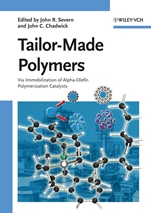
Tailor–Made Polymers: Via Immobilization of Alpha–Olefin Polymerization Catalysts
ISBN 9783527317820
Autor: John R. Severn, John C. Chadwick
Wydawca: Wiley
Dostępność: 3-6 tygodni
Cena: 1 043,70 zł
Przed złożeniem zamówienia prosimy o kontakt mailowy celem potwierdzenia ceny.
ISBN13: |
9783527317820 |
ISBN10: |
3527317821 |
Autor: |
John R. Severn, John C. Chadwick |
Oprawa: |
Hardback |
Rok Wydania: |
2008-02-20 |
Ilość stron: |
374 |
Wymiary: |
242x181 |
Tematy: |
PN |
This first comprehensive handbook on this exciting field provides readers with a clear understanding of the current state of the art, ingenious solutions and opportunities. Researchers from academia and industry present such emerging topics as multi–component systems and computational chemistry, as well as the latest developments in competing and complementary technologies. The result is a well–balanced and up–to–date overview.
Spis treści:
Preface.
List of Contributors.
1 Designing Polymer Properties (Markus Gahleitner and John R. Severn).
1.1 Polyolefins.
1.2 Levels and Scales of Polymer Structure and Modification.
1.3 Polymer Design: The Catalyst’s Point of View.
1.4 Immobilizing “Single–site” Olefi n Polymerization Catalysts: The Basic Problems.
2 Traditional Heterogeneous Catalysts.
2.1 Ziegler–Natta Catalysts in Polyolefi n Synthesis (John C. Chadwick, Thomas Garoff, and John R. Severn).
2.2 Chromium Polymerization Catalysts: Still Alive in Polyethylene Production (Hilkka Knuuttila and Arja Lehtinen).
3 Polymer Particle Growth and Process Engineering Aspects (Michael Bartke).
3.1 Heterogeneous Polymerization with Supported Catalysts versus Polymerization in Homogeneous Phase.
3.2 Phenomena in Polymerization with Heterogeneous Catalysts.
3.3 Polymerization Processes and Reactors for Polymerization with Heterogeneous Catalysts.
3.4 Requirements for Polymerization Catalysts.
4 Methylaluminoxane (MAO), Silica and a Complex: The “Holy Trinity” of Supported Single–site Catalyst (John R. Severn).
4.1 Introduction.
4.2 Basic Ingredients.
4.3 Catalyst Preparations.
4.4 Pitfalls in the Generation of Single–Site Polymer Material.
4.5 Conclusions.
5 Perfl uoroaryl Group 13 Activated Catalysts on Inorganic Oxides (Gregory G. H
latky and Michael W. Lynch).
5.1 Introduction.
5.2 Supported Perfl uoroarylborate Catalysts.
5.3 Supported Perfl uoroarylborane and Perfl uoroarylalane Catalysts.
5.4 Conclusions.
6 Catalysts Supported on Magnesium Chloride (John C. Chadwick).
6.1 Introduction.
6.2 Magnesium Chloride as Activator.
6.3 Magnesium Chloride/Methylaluminoxane.
6.4 Magnesium Chloride/Borate.
6.5 Magnesium Chloride/Aluminum Alkyl.
6.6 Conclusions.
7 Metallocene Activation by Solid Acids (Max P. McDaniel, Michael D. Jensen, Kumindini Jayaratne, Kathy S. Collins,Elizabeth A. Benham, Neal D. McDaniel, P. K. Das, Joel L. Martin, Qing Yang, Mathew G. Thorn, and Albert P. Masino).
7.1 Introduction.
7.2 Experimental.
7.3 Results and Discussion.
7.4 Metallocene Choice.
7.5 Participation by Aluminum Alkyl.
7.6 Brønsted versus Lewis Acidity.
7.7 Polymer Molecular Weight Distribution.
7.8 Leaching of the Metallocene.
7.9 Characterization of Active Sites.
7.10 Clay as an Activator.
7.11 Zeolites as Metallocene Activators.
7.12 Conclusions.
8 Supported Multicomponent Single–Site α–Olefin Polymerization Catalysts (Nic Friederichs, Nourdin Ghalit, and Wei Xu).
8.1 Introduction.
8.2 Supported Catalysts for Concurrent Tandem Oligomerization/Copolymerization.
8.3 Concurrent Tandem Catalysis for Increased Levels of Long–Chain Branching (LCB).
8.4 Supported Multicomponent Catalysts for Bimodal/Multimodal MMD Polyethylene.
8.5 Multicomponent Catalysts for Polypropylene.
8.6 Multicomponent Catalysts for Block Copolymers.
8.7 Conclusions.
9 Tethering Olefi n Polymerization Catalysts and Cocatalysts to Inorganic Oxides (Jason C. Hicks and Christopher W. Jones).
9.1 Introduction.
9.2 Surface–Tethered Precatalysts.
9.3 Tethering Cocatalysts.
9.4 Molecular Models.
9.5 Conclusions.
10 Polymerizati
on with the Single–Site Catalyst Confi ned within the Nanospace of Mesoporous Materials or Clays (Young Soo Ko and Seong Ihl Woo).
10.1 Introduction.
10.2 Single–Site Catalyst Confi ned within the Nanopores of Mesoporous Materials.
10.3 Single–Site Catalyst Confi ned within the Nanogalleries of Mineral Clays.
10.4 Summary.
11 Polymeric Supported Catalysts (Markus Klapper and Gerhard Fink).
11.1 Introduction.
11.2 Polysiloxanes.
11.3 Polystyrene.
11.4 Dendrimers.
11.5 Polyolefins.
11.6 Carbon Nanotubes.
12 Self–immobilizing Catalysts for Olefi n Polymerization (Helmut G. Alt and Christian Görl).
12.1 General Aspects: Why Heterogenize Homogeneous Olefi n Polymerization Catalysts?
12.2 A New Approach: Self–immobilizing Catalysts – Let the Catalyst Produce its own Support.
12.3 Self–immobilizing Metallocene Catalysts.
12.4 Self–immobilizing Half–Sandwich Complexes.
12.5 Self–immobilizing Non–Metallocene Transition Metal Complexes.
12.6 Self–immobilizing Cocatalysts.
Index.
Nota biograficzna:
John Severn completed his Ph.D. at the University of Sussex and joined the group of Prof. R. van Santen at the Eindhoven University of Technology as a postdoc, working on the immobilization of alpha–olefin polymerization catalysts and the use of silsesquioxanes as homogeneous models. Then he joined the Dutch Polymer Institute working on the immobilization of single–site alpha–olefin polymerization catalyst, and with Avantium Technologies B.V. developing high throughput experimentation techniques for polyolefin catalysis. Since 2005 he has been a researcher at Borealis Polymer Oy, Finland.
John Chadwick received his Ph.D. from the University of Bristol, after which he joined Shell Research in Amsterdam. Following the formation of Montell Polyolefins, he t
ransferred from Shell to the Montell (now Basell) research center in Ferrara, Italy, with special responsibility for fundamental Ziegler–Natta catalyst R&D. In 2001, he joined the polymer chemistry group at the Eindhoven University of Technology as Programme Coordinator for research on polyolefin catalysis and catalyst immobilization.
Okładka tylna:
This first comprehensive handbook on this exciting field provides readers with a clear understanding of the current state of the art, ingenious solutions and opportunities. Researchers from academia and industry present such emerging topics as multi–component systems and computational chemistry, as well as the latest developments in competing and complementary technologies. The result is a well–balanced and up–to–date overview.
Koszyk
Książek w koszyku: 0 szt.
Wartość zakupów: 0,00 zł
Informacje


Kontakt
Gambit
Centrum Oprogramowania
i Szkoleń Sp. z o.o.
Al. Pokoju 29b/22-24
31-564 Kraków
Siedziba Księgarni
ul. Kordylewskiego 1
31-542 Kraków
+48 12 410 5991
+48 12 410 5987
+48 12 410 5989
Subskrypcje
Administratorem danych osobowych jest firma Gambit COiS Sp. z o.o. Na podany adres będzie wysyłany wyłącznie biuletyn informacyjny.
Autoryzacja płatności

Informacje na temat autoryzacji płatności poprzez PayU.

© Copyright 2012: GAMBIT COiS Sp. z o.o. Wszelkie prawa zastrzeżone.
Projekt i wykonanie: Alchemia Studio Reklamy