


Wydawcy
Katalog tematyczny
- Archeologia (109)
- Ekonomia, finanse, business (13704)
- Filozofia (1445)
- Historia (3040)
- Języki i językoznawstwo (2356)
- Lifestyle, hobby i rozrywka (475)
- Medycyna (9704)
- Nauki humanistyczne (4)
- Nauki o Ziemi i środowisku (2638)
- Nauki ścisłe (20412)
- Astronomia (294)
- Biologia (5119)
- Chemia (6540)
- Chemia analityczna (361)
- Chemia fizyczna (346)
- Chemia nieorganiczna (137)
- Chemia organiczna (535)
- Krystalografia (27)
- Minerologia (46)
- Fizyka (3309)
- Matematyka (4574)
- Nauki ścisłe, ogólnie (503)
- Nauki społeczne (8486)
- Nauki techniczne (13450)
- Prawo (1696)
- Publikacje informacyjne i interdyscyplinarne (1288)
- Religia i wierzenia (917)
- Technika komputerowa (4067)
- Zdrowie, relacje międzyludzkie i rozwój osobisty (657)





Informacje szczegółowe o książce
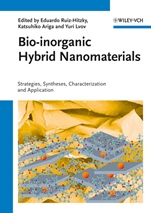
Bio–inorganic Hybrid Nanomaterials: Strategies, Synthesis, Characterization and Applications
ISBN 9783527317189
Autor: Eduardo Ruiz–Hitzky, Katsuhiko Ariga, Yuri M. Lvov
Wydawca: Wiley
Dostępność: 3-6 tygodni
Cena: 1 071,00 zł
Przed złożeniem zamówienia prosimy o kontakt mailowy celem potwierdzenia ceny.
ISBN13: |
9783527317189 |
ISBN10: |
352731718X |
Autor: |
Eduardo Ruiz–Hitzky, Katsuhiko Ariga, Yuri M. Lvov |
Oprawa: |
Hardback |
Rok Wydania: |
2007-12-12 |
Ilość stron: |
521 |
Wymiary: |
249x180 |
Tematy: |
PN |
This ready reference is the first to collate the interdisciplinary knowledge from materials science, bioengineering and nanotechnology to give an in–depth overview of the topic. As such, it provides broad coverage of combinations between inorganic materials and such key biological structures as proteins, enzymes, DNA, and other biopolymers. With its treatment of various application directions, including bioelectronic interfacing, tissue repair, porous membranes, sensors, nanocontainers, and DNA engineering, this is essential reading for materials engineers, medical researchers, catalytic chemists, biologists, and those working in the biotechnological and semiconductor industries.
Spis treści:
Preface.
Contributors.
1 An Introduction to Bio–nanohybrid Materials (Eduardo Ruiz–Hitzky, Margarita Darder, Pilar Aranda).
1.1 Introduction: The Assembly of Biological Species to Inorganic Solids.
1.2 Bio–nanohybrids Based on Silica Particles and Siloxane Networks.
1.3 Calcium Phosphates and Carbonates in Bioinspired and Biomimetic Materials.
1.4 Clay Minerals and Organoclay Bio–nanocomposites.
1.5 Bio–Nanohybrids Based on Metal and Metal Oxide Nanoparticles.
1.6 Carbon–based Bio–nanohybrids.
1.7 Bio–nanohybrids Based on Layered Transition Metal Solids.
1.8 Trends and Perspectives.
References.
2 Biomimetic Nanohybrids Based on Organosiloxane Units (Kazuko Fujii, Jonathan P. Hill, Katsuhiko Ariga).
2.1 Introduction.
2.2 Monolayer on Solid Support.
2.3 Layered Alkylsiloxane.
2.4 Organic–Inorganic Hybrid Vesicle Cerasome.
2.5 Mesoporous Silica Prepared by the Lizard Template Method.
2.6 Future Perspectives.
References.
3 Entrapment of Biopolymers into Sol–Gel–derived Silica Nanonocomposites (Yury A. Shchipunov).
3.1 Introduction.
3.2 Sol–Gel Processes.
3.3 Biocompatible Approaches.
3.4 One
–Stage Approach Based on a Silica Precursor with Ethylene Glycol Residues.
3.5 Perspectives.
References.
4 Immobilization of Biomolecules on Mesoporous Structured Materials (Ajayan Vinu, Narasimhan Gokulakrishnan, Toshiyuki Mori, Katsuhiko Ariga).
4.1 Introduction.
4.2 Immobilization of Protein on Mesoporous Silica.
4.3 Immobilization of Protein on Mesoporous Carbon and Related Materials.
4.4 Immobilization of Other Biopolymers on Mesoporous Materials.
4.5 Immobilization of Small Biomolecules on Mesoporous Materials.
4.6 Advanced Functions of Nanohybrids of Biomolecules and Mesoporous Materials.
4.7 Future Perspectives.
References.
5 Bio–controlled Growth of Oxides and Metallic Nanoparticles (Thibaud Coradin, Roberta Brayner, Fernand Fiévet, Jacques Livage).
5.1 Introduction.
5.2 Biomimetic Approaches.
5.3 In vitro Synthesis of Hybrid Nanomaterials.
5.4 Perspectives: Towards a Green Nanochemistry.
References.
6 Biomineralization of Hydrogels Based on Bioinspired Assemblies for Injectable Biomaterials (Junji Watanabe, Mitsuru Akashi).
6.1 Introduction.
6.2 Fundamental Concept of Bioinspired Approach.
6.3 Alternate Soaking Process for Biomineralization and their Bio–functions.
6.4 Electrophoresis Process for Biomineralization.
6.5 Conclusions.
References.
7 Bioinspired Porous Hybrid Materials via Layer–by–Layer Assembly (Yajun Wang, Frank Caruso).
7.1 Introduction.
7.2 Porous Materials.
7.3 LbL Assembly.
7.4 LbL Assembly on MS Substrates.
7.5 LbL Assembly on Macroporous Substrates.
7.6 Summary and Outlook.
References.
8 Bio–inorganic Nanohybrids Based on Organoclay Self–assembly (Avinash J. Patil, Stephen Mann).
8.1 Introduction.
8.2 Synthesis and Characterization of Organically Functionalized 2:1 Magnesium Phyllosilicates.
8.3 MagnesiumOrganophyllosilicates withHigher–order
Organization.
8.4 Intercalation of Biomolecules within Organically Modified Magnesium Phyllosilicates.
8.5 Hybrid Nanostructures Based on Organoclay Wrapping of Single Biomolecules.
8.6 Functional Mesolamellar Bio–inorganic Nanocomposite Films.
8.7 Summary.
References.
9 Biodegradable Polymer–based Nanocomposites: Nanostructure Control and Nanocomposite Foaming with the Aim of Producing Nano–cellular Plastics (Masami Okamoto).
9.1 Introduction.
9.2 Nano–structure Development.
9.3 Control of Nanostructure Properties.
9.4 Physicochemical Phenomena.
9.5 Foam Processing using Supercritical CO2.
9.6 Porous Ceramic Materials via Nanocomposites.
9.7 Future Prospects.
References.
10 Biomimetic and Bioinspired Hybrid Membrane Nanomaterials (Mihail Barboiu).
10.1 Introduction.
10.2 Molecular Recognition–based Hybrid Membranes.
10.3 Self–organized Hybrid Membrane Materials.
10.4 Dynamic Site Complexant Membranes.
10.5 Conclusions.
References.
11 Design of Bioactive Nano–hybrids for Bone Tissue Regeneration (Masanobu Kamitakahara, Toshiki Miyazaki, Chikara Ohtsuki).
11.1 Introduction.
11.2 Composite of Bioactive Ceramic Particles and Polymers.
11.3 Bone–bonding Mechanism of Bioactive Materials.
11.4 Sol–Gel–derived Bioactive Nano–hybrids.
11.5 Nano–hybrid Consisting of Bone–like Hydroxyapatite and Polymer.
11.6 Nano–hybrid Consisting of Hydroxyapatite and Protein.
11.7 Conclusion.
References.
12 Nanostructured Hybrid Materials for Bone Implants Fabrication (María Vallet–Regí, Daniel Arcos).
12.1 Introduction.
12.2 Bone: A Biological Hybrid Nanostructured Material.
12.3 Biomimetic Materials for Bone Repair. The Hybrid Approach.
12.4 Synthesis and Properties of Organic–Inorganic Hybrid Materials for Bone and Dental Applications.
12.5 Conclusion.
References.
13 Bio–inorganic Conjugates for Drug and Gene Delivery (Jin–Ho Choy, Jae–Min Oh, Soo–Jin Choi).
13.1 Introduction.
13.2 Synthesis of Bio–inorganic Conjugates.
13.3 Bio–inorganic Conjugate for Efficient Gene Delivery.
13.4 Bio–inorganic Conjugate for Efficient Drug Delivery.
13.5 Cellular Uptake Mechanism of LDH.
13.6 Conclusion.
References.
14 Halloysite Nanotubules, a Novel Substrate for the Controlled Delivery of Bioactive Molecules (Yuri M. Lvov, Ronald R. Price).
14.1 Halloysite Structural Characterization.
14.2 Macromolecule Loading and Sustained Release.
14.3 Nanoassembly on Tubules and at the Lumen Opening.
14.4 Catalysis in a Nanoconstrained Volume of the Tubule Lumen.
14.5 Multilayer Halloysite Assembly for Organized Nanofilms. Forming Low Density Tubule Nanoporous Materials.
14.6 Applications: Current and Potential.
References.
15 Enzyme–based Bioinorganic Materials (Claude Forano, Vanessa Prévot).
15.1 Introduction.
15.2 Enzymes versus Inorganic Host Properties.
15.3 Immobilization Strategy.
15.4 Bioinorganic Nanohybrids.
15.5 Enzyme–Host Structure Interactions.
References.
Index.
Nota biograficzna:
Eduardo Ruiz–Hitzky is the director of the Department of Porous Materials and Intercalation Compounds at the Materials Science Institute of Madrid (CSIC), Spain. His research work during the last 30 years has focused on organic–inorganic hybrids and bio–nanocomposite materials. Professor Ruiz–Hitzky has authored over 150 scientific publications and edited two journal special issues, one of them (now in preparation) on bio–nanohybrid materials. He has received several scientific awards from different countries, including the AIPEA Medal from the International Association for the Study of Clays (Tokyo, 2005).
Katsuhiko Ar
iga is the director of the Supermolecules Group at the National Institute for Materials Science (NIMS), Japan. His research work during the last 20 years has focused on fabrication of nanostructured materials through specific interaction at interfaces, creating novel hybrids of inorganic, organic and biological materials. Dr. Katsuhiko Ariga has authored over 230 scientific publications and received more than 3600 citations. He has published three text books on supramolecular chemistry and served as an editor of one book and one journal special issue on nanomaterials.
Yuri M. Lvov is Chemistry Professor and Pipes Endowed Chair on Micro and Nanosystems at Louisiana Tech University, USA. Earlier, he worked in the Center for Biomolecular Science and Engineering at the Naval Research Laboratory. He is author of more than 150 scientific publications on ultrathin films, biomaterials, clay nanocomposites, and nanocapsules for sustained drug release. Professor Yuri Lvov was among the pioneers of the layer–by–layer nanoassembly technique based on alternate adsorption of oppositely charged components with more than 4000 citations of these works.
Okładka tylna:
This ready reference is the first to collate the interdisciplinary knowledge from materials science, bioengineering and nanotechnology to give an in–depth overview of the topic. As such, it provides broad coverage of combinations between inorganic materials and such key biological structures as proteins, enzymes, DNA, and other biopolymers. With its treatment of various application directions, including bioelectronic interfacing, tissue repair, porous membranes, sensors, nanocontainers, and DNA engineering, this is essential reading for materials engineers, medical researchers, catalytic chemists, biologists, and those working in the biotechnological and semiconductor industries.
Koszyk
Książek w koszyku: 0 szt.
Wartość zakupów: 0,00 zł
Informacje


Kontakt
Gambit
Centrum Oprogramowania
i Szkoleń Sp. z o.o.
Al. Pokoju 29b/22-24
31-564 Kraków
Siedziba Księgarni
ul. Kordylewskiego 1
31-542 Kraków
+48 12 410 5991
+48 12 410 5987
+48 12 410 5989
Subskrypcje
Administratorem danych osobowych jest firma Gambit COiS Sp. z o.o. Na podany adres będzie wysyłany wyłącznie biuletyn informacyjny.
Autoryzacja płatności

Informacje na temat autoryzacji płatności poprzez PayU.

© Copyright 2012: GAMBIT COiS Sp. z o.o. Wszelkie prawa zastrzeżone.
Projekt i wykonanie: Alchemia Studio Reklamy