


Wydawcy
Katalog tematyczny
- Archeologia (109)
- Ekonomia, finanse, business (13704)
- Filozofia (1445)
- Historia (3040)
- Języki i językoznawstwo (2356)
- Lifestyle, hobby i rozrywka (475)
- Medycyna (9704)
- Nauki humanistyczne (4)
- Nauki o Ziemi i środowisku (2638)
- Nauki ścisłe (20412)
- Astronomia (294)
- Biologia (5119)
- Chemia (6540)
- Chemia analityczna (361)
- Chemia fizyczna (346)
- Chemia nieorganiczna (137)
- Chemia organiczna (535)
- Krystalografia (27)
- Minerologia (46)
- Fizyka (3309)
- Matematyka (4574)
- Nauki ścisłe, ogólnie (503)
- Nauki społeczne (8486)
- Nauki techniczne (13450)
- Prawo (1696)
- Publikacje informacyjne i interdyscyplinarne (1288)
- Religia i wierzenia (917)
- Technika komputerowa (4067)
- Zdrowie, relacje międzyludzkie i rozwój osobisty (657)





Informacje szczegółowe o książce
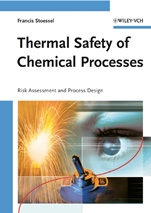
Thermal Safety of Chemical Processes: Risk Assessment and Process Design
ISBN 9783527317127
Autor: Francis Stoessel
Wydawca: Wiley
Dostępność: 3-6 tygodni
Cena: 729,75 zł
Przed złożeniem zamówienia prosimy o kontakt mailowy celem potwierdzenia ceny.
ISBN13: |
9783527317127 |
ISBN10: |
3527317120 |
Autor: |
Francis Stoessel |
Oprawa: |
Hardback |
Rok Wydania: |
2008-02-13 |
Ilość stron: |
393 |
Wymiary: |
250x180 |
Tematy: |
PN |
Based on the author′s many years of experience in practicing safety assessment in industry and teaching students or professionals in this area, this book presents the methods for a systematic assessment of risks due to potential loss of control over chemical reactions and for the prevention of runaway reactions on an industrial scale.
Since this topic is seldom found on university curricula and many professionals do not have the knowledge required to interpret thermal data in terms of risks, Francis Stoessel adopts a unique systematic how–to–do approach: Emphasis is on the data determination and its use for the design of safe processes. He presents the theoretical, methodological and experimental aspects of thermal risk evaluation, while reviewing the principles for mastering exothermal synthesis reactions on an industrial scale for the different common reactor types.
Each chapter begins with a case history illustrating the topic and presenting the lessons learned from the incident. In this way, Stoessel analyzes a goldmine of numerous examples stemming from industrial practice, additionally providing a series of problems or case studies at the end of each chapter.
Divided into three distinct sections, part one looks at the general aspects of thermal process safety, while Part 2 deals with mastering exothermal reactions. The final section discusses the avoidance of secondary, decomposition reactions, with methods given for their characterization in terms of consequences and triggering conditions, allowing the reader to determine safe process conditions.
Spis treści:
Preface.
Part I General Aspects of Thermal Process Safety.
1 Introduction to Risk Analysis of Fine Chemical Processes.
1.1 Introduction.
1.2 Chemical Industry and Safety.
1.3 Risk Analysis.
1.4 Safety Data.
1.5 Systematic Search for Hazards.
1.6 Key Factors for a Successful Risk Analysis.
2 Fundamentals o
f Thermal Process Safety.
2.1 Introduction.
2.2 Energy Potential.
2.3 Effect of Temperature on Reaction Rate.
2.4 Heat Balance.
2.5 Runaway Reactions.
2.6 Exercises.
3 Assessment of Thermal Risks.
3.1 Introduction.
3.2 Thermal Risks.
3.3 Systematic Assessment Procedure.
3.4 Assessment Procedures.
3.5 Exercises.
4 Experimental Techniques.
4.1 Introduction.
4.2 Calorimetric Measurement Principles.
4.3 Choice of Instruments Used in Safety Laboratories.
4.4 Exercises.
Part II Mastering Exothermal Reactions.
5 General Aspects of Reactor Safety.
5.1 Introduction.
5.2 Dynamic Stability of Reactors.
5.3 Example.
6 Batch Reactors.
6.1 Introduction.
6.2 Principles of Batch Reaction.
6.3 Strategies of Temperature Control.
6.4 Isothermal Reactions.
6.5 Adiabatic Reaction.
6.6 Polytropic Reaction.
6.7 Isoperibolic Reaction.
6.8 Temperature Controlled Reaction.
6.9 Key Factors for the Safe Design of Batch Reactors.
6.10 Exercises.
7 Semi–batch Reactors.
7.1 Introduction.
7.2 Principles of Semi–batch Reaction.
7.3 Reactant Accumulation in Semi–batch Reactors.
7.4 Design of Safe Semi–batch Reactors.
7.5 Isothermal Reaction.
7.6 Isoperibolic, Constant Cooling Medium Temperature.
7.7 Non–isothermal Reaction.
7.8 Strategies of Feed Control.
7.9 Choice of Temperature and Feed Rate.
7.10 Feed Control by Accumulation.
7.11 Exercises.
8 Continuous Reactors.
8.1 Introduction.
8.2 Continuous Stirred Tank Reactors.
8.3 Tubular Reactors.
8.4 Other Continuous Reactor Types.
9 Technical Aspects of Reactor Safety.
9.1 Introduction.
9.2 Temperature Control of Industrial Reactors.
9.3 Heat Exchange Across the Wall.
9.4 Evaporative Cooling.
9.5 Dynamics of the Temperature Control System and Process Design.
9.6 Exercises.
10 Risk Reduci
ng Measures.
10.1 Introduction.
10.2 Strategies of Choice.
10.3 Eliminating Measures.
10.4 Technical Preventing Measures.
10.5 Emergency Measures.
10.6 Design of Technical Measures.
10.7 Exercises.
Part III Avoiding Secondary Reactions.
11 Thermal Stability.
11.1 Introduction.
11.2 Thermal Stability and Secondary Decomposition Reactions.
11.3 Consequences of Secondary Reactions.
11.4 Triggering Conditions.
11.5 Experimental Characterization of Decomposition Reactions.
11.6 Exercises.
12 Autocatalytic Reactions.
12.1 Introduction.
12.2 Autocatalytic Decompositions.
12.3 Characterization of Autocatalytic Reactions.
12.4 Practical Safety Aspects for Autocatalytic Reactions.
12.5 Exercises.
13 Heat Confi nement.
13.1 Introduction.
13.2 Heat Accumulation Situations.
13.3 Heat Balance.
13.4 Heat Balance with Reactive Material.
13.5 Assessing Heat Accumulation Conditions.
13.6 Exercises.
14 Symbols.
Index.
Nota biograficzna:
Professor Francis Stoessel is Head of Chemical Process Safety Consulting in the Swiss Institute for the Promotion of Safety & Security. After graduating in Chemical Engineering from the Universite de Haute Alsace, he spent most of his career working for Ciba–Geigy in their Chemical Engineering Department. He was Head of the Thermal Safety Department at Ciba, later of Process Safety Consulting at Novartis. He then took up a professorship at the Swiss Federal Institute of Technology at Lausanne. Prof. Stoessel has received awards from the Swiss Expert Commission for Safety in the Chemical Industry and the Swiss Society for Thermal Analysis and Calorimetry.
Okładka tylna:
Based on the author′s many years of experience in practicing safety assessment in industry and teaching students or professionals in this area, this book presents the methods for a system
atic assessment of risks due to potential loss of control over chemical reactions and for the prevention of runaway reactions on an industrial scale.
Since this topic is seldom found on university curricula and many professionals do not have the knowledge required to interpret thermal data in terms of risks, Francis Stoessel adopts a unique systematic how–to–do approach: Emphasis is on the data determination and its use for the design of safe processes. He presents the theoretical, methodological and experimental aspects of thermal risk evaluation, while reviewing the principles for mastering exothermal synthesis reactions on an industrial scale for the different common reactor types.
Each chapter begins with a case history illustrating the topic and presenting the lessons learned from the incident. In this way, Stoessel analyzes a goldmine of numerous examples stemming from industrial practice, additionally providing a series of problems or case studies at the end of each chapter.
Divided into three distinct sections, part one looks at the general aspects of thermal process safety, while Part 2 deals with mastering exothermal reactions. The final section discusses the avoidance of secondary, decomposition reactions, with methods given for their characterization in terms of consequences and triggering conditions, allowing the reader to determine safe process conditions.
Koszyk
Książek w koszyku: 0 szt.
Wartość zakupów: 0,00 zł
Informacje


Kontakt
Gambit
Centrum Oprogramowania
i Szkoleń Sp. z o.o.
Al. Pokoju 29b/22-24
31-564 Kraków
Siedziba Księgarni
ul. Kordylewskiego 1
31-542 Kraków
+48 12 410 5991
+48 12 410 5987
+48 12 410 5989
Subskrypcje
Administratorem danych osobowych jest firma Gambit COiS Sp. z o.o. Na podany adres będzie wysyłany wyłącznie biuletyn informacyjny.
Autoryzacja płatności

Informacje na temat autoryzacji płatności poprzez PayU.

© Copyright 2012: GAMBIT COiS Sp. z o.o. Wszelkie prawa zastrzeżone.
Projekt i wykonanie: Alchemia Studio Reklamy