


Wydawcy
Katalog tematyczny
- Archeologia (109)
- Ekonomia, finanse, business (13704)
- Filozofia (1445)
- Historia (3040)
- Języki i językoznawstwo (2356)
- Lifestyle, hobby i rozrywka (475)
- Medycyna (9704)
- Nauki humanistyczne (4)
- Nauki o Ziemi i środowisku (2638)
- Nauki ścisłe (20412)
- Astronomia (294)
- Biologia (5119)
- Chemia (6540)
- Chemia analityczna (361)
- Chemia fizyczna (346)
- Chemia nieorganiczna (137)
- Chemia organiczna (535)
- Krystalografia (27)
- Minerologia (46)
- Fizyka (3309)
- Matematyka (4574)
- Nauki ścisłe, ogólnie (503)
- Nauki społeczne (8486)
- Nauki techniczne (13450)
- Prawo (1696)
- Publikacje informacyjne i interdyscyplinarne (1288)
- Religia i wierzenia (917)
- Technika komputerowa (4067)
- Zdrowie, relacje międzyludzkie i rozwój osobisty (657)





Informacje szczegółowe o książce
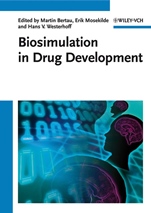
Biosimulation in Drug Development
ISBN 9783527316991
Autor: Martin Bertau, Erik Mosekilde, Hans V. Westerhoff
Wydawca: Wiley
Dostępność: 3-6 tygodni
Cena: 1 206,45 zł
Przed złożeniem zamówienia prosimy o kontakt mailowy celem potwierdzenia ceny.
ISBN13: |
9783527316991 |
ISBN10: |
352731699X |
Autor: |
Martin Bertau, Erik Mosekilde, Hans V. Westerhoff |
Oprawa: |
Hardback |
Rok Wydania: |
2007-10-17 |
Ilość stron: |
540 |
Wymiary: |
247x180 |
Tematy: |
PN |
Biosimulation in Drug Development gives the first comprehensive survey of a broad range of pharmaceutically relevant topics and provides an extensive and clear introduction to the novel and revolutionary tool of biosimulation. This book presents modelling concepts as well as application examples for metabolic networks, cells, organs and the body as a whole.
Following an introduction to the role of biosimulation in drug development, the authors go on to discuss the simulation of cells and tissues, as well as simulating drug action and effect. A further section is devoted to simulating networks and populations, and the whole is rounded off by a look at the potential for biosimulation in industrial drug development and for regulatory decisions.
Many of the authors are members of the BioSim Network of Excellence (LSHB–CT–2004–005137) that encompasses more than 40 academic institutions, pharmaceutical companies and regulatory authorities dealing with drug development; other contributors come from industry, resulting in a broad demonstration of Systems Biology in the pharmaceutical industry.
Spis treści:
Preface.
List of Contributors.
Part I: Introduction.
1. Simulation in Clinical Drug Development (J. J. Perez–Ruixo, F. De Ridder, H. Kimko, M. Samtani, E. Cox, S. Mohanty and A. Vermeulen).
1.1 Introduction.
1.2 Models for Simulations.
1.3 Simulations in Clinical Drug Development: Practical Examples.
1.4 Conclusions.
2. Modeling of Complex Biomedical Systems (E. Mosekilde, C. Knudsen and J. L. Laugesen).
2.1 Introduction.
2.2 Pulsatile Secretion of Insulin.
2.3 Subcutaneous Absorption of Insulin.
2.4 Bursting Pancreatic β–Cell.
2.5 Conclusions.
3. Biosimulation of Drug Metabolism (M. Bertau, L. Brusch and U. Kummer).
3.1 Introduction.
3.2 Experimental Approaches.
3.3 The Biosimulation Approach.
3.4 Ethical Issues.
3.5 PharmBio
sim – a Computer Model of Drug Metabolism in Yeast.
3.6 Computational Modeling.
3.7 Application of the Model to Predict Drug Metabolism.
3.8 Conclusions.
Part II: Simulating Cells and Tissues.
4. Correlation Between In Vitro, In Situ, and In Vivo Models (I. González–Ãlvarez, V. Casabó, V. Merino and M. Bermejo).
4.1 Introduction.
4.2 Biophysical Models of Intestinal Absorption.
4.3 Influence of Surfactants on Intestinal Permeability.
4.4 Modeling and Predicting Fraction Absorbed from Premeability Values.
4.5 Characterization of Active Transport Parameters.
5. Core–Box Modeling in the Biosimulation of Drug Action (G. Cedersund, P. StrÃ¥lfors and M. Jirstrand).
5.1 Introduction.
5.2 Core–Box Modeling.
5.3 A Core–Box Model for Insulin Receptor Phosphorylation and Intermalization in Adipocytes.
5.4 Discussion.
5.6 Summary.
6. The Glucose–Insulin Control System (C. E. Hallgreen, T. V. Korsgaard, R. N. Hansen and M. Colding–Jorgensen).
6.1 Introduction.
6.2 Biological Control Systems.
6.3 Glucose Sensing.
6.4 Glucose Handling.
6.5 The Control System at Large.
6.6 Conclusions.
7. Biological Rhythms in Mental Disorders (H. A. Braun, S. Postnova, B. Wollweber, H. Schneider, M. Belke, K. Voigt, H. Murck, U. Hemmeter and M. T. Huber).
7.1 Introduction: Mental Disorders as Multi–Scale and Multiple–system Diseases.
7.2 The Time Course of Recurrent Mood Disorders: Periodic, Noisy and Chaotic Disease Patterns.
7.3 Mood Related Disturbances of Circadian Rhythms: Sleep–Wake Cycles and HPA Axis.
7.4 Neuronal Rhythms: Oscillations and Synchronization.
7.5 Summary and Conclusions: The Fractal Dimensions of Function.
8. Energy Metabolism in Conformational Diseases (J. Ovádi and F. Orosz).
8.1 What is the Major Energy Source of the Brain?
8.2
Unfolded/Misfolded Proteins Impair Energy Metabolism.
8.3 Interactions of Glycolytic Enzymes with "Neurodegenerative Proteins".
8.4 Post–translational Modifications of Glycolytic Enzymes.
8.5 Triosephosphate Isomerase Deficiency, a Unique Glycolytic Enzymopathy.
8.6 Microcompartmentation in Energy Metabolism.
8.7 Concluding Remarks.
9. Heart Simulation, Arrhythmia, and the Actions of Drugs (D. Noble).
9.1 The Problem.
9.2 Origin of the Problem.
9.3 Avoiding the Problem.
9.4 Multiple Cellular Mechanisms of Arrhythmia.
9.5 Linking Levels: Building the Virtual Heart.
Part III: Technologies for Simulating Drug Action and Effect.
10. Optimizing Temporal Patterns of Anticancer Drug Delivery by Simulations of a Cell Cycle Automaton (A. Altinok, F. Levi and A. Goldbeter).
10.1 Introduction.
10.2 An Automation Model for the Cell Cycle.
10.3 Assessing the Efficacy of Circadian Delivery of the Anticancer Drug 5–FU.
10.4 Discussion.
11. Probability of Exocytosis in Pancreatic β–Cells: Dependence on Ca2+ Sensing Latency Times, Ca2+ Channel Kinetic Parameters and Channel Clustering (J. Galvanovskis, P. Rorsman and B. Soderberg).
11.1 Introduction.
11.2 Theory.
11.3 Mathamatical Model.
11.4 Dwell Time Distributions.
11.5 Waiting Time Distribution.
11.6 Average Waiting Time.
11.7 Cases N = 1, 2, and 3.
11.8 Numerical Simulations.
11.9 Discussion.
11.10 Conclusions.
12. Modeling Kidney Pressure and Flow Regulation (O. V. Sosnovtseva, E. Mosekilde and N.–H. Holstein–Rathlou).
12.1 Introduction.
12.2 Experimental Background.
12.3 Single–nephron Model.
12.4 Simulation Results.
12.5 Intra–nephron Synchronization Phenomena.
12.6 Modeling of Coupled Nephrons.
12.7 Experimental Evidence for Synchronization.
12.8 Conclusion and Perspectives.
13. Toward a Computationa
l Model of Deep Stimulation in Parkinson′s Disease (A. Beuter and J. Modolo).
13.1 Introduction.
13.2 Background.
13.3 Population Density Based Model.
13.4 Perspectives.
13.5 Conclusion.
14. Constructing a Virtual Proteasome (A. Zaikin, F. Luciani and J. Kurths).
14.1 Experiment and Modeling.
14.2 Finding the Cleavage Pattern.
14.3 Possible Translocation Mechanism.
14.4 Transport Model and Influence of Transport Rates on the Protein Degradation.
14.5 Comparison wiht Numerical Results.
14.6 Kinetic Model of the Proteasome.
14.7 Discussion.
Part IV: Applications of Biosimulation.
15. Silicon Cell Models: Construction, Analysis, and Reduction (F. J. Bruggeman, H. M. Härdin, J. H. van Schuppen and H. V. Westerhoff).
15.1 Introduction.
15.2 Kinetic Models in Cell Biology: Purpose and Practice.
15.3 Silicon Cell Models.
15.4 Model Reduction by Balanced Truncation.
15.5 Balanced Truncation in Practice.
15.6 Balanced Truncation in Action: Reduction of a Silicon Cell Model of Glycolysis in Yeast.
15.7 Conclusions.
16. Building Virtual Human Populations: Assessing the Propagation of Genetic Variability in Drug Metabolism to Pharmacokinetics and Pharmacodynamics (G. L. Dickinson and A. Rostami–Hodjegan).
16.1 Introduction.
16.2 ADME and Pharmacokinetics in Drug Development.
16.3 Sources of Interindividual Variability in ADME.
16.4 Modeling and Simulation of ADME in Virtual Human Population.
16.5 The Use of Virtual Human Populations for Simulating ADME.
16.6 Conclusions.
17. Biosimulation in Clinical Drug Development (T. Lehr, A. Staab and H. G. Schäfer).
17.1 Introduction.
17.2 Models in Clinical Development.
17.3 Clinical Drug Development.
17.4 Modeling Technique: Population Approach.
17.5 Pharmacokinetic Models.
17.6 Pharmacodynamic Models.
17.7 Disease Progression Models.
17.8 Patient Mode
Koszyk
Książek w koszyku: 0 szt.
Wartość zakupów: 0,00 zł
Informacje


Kontakt
Gambit
Centrum Oprogramowania
i Szkoleń Sp. z o.o.
Al. Pokoju 29b/22-24
31-564 Kraków
Siedziba Księgarni
ul. Kordylewskiego 1
31-542 Kraków
+48 12 410 5991
+48 12 410 5987
+48 12 410 5989
Subskrypcje
Administratorem danych osobowych jest firma Gambit COiS Sp. z o.o. Na podany adres będzie wysyłany wyłącznie biuletyn informacyjny.
Autoryzacja płatności

Informacje na temat autoryzacji płatności poprzez PayU.

© Copyright 2012: GAMBIT COiS Sp. z o.o. Wszelkie prawa zastrzeżone.
Projekt i wykonanie: Alchemia Studio Reklamy