


Wydawcy
Katalog tematyczny
- Archeologia (109)
- Ekonomia, finanse, business (13704)
- Filozofia (1445)
- Historia (3040)
- Języki i językoznawstwo (2356)
- Lifestyle, hobby i rozrywka (475)
- Medycyna (9704)
- Nauki humanistyczne (4)
- Nauki o Ziemi i środowisku (2638)
- Nauki ścisłe (20412)
- Astronomia (294)
- Biologia (5119)
- Chemia (6540)
- Chemia analityczna (361)
- Chemia fizyczna (346)
- Chemia nieorganiczna (137)
- Chemia organiczna (535)
- Krystalografia (27)
- Minerologia (46)
- Fizyka (3309)
- Matematyka (4574)
- Nauki ścisłe, ogólnie (503)
- Nauki społeczne (8486)
- Nauki techniczne (13450)
- Prawo (1696)
- Publikacje informacyjne i interdyscyplinarne (1288)
- Religia i wierzenia (917)
- Technika komputerowa (4067)
- Zdrowie, relacje międzyludzkie i rozwój osobisty (657)





Informacje szczegółowe o książce
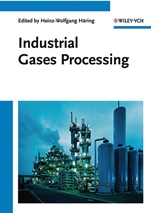
Industrial Gases Processing
ISBN 9783527316854
Autor: Heinz–Wolfgang Häring, Christine Ahner, Aldo Belloni
Wydawca: Wiley
Dostępność: 3-6 tygodni
Cena: 801,15 zł
Przed złożeniem zamówienia prosimy o kontakt mailowy celem potwierdzenia ceny.
ISBN13: |
9783527316854 |
ISBN10: |
352731685X |
Autor: |
Heinz–Wolfgang Häring, Christine Ahner, Aldo Belloni |
Oprawa: |
Hardback |
Rok Wydania: |
2007-12-12 |
Ilość stron: |
310 |
Wymiary: |
248x180 |
Tematy: |
PN |
The majority of modern technologies and manufacturing processes rely on industrial gases and there will be a global increase in demand of around 7% per annum.
Here, experienced and authoritative experts from one of the two world′s leading industrial gas and engineering companies impart their knowledge on the history, properties and, in particular, the production of atmospheric, noble and synthesis gases, i.e., hydrogen and carbon monoxide, carbon dioxide, LNG, acetylene and other fuel gases, as well as special and medical gases. Actual applications of these industrial gases, such as aspects of hydrogen technology and the use of hydrogen in fuel cells, are included as well. This practical text is rounded off by a section on logistics.
Spis treści:
Foreword.
List of Contributors.
1 Introduction.
References.
2 The Air Gases Nitrogen, Oxygen and Argon.
2.1 History, Occurrence and Properties.
2.1.1 Nitrogen.
2.1.1.1 History.
2.1.1.2 Occurrence.
2.1.1.3 Physical and Chemical Properties.
2.1.2 Oxygen.
2.1.2.1 History.
2.1.2.2 Occurrence.
2.1.2.3 Physical and Chemical Properties.
2.1.3 Argon.
2.1.3.1 History.
2.1.3.2 Occurrence.
2.1.3.3 Physical and Chemical Properties.
2.2 Recovery of Nitrogen, Oxygen and Argon.
2.2.1 Introduction.
2.2.2 Application Range of Membrane Separation, Pressure Swing Adsorption and Cryogenic Rectifi cation.
2.2.3 Nitrogen Recovery with Membranes.
2.2.3.1 Physical Principle.
2.2.3.2 Membrane Technology.
2.2.3.3 Design.
2.2.4 Nitrogen and Oxygen Recovery by Means of Pressure Swing Adsorption.
2.2.4.1 Physical Principle.
2.2.4.2 Properties of Molecular Sieves.
2.2.4.3 Nitrogen Recovery.
2.2.4.4 Oxygen Recovery.
2.2.5 Cryogenic Rectifi cation.
2.2.5.1 Process with Air Booster and Medium–Pressure Turbine for the Recovery of Compressed Oxygen, Nitrogen and Argon.
2.2.5.2 Internal Compression.<
br>2.2.5.3 Nitrogen Generators.
2.2.5.4 Liquefiers.
2.2.5.5 High–purity Plants.
2.2.5.6 Apparatus.
2.2.5.7 Design, Assembly and Transport of the Coldbox.
2.3 Safety Aspects.
2.3.1 Introduction.
2.3.3 Air Pollution.
2.3.4 Ignition in Reboilers.
2.3.5 Other Hazards in Air Separation Units.
2.4 Process Analysis Air Separation Units.
2.5 Applications of the Air Gases.
2.5.1 Applications of Nitrogen.
2.5.1.1 Applications of Nitrogen for Inerting and Purging.
2.5.1.2 Applications of Nitrogen for Cooling, Preserving and Deep–Freezing.
2.5.2 Applications of Oxygen.
2.5.3 Applications of Argon.
3 The Noble Gases Neon, Krypton and Xenon.
3.1 History and Occurrence.
3.2 Physical and Chemical Properties.
3.3 Recovery of Krypton and Xenon.
3.3.1 Pre–enrichment in the Air Separator.
3.3.2 Recovery of Pure Kr and Xe.
3.3.2.1 Catalytic Combustion of Hydrocarbons.
3.3.2.2 Cryogenic Separation.
3.4 Recovery of Neon.
3.4.1 Pre–enrichment.
3.4.2 Fine Purification.
3.5 Industrial Product Purities and Analytics.
3.6 Applications of the Noble Gases Neon, Krypton and Xenon.
3.6.1 Applications of Neon.
3.6.2 Applications of Krypton.
3.6.3 Applications of Xenon.
4 The Noble Gas Helium.
4.1 History, Occurrence and Properties.
4.1.1 History.
4.1.2 Occurrence.
4.1.3 Physical and Chemical Properties.
4.2 Recovery.
4.3 Applications.
5 Hydrogen and Carbon Monoxide: Synthesis Gases.
5.1 History, Occurrence and Properties.
5.1.1 Introduction.
5.1.2 History of Synthesis Gas.
5.1.3 Hydrogen.
5.1.3.1 History and Occurrence.
5.1.3.2 Physical and Chemical Properties.
5.1.4 Carbon Monoxide.
5.1.4.1 History and Occurrence.
5.1.4.2 Physical and Chemical Properties.
5.2 Production of Synthesis Gas.
5.2.1 Production of Hydrogen by Electrolysis.
5.2.2 Production of Synthesis Gas from Hydrocarbons.
5.2.2.1 Gen
eration of Synthesis Gas by Steam Reforming.
5.2.2.2 Synthesis Gas Generation by Partial Oxidation (PO).
5.2.2.3 Generation of Synthesis Gas by Autothermal Reforming (ATR).
5.2.3 Synthesis Gas Processing.
5.2.3.1 Water–Gas Shift Reactor.
5.2.3.2 Removal of Carbon Dioxide and Acid Gases.
5.2.3.3 Methanation.
5.2.3.4 Pressure Swing Adsorption (PSA).
5.2.3.5 Membrane Processes.
5.2.3.6 Cryogenic Separation Processes.
5.2.4 Processes for the Production of Synthesis Gas from Hydrocarbons.
5.2.4.1 Reformer Plant for the Production of Hydrogen.
5.2.4.2 Reformer Units for the Generation of CO and H2.
5.2.4.3 PO–plant for the Production of CO and H2.
5.3 Process Analytics.
5.4 Applications of Hydrogen, Carbon Monoxide and Syngas.
5.4.1 Applications of Hydrogen.
5.4.1.1 Hydrogen Use in the Chemical Industry.
5.4.1.2 Hydrogen as an Energy Carrier.
5.4.1.3 Fuel Cells.
5.4.2 Applications of Carbon Monoxide.
5.4.3 Applications of Synthesis Gas (Mixtures of CO and H2).
6 Carbon Dioxide.
6.1 History, Occurrence, Properties and Safety.
6.1.1 History.
6.1.2 Occurrence.
6.1.3 Physical and Chemical Properties.
6.1.4 Safety Issues.
6.2 Recovery of Carbon Dioxide.
6.2.1 Sources of Carbon Dioxide Recovery.
6.2.2 Pre–purifi cation, Enrichment, Extraction, Capture.
6.2.3 Standard Process for the Liquefaction of Carbon Dioxide.
6.2.3.1 Compression and Water Separation.
6.2.3.2 Adsorber Station.
6.2.3.3 Liquefaction and Stripping of Lighter Components.
6.2.3.4 Refrigerating Unit.
6.2.4 Process Steps to Obtain High Product Purity and Recovery Rate.
6.2.4.1 Scrubbing.
6.2.4.2 Adsorption and Chemisorption.
6.2.4.3 Catalytic Combustion.
6.2.4.4 Improvement of the Carbon Dioxide Recovery Rate.
6.2.5 Carbon Dioxide Recovery from Flue Gas.
6.2.6 Production of Dry Ice.
6.3 Applications.
7 Natural Gas.
7
.1 History.
7.2 Occurrence.
7.3 Consumption.
7.4 Natural Gas Trade.
7.5 Composition.
7.6 Process of Natural Gas Treatment.
7.6.1 Dew–point Adjustment.
7.6.2 Separation of Liquefi ed Petroleum Gas.
7.6.3 Ethane Separation.
7.6.4 Liquefaction.
7.6.5 Nitrogen Separation.
7.7 Applications.
8 Fuel Gases.
8.1 Introduction.
8.2 Acetylene C2H2.
8.2.1 Acetylene and the Beginnings of Welding Engineering.
8.2.2 Physical Properties.
8.2.3 Acetylene Decomposition – Deflagration.
8.2.4 Ignitable Mixtures.
8.2.5 Liquefaction of Acetylene – Acetylene Hydrate.
8.2.6 Acetylene Hydrate.
8.2.7 Acetylides.
8.2.8 Extraction Processes.
8.2.8.1 Acetylene Generated via Carbide.
8.2.8.2 Petrochemically Generated Acetylene.
8.2.9 Gas Supply.
8.2.9.1 Storage of Dissolved Acetylene in Cylinders.
8.2.9.2 Design of a Gas Supply System.
8.2.10 Autogenous Engineering Applications.
8.2.11 Regulations.
8.3 Ethene C2H4.
8.3.1 Physical Properties.
8.3.2 Production Processes.
8.3.3 Application and Use.
8.3.4 Gas Supply and Safety.
8.3.5 Regulations.
8.4 Other Fuel Gases.
8.5 Applications.
9 Specialty Gases.
9.1 Introduction.
9.2 Pure Gases.
9.2.1 Defi nitions.
9.2.2 Quality Criteria.
9.2.3 Sources/Production.
9.2.4 Purifi cation/Processing.
9.2.5 Application Examples.
9.3 Gas Mixtures/Calibration Gas Mixtures.
9.3.1 Definitions 261
9.3.2 Production [9.9].
9.3.2.1 Technical Feasibility.
9.3.2.2 Pretreatment of Containers.
9.3.2.3 Preparation Methods.
9.3.2.4 Analytical Quality Assurance.
9.3.3 Application Examples.
9.4 Electronic Gases.
9.4.1 Defi nition/Special Demands.
9.4.2 Application Examples.
9.5 Disposal.
9.6 Transfer of Gases.
9.6.1 Selection of the Materials.
9.6.2 Physical Interaction Forces.
9.6.3 Tightness of the Gas Supply System
.
9.6.4 Purging of the Gas Supply System.
10 Gases in Medicine.
10.1 Introduction.
10.2 Medicinal Oxygen.
10.2.1 Home–therapy.
10.2.2 Hospitals and Other Fields of Application.
10.3 Gases for Anaesthesia.
10.3.1 Medical Nitrous Oxide (Laughing Gas).
10.3.2 Xenon.
10.4 Medical Carbonic Acid (Carbon Dioxide).
10.5 Medical Air.
11 Logistics of Industrial Gas Supply.
11.1 Introduction.
11.2 Storage and Transport of Compressed Gases.
11.2.1 Fundamentals.
11.2.2 Kinds of Transport and Storage for Compressed Gases.
11.2.3 Effi ciency of Compressed Air Gas Transport.
11.3 Storage and Transport of Liquefi ed Compressed Gases.
11.3.1 Fundamentals.
11.3.2 Forms of Transport and Storage of Liquefied Gases.
11.3.3 Efficiency of the Transport of Liquefied Gases.
11.4 Special Forms of Supply.
Subject Index.
Nota biograficzna:
Heinz–Wolfgang Härin studied chemistry at the Ludwig Maximilian University in Munich, Germany, graduating in 1972. He gained his doctorate in 1978 in metal–organic chemistry, joining Linde Engineering, a division of the current Linde Group, one year later. He was initially responsible for material selection in the various processing plants, from steamcrackers to hydrogen plants and air separation units, and for material and corrosion investigations in the event of equipment failure. In 1983, after further qualification as a welding engineer, he became head of the Material Testing Department. From here he advanced to Quality Assurance Manager in 1990, and has since held managerial posts in Materials Technology and Engineering Services Mechanical Equipment. Finally, Dr. Häring returned to chemistry and in 2001 became responsible for Chemical R&D, including the analytical services for the various process plants.
Okładka tylna:
The majority of modern technologies and manufacturing processes re
ly on industrial gases and there will be a global increase in demand of around 7% per annum.
Here, experienced and authoritative experts from one of the two world′s leading industrial gas and engineering companies impart their knowledge on the history, properties and, in particular, the production of atmospheric, noble and synthesis gases, i.e., hydrogen and carbon monoxide, carbon dioxide, LNG, acetylene and other fuel gases, as well as special and medical gases. Actual applications of these industrial gases, such as aspects of hydrogen technology and the use of hydrogen in fuel cells, are included as well. This practical text is rounded off by a section on logistics.
Koszyk
Książek w koszyku: 0 szt.
Wartość zakupów: 0,00 zł
Informacje


Kontakt
Gambit
Centrum Oprogramowania
i Szkoleń Sp. z o.o.
Al. Pokoju 29b/22-24
31-564 Kraków
Siedziba Księgarni
ul. Kordylewskiego 1
31-542 Kraków
+48 12 410 5991
+48 12 410 5987
+48 12 410 5989
Subskrypcje
Administratorem danych osobowych jest firma Gambit COiS Sp. z o.o. Na podany adres będzie wysyłany wyłącznie biuletyn informacyjny.
Autoryzacja płatności

Informacje na temat autoryzacji płatności poprzez PayU.

© Copyright 2012: GAMBIT COiS Sp. z o.o. Wszelkie prawa zastrzeżone.
Projekt i wykonanie: Alchemia Studio Reklamy