


Wydawcy
Katalog tematyczny
- Archeologia (109)
- Ekonomia, finanse, business (13704)
- Filozofia (1445)
- Historia (3040)
- Języki i językoznawstwo (2356)
- Lifestyle, hobby i rozrywka (475)
- Medycyna (9704)
- Nauki humanistyczne (4)
- Nauki o Ziemi i środowisku (2638)
- Nauki ścisłe (20412)
- Astronomia (294)
- Biologia (5119)
- Chemia (6540)
- Chemia analityczna (361)
- Chemia fizyczna (346)
- Chemia nieorganiczna (137)
- Chemia organiczna (535)
- Krystalografia (27)
- Minerologia (46)
- Fizyka (3309)
- Matematyka (4574)
- Nauki ścisłe, ogólnie (503)
- Nauki społeczne (8486)
- Nauki techniczne (13450)
- Prawo (1696)
- Publikacje informacyjne i interdyscyplinarne (1288)
- Religia i wierzenia (917)
- Technika komputerowa (4067)
- Zdrowie, relacje międzyludzkie i rozwój osobisty (657)





Informacje szczegółowe o książce
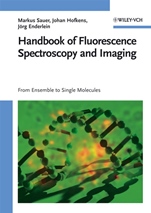
Handbook of Fluorescence Spectroscopy and Imaging: From Ensemble to Single Molecules
ISBN 9783527316694
Autor: Markus Sauer, Johan Hofkens, Jörg Enderlein
Wydawca: Wiley
Dostępność: 3-6 tygodni
Cena: 675,15 zł
Przed złożeniem zamówienia prosimy o kontakt mailowy celem potwierdzenia ceny.
ISBN13: |
9783527316694 |
ISBN10: |
3527316698 |
Autor: |
Markus Sauer, Johan Hofkens, Jörg Enderlein |
Oprawa: |
Hardback |
Rok Wydania: |
2011-01-26 |
Ilość stron: |
290 |
Wymiary: |
251x181 |
Tematy: |
PN |
Jörg Enderleins studied physics at the Mechnikov University in Odessa (Ukraine) from 1981 until 1986, and defended his PhD thesis about non–linear reaction diffusion system at Humboldt University in berlin (Germany) in 1991. From 1991 until 1996 he was scientific co–worker of PicoQuant GmbH, where he was involved in the development of advanced single–photon counting technology for single–molecule fluorescence spectroscopy. From 1996 until 1997, he joined the group of Richard A. Keller in Los Alamos (USA) as a guest scientist, and in 1997 became an assistant professor at the University of Regensburg (Germany), where he
defended his habilitation in 2000. From 2001 until 2006, he was as Heisenberg Fellow of the German Research Council (DFG) and established his research group at the Insitut for Biological Information processing 1 at the Forschungszentrum Jülich (Germany). His main research topic is the development of new single–molecule spectroscopic techniques for biophysics applications.
Johan Hofkens, born in Hoogstraten, Belgium, in 1966 received his master in Chemistry from KUleuven in 1988, which was followed by a PhD in Sciences from KULeuven in 1993. After postdoctoral research with professor Masuahara at Osaka University and Professor Barbara at the University of Minneapolis, he rejoined the KULeuven were he was in charge of the single molecule unit in the group of Prof De Schryver. In 2005 he was appointed research professor at the KULeuven. His research interests are fast spectroscopy, single molecule spectroscopy and optics.
Markus Sauer was born 1965 in Pforzheim. He studied chemistry in Karlsruhe, Saarbrücken, and Heidelberg, and finished his PhD in Physical Chemistry at the University of Heidelberg in 1995 under the guidance of Prof. Jürgen Wolfrum. After a short–term visit at LBNL, Berkeley in the group of Prof. Shimon Weiss, he was decorated with the BioFuture award in 1998 to perform in
dependent research on single–molecule handling, detection, and identification. 2002 he finished his habilitation in Heidelberg at the Institute of Physical Chemistry. Since 2003 he is Professor for Applied Laser Physics and Laser Spectroscopy at the University in Bielefeld. His research interests cover the development of new electron transfer sensors and probes as well as new single–molecule sensitive fluorescence spectroscopic techniques.
Kenneth Weston was born and grew up in Winston–Salem, North Carolina. After receiving a BS degree in Chemistry from the University of North Carolina, Chapel Hill in 1994, he went on to earn a PhD in Chemistry from the University of California, Santa Barbara in 1998 where he worked with Prof. Steve Buratto. Kenneth spent two years working with Dr. Lori Goldner at The National Institute of Standards and Technology in Gaithersburg, MD as a National Research Council Postdoctoral Associate. In 2001, Kenneth joined to group of Dr. Markus Sauer at the Physical Chemistry Institute at the University of Heidelberg in Germany. From 2002–2005, Kenneth was an Assistant Professor in the Department of Chemistry and Biochemistry at Florida State University. Kenneth′s research has focused on the development of various new methods and applications of optical spectroscopy and microscopy, fluctuation correlation spectroscopy, and microfluidics. Kenneth is now a senior scientist with Directed Energy Solutions in Colorado Springs and is part of a team that is developing very high power infrared lasers.
Spis treści:
Introduction
Basic Principles of Absorption, Fluorescence, Time–Resolved Fluorescence, Anisotropy
Basics of Fluorescent Dyes, Characteristics of Different Fluorophore Classes, Suitability of Different Applications, Fluorophores
Fluorescence Labelling, In Vitro and In Vivo Strategies
Basic Principles of Optics and Microscopy
Fluorescence Fluctuation Spectr
oscopy, ALEX/PIE, Antibunching
FRET, PET, PET–FRET: Protein Folding and Dynamics, Diagnostic Applications, Molecular Crowding
Single–Molecule Fluorescence Imaging, Tracking, Trafficking, etc.
Nanoscopy: Techniques with Improved Optical Resolution
Applications in Living Cells and Limitations
SM Enzymology
Nota biograficzna:
Markus Sauer studied chemistry in Karlsruhe, Saarbrücken, and Heidelberg, and finished his PhD in Physical Chemistry at the University of Heidelberg under the guidance of Prof. Jürgen Wolfrum. After a short–term visit at LBNL, Berkeley in the group of Prof. Shimon Weiss, he was decorated with the BioFuture award to perform independent research on single–molecule handling, detection, and identification. He finished his habilitation in Heidelberg at the Institute of Physical Chemistry and is now Professor for Applied Laser Physics and Laser Spectroscopy at the University in Bielefeld.
Okładka tylna:
Jörg Enderleins studied physics at the Mechnikov University in Odessa (Ukraine) from 1981 until 1986, and defended his PhD thesis about non–linear reaction diffusion system at Humboldt University in berlin (Germany) in 1991. From 1991 until 1996 he was scientific co–worker of PicoQuant GmbH, where he was involved in the development of advanced single–photon counting technology for single–molecule fluorescence spectroscopy. From 1996 until 1997, he joined the group of Richard A. Keller in Los Alamos (USA) as a guest scientist, and in 1997 became an assistant professor at the University of Regensburg (Germany), where he
defended his habilitation in 2000. From 2001 until 2006, he was as Heisenberg Fellow of the German Research Council (DFG) and established his research group at the Insitut for Biological Information processing 1 at the Forschungszentrum Jülich (Germany). His main research topic is the development of new single&
#8211;molecule spectroscopic techniques for biophysics applications.
Johan Hofkens, born in Hoogstraten, Belgium, in 1966 received his master in Chemistry from KUleuven in 1988, which was followed by a PhD in Sciences from KULeuven in 1993. After postdoctoral research with professor Masuahara at Osaka University and Professor Barbara at the University of Minneapolis, he rejoined the KULeuven were he was in charge of the single molecule unit in the group of Prof De Schryver. In 2005 he was appointed research professor at the KULeuven. His research interests are fast spectroscopy, single molecule spectroscopy and optics.
Markus Sauer was born 1965 in Pforzheim. He studied chemistry in Karlsruhe, Saarbrücken, and Heidelberg, and finished his PhD in Physical Chemistry at the University of Heidelberg in 1995 under the guidance of Prof. Jürgen Wolfrum. After a short–term visit at LBNL, Berkeley in the group of Prof. Shimon Weiss, he was decorated with the BioFuture award in 1998 to perform independent research on single–molecule handling, detection, and identification. 2002 he finished his habilitation in Heidelberg at the Institute of Physical Chemistry. Since 2003 he is Professor for Applied Laser Physics and Laser Spectroscopy at the University in Bielefeld. His research interests cover the development of new electron transfer sensors and probes as well as new single–molecule sensitive fluorescence spectroscopic techniques.
Kenneth Weston was born and grew up in Winston–Salem, North Carolina. After receiving a BS degree in Chemistry from the University of North Carolina, Chapel Hill in 1994, he went on to earn a PhD in Chemistry from the University of California, Santa Barbara in 1998 where he worked with Prof. Steve Buratto. Kenneth spent two years working with Dr. Lori Goldner at The National Institute of Standards and Technology in Gaithersburg, MD as a National Research Council Postdoctoral Associate. In 2001, Kenneth
Koszyk
Książek w koszyku: 0 szt.
Wartość zakupów: 0,00 zł
Informacje


Kontakt
Gambit
Centrum Oprogramowania
i Szkoleń Sp. z o.o.
Al. Pokoju 29b/22-24
31-564 Kraków
Siedziba Księgarni
ul. Kordylewskiego 1
31-542 Kraków
+48 12 410 5991
+48 12 410 5987
+48 12 410 5989
Subskrypcje
Administratorem danych osobowych jest firma Gambit COiS Sp. z o.o. Na podany adres będzie wysyłany wyłącznie biuletyn informacyjny.
Autoryzacja płatności

Informacje na temat autoryzacji płatności poprzez PayU.

© Copyright 2012: GAMBIT COiS Sp. z o.o. Wszelkie prawa zastrzeżone.
Projekt i wykonanie: Alchemia Studio Reklamy