


Wydawcy
Katalog tematyczny
- Archeologia (109)
- Ekonomia, finanse, business (13704)
- Filozofia (1445)
- Historia (3040)
- Języki i językoznawstwo (2356)
- Lifestyle, hobby i rozrywka (475)
- Medycyna (9704)
- Nauki humanistyczne (4)
- Nauki o Ziemi i środowisku (2638)
- Nauki ścisłe (20412)
- Astronomia (294)
- Biologia (5119)
- Chemia (6540)
- Chemia analityczna (361)
- Chemia fizyczna (346)
- Chemia nieorganiczna (137)
- Chemia organiczna (535)
- Krystalografia (27)
- Minerologia (46)
- Fizyka (3309)
- Matematyka (4574)
- Nauki ścisłe, ogólnie (503)
- Nauki społeczne (8486)
- Nauki techniczne (13450)
- Prawo (1696)
- Publikacje informacyjne i interdyscyplinarne (1288)
- Religia i wierzenia (917)
- Technika komputerowa (4067)
- Zdrowie, relacje międzyludzkie i rozwój osobisty (657)








Informacje szczegółowe o książce
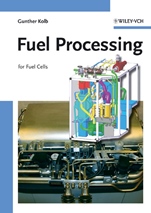
Fuel Processing: For Fuel Cells
ISBN 9783527315819
Autor: Gunther Kolb
Wydawca: Wiley
Dostępność: 3-6 tygodni
Cena: 1 121,40 zł
Przed złożeniem zamówienia prosimy o kontakt mailowy celem potwierdzenia ceny.
ISBN13: |
9783527315819 |
ISBN10: |
3527315810 |
Autor: |
Gunther Kolb |
Oprawa: |
Hardback |
Rok Wydania: |
2008-03-26 |
Ilość stron: |
434 |
Wymiary: |
243x181 |
Tematy: |
PN |
Fuel cell technology attracts increasing attention nowadays, because it offers potential for lowering emissions owing to a potentially superior efficiency compared to conventional power generation. Fuel cells require hydrogen for their operation and consequently numerous technologies are under worldwide investigation for hydrogen storage aiming for distributed, mobile and portable applications.
The lack of hydrogen infrastructure on the short term along with the highly attractive energy density of iquid, fossil and regenerative fuels has created wide–spread research efforts in the field of distributed and on–board hydrogen generation from various fuels. This complex chemical process, generally named fuel rocessing, is the subject of this book.
Adopting a unique integrated engineering approach, this text covers all aspects of fuel processing, from the fundamentals to catalysts, reactors, chemical plant components and integrated system design, right up to complete fuel processor systems and cost and production issues.
Alongside providing an introduction to the subject, this reference also contains recent research developments, making it an invaluable handbook for chemical, power and process engineers, electrochemists, catalytic chemists, materials scientists and engineers in power technology.
Spis treści:
Acknowledgement.
1. Introduction and Outline.
2. Fundamentals.
2.1. Common Fossil Fuels.
2.2. Basic Definitions, Calculations and Legislation.
2.3. The Various Types of Fuel Cells and the Requirements of the Fuel Processor.
3. The Chemistry of Fuel Processing.
3.1. Steam Reforming.
3.2. Partial Oxidation.
3.3. Oxidative Steam Reforming or Autothermal Reforming.
3.4. Catalytic Cracking of Hydrocarbons.
3.5. Pre–reforming of Higher Hydrocarbons.
3.6. Homogeneous Plasma reforming of Higher Hydrocarbons.
3.7. Aqueous Reforming of Bio–Fuels.
3.8. Proc
essing of Alternative Fuels.
3.9. Desulfurisation.
3.10. Carbon Monoxide Clean–Up.
3.11. Catalytic Combustion.
3.12. Coke Formation on Metal Surfaces.
4. Catalyst Technology for Distributed Fuel Processing Applications.
4.1. A Brief Introduction to Catalyst Technology and Evaluation.
4.2. Reforming Catalysts.
4.3. Catalysts for Hydrogen Generation from Alternative Fuels.
4.4. Desulfurisation Catalysts/Adsorbents.
4.5. Carbon Monoxide Clean–Up Catalysts.
4.6. Combustion Catalysts.
5. Fuel Processor Design Concepts.
5.1. Design of the Refomring Process.
5.2. Design of the Carbon Monoxide Clean–Up Devices.
5.3. Aspects of Catalytic Combustion.
5.4. Design of the Overall Fuel Processor.
5.5. Comparison with Conventional Energy Supply Systems.
6. Types of Fuel Processing Reactors.
6.1. Fixed–Bed Reactors.
6.2. Monolithic Reactors.
6.3. Plate Heat–Exchanger Reactors.
7. Application of Fuel Processing Reactors.
7.1. Reforming Reactors.
7.2. Water–Gas Shift Reactors.
7.3. Catalytic Carbon Monoxide Fine Clean–Up.
7.4. Membrane Separation Devices.
7.5. Catalytic Burners.
8. Balance–of–Plant Components.
8.1. Heat–Exchangers.
8.2. Liquid Pumps.
8.3. Blowers and Compressors.
8.4. Feed Injection System.
8.5. Insulation Materials.
9. Complete Fuel Processor Systems.
9.1. Methanol Fuel Processors.
9.2. Ethanol Fuel Processors.
9.3. Natural Gas Fuel Processors.
9.4. Fuel Processors for LPG.
9.5. Gasoline Fuel Processors.
9.6. Diesel and Kerosine Fuel Processors.
9.7. Multi–Fuel Processors.
9.8. Fuel Processors Based on Alternative Fuels.
10. Introduction of Fuel Processors Into the Market Place – Cost and Production Issues.
10.1. Factors Affecting the Cost of Fuel Processors.
10.2. Production Techniques for Fuel Processors.
Ref
erences.
Index.
Nota biograficzna:
Gunther Kolb was appointed Head of the technology and Catalysis Department at IMM in 2006. The department′s activities are focused on hydrogen technology and fuel processing for fuel cells. He studied chemical engineering and obtained his Ph.D. in reaction engineering at the University of Erlangen in 1993, after which he joined the Federal Export Office in Eschborn to work on the implementation of the chemical Weapon Convention. In 1995, he joined GRACE Davison Europe in Worms working as professional in the catalyst Evaluation and Catalyst Development departments. In 2001 he joined IMM and was appointed Leader of the Heterogeneous Catalysis and Process Engineering Group in the same year. he is the author of more than 50 publications in the fields of zeolite catalysis, supercritical fluids and fuel processing in microstructured devices.
Okładka tylna:
Fuel cell technology attracts increasing attention nowadays, because it offers potential for lowering emissions owing to a potentially superior efficiency compared to conventional power generation. Fuel cells require hydrogen for their operation and consequently numerous technologies are under worldwide investigation for hydrogen storage aiming for distributed, mobile and portable applications.
The lack of hydrogen infrastructure on the short term along with the highly attractive energy density of iquid, fossil and regenerative fuels has created wide–spread research efforts in the field of distributed and on–board hydrogen generation from various fuels. This complex chemical process, generally named fuel rocessing, is the subject of this book.
Adopting a unique integrated engineering approach, this text covers all aspects of fuel processing, from the fundamentals to catalysts, reactors, chemical plant components and integrated system design, right up to complete fuel processor systems and cost and production issu
es.
Alongside providing an introduction to the subject, this reference also contains recent research developments, making it an invaluable handbook for chemical, power and process engineers, electrochemists, catalytic chemists, materials scientists and engineers in power technology.
Koszyk
Książek w koszyku: 0 szt.
Wartość zakupów: 0,00 zł
Informacje


Kontakt
Gambit
Centrum Oprogramowania
i Szkoleń Sp. z o.o.
Al. Pokoju 29b/22-24
31-564 Kraków
Siedziba Księgarni
ul. Kordylewskiego 1
31-542 Kraków
+48 12 410 5991
+48 12 410 5987
+48 12 410 5989
Subskrypcje
Administratorem danych osobowych jest firma Gambit COiS Sp. z o.o. Na podany adres będzie wysyłany wyłącznie biuletyn informacyjny.
Autoryzacja płatności

Informacje na temat autoryzacji płatności poprzez PayU.

© Copyright 2012: GAMBIT COiS Sp. z o.o. Wszelkie prawa zastrzeżone.
Projekt i wykonanie: Alchemia Studio Reklamy