


Wydawcy
Katalog tematyczny
- Archeologia (1)
- Ekonomia, finanse, business (698)
- Filozofia (20)
- Historia (57)
- Języki i językoznawstwo (4)
- Lifestyle, hobby i rozrywka (32)
- Medycyna (1025)
- Nauki humanistyczne (2)
- Nauki o Ziemi i środowisku (430)
- Nauki ścisłe (1681)
- Nauki społeczne (1297)
- Nauki techniczne (530)
- Prawo (1437)
- Publikacje informacyjne i interdyscyplinarne (32)
- Religia i wierzenia (15)
- Technika komputerowa (237)
- Zdrowie, relacje międzyludzkie i rozwój osobisty (4)





Informacje szczegółowe o książce
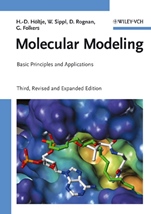
Molecular Modeling: Basic Principles and Applications
ISBN 9783527315680
Autor: Hans–Dieter Höltje, Wolfgang Sippl, Didier Rognan, Gerd Folkers
Wydawca: Wiley
Dostępność: 3-6 tygodni
Cena: 422,10 zł
Przed złożeniem zamówienia prosimy o kontakt mailowy celem potwierdzenia ceny.
ISBN13: |
9783527315680 |
ISBN10: |
3527315683 |
Autor: |
Hans–Dieter Höltje, Wolfgang Sippl, Didier Rognan, Gerd Folkers |
Oprawa: |
Paperback |
Rok Wydania: |
2008-01-16 |
Numer Wydania: |
3rd Edition |
Ilość stron: |
320 |
Wymiary: |
241x175 |
Tematy: |
PN |
Creating a computer model of a molecule with known or unknown structure that can then be studied by computational means is a key skill for biochemists, molecular biologists and aspiring drug developers. Increasingly sophisticated modeling software requires at least a basic understanding of the method in order to avoid misinterpretation of the data generated.
Ideal for beginners, this book explains the basics of modeling in a competent yet easily understandable way, with completely worked–out examples to guide readers to their first modeling experiments.
This third edition features a new chapter on chemogenomics, reflecting the trend towards ′chemical biology′, while the example of protein modeling is completely rewritten for a better ′feel′ of modeling complex biomolecules.
The authors are experienced university lecturers who regularly hold courses on molecular modeling, making this a tried–and–tested text for teachers. It is equally valuable for experts, since it is the only book to evaluate the strengths and limitations of the molecular modeling techniques and software currently available.
Spis treści:
Preface to the third Edition.
1. Introduction.
2. Small Molecules.
3. A Case Study for Small Molecule Modeling: Dopamine D3 Receptor Antagonists.
4. Introduction to Comparative Protein Modeling.
5. Virtual Screening and Docking.
6. Scope and Limits of Molecular Docking.
7. Chemogenomic Approaches to Rational Drug Design.
8. A Case Study for Protein Modeling: the Nuclear Hormone Receptor CAR as an example for Comparative Modeling and the Analysis of Protein–Ligand Complexes.
Index.
Nota biograficzna:
Hans–Dieter Höltje is director of the Institute of Pharmaceutical Chemistry at the Heinrich–Heine–Universität Düsseldorf (Germany) where he also holds the chair of Medicinal Chemistry. His main inte
rest is the molecular mechanism of drug action.
Wolfgang Sippl is Professor of Pharmaceutical Chemistry at the Martin–Luther–University of Halle–Wittenberg (Germany). He is interested in 3D QSAR, molecular docking and molecular dynamics, and their applications in drug design and pharmacokinetics.
Didier Rognan leads the Drug Bioinformatics Group at the Laboratory for Molecular Pharmacochemistry in Illkirch (France). He is mainly interested in all aspects (method development, applications) of protein–based drug design and virtual screening.
Gerd Folkers is Professor of Pharmaceutical Chemistry at the ETH Zürich (Switzerland). The focus of his research is the molecular interation between drugs and their binding sites.
Okładka tylna:
Creating a computer model of a molecule with known or unknown structure that can then be studied by computational means is a key skill for biochemists, molecular biologists and aspiring drug developers. Increasingly sophisticated modeling software requires at least a basic understanding of the method in order to avoid misinterpretation of the data generated.
Ideal for beginners, this book explains the basics of modeling in a competent yet easily understandable way, with completely worked–out examples to guide readers to their first modeling experiments.
This third edition features a new chapter on chemogenomics, reflecting the trend towards ′chemical biology′, while the example of protein modeling is completely rewritten for a better ′feel′ of modeling complex biomolecules.
The authors are experienced university lecturers who regularly hold courses on molecular modeling, making this a tried–and–tested text for teachers. It is equally valuable for experts, since it is the only book to evaluate the strengths and limitations of the molecular modeling techniques and software currently available.
Koszyk
Książek w koszyku: 0 szt.
Wartość zakupów: 0,00 zł
Informacje


Kontakt
Gambit
Centrum Oprogramowania
i Szkoleń Sp. z o.o.
Al. Pokoju 29b/22-24
31-564 Kraków
Siedziba Księgarni
ul. Kordylewskiego 1
31-542 Kraków
+48 12 410 5991
+48 12 410 5987
+48 12 410 5989
Subskrypcje
Administratorem danych osobowych jest firma Gambit COiS Sp. z o.o. Na podany adres będzie wysyłany wyłącznie biuletyn informacyjny.
Autoryzacja płatności

Informacje na temat autoryzacji płatności poprzez PayU.

© Copyright 2012: GAMBIT COiS Sp. z o.o. Wszelkie prawa zastrzeżone.
Projekt i wykonanie: Alchemia Studio Reklamy