


Wydawcy
Katalog tematyczny
- Archeologia (109)
- Ekonomia, finanse, business (13704)
- Filozofia (1445)
- Historia (3040)
- Języki i językoznawstwo (2356)
- Lifestyle, hobby i rozrywka (475)
- Medycyna (9704)
- Nauki humanistyczne (4)
- Nauki o Ziemi i środowisku (2638)
- Nauki ścisłe (20412)
- Nauki społeczne (8486)
- Nauki techniczne (13450)
- Prawo (1696)
- Publikacje informacyjne i interdyscyplinarne (1288)
- Religia i wierzenia (917)
- Technika komputerowa (4067)
- Zdrowie, relacje międzyludzkie i rozwój osobisty (657)





Informacje szczegółowe o książce
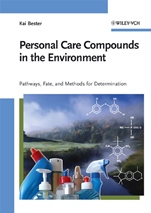
Personal Care Compounds in the Environment: Pathways, Fate and Methods for Determination
ISBN 9783527315673
Autor: Kai Bester
Wydawca: Wiley
Dostępność: 3-6 tygodni
Cena: 1 071,00 zł
Przed złożeniem zamówienia prosimy o kontakt mailowy celem potwierdzenia ceny.
ISBN13: |
9783527315673 |
ISBN10: |
3527315675 |
Autor: |
Kai Bester |
Oprawa: |
Hardback |
Rok Wydania: |
2007-01-08 |
Ilość stron: |
263 |
Wymiary: |
243x174 |
Tematy: |
AT |
Personal care items, such as cosmetics, medicines and household products, release a significant amount of potentially harmful substances into the environment. Tracking the sources of these toxic chemicals and their fate in the environment is therefore of prime concern for water and waste treatment authorities and for the manufacturers of such products. This first comprehensive treatment of the topic systematically covers the most important classes of toxic chemicals from personal care compounds, from cosmetics to plastics additives to pharmaceuticals. For each substance, data on toxicity and bioaccumulation in various ecosystems is given.
Following an introduction to sewage treatment plant functions, the book goes on to look at environmental studies and the pertinent analytical chemistry methods. The whole is rounded off by a discussion of strategies in wastewater treatment to control and remove these substances.
Spis treści:
Preface.
Acknowledgments.
List of Contributors.
List of Abbreviations.
1 Introduction.
1.1 General Considerations (Kai Bester).
1.2 Introduction to Sewage Treatment Plant Functions.
1.3 Enantioselective Analysis in Environmental Research.
1.3.1 Enantioselective Gas Chromatography Techniques.
1.3.1.1 Applications of Enantioselective Gas Chromatography.
1.3.1.2 New Developments.
1.3.2 Enantioselective HPLC.
1.3.2.1 Applications of Enantioselective HPLC.
2 Environmental Studies: Sources and Pathways.
2.1 Synthetic Fragrance Compounds in the Environment (Kai Bester).
2.1.1 Polycyclic Musk Fragrances in Sewage Treatment Plants.
2.1.1.1 Experimental Background.
2.1.1.2 Mass Balance Assessment.
2.1.1.3 Multi–step Process Study on Polycyclic Musks.
2.1.2 Polycyclic Musk Fragrances in Diverse Sludge Samples.
2.1.3 Polycyclic Musk Fragrances in Surface Waters.
2.1.3.1 Experimental Methods.
2.1.3.2 Resul
ts and Discussion.
2.1.4 Polycyclic Musk Fragrances in the North Sea.
2.1.5 OTNE and Other Fragrances in the Environment.
2.1.5.1 Methods.
2.1.5.2 Results and Discussion.
2.1.6 Other Fragrances: Nitroaromatic Musks and Macrocyclic Musks.
2.1.7 Behavior of Polycyclic and Other Musk Fragrances in the Environment.
2.2 The Bactericide Triclosan and Its Transformation Product Methyl Triclosan in the Aquatic Environment (Kai Bester).
2.2.1 Bactericides from Personal Care Products in Sewage Treatment Plants.
2.2.1.1 Materials and Methods.
2.2.1.2 Triclosan Balances in a Sewage Treatment Plant.
2.2.1.3 Triclosan in Multi–step Processes in Sewage Treatment Plants.
2.2.2 Triclosan in Sewage Sludge.
2.2.3 Triclosan in Surface Waters.
2.2.3.1 Estimation of Elimination Constants for Triclosan in a River.
2.2.4 Discussion on Triclosan and Methyl Triclosan in the Environment.
2.3 UV Filters/Sunscreens (Kai Bester ).
2.3.1 Endocrine Properties of UV Filters.
2.3.2 UV Filters in Aquatic Ecosystems.
2.3.3 Enantioselective Considerations for UV Filters.
2.4 Organophosphate Flame–retardants and Plasticizers ( Jens A. Andresen, Stefan Weigel and Kai Bester).
2.4.1 Introduction.
2.4.1.1 Flame–retardants.
2.4.1.2 Organophosphate Plasticizers.
2.4.2 The Organophosphate Flame–retardant TCPP in a Sewage Treatment Plant.
2.4.2.1 Materials and Methods.
2.4.2.2 Mass Balance Assessment for TCPP in a Sewage Treatment Plant.
2.4.2.3 TCPP in Sludge Monitoring.
2.4.2.4 Evaluation of the TCPP Data.
2.4.3 Organophosphate Flame–retardants and Plasticizers in Multi–step Sewage Treatment.
2.4.3.1 Materials and Methods.
2.4.3.2 Results and Discussion.
2.4.3.3 Conclusions.
2.4.4 Organophosphorus Flame–retardants and Plasticizers in Surface Waters.
2.4.4.1 Materials and Methods.
2.4.4.2 Results and Discussion.
2.4.5 Organophosphates in Dr
inking Water Purification.
2.4.5.1 Materials and Methods.
2.4.5.2 Results.
2.4.5.3 Conclusions.
2.4.6 Organophosphates and Other Compounds in the North Sea and Lake Ontario: A Comparison.
2.4.6.1 Materials and Methods.
2.4.6.2 Results and Discussion.
2.4.6.3 Conclusions.
2.4.7 Overall Discussion on Chlorinated Organophosphorus Flame–retardants and Other Compounds.
2.5 Endocrine–disrupting Agents (Michael P. Schlüsener and Kai Bester).
2.5.1 Introduction to Endocrine–disrupting Effects.
2.5.2 Estrogenic Hormones and Antibiotics in Wastewater Treatment Plants.
2.5.2.1 Description of the Sample Sites.
2.5.2.2 Results and Discussion.
2.5.2.3 Conclusions.
2.5.3 Nonylphenol and Other Compounds in the North Sea.
2.5.3.1 Materials and Methods.
2.5.3.2 Results.
2.5.3.3 Discussion.
2.5.3.4 Conclusions.
2.6 Diverse Compounds (Kai Bester).
2.6.1 Benzothiazoles in Marine Ecosystems.
2.6.1.1 Materials and Methods.
2.6.1.2 Results.
2.6.1.3 Discussion and Conclusions.
2.6.2 Enantioselective Degradation of Bromocyclene in Sewage Treatment Plants.
2.6.2.1 Introduction.
2.6.2.2 Methods and Materials.
2.6.2.3 Results and Discussion.
3 Analytical Chemistry Methods.
3.1 Fresh and Wastewater (Kai Bester ).
3.1.1 Lipophilic Compounds from Fresh and Wastewater (GC Analysis).
3.1.1.1 Sampling.
3.1.1.2 Extractions.
3.1.2 Steroid Hormones, Their Adducts, and Macrolide Antibiotics from Wastewater (HPLC–MS/MS Analysis) (Michael P. Schlüsener and Kai Bester ).
3.1.2.1 Introduction.
3.1.2.2 Experimental Methods.
3.1.2.3 Results and Discussion.
3.1.2.4 Conclusions.
3.2 Seawater.
3.2.1 Lipophilic Compounds in Marine Water Samples (Kai Bester ).
3.2.2 Hydrophilic Compounds in Marine Water Samples (Stefan Weigel and Kai Bester).
3.2.2.1 Experimental Methods.
3.2.2.2 Results and Discussion.
3.2.2.3 Conclusions.
3.3 Sewage Sludges ( Jens A. Andresen and Kai Bester).
4 Discussion (Kai Bester).
4.1 Sewage Treatment Plants.
4.2 Limnic Samples.
4.3 Marine Samples.
4.4 Conclusions.
5 Summary (Kai Bester ).
5.1 Polycyclic Musks AHTN, HHCB, HHCB–lactone, and OTNE.
5.2 Flame–retardants.
5.3 Endocrine Disrupters.
5.4 Triclosan and Methyl Triclosan.
6 References.
Subject Index.
Nota biograficzna:
Kai Bester is Professor for Analytical and Environmental Chemistry at the University of Duisburg–Essen, Germany. He studied chemistry at the University of Hamburg, obtaining his PhD in 1995. Before joining the University of Duisburg–Essen, he worked as a post–doc at the Technical University of Aachen and at the University of Dortmund. Professor Bester′s primary research interests focus on the environmental contamination by antibiotics, fragrances and flame retardants as well as pharmaceuticals, and their analysis by mass spectrometric methods.
Okładka tylna:
Personal care items, such as cosmetics, medicines and household products, release a significant amount of potentially harmful substances into the environment. Tracking the sources of these toxic chemicals and their fate in the environment is therefore of prime concern for water and waste treatment authorities and for the manufacturers of such products. This first comprehensive treatment of the topic systematically covers the most important classes of toxic chemicals from personal care compounds, from cosmetics to plastics additives to pharmaceuticals. For each substance, data on toxicity and bioaccumulation in various ecosystems is given.
Following an introduction to sewage treatment plant functions, the book goes on to look at environmental studies and the pertinent analytical chemistry methods. The whole is rounded off by a discussion of strat
Koszyk
Książek w koszyku: 0 szt.
Wartość zakupów: 0,00 zł
Informacje


Kontakt
Gambit
Centrum Oprogramowania
i Szkoleń Sp. z o.o.
Al. Pokoju 29b/22-24
31-564 Kraków
Siedziba Księgarni
ul. Kordylewskiego 1
31-542 Kraków
+48 12 410 5991
+48 12 410 5987
+48 12 410 5989
Subskrypcje
Administratorem danych osobowych jest firma Gambit COiS Sp. z o.o. Na podany adres będzie wysyłany wyłącznie biuletyn informacyjny.
Autoryzacja płatności

Informacje na temat autoryzacji płatności poprzez PayU.

© Copyright 2012: GAMBIT COiS Sp. z o.o. Wszelkie prawa zastrzeżone.
Projekt i wykonanie: Alchemia Studio Reklamy