


Wydawcy
Katalog tematyczny
- Archeologia (109)
- Ekonomia, finanse, business (13704)
- Filozofia (1445)
- Historia (3040)
- Języki i językoznawstwo (2356)
- Lifestyle, hobby i rozrywka (475)
- Medycyna (9704)
- Nauki humanistyczne (4)
- Nauki o Ziemi i środowisku (2638)
- Nauki ścisłe (20412)
- Astronomia (294)
- Biologia (5119)
- Chemia (6540)
- Chemia analityczna (361)
- Chemia fizyczna (346)
- Chemia nieorganiczna (137)
- Chemia organiczna (535)
- Krystalografia (27)
- Minerologia (46)
- Fizyka (3309)
- Matematyka (4574)
- Nauki ścisłe, ogólnie (503)
- Nauki społeczne (8486)
- Nauki techniczne (13450)
- Prawo (1696)
- Publikacje informacyjne i interdyscyplinarne (1288)
- Religia i wierzenia (917)
- Technika komputerowa (4067)
- Zdrowie, relacje międzyludzkie i rozwój osobisty (657)





Informacje szczegółowe o książce
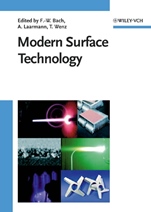
Modern Surface Technology
ISBN 9783527315321
Autor: Friedrich–Wilhelm Bach, Kai Möhwald, Andreas Laarmann, Thomas Wenz
Wydawca: Wiley
Dostępność: 3-6 tygodni
Cena: 1 071,00 zł
Przed złożeniem zamówienia prosimy o kontakt mailowy celem potwierdzenia ceny.
ISBN13: |
9783527315321 |
ISBN10: |
3527315322 |
Autor: |
Friedrich–Wilhelm Bach, Kai Möhwald, Andreas Laarmann, Thomas Wenz |
Oprawa: |
Hardback |
Rok Wydania: |
2006-07-21 |
Ilość stron: |
346 |
Wymiary: |
246x185 |
Tematy: |
PN |
Technology trends lead to steadily increasing requirements for surfaces of industrial components, especially in aerospace and similar high–tech areas.
Surfaces to withstand tribological stresses or with specific properties regarding thermal conductivity or optical behaviour can only be realized by sophisticated, tailor–made coating technologies.
Modern Surface Technology gives a broad and fundamental overview on the state–of–the–art of coating technology. In recent years many new processes were introduced into industrial usage – this book discusses the potential of these innovations (e.g., diamond synthesis, cold gas spraying) in detail.
Materials scientists and engineers will be enabled to assess the potentials of coating systems and coating technologies for their specific problem and to find the appropriate solution for a coating problem. Thus, it will become possible to make coating technology an integral part of R&D, construction and production.
The book combines research and industrial perspectives, treated by authors from academia and industry alike. It is thus a valuable current reference, based on a successful yearly training workshop.
Spis treści:
Preface.
List of Contributors.
1 Selecting Surface–treatment Technologies (W. Tillmann, E. Vogli).
1.1 Introduction.
1.2 Requirements on Part Surfaces.
1.3 Selecting Coating and Surface Technologies.
1.4 Processes for Surface Modification and Coating.
1.5 Economic Assessment of Surface–treatment Technologies.
1.6 Summary and Conclusions.
References.
2 Stainless Austenitic Steel – Surface Hardening for Increased Wear Resistance (M. Wägner).
2.1 Introduction.
2.2 Fundamentals.
2.3 Technologies for Surface Hardening of Austenitic Stainless Steels.
2.4 Applications.
2.5 Outlook.
References.
3 Fundamentals of Thin–film
Technology (M. Nicolaus, M. Schäpers).
3.1 Introduction.
3.2 Classification of Thin–film Coating Processes.
3.3 General Aspects of Gas–phase Coating Processes.
3.4 Plasma Properties.
3.5 Coating Configuration.
3.6 Electrodeposition and Electroless Plating Processes.
References.
4 Innovations in PVD Technology for High–performance Applications (K. Bobzin, E. Lugscheider, M. Maes, P. Immich).
4.1 Introduction.
4.2 Market Situation.
4.3 Application Examples.
4.4 Summary.
References.
5 Development and Status Quo of Thermal CVD Hard–material Coating (A. Szabo).
5.1 Introduction.
5.2 Early CVD Hard–material Coating.
5.3 Fundamentals of Deposition Processes.
5.4 Combination Coatings.
5.5 Material and Coating Properties.
5.6 Performance of Hard–material Coatings – Applications.
5.7 CVD Coating at Lower Temperatures.
5.8 Summary and Conclusions.
References.
6 Hot–filament CVD Diamond Thin Films (O. Lemmer, R. Cremer, D. Breidt, M. Frank, J. Müller).
6.1 Introduction.
6.2 Differences of Diamond Tools.
6.3 Substrate Pre–treatment.
6.4 Production of CVD Diamond.
6.5 Hot–filament Process.
6.6 Controlling CVD Diamond Properties.
6.7 Industrial Deposition of CVD Diamond.
6.8 Post–treatment of CVD Diamond.
6.9 Applications for Diamond–coated Tools.
6.10 Summary and Conclusions.
References.
7 An Introduction to Electrodeposition and Electroless Plating Processes (W. Olberding).
7.1 Introduction.
7.2 Fundamentals of Electrodeposition (Considering Nickel Deposition as Example).
7.3 Overview of System Technologies.
7.4 Overview of Individual Process Steps in Electroplating.
7.5 Microstructuring and Electroforming.
7.6 Summary.
References.
8 Fundamentals of Thermal Spraying, Flame and Arc Spraying (
Z. Babiak, T. Wenz, L. Engl).
8.1 Introduction.
8.2 Fundamentals of Thermal Spraying.
8.3 Flame Spraying.
8.4 Arc Spraying.
8.5 Summary and Conclusions.
References.
9 Spray Materials (J. Beczkowiak).
9.1 Introduction.
9.2 Spray Material Properties Determined by Production Issues.
9.3 Material Selection for Coating Applications.
10 High–velocity Oxygen Fuel Flame Spraying (O. Brandt).
10.1 Introduction.
10.2 Characteristics.
10.3 Technical Considerations.
10.4 Applications.
10.5 Process Monitoring and Control.
10.6 Development Trends.
10.7 Summary.
References.
11 Triplex II – Development of an Economical High–performance Plasma Spray System for Highest–quality Demands even under Challenging Production Conditions (H. Zimmermann, H.–M. Höhle).
11.1 Introduction.
11.2 Fundamentals of Plasma Spraying.
11.3 Standard Plasma Gun Design.
11.4 Development of the High–performance Three–cathode Plasma Gun Triplex.
11.5 Triplex II – A New Era in Plasma Spraying Technology.
11.6 Positive Feedback from Industry.
11.7 Summary.
References.
12 System Technology, Gas Supply, and Potential Applications for Cold Gas Spraying (W. Krömmer, P. Heinrich).
12.1 Introduction.
12.2 System Design.
12.3 Applications.
12.4 Summary.
References.
13 Diagnostics in Thermal Spraying Processes (J. Prehm, K. Hartz).
13.1 Introduction.
13.2 Classification of Diagnostic Methods.
13.3 Methods for Particle Diagnostics.
13.4 Methods for Plasma and Hot Gas Diagnostics.
13.5 Methods for Online Process Control.
13.6 Summary and Conclusions.
References.
14 Sol–gel Coating Processes (M. Kursawe, V. Hilarius, G. Pfaff, R. Anselmann).
14.1 Introduction.
14.2 Sol–gel Coating Formation for SiO<sub>2</sub&
;gt; .
14.3 Application Examples .
14.4 Conclusions.
References.
15 Hot–dip Coating (W. Bleck, D. Beste).
15.1 Mechanisms of Corrosion Protection.
15.2 Phase Diagrams Fe–Zn, Fe–Al, Al–Zn, and Fe–Al–Zn.
15.3 Metal Coatings.
15.4 Systems Technology.
15.5 Quality Control.
15.6 Summary and Conclusions.
References.
16 Build–up Brazed Wear–protection Coatings (H. Krappitz).
16.1 Introduction.
16.2 Brazing and Soldering.
16.3 BrazeCoat Technology.
16.4 Summary.
References.
17 Applications of Coating Processes in Brazing Technology (K. Möhwald, U. Holländer, A. Laarmann).
17.1 Introduction.
17.2 Brazing Filler–metal Application by Thermal Spraying.
17.3 Electroplating and Electroless Plating Methods for Brazing Filler–metal Application.
17.4 Brazing Filler–metal Application by PVD.
17.5 Summary and Conclusions.
References.
18 Surface Protection by Means of Build–up Welding (A. Gebert, B. Bouaifi).
18.1 Introduction.
18.2 Process Variants.
18.3 Characterisation of Build–up Welded Coatings.
18.4 Build–up Welding Techniques.
18.5 Coating Materials for Build–up Welding.
18.6 Summary and Conclusions.
References.
19 Non–destructive Testing and Assessment of Coatings (W. Reimche, R. Duhm).
19.1 Introduction.
19.2 Coatings.
19.3 Thickness–measurement Techniques.
19.4 Internal Stresses in Coatings.
19.5 Detecting Coating Defects.
19.6 Summary and Conclusions.
References.
Subject Index.
Nota biograficzna:
Professor Bach is Head of the Materials Institute of the Universit&auml;t of Hannover and Director of the Research Center for Surface Technologies and Innovation Services (FORTIS) in Witten, Germany. He is one of the highest renow
ned experts on surface technologies in Germany. Dr. M?ld is also member of FORTIS.
Dr. Laarmann works as a Technical Consultant for Benteler Steel/Tube in Paderborn, T. Wenz is a Project–Engineer at Durum Verschleiss–Schutz in Willich.
Dr. M&ouml;hwald is also member of FORTIS Board of Directors, A. Laarmann and T. Wenz also belong to FORTIS.
Okładka tylna:
Technology trends lead to steadily increasing requirements for surfaces of industrial components, especially in aerospace and similar high–tech areas.
Surfaces to withstand tribological stresses or with specific properties regarding thermal conductivity or optical behaviour can only be realized by sophisticated, tailor–made coating technologies.
Modern Surface Technology gives a broad and fundamental overview on the state–of–the–art of coating technology. In recent years many new processes were introduced into industrial usage – this book discusses the potential of these innovations (e.g., diamond synthesis, cold gas spraying) in detail.
Materials scientists and engineers will be enabled to assess the potentials of coating systems and coating technologies for their specific problem and to find the appropriate solution for a coating problem. Thus, it will become possible to make coating technology an integral part of R&D, construction and production.
The book combines research and industrial perspectives, treated by authors from academia and industry alike. It is thus a valuable current reference, based on a successful yearly training workshop.
Koszyk
Książek w koszyku: 0 szt.
Wartość zakupów: 0,00 zł
Informacje


Kontakt
Gambit
Centrum Oprogramowania
i Szkoleń Sp. z o.o.
Al. Pokoju 29b/22-24
31-564 Kraków
Siedziba Księgarni
ul. Kordylewskiego 1
31-542 Kraków
+48 12 410 5991
+48 12 410 5987
+48 12 410 5989
Subskrypcje
Administratorem danych osobowych jest firma Gambit COiS Sp. z o.o. Na podany adres będzie wysyłany wyłącznie biuletyn informacyjny.
Autoryzacja płatności

Informacje na temat autoryzacji płatności poprzez PayU.

© Copyright 2012: GAMBIT COiS Sp. z o.o. Wszelkie prawa zastrzeżone.
Projekt i wykonanie: Alchemia Studio Reklamy