


Wydawcy
Katalog tematyczny
- Archeologia (109)
- Ekonomia, finanse, business (13704)
- Filozofia (1445)
- Historia (3040)
- Języki i językoznawstwo (2356)
- Lifestyle, hobby i rozrywka (475)
- Medycyna (9704)
- Chirurgia (272)
- Inne gałęzie medycyny (1871)
- Medycyna kliniczna (4187)
- Choroby wewnętrzne (514)
- Dermatologia (51)
- Diagnostyka medyczna (3)
- Endokrynologia (144)
- Gastroenterologia (27)
- Geriatria (50)
- Ginekologia i położnictwo (134)
- Hematologia (46)
- Hepatologia (10)
- Kardiologia (71)
- Laryngologia (12)
- Nefrologia (10)
- Neurologia (500)
- Oftalmologia (50)
- Pediatria (33)
- Pulmunologia (32)
- Reumatologia (14)
- Terapia genowa (1)
- Układ mięśniowo-szkieletowy (1)
- Urologia (14)
- Medycyna niekonwencjonalna (14)
- Medycyna przedkliniczna (269)
- Medycyna, ogólnie (1740)
- Medyczne służby pomocnicze (745)
- Studia medyczne (16)
- Weterynaria (548)
- Nauki humanistyczne (4)
- Nauki o Ziemi i środowisku (2638)
- Nauki ścisłe (20412)
- Nauki społeczne (8486)
- Nauki techniczne (13450)
- Prawo (1696)
- Publikacje informacyjne i interdyscyplinarne (1288)
- Religia i wierzenia (917)
- Technika komputerowa (4067)
- Zdrowie, relacje międzyludzkie i rozwój osobisty (657)





Informacje szczegółowe o książce
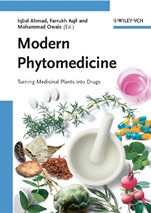
Modern Phytomedicine: Turning Medicinal Plants into Drugs
ISBN 9783527315307
Autor: Iqbal Ahmad, Farrukh Aqil, Mohammad Owais
Wydawca: Wiley
Dostępność: 3-6 tygodni
Cena: 1 098,30 zł
Przed złożeniem zamówienia prosimy o kontakt mailowy celem potwierdzenia ceny.
ISBN13: |
9783527315307 |
ISBN10: |
3527315306 |
Autor: |
Iqbal Ahmad, Farrukh Aqil, Mohammad Owais |
Oprawa: |
Hardback |
Rok Wydania: |
2006-10-10 |
Ilość stron: |
404 |
Wymiary: |
254x182 |
Tematy: |
MJ |
How to turn ancient knowledge into a blockbuster drug. Throughout time, humans have searched, collected, and effectively used plants for healing. Currently, business in medicinal plants is flourishing, and efforts are being made to transform traditionally used herbs into modern drugs conforming to the high pharmacological standards present–day. To achieve this goal, a number of problems concerning the safety and efficacy of medicinal plant products need to be addressed and solved.
This timely and original handbook paves the way to success, systematically addressing the issues facing pharmaceutical scientists wanting to turn a plant compound into a safe and effective drug. Plant pharmacologists from around the world demonstrate the potentials and pitfalls involved, with many of the studies and experiments published here for the first time.
This is a valuable resource, bringing together information that is otherwise unavailable.
Spis treści:
Preface.
List of Contributors.
1 Bioactive Phytocompounds: New Approaches in the Phytosciences (Ricardo Ramos Mendonça–Filho).
1.1 Introduction.
1.2 Development of Fast Reliable Methods of Extraction and High–Throughoutput Screening (HTS) of Crude Plant Extracts: New Challenges.
1.3 Antimicrobial Bioactive Phytocompounds from Extraction to Identification: Process Standardization.
1.4 Problems Associated with the Efficacy, Stability and Quality Control of Herbal Drugs Preparations.
1.5 Novel Bioactive Phytocompounds Against Multidrug–Resistant Bacteria/Fungi: The Management of Infectious and Chronic Diseases.
1.6 Mode of Action of Bioactive Phytocompounds and their Interactions with Macromolecules and Toxicity.
1.7 Bioactive Phytocompounds and Future Perspectives.
References.
2 Quality Control, Screening, Toxicity, and Regulation of Herbal Drugs (Wickramasinghe M. Bandaranayake).
2.1 Introduction.<
br>2.2 Preparation of Herbal Drugs.
2.3 Quality Control of Herbal Drugs.
2.4 Herbal Supplements.
2.5 Adulteration of Herbal Drugs.
2.6 Contamination of Herbal Drugs and Herb–Drug Interactions.
2.7 Toxicity of Herbal Drugs.
2.8 Screening of Herbal Drugs.
2.9 Labeling of Herbal Products.
2.10 Policies and Regulations.
2.11 Trends and Developments.
2.12 Conclusions.
References.
3 Herbal Medicines: Prospects and Constraints (Iqbal Ahmad, Farrukh Aqil, Farah Ahmad, and Mohammad Owais).
3.1 Introduction.
3.2 Prospects for Herbal Medicine.
3.3 Constraints in Herbal Medicine.
3.4 Good Manufacturing Practice (GMP) for Herbal Medicine.
3.5 Improving the Quality, Safety and Efficacy of Herbal Medicine.
3.6 Conclusions.
Acknowledgments.
References.
4 Bioactive Phytocompounds and Products Traditionally Used in Japan (Jin–ichi Sasaki).
4.1 Introduction.
4.2 Garlic.
4.3 Mushroom.
4.4 Sweetcorn.
4.5 Oil and Flavor of Tree Hiba (Japanese Cypress) (Hinokitiol).
4.6 Conclusions.
Acknowledgments.
References.
5 Plant Extracts Used to Manage Bacterial, Fungal, and Parasitic Infections in Southern Africa (J.N. Eloff and L.J. McGaw).
5.1 Introduction.
5.2 Biodiversity in Southern Africa.
5.3 Use of Plants in Southern African Traditional Medicine.
5.4 The Need for Anti–Infective Agents.
5.5 Selection of Plant Species to Investigate.
5.6 Collecting, Drying, and Storage of Plant Material.
5.7 Extraction of Plant Material.
5.8 Evaluating Quantitative Antimicrobial Activity.
5.9 Evaluating Qualitative Biological Activity.
5.10 Expression of Results.
5.11 Antibacterial Activity.
5.12 Results on Antibacterial Activity Obtained with Members of the Combretaceae.
5.13 Antifungal Activity.
5.14 Antiparasitic Activity.
5.15 Other Anti–Infective Research in South Africa.
5.16 Cytotoxicity.
5.17 Eth
noveterinary Research.
5.18 Determining the in vivo Efficacy of Extracts and Isolated Compounds.
5.19 Conclusion.
References.
6 Biological and Toxicological Properties of Moroccan Plant Extracts: Advances in Research (M. Larhsini).
6.1 Introduction.
6.2 Ethnobotanic and Ethnopharmacology of Traditional Moroccan Plants.
6.3 Toxicological Assays.
6.4 Conclusions.
References.
7 Anti–MRSA and Anti–VRE Activities of Phytoalexins and Phytoncides Isolated from Tropical Plants (Yoshikazu Sakagami).
7.1 Introduction.
7.2 Phytoalexins and Phytoncides.
7.3 Antibiotics.
7.4 Bacteria and Broth.
7.5 Isolation of Phytoalexins and Phytoncides.
7.6 Minimum Inhibitory Concentration.
7.7 Synergism of Antibacterial Compounds with Commercially Available Antibiotics.
7.8 Antibacterial Activities.
7.9 Synergism Between the Test Compounds and Commercial Antibiotics Against VRE, MRSA, VSE, and MSSA.
References.
8 Methods for Testing the Antimicrobial Activity of Extracts (Jenny M. Wilkinson).
8.1 Introduction.
8.2 Antibacterial Assays.
8.3 Antifungal Assays.
8.4 In vivo Assessment of Antibacterial and Antifungal Activity.
8.5 Methods for Assessing Antiviral Activity.
8.6 Screening of Plant Extracts for Antiparasitic Activity.
8.7 Conclusions.
References.
9 Targeted Screening of Bioactive Plant Extracts and Phytocompounds Against Problematic Groups of Multidrug–Resistant Bacteria (Farrukh Aqil, Iqbal Ahmad, and Mohammad Owais).
9.1 Introduction.
9.2 Approaches to Targeted Screening Against MDR Bacteria.
9.3 Other Potential Approaches.
9.4 Conclusions and Future Directions.
Acknowledgments.
References.
10 Activity of Plant Extracts and Plant–Derived Compounds against Drug–Resistant Microorganisms (Antonia Nostro).
10.1 Introduction.
10.2 Plant Materials with Genera
l Antimicrobial Activity Including some Drug–Resistant Strains.
10.3 Plant Materials with Specific Antimicrobial Activity Against Drug–Resistant Strains.
10.4 Plant Materials that Restore the Effectiveness of Antimicrobial Agents and/or Inhibit Drug Resistance Mechanisms.
10.5 Conclusions.
References.
11 An Alternative Holistic Medicinal Approach to the Total Management of Hepatic Disorders: A Novel Polyherbal Formulation (Mohammad Owais, Iqbal Ahmad, Shazia Khan, Umber Khan, and Nadeem Ahmad).
11.1 Introduction.
11.2 Conventional Medicines for Liver Disorders.
11.3 Herbal Medicines – Potential Therapeutic Agents with Minimal Side–Effects.
11.4 Contributions of Elementology to Potential Treatments for Hepatic Disorders.
11.5 Other Alternatives in Liver Therapy.
11.6 Conclusions.
References.
12 Traditional Plants and Herbal Remedies Used in the Treatment of Diarrheal Disease: Mode of Action, Quality, Efficacy, and Safety Considerations (Enzo A. Palombo).
12.1 Introduction.
12.2 Methods Used in the Evaluation of Bioactivity of Medicinal Plants.
12.3 Traditional Medicinal Plants Used in the Treatment of Diarrhea that Display Antimicrobial Activity.
12.4 Traditional Medicinal Plants Used in the Treatment of Diarrhea that Display Antidiarrheal Activity.
12.5 Phytochemical Analysis, Identification of Active Plant Components, and Mechanism of Action of Medicinal Plants Used in the Treatment of Diarrhea.
12.6 Quality, Efficacy, and Safety Considerations.
12.7 Conclusions.
Acknowledgments.
References.
13 Mutagenicity and Antimutagenicity of Medicinal Plants (Javed Musarrat, Farrukh Aqil, and Iqbal Ahmad).
13.1 Introduction.
13.2 Plants as Protective Agents Against DNA Damage.
13.3 Antimutagenic Properties of Edible and Medicinal Plants.
13.4 Mutagenicity of Plant Extracts and Phytocompounds.
13.5 “Janus Carcinogens and M
utagens”.
13.6 Chemical Nature of Phytoantimutagenic Compounds.
13.7 Assays for Mutagenicity and Antimutagenicity.
13.8 Paradigms in Antimutagenicity Research.
13.9 Conclusions.
References.
14 Potential of Plant–Derived Products in the Treatment of Mycobacterial Infections (Deepa Bisht, Mohammad Owais, and K. Venkatesan).
14.1 Introduction.
14.2 Current Therapy of Tuberculosis and Leprosy.
14.3 Need for Newer Antimycobacterial Drugs.
14.4 Plant Extracts.
14.5 Well–Characterized Plant–Derived Compounds.
14.6 Conclusion.
Acknowledgements.
References.
15 Ethnomedicinal Antivirals: Scope and Opportunity (Debprasad Chattopadhyay).
15.1 Introduction.
15.2 Antiviral Ethnomedicines Against Common Virus Families.
15.3 Major Groups of Antivirals from Plants.
15.4 Mixtures and Other Compounds.
15.5 Experimental Approaches.
15.6 Future Prospects.
15.7 Conclusions.
Acknowledgments.
References.
16 Immunomodulatory Effects of Phytocompounds (Buket Cicioglu Arıdogan).
16.1 Introduction.
16.2 Effect of Specific Medicinal Herbs on Immune System and Immune Cells.
16.3 General Properties of Echinacea Species.
16.4 Effects of Echinacea Species on the Immune System and Various Immune Cells.
16.5 Asteraceae.
16.6 Lithospermum erythrorhizon.
16.7 Guarana.
16.8 Side and Adverse Effects of Some Phytocompounds.
16.9 Conclusion.
References.
17 Use of a Liposomal Delivery System for Herbal–Based Therapeutics (with a Focus on Clove Oil) (Nadeem Ahmad, Maroof Alam, Iqbal Ahmad, and Mohammad Owais).
17.1 Introduction.
17.2 Rationale for Using Liposomized Formulation of Clove Oil.
17.3 Experiments Conducted to Develop Liposomal Clove Oil Formulation.
17.4 Conclusions.
References.
Subject Index.
Nota biograficzna:
Iqbal Ahmad is a senior lec
turer of agricultural microbiology at Aligarh Muslim University (AMU), India, and Principal Investigator of the Medicinal Plants Research Project of the University Grant Commission, New Delhi, India. A graduate of AMU, he worked as a research scientist at the Himalaya Drug Company before moving to the AMU′s Faculty of Agricultural Sciences. He has so far screened more than 150 traditional Indian medicinal plants for their biological activities and potential prospection.
Farrukh Aqil is Project Fellow working on the major research project on medicinal plants at the AMU Department of Agricultural Microbiology. His current work includes biological activities of Indian medicinal plants against MDR bacteria, antioxidants, and the antimutagenicity potential of bioactive plant extracts.
Mohammad Owais currently holds a faculty position at the Interdisciplinary Biotechnology Unit at Aligarh Muslim University, India. He trained at CDRI, Lucknow and IMTECH, Chandigarh, and worked during his post doctoral training with Dr. R. C. Gallo′s group at the NIH, USA. His present work is focusing on the screening of various herbal drugs for their potential to treat drug resistant infections, and developing and applying drug delivery systems to herbal drugs to assess the efficacy, stability and toxicity in animal models.
Okładka tylna:
How to turn ancient knowledge into a blockbuster drug. Throughout time, humans have searched, collected, and effectively used plants for healing. Currently, business in medicinal plants is flourishing, and efforts are being made to transform traditionally used herbs into modern drugs conforming to the high pharmacological standards present–day. To achieve this goal, a number of problems concerning the safety and efficacy of medicinal plant products need to be addressed and solved.
This timely and original handbook paves the way to success, systematically addressing the issues facing pharmaceu
tical scientists wanting to turn a plant compound into a safe and effective drug. Plant pharmacologists from around the world demonstrate the potentials and pitfalls involved, with many of the studies and experiments published here for the first time.
This is a valuable resource, bringing together information that is otherwise unavailable.
Koszyk
Książek w koszyku: 0 szt.
Wartość zakupów: 0,00 zł
Informacje


Kontakt
Gambit
Centrum Oprogramowania
i Szkoleń Sp. z o.o.
Al. Pokoju 29b/22-24
31-564 Kraków
Siedziba Księgarni
ul. Kordylewskiego 1
31-542 Kraków
+48 12 410 5991
+48 12 410 5987
+48 12 410 5989
Subskrypcje
Administratorem danych osobowych jest firma Gambit COiS Sp. z o.o. Na podany adres będzie wysyłany wyłącznie biuletyn informacyjny.
Autoryzacja płatności

Informacje na temat autoryzacji płatności poprzez PayU.

© Copyright 2012: GAMBIT COiS Sp. z o.o. Wszelkie prawa zastrzeżone.
Projekt i wykonanie: Alchemia Studio Reklamy