


Wydawcy
Katalog tematyczny
- Archeologia (109)
- Ekonomia, finanse, business (13704)
- Filozofia (1445)
- Historia (3040)
- Języki i językoznawstwo (2356)
- Lifestyle, hobby i rozrywka (475)
- Medycyna (9704)
- Nauki humanistyczne (4)
- Nauki o Ziemi i środowisku (2638)
- Nauki ścisłe (20412)
- Astronomia (294)
- Biologia (5119)
- Chemia (6540)
- Chemia analityczna (361)
- Chemia fizyczna (346)
- Chemia nieorganiczna (137)
- Chemia organiczna (535)
- Krystalografia (27)
- Minerologia (46)
- Fizyka (3309)
- Matematyka (4574)
- Nauki ścisłe, ogólnie (503)
- Nauki społeczne (8486)
- Nauki techniczne (13450)
- Prawo (1696)
- Publikacje informacyjne i interdyscyplinarne (1288)
- Religia i wierzenia (917)
- Technika komputerowa (4067)
- Zdrowie, relacje międzyludzkie i rozwój osobisty (657)





Informacje szczegółowe o książce
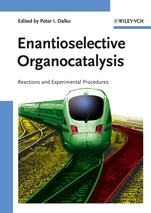
Enantioselective Organocatalysis: Reactions and Experimental Procedures
ISBN 9783527315222
Autor: Peter I. Dalko
Wydawca: Wiley
Dostępność: 3-6 tygodni
Cena: 990,15 zł
Przed złożeniem zamówienia prosimy o kontakt mailowy celem potwierdzenia ceny.
ISBN13: |
9783527315222 |
ISBN10: |
3527315225 |
Autor: |
Peter I. Dalko |
Oprawa: |
Hardback |
Rok Wydania: |
2007-02-23 |
Ilość stron: |
559 |
Wymiary: |
249x180 |
Tematy: |
PN |
In this reference frontline leaders in the field provide an insight into one of the hottest topics in organic synthesis, focusing on the most important enantioselective reactions in the field.
Clearly structured, each entry begins with a concise introduction, including a mechanistic discussion of the reaction. Experimental procedures are brought together in a concluding chapter: preparative guidelines for newcomers, carefully selected working procedures with critical notes for bench chemists, rules of thumb and tips and tricks.
Spis treści:
Preface.
List of Contributors.
List of Abbreviations.
1 Asymmetric Organocatalysis: A New Stream in Organic Synthesis (Peter I. Dalko).
1.1 Introduction.
1.2 Historical Background.
1.3 Catalysts.
1.4 Reaction Types.
1.5 How This Book is Organized.
References and Notes.
2 Enamine Catalysis.
2.1 Aldol and Mannich–Type Reactions (Fujie Tanaka and Carlos F. Barbas, III).
2.2 a–Heteroatom Functionalization (Mauro Marigo and Karl Anker Jørgensen).
2.3 Direct Conjugate Additions via Enamine Activation (Cyril Bressy and Peter I. Dalko).
2.4 Conclusions.
3 Iminium Catalysis (Gérald Lelais and David W. C. MacMillan).
3.1 Introduction.
3.2 The Catalysis Concept of Iminium Activation.
3.3 Development of the "First–Generation" Imidazolidinone Catalysts.
3.4 Development of the "Second–Generation" Imidazolidinone Catalysts.
3.5 Cyloaddition Reactions.
3.6 1,4–Addition Reactions.
3.7 Transfer Hydrogenation.
3.8 Organocatalytic Cascade Reactions.
3.9 Conclusions.
4 Ammonium Ions as Chiral Templates (Takashi Ooi and Keiji Maruoka).
4.1 Introduction.
4.2 Homogeneous Catalysis with Chiral Quaternary Ammonium Fluorides.
4.3 Homogeneous Catalysis with Chiral Quaternary Ammonium Bifluorides.
4.4 Homogeneous Catalysis with Chir
al Quaternary Ammonium Phenoxides.
4.5 Heterogeneous Catalysis: Chiral Phase–Transfer Catalysis.
4.6 Conclusions.
5 Organocatalytic Enantioselective Morita–Baylis–Hillman (MBH) Reactions (Candice Menozzi and Peter I. Dalko).
5.1 Addition of Ketones and Aldehydes to Activated Olefins.
5.2 Asymmetric Aza–MBH Reactions.
5.3 Conclusions.
References and Notes.
6 Asymmetric Proton Catalysis (Jeff D. McGilvra, Vijaya Bhasker Gondi, and Viresh H. Rawal).
6.1 Introduction.
6.2 Conjugate Addition Reactions.
6.3 Hydrocyanation Reactions.
6.4 Mannich Reactions.
6.5 Aza–Henry Reactions of Aldimines.
6.6 Acyl Pictet–Spengler Reactions of Iminium Ions.
6.7 Aza–Friedel–Crafts Reactions of Aldimines.
6.8 Hydrophosphonylation Reactions of Aldimines.
6.9 Direct Alkylation Reactions of α–Diazoesters.
6.10 Imine Amidation Reactions.
6.11 Transfer Hydrogenation Reactions of Imines.
6.12 Morita–Baylis–Hillman Reactions.
6.13 Cycloaddition Reactions.
6.14 Aldol and Related Reactions.
6.15 Conclusion and Prospects.
6.16 Addendum.
References.
7 Chiral Lewis Bases as Catalysts (Pavel Kočovský and Andrei V. Malkov).
7.1 Introduction.
7.2 Allylation Reactions.
7.3 Propargylation, Allenylation, and Addition of Acetylenes.
7.4 Aldol–Type Reactions.
7.5 Hydrocyanation and Isonitrile Addition.
7.6 Reduction of Imines.
7.7 Epoxide Opening.
7.8 Conclusions and Outlook.
8 Asymmetric Acyl Transfer Reactions (Alan C. Spivey and Paul McDaid).
8.1 Introduction.
8.2 Type I Acyl Transfer Processes.
8.3 Type II Acyl Transfer Processes.
8.4 Concluding Remarks.
9 Nucleophilic N–Heterocyclic Carbenes in Asymmetric Organocatalysis (Dieter Enders, Tim Balensiefer, Oliver Niemeier, and Mathias Christmann).
9.1 The Benzoin
Condensation.
9.2 The Stetter Reaction.
9.3 Further Applications.
10 Ylide–Based Reactions (Eoghan M. McGarrigle and Varinder K. Aggarwal).
10.1 Introduction.
10.2 Epoxidation.
10.3 Asymmetric Aziridination.
10.4 Asymmetric Cyclopropanation.
10.5 Summary of Ylide–Catalyzed Asymmetric Reactions.
11 Organocatalytic Enantioselective Reduction of Olefins, Ketones, and Imines (Henri B. Kagan).
11.1 Introduction.
11.2 The General Concept.
11.3 Asymmetric Organocatalytic Reduction of Olefins.
11.4 Reduction of Ketones or Ketimines.
11.5 Conclusions.
12 Oxidation Reactions (Alan Armstrong).
12.1 Epoxidation of Alkenes.
12.2 Epoxidation of Enoates, Enones, and Enals.
12.3 Asymmetric Baeyer–Villiger Reaction.
12.4 Oxidation of Thioethers.
12.5 Resolution of Alcohols by Oxidation.
12.6 Conclusions.
13 Shape– and Site–Selective Asymmetric Reactions (Nicolas Bogliotti and Peter I. Dalko).
13.1 Introduction.
13.2 Acylation Reactions with Oligopeptide–Based Catalysts.
13.3 Sequence–Specific RNA–Cleaving Agents.
13.4 Chiral Cavitands: Calixarenes and Cyclodextrins.
13.5 Molecular Imprinting.
13.6 Conclusion.
14 Appendix I: Reaction Procedures.
14.1 Aldol Reactions.
14.2 Mannich Reaction.
14.3 Pictet–Spengler Reaction.
14.4 Nitroaldol (Henry) Reaction.
14.5 Hydrocyanation and Cyanosilylation Reactions.
14.6 Alkylation of α–Diazoesters.
14.7 Heteroatom Addition to Imines.
14.8 α–Heteroatom Functionalization.
14.9 1,4–Additions.
14.10 Morita–Baylis–Hillman (MBH) Reactions.
14.11 Cyclopropanation.
14.12 Aziridination.
14.13 Epoxide Formation.
14.14 Epoxide Opening.
14.15 Nucleophilic Substitution Reactions.
14.16 Allylation Reactions.
14.17 Acylation.
14.18 [4+2] Cycloadditions.
14.19 [3+2]–Cycloa
dditions.
14.20 Acyloin and Benzoin Condensations.
14.21 Reduction of Ketones and Imines.
14.22 Hydrogenation of Olefins.
14.23 Multicomponent Domino Reactions.
15 Appendix II: Catalysts.
Subject Index.
Nota biograficzna:
Peter I. Dalko was born in 1960 in Budapest (Hungary). He studied chemistry at the Budapest TechnicalUniversity (Hungary) and obtained his doctorate with Dr. S. D. Géro in Gif–sur–Yvette (France). After undertaking postdoctoralresearch with Sir Derek H. Barton at Texas A&M University (USA) and Prof. Yoshito Kishi at Harvard University he joined Prof. Janine Cossy′s research group at the ESPCI in Paris. His current main research interest is the development of novel asymmetric reactions.
Okładka tylna:
In this reference frontline leaders in the field provide an insight into one of the hottest topics in organic synthesis, focusing on the most important enantioselective reactions in the field.
Clearly structured, each entry begins with a concise introduction, including a mechanistic discussion of the reaction. Experimental procedures are brought together in a concluding chapter: preparative guidelines for newcomers, carefully selected working procedures with critical notes for bench chemists, rules of thumb and tips and tricks.
Koszyk
Książek w koszyku: 0 szt.
Wartość zakupów: 0,00 zł
Informacje


Kontakt
Gambit
Centrum Oprogramowania
i Szkoleń Sp. z o.o.
Al. Pokoju 29b/22-24
31-564 Kraków
Siedziba Księgarni
ul. Kordylewskiego 1
31-542 Kraków
+48 12 410 5991
+48 12 410 5987
+48 12 410 5989
Subskrypcje
Administratorem danych osobowych jest firma Gambit COiS Sp. z o.o. Na podany adres będzie wysyłany wyłącznie biuletyn informacyjny.
Autoryzacja płatności

Informacje na temat autoryzacji płatności poprzez PayU.

© Copyright 2012: GAMBIT COiS Sp. z o.o. Wszelkie prawa zastrzeżone.
Projekt i wykonanie: Alchemia Studio Reklamy