


Wydawcy
Katalog tematyczny
- Archeologia (109)
- Ekonomia, finanse, business (13704)
- Filozofia (1445)
- Historia (3040)
- Języki i językoznawstwo (2356)
- Lifestyle, hobby i rozrywka (475)
- Medycyna (9704)
- Nauki humanistyczne (4)
- Nauki o Ziemi i środowisku (2638)
- Nauki ścisłe (20412)
- Astronomia (294)
- Biologia (5119)
- Chemia (6540)
- Chemia analityczna (361)
- Chemia fizyczna (346)
- Chemia nieorganiczna (137)
- Chemia organiczna (535)
- Krystalografia (27)
- Minerologia (46)
- Fizyka (3309)
- Matematyka (4574)
- Nauki ścisłe, ogólnie (503)
- Nauki społeczne (8486)
- Nauki techniczne (13450)
- Prawo (1696)
- Publikacje informacyjne i interdyscyplinarne (1288)
- Religia i wierzenia (917)
- Technika komputerowa (4067)
- Zdrowie, relacje międzyludzkie i rozwój osobisty (657)






Informacje szczegółowe o książce
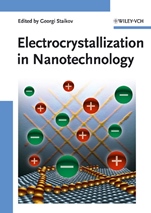
Electrocrystallization in Nanotechnology
ISBN 9783527315154
Autor: Georgi T. Staikov
Wydawca: Wiley
Dostępność: 3-6 tygodni
Cena: 935,55 zł
Przed złożeniem zamówienia prosimy o kontakt mailowy celem potwierdzenia ceny.
ISBN13: |
9783527315154 |
ISBN10: |
3527315152 |
Autor: |
Georgi T. Staikov |
Oprawa: |
Hardback |
Rok Wydania: |
2007-01-11 |
Ilość stron: |
279 |
Wymiary: |
240x170 |
Tematy: |
PN |
Here, the well–known editor in the field of electrocrystallization and his team of excellent international authors guarantee the high quality of the contributions. Clearly structured in two main parts, this book reviews the fundamentals and applications of electrocrystallization processes in nanotechnology.
The first part, "Fundamentals" covers the basic concepts of electrocrystallization, computer simulations of low–dimensional metal phase formation, electrodeposition in templates and nanocavities, nanoscale electrocrystallization from ionic liquids, and superconformal electrodeposition of metals.
The second part, "Preparation and properties of nanostructures", includes nanostructuring by STM tip induced localized electrocrystallization of metals, fabrication of ordered anodic nanoporous Al2O3 layers and their application, preparation of nanogaps, nanocontacts, nanowires and nanodots by selective electrochemical deposition, as well as electrodeposition of magnetic nanostructures and multilayers.
Spis treści:
Preface.
List of Contributors.
I Fundamentals.
1 The Impact of Electrocrystallization on Nanotechnology (Georgi Staikov and Alexander Milchev).
1.1 Introduction.
1.2 Thermodynamic Properties of Large and Small Phases.
1.3 Kinetics of Nucleus Formation in Electrocrystallization.
1.4 Energy State of the Electrode Surface and Spatial Distribution of Nanoclusters.
1.5 Electrochemical Growth of Nanoparticles and Ultrathin Films.
1.6 Localization of Electrocrystallization Processes and Nanostructuring.
1.7 Conclusion.
2 Computer Simulations of Electrochemical Low–dimensional Metal Phase Formation (Marcelo M. Mariscal and Ezequiel P. M. Leiva).
2.1 Introduction.
2.2 Molecular Dynamics Simulations.
2.3 Monte Carlo Method.
2.4 Brownian and Langevin Dynamics Simulations.
2.5 Conclusions and Outlook.
3 Electrodeposition of M
etals in Templates and STM Tip–generated 0D Nanocavities (Wolfgang Kautek).
3.1 Introduction.
3.2 Bottom–up Template Approach.
3.3 Top–down SPM Approach.
3.4 Thermodynamics of Low–dimensional Phases.
3.5 Experiments on the Electrodeposition in STM–tip–generated Nanocavities.
3.6 Underpotential Behavior of Bismuth on Gold.
3.7 Zero–dimensional Bi Deposition.
3.8 Conclusions.
4 Nanoscale Electrocrystallization of Metals and Semiconductors from Ionic Liquids (Walter Freyland, Chitradurga L. Aravinda, and Ditimar Borissov).
4.1 Introduction.
4.2 Some Electrochemical and Interfacial Characteristics of Ionic Liquids (ILs).
4.3 Variable Temperature Electrochemical SPM Technique for Studies with Ionic Liquids.
4.4 Underpotential Deposition of Metals: Phase Formation and Transitions.
4.5 Overpotential Deposition of Metals, Alloys and Semiconductors.
4.6 Concluding Remarks.
5 Superconformal Film Growth (Thomas P. Moffat, Daniel Wheeler, and Daniel Josell).
5.1 Introduction.
5.2 Competitive Adsorption: Inhibition versus Acceleration.
5.3 Quantifying the Impact of Competitive Adsorption on Metal Deposition Kinetics.
5.4 Feature Filling.
5.5 Shape Change Simulations.
5.6 Stability Analysis.
5.7 Conclusions and Outlook.
II Preparation and Properties of Nanostructures.
6 Localized Electrocrystallization of Metals by STM Tip Nanoelectrodes (Werner Schindler and Philipp Hugelmann).
6.1 Electrochemistry in Nanoscale Dimensions.
6.2 Jump–to–Contact Metal Deposition.
6.3 Scanning Electrochemical Microscope.
6.4 STM Tip Electrochemical Nanoelectrodes.
6.5 Metal Deposition by STM Tip Electrochemical Nanoelectrodes.
6.6 Metal Dissolution by STM Tip Electrochemical Nanoelectrodes.
6.7 The Importance of Nanoelectrode Tip Shape and Surface Quality.
6.8 Localized Electrodeposition o
f Single Metal Nanostructures.
6.9 Summary and Outlook.
7 Fabrication of Ordered Anodic Nanoporous Alumina Layers and their Application to Nanotechnology (Hidetaka Asoh and Sachiko Ono).
7.1 Introduction.
7.2 Self–ordered Anodic Porous Alumina.
7.3 Ideally Ordered Anodic Porous Alumina.
7.4 Anodic Porous Alumina with 3D Periodicity.
7.5 Application of Nanoporous Alumina to a Mask for Fabrication of Nanostructures.
7.6 Summary.
8 Electrochemical Fabrication of Metal Nanocontacts and Nanogaps (Fang Chen and N. J. Tao).
8.1 Introduction.
8.2 Electrochemical Fabrication of Metal Nanocontacts.
8.3 Electrochemical Fabrication of Metal Nanogaps.
8.4 Summary.
9 Nanowires by Electrochemical Step Edge Decoration (ESED) (Reginald M. Penner).
9.1 Introduction.
9.2 General Considerations.
9.3 Direct Nanowire Electrodeposition.
9.4 Compound Nanowires by Cyclic Electrodeposition/Stripping.
9.5 Electrochemical/Chemical Synthesis of Nanowires.
9.6 Nanowire ‘‘Thinning’’ by Electrooxidation.
9.7 Summary.
10 Electrochemical Fabrication of Arrayed Nanostructures (Takayuki Homma).
10.1 Introduction.
10.2 Formation of Metal Nanodots Along the Step Edge of the Si(111) Surface.
10.3 Maskless Fabrication of Metal Nanodot Arrays using Electroless Deposition Induced by Controlled Local Surface Activities.
10.4 Conclusion.
11 Electrodeposition of Two–dimensional Magnetic Nanostructures on Single Crystal Electrode Surfaces (Philippe Allongue and Fouad Maroun).
11.1 Introduction.
11.2 Ultrathin Magnetic Films.
11.3 Electrochemical Growth and Magnetic Properties of Iron Group Films on Au(111).
11.4 Concluding Remarks.
12 Electrodeposition and Properties of Nanoscale Magnetic/Non–magnetic Metallic Multilayer Films (László Péter and Imre Ba
konyi).
12.1 Introduction.
12.2 Electrodeposition.
12.3 Properties.
12.4 Summary.
Index.
Nota biograficzna:
Georgi Staikov received his MS in physical chemistry from Sofia University in 1968, and subsequently joined the Central Laboratory of Electrochemical Power Sources at the Bulgarian Academy of Sciences, ultimately becoming deputy director. In 1993 he transferred to the University of Karlsruhe to continue his research with Professor W. J. Lorenz on electrocrystallization and underpotential deposition of metals. He is currently a senior scientist at the Research Center Jülich and an assistant professor at the University of Düsseldorf. Dr. Staikov has over 100 publications to his name, and his current research focuses on the application of electrochemical phase formation processes for nanometer–scale structuring and modification of solid surfaces.
Okładka tylna:
Here, the well–known editor in the field of electrocrystallization and his team of excellent international authors guarantee the high quality of the contributions. Clearly structured in two main parts, this book reviews the fundamentals and applications of electrocrystallization processes in nanotechnology.
The first part, "Fundamentals" covers the basic concepts of electrocrystallization, computer simulations of low–dimensional metal phase formation, electrodeposition in templates and nanocavities, nanoscale electrocrystallization from ionic liquids, and superconformal electrodeposition of metals.
The second part, "Preparation and properties of nanostructures", includes nanostructuring by STM tip induced localized electrocrystallization of metals, fabrication of ordered anodic nanoporous Al2O3 layers and their application, preparation of nanogaps, nanocontacts, nanowires and nanodots by selective electrochemical deposition, as well as electrodeposition of magnetic nanostructures and m
Koszyk
Książek w koszyku: 0 szt.
Wartość zakupów: 0,00 zł
Informacje


Kontakt
Gambit
Centrum Oprogramowania
i Szkoleń Sp. z o.o.
Al. Pokoju 29b/22-24
31-564 Kraków
Siedziba Księgarni
ul. Kordylewskiego 1
31-542 Kraków
+48 12 410 5991
+48 12 410 5987
+48 12 410 5989
Subskrypcje
Administratorem danych osobowych jest firma Gambit COiS Sp. z o.o. Na podany adres będzie wysyłany wyłącznie biuletyn informacyjny.
Autoryzacja płatności

Informacje na temat autoryzacji płatności poprzez PayU.

© Copyright 2012: GAMBIT COiS Sp. z o.o. Wszelkie prawa zastrzeżone.
Projekt i wykonanie: Alchemia Studio Reklamy