


Wydawcy
Katalog tematyczny
- Archeologia (109)
- Ekonomia, finanse, business (13704)
- Filozofia (1445)
- Historia (3040)
- Języki i językoznawstwo (2356)
- Lifestyle, hobby i rozrywka (475)
- Medycyna (9704)
- Nauki humanistyczne (4)
- Nauki o Ziemi i środowisku (2638)
- Nauki ścisłe (20412)
- Astronomia (294)
- Biologia (5119)
- Chemia (6540)
- Chemia analityczna (361)
- Chemia fizyczna (346)
- Chemia nieorganiczna (137)
- Chemia organiczna (535)
- Krystalografia (27)
- Minerologia (46)
- Fizyka (3309)
- Matematyka (4574)
- Nauki ścisłe, ogólnie (503)
- Nauki społeczne (8486)
- Nauki techniczne (13450)
- Prawo (1696)
- Publikacje informacyjne i interdyscyplinarne (1288)
- Religia i wierzenia (917)
- Technika komputerowa (4067)
- Zdrowie, relacje międzyludzkie i rozwój osobisty (657)





Informacje szczegółowe o książce
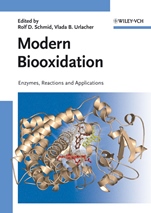
Modern Biooxidation: Enzymes, Reactions and Applications
ISBN 9783527315079
Autor: Rolf D. Schmid, Vlada Urlacher
Wydawca: Wiley
Dostępność: 3-6 tygodni
Cena: 1 058,40 zł
Przed złożeniem zamówienia prosimy o kontakt mailowy celem potwierdzenia ceny.
ISBN13: |
9783527315079 |
ISBN10: |
3527315071 |
Autor: |
Rolf D. Schmid, Vlada Urlacher |
Oprawa: |
Hardback |
Rok Wydania: |
2007-07-18 |
Ilość stron: |
318 |
Wymiary: |
249x180 |
Tematy: |
PN |
Filling a gap in the literature, leading expert editor5s and top international authors present he field of biooxidation from an academic and industrial point of view, taking many examples from modern pharmaceutical research. Topics range from the characterization to technical applications of different oxidoreductases, making this volume of high interest not only for those working in biotechnology but also for organic synthetic chemists, among others.
Keywords:Biocatalytic Applications of PQQ–and FAD–Dependent Dehydrogenases, Laccase, Baeyer–Villiger Monooxygenases, and Cytochrome P450 MonooxygenasesBioreactors for Drug–Discovery, –Development and –BiotechnologyEngineering Substrate Specificity; Enantio–and RegioselectivityApproaches to Cofactor Recycling and Substituting
Spis treści:
1 Biooxidation with PQQ– and FAD–Dependent Dehydrogenases (Osao Adachi, Yoshitaka Ano, Hirohide Toyama, and Kazunobu Matsushita).
1.1 Introduction.
1.2 Basic Technical Information Regarding Membrane–bound Enzymes.
1.3 PQQ–Dependent Dehydrogenases.
1.4 FAD–Dependent Dehydrogenase.
1.5 Miscellaneous.
References.
2 Catalytic Applications of Laccase (Feng Xu, Ture Damhus, Steffen Danielsen, and Lars Henrik Østergaard).
2.1 Properties of Classical Laccase.
2.2 Applications of Laccase for Industrial Oxidation Processes.
2.3 More Recent Developments.
2.4 Further Developing Laccase Catalysis.
3 Biocatalytic Scope of Baeyer–Villiger Monooxygenases (Marco W. Fraaije and Dick B. Janssen).
3.1 Introduction.
3.2 Type I Baeyer–Villiger Monooxygenases: Versatile Oxidative Biocatalysts.
3.3 Concluding Remarks.
4 The Bacterial Cytochrome P450 Monooxygenases: P450cam and P450BM–3 (Vlada B. Urlacher, Stephen G. Bell, and Luet–Lok Wong).
4.1 Introducti
on.
4.2 Biotransformation by Bacterial P450 Enzymes.
4.3 General Features of P450cam and P450BM–3.
4.4 The Scope of P450 Engineering.
5 Cytochrome P450 Redox Partner Systems: Biodiversity and Biotechnological Implications (Andrew W. Munro, Hazel M. Girvan, Joseph P. McVey, and Kirsty J. McLean).
5.1 Introduction.
5.2 P450 Redox Partners.
5.3 Increasing P450–Redox Partner Complexity: Flavodoxins and Diverse Ferredoxins.
5.4 Natural and Arti. cial P450–Redox Partner Fusion Enzymes and their Biocatalytic Potential.
5.5 Other Routes to Driving P450 Catalytic Function.
5.6 Uncoupling, Enzyme Stability and Coenzyme Issues.
5.7 Future Prospects.
6 Steroid Hydroxylation: Microbial Steroid Biotransformations Using Cytochrome P450 Enzymes (Matthias Bureik and Rita Bernhardt).
6.1 Introduction.
6.2 Cytochrome P450–Dependent Steroid Hydroxylase Systems.
6.3 Native Microorganisms in Steroid Biotransformation.
6.4 Genetically Modi. ed Microorganisms in Steroid Biotransformation.
6.5 Synopsis and Concluding Remarks.
7 A Modular Approach to Biotransformation Using Microbial Cytochrome P450 Monooxygenases (Akira Arisawa and Hitosi Agematu).
7.1 Introduction.
7.2 Experimental Outline.
7.3 Bacterial CYP Expression System in E. coli.
7.4 Construction of a Bacterial CYP Library.
7.5 Construction of a Bacterial CYP Reaction Array.
7.6 Application of the CYP Reaction Array to Biotransformation Screening.
8 Selective Microbial Oxidations in Industry: Oxidations of Alkanes, Fatty Acids, Heterocyclic Compounds, Aromatic Compounds and Glycerol Using Native or Recombinant Microorganisms (Albrecht Weiss).
8.1 Introduction.
8.2 Selective Oxidation of Hydrocarbons and Fatty Acids.
8.3 Aromatic Compounds/Fine Chemicals.
8.4 Heterocyclic Compounds.
8.5 Glycerol Conversion to Dihydroxyacetone.
8.6 Perspectives.
9 Pr
eparation of Drug Metabolites using Fungal and Bacterial Strains (Oreste Ghisalba and Matthias Kittelmann).
9.1 Introduction.
9.2 Phase I Drug–Metabolizing Enzymes.
9.3 Needs and "Platforms" for the Generation of Drug Metabolites.
9.4 Microbial Models for Oxidative Drug Metabolism.
9.5 Correlation of Microbial and Mammalian Oxidative Drug Metabolism.
9.6 Correlation of Microbial Reactions with Human CYP Isozyme–Speci. c Reactions.
9.7 Novartis Research Examples of Microbial Hydroxylations.
9.8 Microbial Oxidation of Natural Products.
9.9 Conclusions.
10 Recombinant Yeast and Bacteria that Express Human P450s: Bioreactors for Drug Discovery, Development, and Biotechnology (Steven P. Hanlon, Thomas Friedberg, C. Roland Wolf, Oreste Ghisalba, and Matthias Kittelmann).
10.1 Background.
10.2 Comparison of P450 Levels and Enzymic Activities in Various Models.
10.3 Use of E. coli P450 Expression Systems in Bioreactors.
10.4 Conclusion.
11 Human Cytochrome P450 Monooxygenases – a General Model of Substrate Specifi city and Regioselectivity (Jürgen Pleiss).
11.1 Introduction.
11.2 What Can We Learn From Sequence?
11.3 What Can We Learn from Structure?
11.4 Conclusion.
12 Approaches to Recycling and Substituting NAD(P)H as a CYP Cofactor (Dirk Holtmann and Jens Schrader).
12.1 Introduction.
12.2 Chemical Substitution of Cofactors.
12.3 Enzymatic Regeneration of Cofactors.
12.4 Photochemical Approaches to Substituting or Regenerating Cofactors for P450 Systems.
12.5 Electrochemical Systems for Substitution or Regeneration of Cofactors.
12.6 Redox Mediators.
12.7 Molecular Biological Approaches.
12.8 Conclusion and Outlook.
Index.
Nota biograficzna:
Rolf Schmid obtained his PhD in 1970. After post–doctoral studies in France and the USA, he joined the research laboratories o
f Henkel KGaA in D?orf in 1972 where he became Director of the Biotechnology Laboratories. In 1987, he moved to the ′Gesellschaft f?technologische Forschung′ (GBF) in Braunschweig where he headed the Division of Enzyme Technology and Natural Products Research.
In 1993, he accepted an invitation to build up the newly founded Institute for Technical Biochemistry at the University of Stuttgart. He is further in charge of the Department of Molecular Biotechnology at the Fraunhofer Institute for Membrane Science and Biotechnology in Stuttgart, and he is chairman of the IUPAC Commission of Biotechnology.
Vlada B. Urlacher obtained her diploma in Biology at the University of Tashkent, Uzbekistan. After receiving her PhD from the Academy of Sciences, Uzbekistan, she spent a postdoctoral year at the Institute of Technical Biochemistry, University of Stuttgart, Germany and then two years in the Institute of Biotechnology, University Halle–Wittenberg, Germany. In 2001 she returned to the Institute of Technical Biochemistry, University of Stuttgart. Since 2003 she has been head of Biocatalysis group at this Insitute. Her main research interests are engineering the technical application of oxidizing enzymes.
Okładka tylna:
Filling a gap in the literature, leading expert editor5s and top international authors present he field of biooxidation from an academic and industrial point of view, taking many examples from modern pharmaceutical research. Topics range from the characterization to technical applications of different oxidoreductases, making this volume of high interest not only for those working in biotechnology but also for organic synthetic chemists, among others.
Keywords:Biocatalytic Applications of PQQ–and FAD–Dependent Dehydrogenases, Laccase, Baeyer–Villiger Monooxygenases, and Cytochrome P450 MonooxygenasesBioreactors for Drug–Discovery, –Development and –Biotechno
Koszyk
Książek w koszyku: 0 szt.
Wartość zakupów: 0,00 zł
Informacje


Kontakt
Gambit
Centrum Oprogramowania
i Szkoleń Sp. z o.o.
Al. Pokoju 29b/22-24
31-564 Kraków
Siedziba Księgarni
ul. Kordylewskiego 1
31-542 Kraków
+48 12 410 5991
+48 12 410 5987
+48 12 410 5989
Subskrypcje
Administratorem danych osobowych jest firma Gambit COiS Sp. z o.o. Na podany adres będzie wysyłany wyłącznie biuletyn informacyjny.
Autoryzacja płatności

Informacje na temat autoryzacji płatności poprzez PayU.

© Copyright 2012: GAMBIT COiS Sp. z o.o. Wszelkie prawa zastrzeżone.
Projekt i wykonanie: Alchemia Studio Reklamy