


Wydawcy
Katalog tematyczny
- Archeologia (109)
- Ekonomia, finanse, business (13704)
- Filozofia (1445)
- Historia (3040)
- Języki i językoznawstwo (2356)
- Lifestyle, hobby i rozrywka (475)
- Medycyna (9704)
- Nauki humanistyczne (4)
- Nauki o Ziemi i środowisku (2638)
- Nauki ścisłe (20412)
- Astronomia (294)
- Biologia (5119)
- Chemia (6540)
- Chemia analityczna (361)
- Chemia fizyczna (346)
- Chemia nieorganiczna (137)
- Chemia organiczna (535)
- Krystalografia (27)
- Minerologia (46)
- Fizyka (3309)
- Matematyka (4574)
- Nauki ścisłe, ogólnie (503)
- Nauki społeczne (8486)
- Nauki techniczne (13450)
- Prawo (1696)
- Publikacje informacyjne i interdyscyplinarne (1288)
- Religia i wierzenia (917)
- Technika komputerowa (4067)
- Zdrowie, relacje międzyludzkie i rozwój osobisty (657)





Informacje szczegółowe o książce
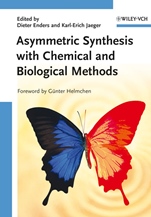
Asymmetric Synthesis with Chemical and Biological Methods
ISBN 9783527314737
Autor: Dieter Enders, Karl–Erich Jaeger, Günter Helmchen
Wydawca: Wiley
Dostępność: 3-6 tygodni
Cena: 1 043,70 zł
Przed złożeniem zamówienia prosimy o kontakt mailowy celem potwierdzenia ceny.
ISBN13: |
9783527314737 |
ISBN10: |
3527314733 |
Autor: |
Dieter Enders, Karl–Erich Jaeger, Günter Helmchen |
Oprawa: |
Hardback |
Rok Wydania: |
2007-02-23 |
Ilość stron: |
470 |
Wymiary: |
240x170 |
Tematy: |
PN |
Edited by two of the leading researchers in asymmetric synthesis, this book provides a deep, interdisciplinary insight in the ever–expanding field of stoichiometric and catalytic reactions. Presenting the latest developments, it focuses on the synthesis of natural and bioactive compounds and both chemical and biological methods of catalysis.
Nineteen contributions from top research teams cover a plethora of various topics, ranging from classical organic chemistry to the development of new synthetic strategies, and from theory to reaction technology and enzyme use. All the important particulars of the individual techniques are investigated and delivered in highly readable fashion.
Spis treści:
Foreword.
Preface.
List of Contributors.
1 Stoichiometric Asymmetric Synthesis.
1.1 Development of Novel Enantioselective Synthetic Methods (Dieter Enders and Wolfgang Bettray).
1.1.1 Introduction 1
1.1.2 α–Silyl Ketone–Controlled Asymmetric Syntheses.
1.1.3 Asymmetric Hetero–Michael Additions.
1.1.4 Asymmetric Syntheses with Lithiated α–Aminonitriles.
1.1.5 Asymmetric Electrophilic α–Substitution of Lactones and Lactams.
1.1.6 Asymmetric Synthesis of α–Phosphino Ketones and 2–Phosphino Alcohols.
1.1.7 Asymmetric Synthesis of 1,3–Diols and anti–1,3–Polyols.
1.1.8 Asymmetric Synthesis of α–Substituted Sulfonamides and Sulfonates.
1.2 Asymmetric Synthesis of Natural Products Employing the SAMP/RAMP Hydrazone Methodology (Dieter Enders and Wolfgang Bettray).
1.2.1 Introduction.
1.2.2 Stigmatellin A.
1.2.3 Callistatin A.
1.2.4 Dehydroiridodiol(dial) and Neonepetalactone.
1.2.5 First Enantioselective Synthesis of Dendrobatid Alkaloids Indolizidine 209I and 223J.
1.2.6 Effi cient Synthesis of (2S,12′R)–2–(12′–Aminotridecyl
)pyrrolidine, a Defense Alkaloid of the Mexican Bean Beetle.
1.2.7 2–epi–Deoxoprosopinine.
1.2.8 Attenol A and B.
1.2.9 Asymmetric Synthesis of (+)– and (−)–Streptenol A.
1.2.10 Sordidin.
1.2.11 Prelactone B and V.
1.3 Asymmetric Synthesis Based on Sulfonimidoyl–Substituted Allyltitanium Complexes (Hans–Joachim Gais).
1.3.1 Introduction.
1.3.2 Hydroxyalkylation of Sulfonimidoyl–Substituted Allylltitanium Complexes.
1.3.3 Aminoalkylation of Sulfonimidoyl–Substituted Allyltitanium Complexes.
1.3.4 Structure and Reactivity of Sulfonimidoyl–Substituted Allyltitanium Complexes.
1.3.5 Asymmetric Synthesis of Homopropargyl Alcohols.
1.3.6 Asymmetric Synthesis of 2,3–Dihydrofurans.
1.3.7 Synthesis of Bicyclic Unsaturated Tetrahydrofurans.
1.3.8 Asymmetric Synthesis of Alkenyloxiranes.
1.3.9 Asymmetric Synthesis of Unsaturated Mono– and Bicyclic Prolines.
1.3.10 Asymmetric Synthesis of Bicyclic Amino Acids.
1.3.11 Asymmetric Synthesis of β–Amino Acids.
1.3.12 Conclusion.
1.4 The “Daniphos” Ligands: Synthesis and Catalytic Applications (Albrecht Salzer and Wolfgang Braun).
1.4.1 Introduction.
1.4.2 General Synthesis.
1.4.3 Applications in Stereoselective Catalysis.
1.4.4 Conclusion.
1.5 New Chiral Ligands Based on Substituted Heterometallocenes (Christian Ganter).
1.5.1 Introduction.
1.5.2 General Properties of Phosphaferrocenes.
1.5.3 Synthesis of Phosphaferrocenes.
1.5.4 Preparation of Bidentate P,P and P,N Ligands.
1.5.5 Modifi cation of the Backbone Structure.
1.5.6 Cp–Phosphaferrocene Hybrid Systems.
1.5.7 Catalytic Applications.
1.5.8 Conclusion.
2 Catalytic Asymmetric Synthesis.
2.1 Chemical Methods.
2.1.1 Sulfoximines as Ligands in Asymmetric Metal Catalysis (Carsten Bolm).
2.1.2 Catalyzed Asymmetric Aryl Transfer Reactions (Carsten Bolm).
2.1.3 Substituted [2.2]Paracyclophane Derivatives as Effi cient Ligands for Asymmetric 1,2– and 1,4–Addition Reactions (Stefan Bräse).
2.1.4 Palladium–Catalyzed Allylic Alkylation of Sulfur and Oxygen Nucleophiles – Asymmetric Synthesis, Kinetic Resolution and Dynamic Kinetic Resolution (Hans–Joachim Gais).
2.1.5 The QUINAPHOS Ligand Family and its Application in Asymmetric Catalysis (Giancarlo Franciò, Felice Faraone, and Walter Leitner).
2.1.6 Immobilization of Transition Metal Complexes and Their Application to Enantioselective Catalysis (Adrian Crosman, Carmen Schuster, Hans–Hermann Wagner, Melinda Batorfi , Jairo Cubillos, and Wolfgang Hölderich).
2.2 Biological Methods.
2.2.1 Directed Evolution to Increase the Substrate Range of Benzoylformate Decarboxylase from Pseudomonas putida (Marion Wendorff, Thorsten Eggert, Martina Pohl, Carola Dresen, Michael Müller, and Karl–Erich Jaeger).
2.2.2 C–C–Bonding Microbial Enzymes: Thiamine Diphosphate–Dependent Enzymes and Class I Aldolases (Georg A. Sprenger, Melanie Schürmann, Martin Schürmann, Sandra Johnen, Gerda Sprenger, Hermann Sahm, Tomoyuki Inoue, and Ulrich Schörken).
2.2.3 Enzymes for Carboligation – 2–Ketoacid Decarboxylases and Hydroxynitrile Lyases (Martina Pohl, Holger Breittaupt, Bettina Frölich, Petra Heim, Hans Iding, Bettina Juchem, Petra Siegert, and Maria–Regina Kula).
2.2.4 Preparative Syntheses of Chiral Alcohols using (R)–Specifi c Alcohol Dehydrogenases from Lactobacillus Strains (Andrea Weckbecker, Michael Müller, and Werner Hummel).
2.2.5 Biocatalytic C–C Bond Formation in Asymmetric Synthesis (Wolf–Dieter Fessner).
2.2.6 Exploring and Broadening the Biocatalytic Properties
of Recombinant Sucrose Synthase 1 for the Synthesis of Sucrose Analogues (Lothar Elling).
2.2.7 Flexible Asymmetric Redox Reactions and C–C Bond Formation by Bioorganic Synthetic Strategies (Michael Müller, Michael Wolberg, Silke Bode, Ralf Feldmann, Petra Geilenkirchen, Thomas Schubert, Lydia Walter, Werner Hummel, Thomas Dünnwald, Ayhan S. Demir, Doris Kolter–Jung, Adam Nitsche, Pascal Dünkelmann, Annabel Cosp, Martina Pohl, Bettina Lingen, and Maria–Regina Kula).
3 Reaction Technology in Asymmetric Synthesis.
3.1 Reaction Engineering in Asymmetric Synthesis (Stephan Lütz, Udo Kragl, Andreas Liese, and Christian Wandrey).
3.1.1 Introduction.
3.1.2 Membrane Reactors with Chemical Catalysts.
3.1.3 Membrane Reactors with Biological Catalysts.
3.1.4 Two–Phase Systems.
3.1.5 Conclusions.
3.2 Biocatalyzed Asymmetric Syntheses Using Gel–Stabilized Aqueous–Organic Two–Phase Systems (Marion B. Ansorge–Schumacher).
3.2.1 Gel–Stabilized Two–Phase Systems.
3.2.2 Benzoin Condensation with Entrapped Benzaldehyde Lyase.
3.2.3 Reduction of Ketones with Entrapped Alcohol Dehydrogenase.
3.2.4 Conclusion.
Index.
Name Index.
Nota biograficzna:
Dieter Enders completed his PhD at the Justus–Liebig–Universitat Giessen under the supervision of D. Seebach. After postdoctoral studies at Harvard University with E. J. Corey, he returned to Giessen and completed his habilitation. He became Associate Professor at the Universitat Bonn in 1980, and moved to his present position as Professor of Organic Chemistry at the RWTH Aachen in 1985. He has received many awards (Leibniz–Prize of the DFG, Emil Fischer Medal of the GDCh, Yamada Prize, Japan) for his research, which focuses on the asymmetric synthesis of biologically active compounds and the devel
opment of new synthetic methods.
Karl–Erich Jaeger was born in Dortmund and studied biology and chemistry at the Ruhr–University Bochum, where he received his PhD under the supervision of U. Winkler. After postdoctoral studies with Robert E.W. Hancock at the Department of Microbiology of the University of British Columbia in Vancouver, he received his habilitation in Bochum in 1995. Karl–Erich Jaeger is currently Professor at the Heinrich–Heine University of Dusseldorf and Director of the Institute of Molecular Enzyme Technology at the Research Centre Julich. His research interests include the expression, folding and secretion of bacterial enzymes, their optimization by directed evolution, and enantioselective biocatalysis.
Okładka tylna:
Edited by two of the leading researchers in asymmetric synthesis, this book provides a deep, interdisciplinary insight in the ever–expanding field of stoichiometric and catalytic reactions. Presenting the latest developments, it focuses on the synthesis of natural and bioactive compounds and both chemical and biological methods of catalysis.
Nineteen contributions from top research teams cover a plethora of various topics, ranging from classical organic chemistry to the development of new synthetic strategies, and from theory to reaction technology and enzyme use. All the important particulars of the individual techniques are investigated and delivered in highly readable fashion.
Koszyk
Książek w koszyku: 0 szt.
Wartość zakupów: 0,00 zł
Informacje


Kontakt
Gambit
Centrum Oprogramowania
i Szkoleń Sp. z o.o.
Al. Pokoju 29b/22-24
31-564 Kraków
Siedziba Księgarni
ul. Kordylewskiego 1
31-542 Kraków
+48 12 410 5991
+48 12 410 5987
+48 12 410 5989
Subskrypcje
Administratorem danych osobowych jest firma Gambit COiS Sp. z o.o. Na podany adres będzie wysyłany wyłącznie biuletyn informacyjny.
Autoryzacja płatności

Informacje na temat autoryzacji płatności poprzez PayU.

© Copyright 2012: GAMBIT COiS Sp. z o.o. Wszelkie prawa zastrzeżone.
Projekt i wykonanie: Alchemia Studio Reklamy