


Wydawcy
Katalog tematyczny
- Archeologia (109)
- Ekonomia, finanse, business (13704)
- Filozofia (1445)
- Historia (3040)
- Języki i językoznawstwo (2356)
- Lifestyle, hobby i rozrywka (475)
- Medycyna (9704)
- Nauki humanistyczne (4)
- Nauki o Ziemi i środowisku (2638)
- Nauki ścisłe (20412)
- Astronomia (294)
- Biologia (5119)
- Chemia (6540)
- Chemia analityczna (361)
- Chemia fizyczna (346)
- Chemia nieorganiczna (137)
- Chemia organiczna (535)
- Krystalografia (27)
- Minerologia (46)
- Fizyka (3309)
- Matematyka (4574)
- Nauki ścisłe, ogólnie (503)
- Nauki społeczne (8486)
- Nauki techniczne (13450)
- Prawo (1696)
- Publikacje informacyjne i interdyscyplinarne (1288)
- Religia i wierzenia (917)
- Technika komputerowa (4067)
- Zdrowie, relacje międzyludzkie i rozwój osobisty (657)





Informacje szczegółowe o książce
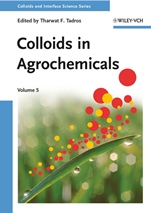
Colloids in Agrochemicals
ISBN 9783527314652
Autor: Tharwat F. Tadros
Wydawca: Wiley
Dostępność: 3-6 tygodni
Cena: 1 071,00 zł
Przed złożeniem zamówienia prosimy o kontakt mailowy celem potwierdzenia ceny.
ISBN13: |
9783527314652 |
ISBN10: |
3527314652 |
Autor: |
Tharwat F. Tadros |
Oprawa: |
Hardback |
Rok Wydania: |
2009-04-15 |
Ilość stron: |
300 |
Wymiary: |
242x177 |
Tematy: |
PN |
The first modern approach to related fundamental research to the applied science of colloids bridges academic research and industrial applications, thus providing the information vital to both.
Written by the very top scientists in their respective disciplines, the volumes in this series are edited by an internationally recognized expert on this topic.
This volume describes the role of colloids and interface science in agrochemicals, making it invaluable reading for agricultural scientists, surface and physical chemists, as well as chemical engineers.
Spis treści:
Preface.
1 General Introduction.
Further Reading.
2 General Classification of Surface–active Agents Used in Agrochemical Formulations.
2.1 Anionic Surfactants.
2.2 Cationic Surfactants.
2.3 Amphoteric (Zwitterionic) Surfactants.
2.4 Nonionic Surfactants.
2.5 Speciality Surfactants Fluorocarbon and Silicone Surfactants.
2.6 Polymeric Surfactants.
References.
3 Physical Chemistry of Surfactant Solutions.
3.1 Properties of Solutions of Surfactants.
3.2 Solubility Temperature Relationship for Surfactants.
3.3 Thermodynamics of Micellization.
3.4 Micellization in Surfactant Mixtures (Mixed Micelles).
3.5 Surfactant Polymer Interaction.
References.
4 Interfacial Aspects of Agrochemical Formulations.
4.1 Introduction.
4.2 Equilibrium Adsorption of Surfactants at the Air/Liquid and Liquid/Liquid Interfaces.
4.3 The Gibbs Adsorption Isotherm.
4.4 Dynamic Processes of Adsorption.
4.5 Adsorption of Surfactants and Polymeric Surfactants at the Solid/Liquid Interface.
4.6 Surfactant Adsorption.
4.7 Adsorption of Polymeric Surfactants at the Solid/Liquid Interface.
4.8 Experimental Methods for Measurement of Adsorption Parameters for Polymeric Surfactants.
References.
5 Interaction Forces Between Particles or Droplets in Agrochemical Dispersions (Suspension Con
centrates or Emulsions, EWs) and Their Role in Colloid Stability.
5.1 Introduction.
5.2 van der Waals Attraction.
5.3 Electrical Double Layer Repulsion.
5.4 Total Energy of Interaction: Deryaguin Landau Verwey Overbeek (DLVO) Theory.
5.5 Criteria for Stabilization of Dispersions with Double Layer Interaction.
5.6 Steric Stabilization of Dispersions.
5.7 Interaction Between Particles or Droplets Containing Adsorbed Polymeric Surfactant Layers.
5.8 Flocculation of Sterically Stabilized Dispersions.
References.
6 Emulsion Concentrates (EWs).
6.1 Introduction.
6.2 Formation of Emulsions.
6.3 Mechanism of Emulsification.
6.4 Methods of Emulsification.
6.5 Role of Surfactants in Emulsion Formation.
6.6 Selection of Emulsifiers.
6.7 Creaming or Sedimentation of Emulsions.
6.8 Flocculation of Emulsions.
6.9 Ostwald Ripening.
6.10 Coalescence of Emulsions.
6.11 Phase Inversion.
6.12 Experimental Methods for Assessment of Emulsion Stability.
References.
7 Suspension Concentrates (SCs).
7.1 Introduction.
7.2 Preparation of Suspension Concentrates and the Role of Surfactants/Dispersing Agents.
7.3 Wetting of the Agrochemical Powder.
7.4 Control of the Physical Stability of Suspension Concentrates.
7.5 Characterization of Suspension Concentrates and Assessment of Their Long–term Physical Stability.
7.6 Bulk Properties of Suspension Concentrates.
References.
8 Oil–based Suspension Concentrates.
8.1 Introduction.
8.2 Stability of Suspensions in Polar Media.
8.3 Stability of Suspensions in Nonpolar Media.
8.4 Theory of Steric Stabilization.
8.5 Settling of Suspensions.
8.6 Emulsification of Oil–based Suspensions.
8.7 Proper Choice of the Antisettling System.
8.8 Rheological Characteristics of the Oil–based Suspensions.
References.
9 Suspoemulsions.
9.1 Introduction.
9.2 Systems Investigated.9.3 Experimental Methods.
9.4 Results and Discussion.
9.5 Conclusions.
References.
10 Microemulsions.
10.1 Introduction.
10.2 Thermodynamic Definition of Microemulsions.
10.3 Application in Agrochemicals.
10.4 Basic Principles of Microemulsion Formation and Thermodynamic Stability.
10.5 Characterization of Microemulsions Using Scattering Techniques.
10.6 Characterization of Microemulsions Using Conductivity.
10.7 NMR Measurements.
10.8 Selection of Surfactants for Formulation of Microemulsions.
10.9 Role of Microemulsions in Enhancement of Biological Efficacy.
References.
11 Multiple Emulsions.
11.1 Introduction.
11.2 General Description of Polymeric Surfactants.
11.3 Interaction Between Oil or Water Droplets Containing an Adsorbed Polymeric Surfactant Steric Stabilization.
11.4 Examples of Multiple Emulsions Using Polymeric Surfactants.
References.
12 Controlled–release Formulations.
12.1 Introduction.
12.2 Microencapsulation.
12.3 Mechanism of Release of Active Ingredient from Microcapsules.
12.4 Encapsulation by Phase Separation from Aqueous Solution.
12.5 Microencapsulation of Solid Particles.
12.6 Controlled Release of Agrochemicals from Matrix–based Microparticles.
12.7 Mechanism of Controlled Release from Microparticles.
12.8 Controlled Release from Granules.
References.
13 Basic Principles of Selection of Adjuvants in Agrochemical Formulations.
13.1 Introduction.
13.2 Interactions at the Air/Solution Interface and Their Effect on Droplet
Formation.
13.3 Spray Impaction and Adhesion.
13.4 Droplet Sliding and Spray Retention.
13.5 Wetting and Spreading.
13.6 Evaporation of Spray Drops and Deposit Formation.
13.7 Solubilization and its Effect on Transport.
13.8 Interaction Between Surfactant, Agrochemical and Target Species.
References.
Subject Index.
Nota biograficzna:Tharwat F. Tadros was appointed lecturer in Physical Chemistry (1962–1966) at Alexandria University. between 1966 and 1969, he spent a sabbatical at the Agricultural University of Wageningen and T.N.O. in Delft, The Netherlands.
Thereafter he joined I.C.I. and ZENECA until 1994, where he researched various fields of surfactants, emulsions, suspensions, microemulsions, wetting spreading adhesion and rheology. During that period he was also appointed visiting professor at Imperial College London, Bristol University and Reading University. In 1992, he was elected president of the International Association of Colloid and Interface Science. Since leaving ZENECA, Tharwat F. Tadros has worked as a consultant for various industries and also given several courses in his specialized field. He is the recipient of two medals from the Royal Society of Chemistry in the UK, and has more than 250 scientific papers to his name.
Okładka tylna:
The first modern approach to related fundamental research to the applied science of colloids bridges academic research and industrial applications, thus providing the information vital to both.
Written by the very top scientists in their respective disciplines, the volumes in this series are edited by an internationally recognized expert on this topic.
This volume describes the role of colloids and interface science in agrochemicals, making it invaluable reading for agricultural scientists, surface and physical chemists, as well as chemical engineers.
Koszyk
Książek w koszyku: 0 szt.
Wartość zakupów: 0,00 zł
Informacje


Kontakt
Gambit
Centrum Oprogramowania
i Szkoleń Sp. z o.o.
Al. Pokoju 29b/22-24
31-564 Kraków
Siedziba Księgarni
ul. Kordylewskiego 1
31-542 Kraków
+48 12 410 5991
+48 12 410 5987
+48 12 410 5989
Subskrypcje
Administratorem danych osobowych jest firma Gambit COiS Sp. z o.o. Na podany adres będzie wysyłany wyłącznie biuletyn informacyjny.
Autoryzacja płatności

Informacje na temat autoryzacji płatności poprzez PayU.

© Copyright 2012: GAMBIT COiS Sp. z o.o. Wszelkie prawa zastrzeżone.
Projekt i wykonanie: Alchemia Studio Reklamy