


Wydawcy
Katalog tematyczny
- Archeologia (109)
- Ekonomia, finanse, business (13704)
- Filozofia (1445)
- Historia (3040)
- Języki i językoznawstwo (2356)
- Lifestyle, hobby i rozrywka (475)
- Medycyna (9704)
- Chirurgia (272)
- Inne gałęzie medycyny (1871)
- Medycyna kliniczna (4187)
- Choroby wewnętrzne (514)
- Dermatologia (51)
- Diagnostyka medyczna (3)
- Endokrynologia (144)
- Gastroenterologia (27)
- Geriatria (50)
- Ginekologia i położnictwo (134)
- Hematologia (46)
- Hepatologia (10)
- Kardiologia (71)
- Laryngologia (12)
- Nefrologia (10)
- Neurologia (500)
- Oftalmologia (50)
- Pediatria (33)
- Pulmunologia (32)
- Reumatologia (14)
- Terapia genowa (1)
- Układ mięśniowo-szkieletowy (1)
- Urologia (14)
- Medycyna niekonwencjonalna (14)
- Medycyna przedkliniczna (269)
- Medycyna, ogólnie (1740)
- Medyczne służby pomocnicze (745)
- Studia medyczne (16)
- Weterynaria (548)
- Nauki humanistyczne (4)
- Nauki o Ziemi i środowisku (2638)
- Nauki ścisłe (20412)
- Nauki społeczne (8486)
- Nauki techniczne (13450)
- Prawo (1696)
- Publikacje informacyjne i interdyscyplinarne (1288)
- Religia i wierzenia (917)
- Technika komputerowa (4067)
- Zdrowie, relacje międzyludzkie i rozwój osobisty (657)





Informacje szczegółowe o książce
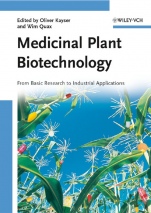
Medicinal Plant Biotechnology: From Basic Research to Industrial Applications 2 Volume Set
ISBN 9783527314430
Autor: Oliver Kayser, Wim J. Quax
Wydawca: Wiley
Dostępność: 3-6 tygodni
Cena: 1 441,65 zł
Przed złożeniem zamówienia prosimy o kontakt mailowy celem potwierdzenia ceny.
ISBN13: |
9783527314430 |
ISBN10: |
3527314431 |
Autor: |
Oliver Kayser, Wim J. Quax |
Oprawa: |
Hardback |
Rok Wydania: |
2006-11-03 |
Ilość stron: |
618 |
Wymiary: |
247x177 |
Tematy: |
MJ |
“The book draws on the expertise of 47 contributors with backgrounds in both basic and industrial research… This useful book is strongly recommended to anyone interested in this field.” – Biotechnology Advances, 2010
“This book is an ideal reference providing comprehensive and up–to–date information…” – Anticancer Research, 2007
This unique overview of plants and transgenic techniques of great scientific, medicinal and economic value for both industry and academia covers the whole spectrum from cell culture techniques, via genetic engineering and secondary product metabolism right up to the use of transgenic plants for the production of bioactive compounds. Practical examples are given throughout, including the production of cancer therapeutics, functional food, and flavor compounds in plants.
Of particular interest to the pharmaceutical and biotechnological industries, as well as medicinal chemists, biochemists, and molecular biologists.
Spis treści:
Preface.
Foreword.
List of Contributors.
Color Plates.
Volume I.
Part 1 Linking Plants, Genes, and Biotechnology.
1 The Engineering of Medicinal Plants: Prospects and Limitations of Medicinal Plant Biotechnology (Matthys K. Julsing, Wim J. Quax, and Oliver Kayser).
1.1 Introduction.
1.2 Genetic Transformation and Production of Transgenic Plants.
1.3 Pathway Engineering and Combinatorial Biosynthesis.
1.4 Bioprocessing.
1.5 Plant Propagation.
1.6 Bioanalytics and Metabolomics.
1.7 Future Prospects.
References.
2 Metabolomics (Young Hae Choi, Hye Kyong Kim, and Robert Verpoorte).
2.1 Introduction.
2.2 Analytical Methods.
2.3 Data Handling.
2.4 The General Set–Up of a Metabolomics Project.
2.5 Applications.
2.6 Conclusions.
References.
3 HPLC–NMR Techniq
ues for Plant Extract Analysis (Dan Stærk, Maja Lambert, and Jerzy W. Jaroszewski).
3.1 Introduction.
3.2 Hyphenation of Separation Techniques and Spectroscopic Methods.
3.3 Direct HPLC–NMR Methods.
3.4 Indirect HPLC–NMR Methods.
3.4.1 HPLC–SPE–NMR.
3.5 Cryogenically Cooled NMR Probes.
3.6 Miniaturization.
3.7 Conclusions.
References.
4 Plant–Associated Microorganisms (Endophytes) as a New Source of Bioactive Natural Products (Gary Strobel).
Abstract.
4.1 Introduction.
4.2 Why Are There Needs for New Medicines?
4.3 Natural Products in Medicine.
4.4 Endophytic Microbes.
4.5 Rationale for Plant Selection.
4.6 Endophytes and Biodiversity.
4.7 Endophytes and Natural Products.
4.8 Surprising Results from Molecular Biology Studies on Pestalotiopsis microspora.
4.9 Concluding Statements.
Acknowledgments.
References.
5 DNA Profiling of Plants (Hilde Nybom and Kurt Weising).
5.1 Introduction.
5.2 Methodology of Plant DNA Profiling.
5.3 Applications.
5.4 Conclusions.
References.
6 Bioprospecting: The Search for Bioactive Lead Structures from Nature (Michael Wink).
Abstract.
6.1 Introduction.
6.2 The Function of Secondary Metabolites.
6.3 Modes of Action.
6.4 The Utilization of Secondary Metabolites in Medicine.
6.5 Conclusions.
Key references.
7 Biotechnological Approaches for the Production of some Promising Plant–Based Chemotherapeutics (Ashish Baldi, V.S. Bisaria, and A.K. Srivastava).
Abstract.
7.1 Introduction.
7.2 Production by Plant Cell Cultures.
7.3 Biotechnological Approaches for Production.
7.4 Future Prospects.
References.
Part 2 Genetic Modifications, Transgenic Plants and Potential of Medicinal Plants in Genetechnology and Biotechnology.
8 In–Vitro Culturing Techniques of Medicin
al Plants (Wolfgang Kreis).
8.1 Introduction.
8.2 Basic Methods and Techniques.
8.3 Protoplast Technology.
8.4 Special Techniques.
8.5 Permanent In–Vitro Cultures.
8.6 Methods and Techniques Related to Secondary Metabolism.
8.7 Conclusions.
References.
9 Biotechnological Methods for Selection of High–Yielding Cell Lines and Production of Secondary Metabolites in Medicinal Plants (Donald P. Briskin).
9.1 Introduction.
9.2 Medicinal Plant Tissue Cultures and the In–Vitro Production of Phytomedicinal Secondary Metabolites.
9.3 Factors Leading to Elevated Production of Secondary Metabolites in Medicinal Plant Cell Cultures.
9.4 Enhancement of Secondary Metabolite Production through Agrobacterium rhizogenes Transformation.
9.5 Metabolite Engineering of Medicinal Plants in Culture.
9.6 Large–Scale Production of Medicinal Secondary Metabolites in Bioreactor Systems.
9.7 Summary and Perspective.
References.
10 Impact of Whole–Genome and Expressed Sequence Tag Databases on the Study of Plant Secondary Metabolism (Jillian M. Hagel, Jonathan E. Page, and Peter J. Facchini).
10.1 Introduction.
10.2 Whole–Genome Sequences.
10.3 Expressed Sequence Tags.
10.4 Terpenoids.
10.5 Phenylpropanoids.
10.6 Alkaloids.
10.7 Conclusion.
Acknowledgments.
References.
11 Biotechnology of Solanaceae Alkaloids: A Model or an Industrial Perspective? (Birgit Dräger).
11.1 Culture Systems.
11.2 Alkaloid Production.
11.3 Alkaloid Biosynthesis.
11.4 Solanaceae Model Systems for Transformation and Overexpression.
11.5 Conclusion and Future Aspects.
Acknowledgment.
References.
Volume II.
12 Plant Cell Cultures: Production of Biologically Important Secondary Metabolites from Medicinal Plants of Taiwan (Mulabagal Vanisree and Hsin–Sheng Tsay).
Abstract.
12.1 Introduction.
12.2 Cell Culture Protocols for Biologically Important Secondary Metabolites.
12.3 Conclusions and Future Perspectives.
References.
13 Exploring and Accessing Plant Natural Product Biosynthesis in Engineered Microbial Hosts (Erin K. Marasco and Claudia Schmidt–Dannert).
13.1 Introduction.
13.2 Heterologous Expression of Plant Natural Product Genes and Pathways.
13.3 Alkaloids.
13.4 Isoprenoids.
13.5 Flavonoids.
13.6 Conclusions.
References.
14 Production of Therapeutic Antibodies in Plants (Richard M. Twyman, Stefan Schillberg, and Rainer Fischer).
14.1 Introduction.
14.2 The Evolution of Recombinant Antibody Technology.
14.3 Production of Recombinant Antibodies in Plants.
14.4 Current Objectives in the Field.
14.5 Plant–Derived Antibodies in Clinical Trials.
14.6 Regulatory Considerations.
14.7 Summary.
References.
15 Glycosylation of Recombinant Proteins in Plants (Gilbert Gorr and Friedrich Altmann).
15.1 Introduction.
15.2 A Word on Names.
15.3 General Aspects of Glycosylation.
15.4 Why Antibodies?
15.5 “Humanization” of N–Glycans in Plants.
15.6 Trust is Good, Control is Better: A Structural Analysis.
15.7 Conclusions and Outlook.
References.
16 Frontiers in Transgenic Medicinal Plants Research (Ya’akov Tadmor and Efraim Lewinsohn).
16.1 Introduction.
16.2 Sources of Key Genes that Affect the Biosynthesis of Plant Natural Products.
16.3 Genomic Approaches Applied to Medicinal Plants Research.
16.4 Generation of Transgenic Medicinal Plants.
16.5 Metabolically Engineered Medicinal Plants.
16.6 Conclusions.
References.
Part 3 Plants as Drug Factories.
17 Intellectual Property Protection of Plant Biotechnology (Konrad Sechley and Clare Salisbury).
17.1 Introduction.
17.2 Protection of Plant Biotechnology in Eu
Koszyk
Książek w koszyku: 0 szt.
Wartość zakupów: 0,00 zł
Informacje


Kontakt
Gambit
Centrum Oprogramowania
i Szkoleń Sp. z o.o.
Al. Pokoju 29b/22-24
31-564 Kraków
Siedziba Księgarni
ul. Kordylewskiego 1
31-542 Kraków
+48 12 410 5991
+48 12 410 5987
+48 12 410 5989
Subskrypcje
Administratorem danych osobowych jest firma Gambit COiS Sp. z o.o. Na podany adres będzie wysyłany wyłącznie biuletyn informacyjny.
Autoryzacja płatności

Informacje na temat autoryzacji płatności poprzez PayU.

© Copyright 2012: GAMBIT COiS Sp. z o.o. Wszelkie prawa zastrzeżone.
Projekt i wykonanie: Alchemia Studio Reklamy