


Wydawcy
Katalog tematyczny
- Archeologia (109)
- Ekonomia, finanse, business (13704)
- Filozofia (1445)
- Historia (3040)
- Języki i językoznawstwo (2356)
- Lifestyle, hobby i rozrywka (475)
- Medycyna (9704)
- Nauki humanistyczne (4)
- Nauki o Ziemi i środowisku (2638)
- Nauki ścisłe (20412)
- Astronomia (294)
- Biologia (5119)
- Chemia (6540)
- Chemia analityczna (361)
- Chemia fizyczna (346)
- Chemia nieorganiczna (137)
- Chemia organiczna (535)
- Krystalografia (27)
- Minerologia (46)
- Fizyka (3309)
- Matematyka (4574)
- Nauki ścisłe, ogólnie (503)
- Nauki społeczne (8486)
- Nauki techniczne (13450)
- Prawo (1696)
- Publikacje informacyjne i interdyscyplinarne (1288)
- Religia i wierzenia (917)
- Technika komputerowa (4067)
- Zdrowie, relacje międzyludzkie i rozwój osobisty (657)





Informacje szczegółowe o książce
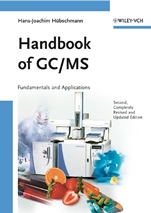
Handbook of GC/MS: Fundamentals and Applications
ISBN 9783527314270
Autor: Hans–Joachim Hübschmann
Wydawca: Wiley
Dostępność: 3-6 tygodni
Cena: 1 206,45 zł
Przed złożeniem zamówienia prosimy o kontakt mailowy celem potwierdzenia ceny.
ISBN13: |
9783527314270 |
ISBN10: |
352731427X |
Autor: |
Hans–Joachim Hübschmann |
Oprawa: |
Hardback |
Rok Wydania: |
2008-10-22 |
Numer Wydania: |
2nd, Completely Revised and Updated Edition |
Ilość stron: |
736 |
Wymiary: |
248x181 |
Tematy: |
PN |
"The most important advantage [of this text] is that it has not only been written for the practitioner, but also the analyst who wishes to familiarize himself with any or all the aspects of GC/MS."
—AFS – Advances In Food Sciences
An updated edition of its bestselling predecessor, Handbook of GC/MS: Fundamentals and Applications offers broad coverage of the subject, from sample preparation to the evaluation of MS–Data. This edition boasts several new chapters, including Automated Solvent Extraction (ASE), Hyphenation with Isotope Ratio MS, and the TOF–technique.
Spis treści:
1. Introduction.
2. Fundamentals.
2.1. Sample Preparation.
2.2. Gas Chromatography.
2.3. Mass Spectrometry.
2.4. Special Aspects of GC/MS Coupling.
3. Evaluation of GC/MS Analyses.
3.1. Display of Chromatograms.
3.2. Substance Identification.
3.3. Quantitation.
3.4. Frequently Occurring Impurities.
4. Applications.
4.1. Air Analysis According to EPA Method TO–14.
4.2. BTEX Using Headspace GC/MS.
4.3. Simultaneous Determination of Volatile Halogenated Hydrocarbons and BTEX.
4.4. Static Headspace Analysis of Volatile Priority Pollutants.
4.5. MAGIC 60 – Analysis of Volatile Organic Compounds
4.6. irm–GC/MS of Volatile Organic Compounds Using Purge and Trap Extraction.
4.7. Vinyl Chloride in Drinking Water.
4.8. Chloral Hydrate in Surface Water.
4.9. Field Analysis of Soil Air.
4.10. Residual Monomers and Polymerisation Additives.
4.11. Geosmin and Methylisoborneol in Drinking Water.
4.12. Substituted Phenols in Drinking Water.
4.13. GC/MS/MS Target Compound Analysis of Pesticide residues in Difficult Matrices.
4.14. Multi–component Pesticide Analysis by MS/MS.
4.15. Multi–method for the Determination of 239 Pesticides.
4.16. Nitrophenol Herbicides in Water.
4.17. Dinitrophenol Herbicides
in Water.
4.18. Hydroxybenzonitrile Herbicides in Drinking Water.
4.19. Routine Analysis of 24 PAHs in Water and Soil.
4.20. Fast GC Quantification of 16 EC Priority PAH Components.
4.21. Analysis of Water Contaminants by On–line SPE–GC/MS.
4.22. Determination of Polar Aromatic Amines by SPME.
4.23. Congener Specific Isotope Analysis of Technical PCB Mixtures.
4.24. Polychlorinated Biphenyls in Indoor Air.
4.25. Confirmation Analysis of Dioxins and Dioxin–like PCBs.
4.26. Fast GC Analysis for PCBs.
4.27. Analysis of Brominated Flame Retardants PBDE.
4.28. Trace Analysis of BFRs in Waste Water Using SPME–GC/MS/MS.
4.29. Analysis of Military Waste.
4.30. Detection of Drugs in Hair.
4.31. Detection of Morphine Derivatives.
4.32. Detection of Cannabis Consumption.
4.33. Analysis of Steroid Hormones Using MS/MS.
4.34. Determination of Prostaglandins Using MS/MS.
4.35. Detection of Clenbuterol by CI.
4.36. General Unknown Toxicological–chemical Analysis.
4.37. Clofibric Acid Aquatic Systems.
4.38. Polycyclic Musks in Waste Water.
4.39. Identification and Quantification of Trichothecene Mycotoxins.
4.40. Highly Sensitive Screening and Quantification of environmental Components Using Chemical Ionisation with Water.
4.41. Characterization of Natural Waxes by Pyrolysis–GC/MS.
4.42. Quantitative Determination of Acrylate Copolymer Layers.
5. Glossary.
Subject Index.
Nota biograficzna:
Hans–Joachim Hübschmann graduated from the Technical University, Berlin, Germany, with a doctorate in food chemistry. He began his career in diagnostics and medical analytical instruments before working for a number of German companies in gas chromatography and mass spectrometry. In 2003 he rejoined Thermo Fisher Scientific in Bremen, as a product marketing manager, moving to the US company in Austin, Texas, in his current capacity as a technolo
gy manager two years later.
Koszyk
Książek w koszyku: 0 szt.
Wartość zakupów: 0,00 zł
Informacje


Kontakt
Gambit
Centrum Oprogramowania
i Szkoleń Sp. z o.o.
Al. Pokoju 29b/22-24
31-564 Kraków
Siedziba Księgarni
ul. Kordylewskiego 1
31-542 Kraków
+48 12 410 5991
+48 12 410 5987
+48 12 410 5989
Subskrypcje
Administratorem danych osobowych jest firma Gambit COiS Sp. z o.o. Na podany adres będzie wysyłany wyłącznie biuletyn informacyjny.
Autoryzacja płatności

Informacje na temat autoryzacji płatności poprzez PayU.

© Copyright 2012: GAMBIT COiS Sp. z o.o. Wszelkie prawa zastrzeżone.
Projekt i wykonanie: Alchemia Studio Reklamy