


Wydawcy
Katalog tematyczny
- Archeologia (109)
- Ekonomia, finanse, business (13704)
- Filozofia (1445)
- Historia (3040)
- Języki i językoznawstwo (2356)
- Lifestyle, hobby i rozrywka (475)
- Medycyna (9704)
- Chirurgia (272)
- Inne gałęzie medycyny (1871)
- Medycyna kliniczna (4187)
- Choroby wewnętrzne (514)
- Dermatologia (51)
- Diagnostyka medyczna (3)
- Endokrynologia (144)
- Gastroenterologia (27)
- Geriatria (50)
- Ginekologia i położnictwo (134)
- Hematologia (46)
- Hepatologia (10)
- Kardiologia (71)
- Laryngologia (12)
- Nefrologia (10)
- Neurologia (500)
- Oftalmologia (50)
- Pediatria (33)
- Pulmunologia (32)
- Reumatologia (14)
- Terapia genowa (1)
- Układ mięśniowo-szkieletowy (1)
- Urologia (14)
- Medycyna niekonwencjonalna (14)
- Medycyna przedkliniczna (269)
- Medycyna, ogólnie (1740)
- Medyczne służby pomocnicze (745)
- Studia medyczne (16)
- Weterynaria (548)
- Nauki humanistyczne (4)
- Nauki o Ziemi i środowisku (2638)
- Nauki ścisłe (20412)
- Nauki społeczne (8486)
- Nauki techniczne (13450)
- Prawo (1696)
- Publikacje informacyjne i interdyscyplinarne (1288)
- Religia i wierzenia (917)
- Technika komputerowa (4067)
- Zdrowie, relacje międzyludzkie i rozwój osobisty (657)





Informacje szczegółowe o książce
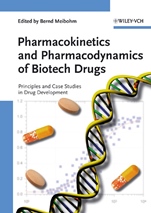
Pharmacokinetics and Pharmacodynamics of Biotech Drugs: Principles and Case Studies in Drug Development
ISBN 9783527314089
Autor: Bernd Meibohm
Wydawca: Wiley
Dostępność: 3-6 tygodni
Cena: 882,00 zł
Przed złożeniem zamówienia prosimy o kontakt mailowy celem potwierdzenia ceny.
ISBN13: |
9783527314089 |
ISBN10: |
3527314083 |
Autor: |
Bernd Meibohm |
Oprawa: |
Hardback |
Rok Wydania: |
2006-10-10 |
Ilość stron: |
426 |
Wymiary: |
242x185 |
Tematy: |
MJ |
The characterization and optimization of pharmacokinetic properties and exposure–response relationships are crucial parts in the drug development of biotechnologically–derived drug products. Until recently, our understanding of pharmacokinetics and pharmacodynamics was limited to `traditional? small–molecule, non–biological drugs. Now, with the current boom in drugs based on biological molecules, such as proteins and nucleotides, there is an urgent need to understand the pharmacokinetic and pharmacodynamic characteristics of these very different types of drugs. This book meets that need.
Comprehensive in its coverage, it spans relevant topics from early phase drug development right up to late–stage clinical trials. Following an introduction to the role of PK and PD in the development of biotech drugs, the first section covers the basics, including the pharmacokinetics of peptides, monoclonal antibodies, antisense oligonucleotides, as well as viral and non–viral gene delivery vectors. The second section discusses challenges and opportunities in the pharmaceutical development of biologics, including issues related to bioanalytical assays, bioequivalence and exposure–response assessments, as well as drug delivery. The final section considers the integration of PK and PD concepts into the biotech drug development plan, taking as case studies the preclinical and clinical drug development of tasidotin, as well as the examples set by cetuximab and pegfilgrastim.
Vital reading for all pharmaceutical scientists working with biologics.
Spis treści:
Foreword.
Preface.
List of Contributors.
Part I: Introduction.
1 The Role of Pharmacokinetics and Pharmacodynamics in the Development of Biotech Drugs (Bernd Meibohm).
1.1 Introduction.
1.2 Biotech Drugs and the Pharmaceutical Industry.
1.3 Pharmacokinetics and Pharmacodynamics in Drug Develop
ment.
1.4 PK and PK/PD Pitfalls for Biotech Drugs.
1.5 Regulatory Guidance.
1.6 Future.
1.7 References.
Part II: The Basics.
2 Pharmacokinetics of Peptides and Proteins (Lisa Tang and Bernd Meibohm).
2.1 Introduction.
2.2 Administration Pathways.
2.3 Administration Route and Immunogenicity.
2.4 Distribution.
2.5 Elimination.
2.6 Interspecies Scaling.
2.7 Conclusions.
2.8 References.
3 Pharmacokinetics of Monoclonal Antibodies (Katharina Kuester and Charlotte Kloft).
3.1 Introduction.
3.2 The Human Immune System.
3.3 Physiological Antibodies.
3.4 Therapeutic Antibodies.
3.5 Effector Functions and Modes of Action of Antibodies.
3.6 Prerequisites for mAb Therapy.
3.7 Issues in the Bioanalysis of Antibodies.
3.8 Catabolism of Antibodies.
3.9 Pharmacokinetic Characteristics of mAbs.
3.10 Pharmacokinetic Modeling of mAbs.
3.11 Pharmacodynamics of mAbs.
3.12 Conclusions.
3.13 References.
4 Pharmacokinetics and Pharmacodynamics of Antisense Oligonucleotides (Rosie Z. Yu, Richard S. Geary, and Arthur A. Levin).
4.1 Introduction.
4.2 Pharmacokinetics.
4.3 Pharmacodynamics.
4.4 Summary.
4.5 References.
5 Pharmacokinetics of Viral and Non–Viral Gene Delivery Vectors (Martin Meyer, Gururaj Rao, Ke Ren, and Jeffrey Hughes).
5.1 General Overview of Gene Therapy.
5.2 Anatomical Considerations.
5.3 Naked DNA.
5.4 Non–Viral Vectors.
5.5 Viral Vectors.
5.6 Summary.
5.7 References.
Part III: Challenges and Opportunities.
6 Bioanalytical Methods Used for Pharmacokinetic Evaluations of Biotech Macromolecule Drugs: Issues, Assay Approaches, and Limitations (Jean W. Lee).
6.1 Introduction.
6.2 Bioanalytical Methods for Macromolecule Drug Analysis: Common Considerations.
6.3 The Bioanalytical Method Workhorses.
6.4 Case Studies.
6.5 Future Perspective
s: Emerging Quantitative Methods.
6.6 Conclusions.
6.7 References.
7 Limitations of Noncompartmental Pharmacokinetic Analysis of Biotech Drugs (Arthur B. Straughn).
7.1 Introduction.
7.2 The Concept of Volume of Distribution.
7.3 Calculation of Vss.
7.4 Pitfalls in Calculating Vss.
7.5 Results and Discussion.
7.6 Conclusions.
7.7 References.
8 Bioequivalence of Biologics (Jeffrey S. Barrett).
8.1 Introduction.
8.2 Prevailing Opinion: Science, Economics, and Politics.
8.3 Biologics: Time Course of Immunogenicity.
8.4 Pharmaceutical Equivalence.
8.5 Bioequivalence: Metrics and Methods for Biologics?
8.6 Case Study: Low–Molecular–Weight Heparins.
8.7 Conclusions.
8.8 References.
9 Biopharmaceutical Challenges: Pulmonary Delivery of Proteins and Peptides (Kun Cheng and Ram I. Mahato).
9.1 Introduction.
9.2 Structure and Physiology of the Pulmonary System.
9.3 Barriers to Pulmonary Absorption of Peptides and Proteins.
9.4 Strategies for Pulmonary Delivery.
9.5 Experimental Models.
9.6 Pulmonary Delivery of Peptides and Proteins.
9.7 Limitations of Aerosol Delivery.
9.8 Summary.
9.9 References.
10 Biopharmaceutical Challenges: Delivery of Oligonucleotides (Lloyd G. Tillman and Gregory E. Hardee).
10.1 Introduction.
10.2 ASOs: The Physico–Chemical Properties.
10.3 Local Administration.
10.4 Systemic Delivery.
10.5 Conclusions.
10.6 References.
11 Custom–Tailored Pharmacokinetics and Pharmacodynamics via Chemical Modifications of Biotech Drugs (Francesco M. Veronese and Paolo Caliceti).
11.1 Introduction.
11.2 Polymers Used in Biotechnological Drug PEGylation.
11.3 Advantages of PEG as Drug Carrier.
11.4 Chemical Aspects Critical for the Pharmacokinetics of Drug Conjugates.
11.5 Insulin.
11.6 Interferons.
11.7 Avidin.
11.8 Non–Peptide Drug Co
njugation.
11.9 Concluding Remarks.
11.10 References.
12 Exposure–Response Relationships for Therapeutic Biologic Products (Mohammad Tabrizi and Lorin K. Roskos).
12.1 Introduction.
12.2 Overview of Pharmacokinetics and Pharmacodynamics.
12.3 Hormones.
12.4 Cytokines.
12.5 Growth Factors.
12.6 Soluble Receptors.
12.7 Monoclonal Antibodies (mAbs).
12.8 Conclusions.
12.9 References.
Part IV: Examples for the Integration of Pharmacokinetic and Pharmacodynamic Concepts Into the Biotech Drug Development Plan.
13 Preclinical and Clinical Drug Development of Tasidotin, a Depsi–Pentapeptide Oncolytic Agent (Peter L. Bonate, Larry Arthaud, and Katherine Stephenson).
13.1 Introduction.
13.2 The Dolastatins.
13.3 Discovery and Preclinical Pharmacokinetics of Tasidotin.
13.4 Preclinical Pharmacology of Tasidotin and ILX651–C–Carboxylate.
13.5 Toxicology of Tasidotin.
13.6 Clinical Pharmacology and Studies of Tasidotin in Patients with Solid Tumors.
13.7 Clinical Pharmacology of ILX651–C–Carboxylate.
13.8 Exposure–Response Relationships.
13.9 Discussion.
13.10 Summary.
13.11 References.
14 Clinical Drug Development of Cetuximab, a Monoclonal Antibody (Arno Nolting, Floyd E. Fox, and Andreas Kovar).
14.1 Introduction.
14.2 Specific Considerations in Oncologic Drug Development.
14.3 Introduction to the Clinical Pharmacokinetics of Cetuximab.
14.4 Early Attempts to Characterize the PK of Cetuximab.
14.5 PK of Cetuximab Following Pooling of Data Across All Studies.
14.6 Characterization of Cetuximab PK by a Population PK Approach.
14.7 Drug–Drug Interaction Studies.
14.8 Conclusions.
14.9 References.
15 Integration of Pharmacokinetics and Pharmacodynamics Into the Drug Development of Pegfilgrastim, a Pegylated Protein (Bing–Bing Yang).
15.1 Introduction.
Koszyk
Książek w koszyku: 0 szt.
Wartość zakupów: 0,00 zł
Informacje


Kontakt
Gambit
Centrum Oprogramowania
i Szkoleń Sp. z o.o.
Al. Pokoju 29b/22-24
31-564 Kraków
Siedziba Księgarni
ul. Kordylewskiego 1
31-542 Kraków
+48 12 410 5991
+48 12 410 5987
+48 12 410 5989
Subskrypcje
Administratorem danych osobowych jest firma Gambit COiS Sp. z o.o. Na podany adres będzie wysyłany wyłącznie biuletyn informacyjny.
Autoryzacja płatności

Informacje na temat autoryzacji płatności poprzez PayU.

© Copyright 2012: GAMBIT COiS Sp. z o.o. Wszelkie prawa zastrzeżone.
Projekt i wykonanie: Alchemia Studio Reklamy