


Wydawcy
Katalog tematyczny
- Archeologia (109)
- Ekonomia, finanse, business (13704)
- Filozofia (1445)
- Historia (3040)
- Języki i językoznawstwo (2356)
- Lifestyle, hobby i rozrywka (475)
- Medycyna (9704)
- Nauki humanistyczne (4)
- Nauki o Ziemi i środowisku (2638)
- Nauki ścisłe (20412)
- Astronomia (294)
- Biologia (5119)
- Chemia (6540)
- Chemia analityczna (361)
- Chemia fizyczna (346)
- Chemia nieorganiczna (137)
- Chemia organiczna (535)
- Krystalografia (27)
- Minerologia (46)
- Fizyka (3309)
- Matematyka (4574)
- Nauki ścisłe, ogólnie (503)
- Nauki społeczne (8486)
- Nauki techniczne (13450)
- Prawo (1696)
- Publikacje informacyjne i interdyscyplinarne (1288)
- Religia i wierzenia (917)
- Technika komputerowa (4067)
- Zdrowie, relacje międzyludzkie i rozwój osobisty (657)





Informacje szczegółowe o książce
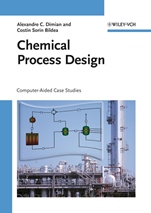
Chemical Process Design: Computer–Aided Case Studies
ISBN 9783527314034
Autor: Alexandre C. Dimian, Costin Sorin Bildea
Wydawca: Wiley
Dostępność: 3-6 tygodni
Cena: 1 043,70 zł
Przed złożeniem zamówienia prosimy o kontakt mailowy celem potwierdzenia ceny.
ISBN13: |
9783527314034 |
ISBN10: |
3527314032 |
Autor: |
Alexandre C. Dimian, Costin Sorin Bildea |
Oprawa: |
Hardback |
Rok Wydania: |
2008-02-20 |
Ilość stron: |
527 |
Wymiary: |
241x184 |
Tematy: |
PN |
Computer aided process engineering (CAPE) tools have been very successfully used in process design for a long time. In particular, simulation as an analysis and validation tool and modeling have enabled engineers to analyze and understand the interplay of chemistry, thermodynamics, process synthesis, the efficient use of resources, and process dynamics prior to building the actual plant. The progress in software technology in recent years has allowed access to dynamic simulation for a much greater number of users than before.
This practical how–to–do book deals with the design of sustainable chemical processes by means of systematic methods aided by computer simulation. Ample case studies illustrate generic creative issues, as well as the efficient use of simulation techniques, with each one standing for an important issue taken from practice.
The didactic approach guides readers from basic knowledge to mastering complex flow–sheets, starting with chemistry and thermodynamics, via process synthesis, efficient use of energy and waste minimization, right up to plant–wide control and process dynamics.
From the contents:Integrated process designCyclohexanome by phenol hydrogenationButane/butane alkylationVinyl chloride monomer processCumene by benzene alkylationCumeme by catalytic reactive distillationVinyl acetate processLow density polyethylene processAcetylene separation and purificationTreatment of waste sour gasesWaste minimization: VCM process
The simulation results are compared with flow–sheets and performance indices of actual industrial licensed processes, while the complete input data for all the case studies is also provided, allowing readers to reproduce the results with their own simulators.
For everyone interested in the design of innovative chemical processes.
Spis treści:
Preface.
1 Integrated Process Design.
1.1 Motivation and Objectives.
1.2 Sustainable Process Design.
1.3 Integrated Process Design.
1.4 Summary.
2 Process Synthesis by Hierarchical Approach.
2.1 Hierarchical Approach of Process Design.
2.2 Basis of Design.
2.3 Chemistry and Thermodynamics.
2.4 Input/Output Analysis.
2.5 Reactor/Separation/Recycle Structure.
2.6 Separation System Design.
2.7 Optimization of Material Balance.
2.8 Process Integration.
2.9 Integration of Design and Control.
2.10 Summary.
3 Synthesis of Separation System.
3.1 Methodology.
3.2 Vapor Recovery and Gas–Separation System.
3.3 Liquid–Separation System.
3.4 Separation of Zeotropic Mixtures by Distillation.
3.5 Enhanced Distillation.
3.6 Hybrid Separations.
3.7 Azeotropic Distillation.
3.8 Reactive Separations.
3.9 Summary.
4 Reactor/Separation/Recycle Systems.
4.1 Introduction.
4.2 Plantwide Control Structures.
4.3 Processes Involving One Reactant.
4.4 Processes Involving Two Reactants.
4.5 The Effect of the Heat of Reaction.
4.6 Example – Toluene Hydrodealkylation Process.
4.7 Conclusions.
5 Phenol Hydrogenation to Cyclohexanone.
5.1 Basis of Design.
5.2 Chemical Reaction Analysis.
5.3 Thermodynamic Analysis.
5.4 Input/Output Structure.
5.5 Reactor/Separation/Recycle Structure.
5.6 Separation System.
5.7 Material–Balance Flowsheet.
5.8 Energy Integration.
5.9 One–Reactor Process.
5.10 Process Dynamics and Control.
5.11 Environmental Impact.
5.12 Conclusions.
6 Alkylation of Benzene by Propylene to Cumene.
6.1 Basis of Design.
6.2 Reaction–Engineering Analysis.
6.3 Reactor/Separator/Recycle Structure.
6.4 Mass Balance and Simulation.
6.5 Energy Integration.
6.6 Complete Process Flowsheet.
6.7 Reactive Distillation Process.
6.8 Conclusions.
7 Vinyl Chloride Monomer Process.
7.1 Basis of De
sign.
7.2 Reactions and Thermodynamics.
7.3 Chemical–Reaction Analysis.
7.4 Reactor Simulation.
7.5 Separation System.
7.6 Material–Balance Simulation.
7.7 Energy Integration.
7.8 Dynamic Simulation and Plantwide Control.
7.9 Plantwide Control of Impurities.
7.10 Conclusions.
8 Fatty–Ester Synthesis by Catalytic Distillation.
8.1 Introduction.
8.2 Methodology.
8.3 Esterifi cation of Lauric Acid with 2–Ethylhexanol.
8.4 Esterifi cation of Lauric Acid with Methanol.
8.5 Esterifi cation of Lauric Acid with Propanols.
8.6 Conclusions.
9 Isobutane Alkylation.
9.1 Introduction.
9.2 Basis of Design.
9.3 Input–Output Structure.
9.4 Reactor/Separation/Recycle.
9.5 Separation Section.
9.6 Plantwide Control and Dynamic Simulation.
9.7 Discussion.
9.8 Conclusions.
10 Vinyl Acetate Monomer Process.
10.1 Basis of Design.
10.2 Reactions and Thermodynamics.
10.3 Input–Output Analysis.
10.4 Reactor/Separation/Recycles.
10.5 Separation System.
10.6 Material–Balance Simulation.
10.7 Energy Integration.
10.8 Plantwide Control.
10.9 Conclusions.
11 Acrylonitrile by Propene Ammoxidation.
11.1 Problem Description.
11.2 Reactions and Thermodynamics.
11.3 Chemical–Reactor Analysis.
11.4 The First Separation Step.
11.5 Liquid–Separation System.
11.6 Heat Integration.
11.7 Water Minimization.
11.8 Emissions and Waste.
11.9 Final Flowsheet.
11.10 Further Developments.
11.11 Conclusions.
12 Biochemcial Process for NOx Removal.
12.1 Introduction.
12.2 Basis of Design.
12.3 Process Selection.
12.4 The Mathematical Model.
12.5 Sizing of the Absorber and Bioreactor.
12.6 Flowsheet and Process Control.
12.7 Conclusions.
13 PVC Manufacturing by Suspension Polymerization.
13.1 Introduction.
13.2 Large–Scale Reactor
Technology.
13.3 Kinetics of Polymerization.
13.4 Molecular–Weight Distribution.
13.5 Kinetic Constants.
13.6 Reactor Design.
13.7 Design of the Reactor.
13.8 Conclusions.
14 Biodiesel Manufacturing.
14.1 Introduction to Biofuels.
14.2 Fundamentals of Biodiesel Manufacturing.
14.3 Manufacturing Processes.
14.4 Kinetics and Catalysis.
14.5 Reaction–Engineering Issues.
14.6 Phase–Separation Issues.
14.7 Application.
14.8 Conclusions.
15 Bioethanol Manufacturing.
15.1 Introduction.
15.2 Bioethanol as Fuel.
15.3 Economic Aspects.
15.4 Ecological Aspects.
15.5 Raw Materials.
15.6 Biorefi nery Concept.
15.7 Fermentation.
15.8 Manufacturing Technologies.
15.9 Process Design: Ethanol from Lignocellulosic Biomass.
15.10 Conclusions.
Appendix A Residue Curve Maps for Reactive Mixtures.
Appendix B Heat–Exchanger Design.
Appendix C Materials of Construction.
Appendix D Saturated Steam Properties.
Appendix E Vapor Pressure of Some Hydrocarbons.
Appendix F Vapor Pressure of Some Organic Components.
Appendix G Conversion Factors to SI Units.
Index.
Nota biograficzna:
Alexandre C. Dimian has been Associate Professor for Process Design and Integration at the University of Amsterdam, The Netherlands, since 1993. He wrote his PhD thesis in chemical engineering at the Technical University of Bucharest, Romania, and TU Hanover, Germany. He worked as a consultant for computer applications in process industries for 12 years, has realized numerous industrial projects, and has more than 100 refereed scientific papers as well as five books and three patents to his name. His research interests focus on the computer–aided design of chemical processes, and, more recently, on biofuels and biorefinery applications.
C. Sorin Bildea holds two MSc degrees in chemical
engineering and automatics and received his PhD from the University of Amsterdam, The Netherlands. Following posts as Assistant Professor at Delft University of Technology and a researcher at the University of Amsterdam, the Netherlands, he is currently Associate Professor at the University Politehnica Bucharest, Romania, where he teaches process control and various other chemical engineering courses. He has more than 50 published papers and conference presentations to his name and his research interests are in the fields of nonlinear dynamics and integration between process design and process control.
Okładka tylna:
Computer aided process engineering (CAPE) tools have been very successfully used in process design for a long time. In particular, simulation as an analysis and validation tool and modeling have enabled engineers to analyze and understand the interplay of chemistry, thermodynamics, process synthesis, the efficient use of resources, and process dynamics prior to building the actual plant. The progress in software technology in recent years has allowed access to dynamic simulation for a much greater number of users than before.
This practical how–to–do book deals with the design of sustainable chemical processes by means of systematic methods aided by computer simulation. Ample case studies illustrate generic creative issues, as well as the efficient use of simulation techniques, with each one standing for an important issue taken from practice.
The didactic approach guides readers from basic knowledge to mastering complex flow–sheets, starting with chemistry and thermodynamics, via process synthesis, efficient use of energy and waste minimization, right up to plant–wide control and process dynamics.
From the contents:Integrated process designCyclohexanome by phenol hydrogenationButane/butane alkylationVinyl chloride monomer processCumene by benzene alkylationCumem
e by catalytic reactive distillationVinyl acetate processLow density polyethylene processAcetylene separation and purificationTreatment of waste sour gasesWaste minimization: VCM process
The simulation results are compared with flow–sheets and performance indices of actual industrial licensed processes, while the complete input data for all the case studies is also provided, allowing readers to reproduce the results with their own simulators.
For everyone interested in the design of innovative chemical processes.
Koszyk
Książek w koszyku: 0 szt.
Wartość zakupów: 0,00 zł
Informacje


Kontakt
Gambit
Centrum Oprogramowania
i Szkoleń Sp. z o.o.
Al. Pokoju 29b/22-24
31-564 Kraków
Siedziba Księgarni
ul. Kordylewskiego 1
31-542 Kraków
+48 12 410 5991
+48 12 410 5987
+48 12 410 5989
Subskrypcje
Administratorem danych osobowych jest firma Gambit COiS Sp. z o.o. Na podany adres będzie wysyłany wyłącznie biuletyn informacyjny.
Autoryzacja płatności

Informacje na temat autoryzacji płatności poprzez PayU.

© Copyright 2012: GAMBIT COiS Sp. z o.o. Wszelkie prawa zastrzeżone.
Projekt i wykonanie: Alchemia Studio Reklamy