


Wydawcy
Katalog tematyczny
- Archeologia (109)
- Ekonomia, finanse, business (13704)
- Filozofia (1445)
- Historia (3040)
- Języki i językoznawstwo (2356)
- Lifestyle, hobby i rozrywka (475)
- Medycyna (9704)
- Nauki humanistyczne (4)
- Nauki o Ziemi i środowisku (2638)
- Nauki ścisłe (20412)
- Astronomia (294)
- Biologia (5119)
- Chemia (6540)
- Chemia analityczna (361)
- Chemia fizyczna (346)
- Chemia nieorganiczna (137)
- Chemia organiczna (535)
- Krystalografia (27)
- Minerologia (46)
- Fizyka (3309)
- Matematyka (4574)
- Nauki ścisłe, ogólnie (503)
- Nauki społeczne (8486)
- Nauki techniczne (13450)
- Prawo (1696)
- Publikacje informacyjne i interdyscyplinarne (1288)
- Religia i wierzenia (917)
- Technika komputerowa (4067)
- Zdrowie, relacje międzyludzkie i rozwój osobisty (657)





Informacje szczegółowe o książce
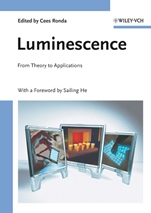
Luminescence: From Theory to Applications
ISBN 9783527314027
Autor: Cornelis R. Ronda
Wydawca: Wiley
Dostępność: 3-6 tygodni
Cena: 949,20 zł
Przed złożeniem zamówienia prosimy o kontakt mailowy celem potwierdzenia ceny.
ISBN13: |
9783527314027 |
ISBN10: |
3527314024 |
Autor: |
Cornelis R. Ronda |
Oprawa: |
Hardback |
Rok Wydania: |
2007-10-24 |
Ilość stron: |
276 |
Wymiary: |
246x175 |
Tematy: |
PN |
In this, the only up–to–date book on this key technology, the number–one expert in the field perfectly blends academic knowledge and industrial applications.
Adopting a didactical approach, Professor Ronda discusses all the underlying principles, such that both researchers as well as beginners in the field will profit from this book. The focus is on the inorganic side and the phenomena of luminescence behind the manifold applications illustrated here, including displays, LEDs, lamps, and medical applications.
Valuable reading for chemists and electrochemists, as well as materials scientists, those working in the optical and chemical industry, plus lamp and lighting manufacturers.
From the contentsEmission and Excitation Mechanisms of PhosphorsQuantum Dots and NanophosphorsPhosphors for Plasma Display PanelsQuantum–Splitting SystemsScintillatorsLuminescent Materials for Phosphor–Converted LEDsOrganic ElectroluminescenceExperimental Techniques
Spis treści:
Foreword.
Preface.
List of Contributors.
1 Emission and Excitation Mechanisms of Phosphors (Cees R. Ronda).
1.1 Introduction.
1.2 General Considerations â Fluorescent Lamps.
1.3 General Considerations â Cathode Ray Tubes.
1.4 Luminescence Mechanisms.
1.5 Excitation Mechanisms.
1.6 Energy Transfer Mechanisms between Optical Centers.
1.7 Excitation with High–energy Particles.
1.8 Electroluminescence (EL).
1.9 Factors Determining the Emission Color.
1.10 Energy Efficiency Considerations of Important Luminescent Devices.
1.11 Luminescence Quantum Yield and Quenching Processes.
1.12 Acknowledgement.
2 Quantum Dots and Nanophosphors (Cees R. Ronda and Thomas Jüstel).
2.1 Introduction.
2.2 Density of States in Low–dimensional Structures.
2.3 Electrons, Holes, and Excitons.
2.4 Low–dimensional Struc
tures.
2.5 Quantum Confinement in Action.
2.6 Photoluminescence of Quantum Dots Prepared by Wet–chemical Precipitation.
2.7 Photoluminescence from Doped Quantum Dots.
2.8 Luminescence of Nano Particles of Rare–Earth Phosphors.
2.9 Nanoscale Particles for Molecular Imaging.
2.10 Conclusions.
2.11 Acknowledgements.
3 Phosphors for Plasma Display Panels (Thomas Jüstel).
3.1 Introduction.
3.2 Principle of Operation of Plasma Display Panels.
3.3 Performance of Applied Phosphors in PDPs.
3.4 Summary and Prospects.
4 Quantum–Splitting Systems (Alok M. Srivastava and Cees R. Ronda).
4.1 Introduction.
4.2 Quantum–splitting Phosphors Based on Pr3+–activated Fluoride Materials.
4.3 Quantum–splitting Phosphors Based on Pr3+–activated Oxide Materials.
4.4 The Quantum Efficiency of the Quantum–splitting Process.
4.5 Limitations of Pr3+–based Quantum–splitting Phosphors.
4.6 Quantum–splitting Phosphors Based on Gd3+ and Rare Earth Ion–Activated Fluoride Materials.
4.7 Multiphoton Emission through High–energy Excitation.
4.8 Applications of Quantum–splitting Phosphors.
4.9 Conclusions.
4.10 Acknowledgements.
5 Scintillators (Cees R. Ronda and Alok M. Srivastava)
5.1 Introduction.
5.2 Positron Emission Tomography and Computed Tomography.
5.3 General Requirements for Scintillating Materials used in Medical Imaging.
5.4 Scintillators for Pet Application.
5.5 Scintillators for CT Application.
5.6 X–ray Intensifying Screens.
5.7 FDXD Detectors.
5.8 Storage Phosphors.
5.9 Semiconductor Scintillators.
6 Upconversion Phosphors (J. Freek Suijver).
6.1 Introduction.
6.2 Theory of Upconversion.
6.3 Examples.
6.4 Conclusions and Outlook.
6.5 Acknowledgements.
7 Luminescent Materials for Phosphorâ
Converted LEDs (Thomas Jüstel).
7.1 Inorganic Light–Emitting Diodes (LEDs).
7.2 White and Colored LEDs.
7.3 Phosphor–Converted LEDs.
7.4 Future Trends.
8 Organic Electroluminescence (Joseph J. Shiang and Anil R. Duggal).
8.1 Introduction.
8.2 OLED Fundamentals.
8.3 Key OLED Trends and Innovations.
8.4 Prospects for General Illumination.
8.5 Conclusions.
8.6 Acknowledgements.
9 Experimental Techniques (Peter Vergeer)
9.1 Introduction.
9.2 Energy of Optical Transitions: Absorption, Excitation, and Emission Spectroscopy.
9.3 The Transition Dipole Moment: Absorption Strengths and Luminescence Lifetimes.
9.4 Quantum Efficiency and Nonradiative Relaxation.
9.5 Homogeneous Broadening and Dephasing.
9.6 Detection of Luminescence from Individual Optical Centers.
9.7 Acknowledgement.
Index.
Nota biograficzna:
Cess Rondaobtained a PhD in Solid State– and Theoretical Chemistry at the State University of Groningen, the Netherlands. He joined Philips Research in Eindhoven, the Netherlands in 1986 and moved to Philips Research in Aachen, Germany in 1989. Currently, he is research fellow, one of the highest technical ranks within the Philips Research organisation.
Cess Ronda has worked on luminescent materials for number of applications, his current interest is in liminescent materials for medical applications and for application in Light Emitting Diodes (LEDs).
Apart from working at Philips, he is a professor at Utrecht University (Condensed Matter and Interfaces), the Netherlands and at Zhejiang University (Optical and Electromagnetic Research), China.
Okładka tylna:
In this, the only up–to–date book on this key technology, the number–one expert in the field perfectly blends academic knowledge and industrial applications.
Adopting a didactical approach, Professor Ronda discusses all the underlying princ
iples, such that both researchers as well as beginners in the field will profit from this book. The focus is on the inorganic side and the phenomena of luminescence behind the manifold applications illustrated here, including displays, LEDs, lamps, and medical applications.
Valuable reading for chemists and electrochemists, as well as materials scientists, those working in the optical and chemical industry, plus lamp and lighting manufacturers.
From the contentsEmission and Excitation Mechanisms of PhosphorsQuantum Dots and NanophosphorsPhosphors for Plasma Display PanelsQuantum–Splitting SystemsScintillatorsLuminescent Materials for Phosphor–Converted LEDsOrganic ElectroluminescenceExperimental Techniques
Koszyk
Książek w koszyku: 0 szt.
Wartość zakupów: 0,00 zł
Informacje


Kontakt
Gambit
Centrum Oprogramowania
i Szkoleń Sp. z o.o.
Al. Pokoju 29b/22-24
31-564 Kraków
Siedziba Księgarni
ul. Kordylewskiego 1
31-542 Kraków
+48 12 410 5991
+48 12 410 5987
+48 12 410 5989
Subskrypcje
Administratorem danych osobowych jest firma Gambit COiS Sp. z o.o. Na podany adres będzie wysyłany wyłącznie biuletyn informacyjny.
Autoryzacja płatności

Informacje na temat autoryzacji płatności poprzez PayU.

© Copyright 2012: GAMBIT COiS Sp. z o.o. Wszelkie prawa zastrzeżone.
Projekt i wykonanie: Alchemia Studio Reklamy