


Wydawcy
Katalog tematyczny
- Archeologia (109)
- Ekonomia, finanse, business (13704)
- Filozofia (1445)
- Historia (3040)
- Języki i językoznawstwo (2356)
- Lifestyle, hobby i rozrywka (475)
- Medycyna (9704)
- Nauki humanistyczne (4)
- Nauki o Ziemi i środowisku (2638)
- Nauki ścisłe (20412)
- Astronomia (294)
- Biologia (5119)
- Chemia (6540)
- Chemia analityczna (361)
- Chemia fizyczna (346)
- Chemia nieorganiczna (137)
- Chemia organiczna (535)
- Krystalografia (27)
- Minerologia (46)
- Fizyka (3309)
- Matematyka (4574)
- Nauki ścisłe, ogólnie (503)
- Nauki społeczne (8486)
- Nauki techniczne (13450)
- Prawo (1696)
- Publikacje informacyjne i interdyscyplinarne (1288)
- Religia i wierzenia (917)
- Technika komputerowa (4067)
- Zdrowie, relacje międzyludzkie i rozwój osobisty (657)





Informacje szczegółowe o książce
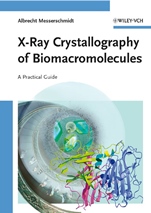
X–Ray Crystallography of Biomacromolecules: A Practical Guide
ISBN 9783527313969
Autor: Albrecht Messerschmidt
Wydawca: Wiley
Dostępność: 3-6 tygodni
Cena: 811,65 zł
Przed złożeniem zamówienia prosimy o kontakt mailowy celem potwierdzenia ceny.
ISBN13: |
9783527313969 |
ISBN10: |
3527313966 |
Autor: |
Albrecht Messerschmidt |
Oprawa: |
Hardback |
Rok Wydania: |
2007-01-02 |
Ilość stron: |
318 |
Wymiary: |
241x174 |
Tematy: |
PN |
Written by one of the most significant contributors to the progress of protein crystallography, this practical guide contains case studies, a troubleshooting section and pointers on data interpretation. Clearly structured, Part A covers relevant experimental techniques for crystallization, generation of X–rays and data collection, the principles of X–ray diffraction, solutions for the phase problem and further steps for structure determination, time–resolved X–ray crystallography and structural genomics. Part B includes case studies for different stages in determining X–ray crystal structure, such as diffraction data evaluation, MIRAS and MAD techniques, molecular replacement, phase improvement by electron density averaging, non–crystallographic symmetries and model building.
With its coverage of the theory, practice and latest achievements in x–ray crystallography, this book will benefit any researcher in structural biology.
Spis treści:
Preface.
Part I Principles and Methods.
1 Introduction.
1.1 Crystals and Symmetry.
1.2 Protein Solubility.
1.3 Experimental Techniques.
1.4 Crystallization Screenings.
1.5 High–Throughput Crystallization, Imaging, and Analysis.
References.
2 Experimental Techniques.
2.1 X–Ray Sources.
2.2 Detectors.
2.3 Crystal Mounting and Cooling.
2.4 Data Collection Techniques.
References.
3 Principles of X–Ray Diffraction by a Crystal.
3.1 Rational Mathematical Representation of Waves.
3.2 Principles of X–Ray Diffraction by a Crystal.
References.
4 Diffraction Data Evaluation.
4.1 Introductory Remarks.
4.2 Geometric Principles in the Rotation Technique with Normal Flat Detector.
4.3 Autoindexing of Oscillation Images.
4.4 Beam Divergence, Mosaicity, and Partiality.
4.5 Integration of Diffraction Spots.
4.6 Post–Refinement, Scaling, a
nd Averaging of Diffraction Data.
References.
5 Methods for Solving the Phase Problem.
5.1 Isomorphous Replacement.
5.2 Anomalous Scattering.
5.3 Determination of Heavy–Atom Positions.
5.4 Phase Calculation.
5.5 Patterson Search Methods (Molecular Replacement).
References.
6 Phase Improvement by Density Modification and Phase Combination.
6.1 Introduction.
6.2 Solvent Flattening.
6.3 Histogram Matching.
6.4 Molecular Averaging.
6.5 Sayre’s Equation.
6.6 Atomization.
6.7 Phase Combination.
6.8 Difference Fourier Technique.
References.
7 Model Building and Refinement.
7.1 Model Building.
7.2 Crystallographic Refinement.
7.3 Verification and Accuracy of Structure Determination.
References.
8 Crystal Structure Determination of the Time–Course of Reactions and of Unstable Species.
8.1 Introduction.
8.2 Triggering Methods.
8.3 Trapping Methods.
8.4 Laue Diffraction.
References.
9 Structural Genomics.
9.1 Introduction.
9.2 Target Selection.
9.3 Production of Recombinant Proteins.
9.4 Aspects of Automation.
References.
Part II Practical Examples.
Introductory Remarks.
10 Data Evaluation.
10.1 Autoindexing, Refinement of Cell Parameters, and Reflection Integration.
10.2 Scaling of Intensity Diffraction Data.
10.3 A Complex Example of Space Group Determination.
References.
11 Determination of Anomalous Scatterer or Heavy Atom Positions.
11.1 Application of Direct Methods.
11.2 Vector Verification Methods.
11.3 Comparison of the Results from SnB and RSPS.
References.
12 MIRAS and MAD Phasing with the Program SHARP.
12.1 MAD Phasing with the Program SHARP for 4–BUDH.
References.
13 Molecular Replacement.
13.1 Phase Determination of PKC–iota with Program Molrep.
References.
14 Averaging about Non–Crystall
ographic Symmetry (NCS) for 4–BUDH.
14.1 Determination of NCS Operators for 4–BUDH.
14.2 Electron Density Map Averaging for 4–BUDH.
References.
15 Model Building and More.
15.1 A Very Personal Short Introduction to the Computer Graphics Modeling Program “O”.
15.2 Introduction of the Four Fe–Sites per Fe–S–Cluster and New SHARP–Phasing for 4–BUDH.
15.3 Crystallographic Refinement and Final Steps.
References.
Subject Index.
Nota biograficzna:
Albrecht Messerschmidt is head of a research group at Max–Planck–Institute for Biochemistry in Martinsried, Germany, department of proteomics and signal transduction headed by Matthias Mann. He gained his PhD in Crystallography at the Humboldt University in Berlin under Bill Kleber. After working on the X–ray crystallography of small biological molecules he moved to the field of X–ray crystallography of biomacromolecules, working in the department of structural research under Nobel laureate Robert Huber. He gained his lecturing qualification in the field of physical biochemistry at the faculty of biology of the University of Constance in 1996, where he was appointed extraordinary professor in 2002.
The author has published great number of scientific papers and is one of the editors of the three volume Handbook of Metalloproteins, published by Wiley.
Okładka tylna:
Written by one of the most significant contributors to the progress of protein crystallography, this practical guide contains case studies, a troubleshooting section and pointers on data interpretation. Clearly structured, Part A covers relevant experimental techniques for crystallization, generation of X–rays and data collection, the principles of X–ray diffraction, solutions for the phase problem and further steps for structure determination, time–resolved X–ray
crystallography and structural genomics. Part B includes case studies for different stages in determining X–ray crystal structure, such as diffraction data evaluation, MIRAS and MAD techniques, molecular replacement, phase improvement by electron density averaging, non–crystallographic symmetries and model building.
With its coverage of the theory, practice and latest achievements in x–ray crystallography, this book will benefit any researcher in structural biology.
Koszyk
Książek w koszyku: 0 szt.
Wartość zakupów: 0,00 zł
Informacje


Kontakt
Gambit
Centrum Oprogramowania
i Szkoleń Sp. z o.o.
Al. Pokoju 29b/22-24
31-564 Kraków
Siedziba Księgarni
ul. Kordylewskiego 1
31-542 Kraków
+48 12 410 5991
+48 12 410 5987
+48 12 410 5989
Subskrypcje
Administratorem danych osobowych jest firma Gambit COiS Sp. z o.o. Na podany adres będzie wysyłany wyłącznie biuletyn informacyjny.
Autoryzacja płatności

Informacje na temat autoryzacji płatności poprzez PayU.

© Copyright 2012: GAMBIT COiS Sp. z o.o. Wszelkie prawa zastrzeżone.
Projekt i wykonanie: Alchemia Studio Reklamy