


Wydawcy
Katalog tematyczny
- Archeologia (109)
- Ekonomia, finanse, business (13704)
- Filozofia (1445)
- Historia (3040)
- Języki i językoznawstwo (2356)
- Lifestyle, hobby i rozrywka (475)
- Medycyna (9704)
- Nauki humanistyczne (4)
- Nauki o Ziemi i środowisku (2638)
- Nauki ścisłe (20412)
- Astronomia (294)
- Biologia (5119)
- Chemia (6540)
- Chemia analityczna (361)
- Chemia fizyczna (346)
- Chemia nieorganiczna (137)
- Chemia organiczna (535)
- Krystalografia (27)
- Minerologia (46)
- Fizyka (3309)
- Matematyka (4574)
- Nauki ścisłe, ogólnie (503)
- Nauki społeczne (8486)
- Nauki techniczne (13450)
- Prawo (1696)
- Publikacje informacyjne i interdyscyplinarne (1288)
- Religia i wierzenia (917)
- Technika komputerowa (4067)
- Zdrowie, relacje międzyludzkie i rozwój osobisty (657)





Informacje szczegółowe o książce
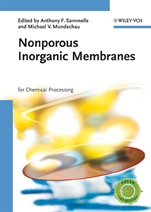
Nonporous Inorganic Membranes: For Chemical Processing
ISBN 9783527313426
Autor: Anthony F. Sammells, Michael V. Mundschau
Wydawca: Wiley
Dostępność: 3-6 tygodni
Cena: 827,40 zł
Przed złożeniem zamówienia prosimy o kontakt mailowy celem potwierdzenia ceny.
ISBN13: |
9783527313426 |
ISBN10: |
3527313427 |
Autor: |
Anthony F. Sammells, Michael V. Mundschau |
Oprawa: |
Hardback |
Rok Wydania: |
2006-07-07 |
Ilość stron: |
291 |
Wymiary: |
247x186 |
Tematy: |
PN |
Membrane technology is a clean and energy–saving alternative to conventional processes with ionically conducting membranes already being used for a variety of gas separations to produce high–purity and dry gases.
This first book to focus on such membranes collates the literature hitherto scattered amongst various journals. The resulting ready reference presents an overview of all the facets necessary to demonstrate the potential impact of this emerging technology for advanced chemical processing. As such, the text addresses the evolution of materials for both oxygen and hydrogen transport membranes and offers strategies for their fabrication as well as their subsequent incorporation into catalytic membrane reactors. Other chapters deal with, among many other topics, engineering design and scale–up issues, strategies for preparation of supported thin–film membranes, interfacial kinetic and mass transfer issues.
A must for materials scientists, chemists, chemical engineers and electrochemists interested in advanced chemical processing.
Spis treści:
Preface.
List of Contributors.
1 Dense Ceramic Membranes for Hydrogen Separation (Truls Norby and Reidar Haugsrud).
1.1 Introduction.
1.2 Applications and Principles of Operation.
1.2.1 Simple Cases.
1.2.2 Examples of More Complex Applications.
1.3 Defect Chemistry of Dense Hydrogen–permeable Ceramics.
1.3.1 Materials Classes.
1.3.2 Neutral and Ionized Hydrogen Species in Oxides.
1.3.4 Protonic Defects and Their Transport.
1.3.5 Defect Structures of Proton–conducting Oxides.
1.3.6 Diffusivity, Mobility and Conductivity: The Nernst–Einstein Relation.
1.4 Wagner Transport Theory for Dense Ceramic Hydrogen–Separation Membranes.
1.4.1 General Expressions.
1.4.2 From Charged to Well–Defined Species: The Electrochemical Equilibrium.
1.4.3 The Voltage Over a Sample.
1.4.4
Flux of a Particular Species.
1.4.5 Fluxes in a Mixed Proton, Oxygen Ion, and Electron Conductor.
1.4.6 Fluxes in a Mixed Proton and Electron Conductor.
1.4.7 Fluxes in a Mixed Proton and Oxygen Ion Conductor.
1.4.8 Fluxes in a Mixed Proton, Oxygen Ion, and Electron Conductor Revisited.
1.4.9 Permeation of Neutral Hydrogen Species.
1.4.10 What About Hydride Ions?
1.5 Surface Kinetics of Hydrogen Permeation in Mixed Proton–Electron Conductors.
1.6 Issues Regarding Metal Cation Transport in Hydrogen–permeable Membrane Materials.
1.7 Modeling Approaches.
1.8 Experimental Techniques and Challenges.
1.8.1 Investigation of Fundamental Materials Properties.
1.8.1.1 Concentration.
1.8.1.2 Diffusion.
1.8.1.3 Conductivity.
1.8.1.4 Transport Numbers.
1.8.1.5 Other Properties.
1.8.2 Investigation of Surface Kinetics.
1.8.3 Measurements and Interpretation of Hydrogen Permeation.
1.9 Hydrogen Permeation in Selected Systems.
1.9.1 A Few Words on Flux and Permeability.
1.9.2 Classes of Membranes.
1.9.3 Mixed Proton–Electron Conducting Oxides.
1.9.4 Cermets.
1.9.5 Permeation in Other Oxide Classes and the Possibility of Neutral Hydrogen Species.
1.9.6 Comparison with Metals.
1.10 Summary.
2 Ceramic Proton Conductors (Vineet K. Gupta and Jerry Y. S. Lin).
2.1 Introduction.
2.2 General Properties of Perovskite–structured Proton–conducting Ceramic Membranes.
2.2.1 Creation of Protonic Carriers.
2.2.2 Transport Properties.
2.2.3 Electronic Conductivity and Its Improvement.
2.3 Synthesis of Proton–conducting Ceramic Membranes.
2.3.1 Synthesis of Powders.
2.3.2 Effect of Synthesis Conditions on Membrane Performance.
2.3.3 Preparation of Thin Films.
2.4 Hydrogen Permeation.
2.4.1 The H2 Permeation Set–up and Sealing System.
2.4.2 Effects of Process Variables on H2 Flux.
2.4.2.1 Effect of Feed and Sweep Side Gas Con
centrations.
2.4.2.2 Effect of Membrane Thickness.
2.4.2.3 Effect of Temperature.
2.4.3 Mathematical Models for Hydrogen Permeation.
2.5 Chemical Stability of Protonic Conductors.
2.5.1 Stability in CO2 Atmospheres.
2.5.2 Stability in Moisture–containing Atmospheres.
2.5.3 Stability in Reducing Atmospheres.
2.6 Future Directions and Perspectives.
3 Palladium Membranes (Stephen N. Paglieri).
3.1 Introduction.
3.2 History and Applications.
3.3 Effect of Impurities.
3.4 Palladium Alloy Membranes.
3.5 Palladium Deposition Methods.
3.6 Membrane Characterization and Analysis.
3.7 Palladium Composite Membranes.
3.8 Recent Advances.
3.9 Summary and Outlook.
4 Superpermeable Hydrogen Transport Membranes (Michael V. Mundschau, Xiaobing Xie, and Carl R. Evenson IV).
4.1 Introduction.
4.2 Theoretical Limits of Superpermeable Membranes.
4.3 Superpermeable Membranes in Plasma Physics.
4.4 Hydrogen Transport Membranes in Nuclear Reactor Cooling Systems.
4.5 Hydrogen Transport Membranes in the Chemical Industry.
4.6 Membrane Hydrogen Dissociation Catalysts and Protective Layers.
4.7 Thermal and Chemical Expansion.
4.8 Methods of Catalyst Application.
4.9 Catalyst Tolerance to Sulfur.
4.10 Interdiffusion.
4.11 Measured Hydrogen Permeability of Bulk Membrane Materials.
4.12 Conclusions.
5 Engineering Scale–up for Hydrogen Transport Membranes (David J. Edlund).
5.1 Historical Review.
5.2 General Review of Hydrogen–permeable Metal Membranes and Module Design.
5.2.1 Scale–up and Differential Expansion.
5.2.2 Overview of Sealing Methods.
5.3 Scale–up from Laboratory Test–and–Evaluation Module to Commercial Membrane Module.
5.3.1 Cost and Membrane Thickness.
5.3.2 Module Maintenance and Operating Costs.
5.3.3 Overview of Membrane Fabrication Methods.
5.4 Membrane Module Design and Con
struction.
5.4.1 Design of the Module Shell.
5.4.2 Membrane Sealing Options.
5.4.3 Commercial Applicability.
6 The Evolution of Materials and Architecture for Oxygen Transport Membranes (John Sirman).
6.1 Introduction.
6.2 Oxygen Separation and Collection.
6.2.1 Background for Selection of Materials for Oxygen Separation and Collection.
6.2.2 Membrane Materials Concepts.
6.2.3 Membrane Architecture Concepts.
6.2.4 Summary of Oxygen Separation Materials and Architecture.
6.3 Syngas Production and Combustion Applications.
6.3.1 Background for Selection of Materials for Syngas Production and Combustion Applications.
6.3.2 Membrane Materials Concepts.
6.3.3 Membrane Architecture Concepts.
6.3.4 Summary of Syngas and Combustion Applications Materials and Architecture.
7 Membranes for Promoting Partial Oxidation Chemistries (Anthony F. Sammells, James H. White, and Richard Mackay).
7.1 Introduction.
7.2 On the Nature of Perovskite–related Metal Oxides for Achieving Mixed Oxygen Anion and Electron Conduction.
7.2.1 Background.
7.2.2 Early Work towards the Selection of Mixed Conductors.
7.2.3 Requirements for Oxygen Anion and Electronic Conduction within Perovskites.
7.2.4 Empirical Factors Relating to Oxygen Anion Transport in Perovskiterelated Membranes.
7.2.5 Introducing Electronic Conductivity into a Perovskite–related Lattice.
7.3 The Application of Oxygen Transport Membranes to Partial Oxidation Chemistries.
7.3.1 Natural Gas Conversion to Synthesis Gas – General Considerations.
7.3.2 Methane Partial Oxidation to Synthesis Gas in Membrane Reactors.
7.3.3 Liquid Fuel Reforming.
7.3.4 Coal/Biomass to Synthesis Gas.
7.3.5 Oxygen Reduction Catalysis Requirements in Oxygen Transport Membranes.
7.3.6 Methane to Ethylene.
7.3.7 Catalysis Considerations for Promoting Methane Coupling Reactions.
7.3.8 Catalyst Implementation on Dense Ox
Koszyk
Książek w koszyku: 0 szt.
Wartość zakupów: 0,00 zł
Informacje


Kontakt
Gambit
Centrum Oprogramowania
i Szkoleń Sp. z o.o.
Al. Pokoju 29b/22-24
31-564 Kraków
Siedziba Księgarni
ul. Kordylewskiego 1
31-542 Kraków
+48 12 410 5991
+48 12 410 5987
+48 12 410 5989
Subskrypcje
Administratorem danych osobowych jest firma Gambit COiS Sp. z o.o. Na podany adres będzie wysyłany wyłącznie biuletyn informacyjny.
Autoryzacja płatności

Informacje na temat autoryzacji płatności poprzez PayU.

© Copyright 2012: GAMBIT COiS Sp. z o.o. Wszelkie prawa zastrzeżone.
Projekt i wykonanie: Alchemia Studio Reklamy