


Wydawcy
Katalog tematyczny
- Archeologia (109)
- Ekonomia, finanse, business (13704)
- Filozofia (1445)
- Historia (3040)
- Języki i językoznawstwo (2356)
- Lifestyle, hobby i rozrywka (475)
- Medycyna (9704)
- Nauki humanistyczne (4)
- Nauki o Ziemi i środowisku (2638)
- Nauki ścisłe (20412)
- Astronomia (294)
- Biologia (5119)
- Chemia (6540)
- Fizyka (3309)
- Elektryczność i magnetyzm (90)
- Fizyka atomowa i molekularna (110)
- Fizyka cząstek elementarnych (36)
- Fizyka jądra atomowego (36)
- Fizyka kwantowa (210)
- Fizyka matematyczna (121)
- Fizyka relatywistyczna (36)
- Fizyka statystyczna (51)
- Fizyka stosowana (498)
- Mechanika klasyczna (186)
- Optyka i światło (133)
- Stany materii (202)
- Matematyka (4574)
- Nauki ścisłe, ogólnie (503)
- Nauki społeczne (8486)
- Nauki techniczne (13450)
- Prawo (1696)
- Publikacje informacyjne i interdyscyplinarne (1288)
- Religia i wierzenia (917)
- Technika komputerowa (4067)
- Zdrowie, relacje międzyludzkie i rozwój osobisty (657)





Informacje szczegółowe o książce
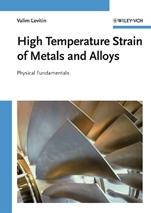
High Temperature Strain of Metals and Alloys: Physical Fundamentals
ISBN 9783527313389
Autor: Valim Levitin
Wydawca: Wiley
Dostępność: 3-6 tygodni
Cena: 854,70 zł
Przed złożeniem zamówienia prosimy o kontakt mailowy celem potwierdzenia ceny.
ISBN13: |
9783527313389 |
ISBN10: |
3527313389 |
Autor: |
Valim Levitin |
Oprawa: |
Hardback |
Rok Wydania: |
2005-12-13 |
Ilość stron: |
180 |
Wymiary: |
246x186 |
Tematy: |
PH |
Creep and fatigue are the most important causes of failure in heat–resistant alloys, which are important intermetallics for industrial usage, such as in engines and turbine blades in the aerospace or energy producing industries. It is thus vital to find new characterization methods that allow an understanding of the fundamental physics of creep and fatigue in these materials.
Here, the author shows how new x–ray and transmission electron microscope studies lead to novel explanations of the physical bases of creep and fatigue in superalloys. This unique approach is the first to find unequivocal and quantitative expressions for the macroscopic deformation rate of metals by means of three groups of parameters: substructural characteristics, physical material constants and external conditions.
From the contents:Macroscopic characteristics of strainThe experimental equipment and techniques of the x–ray investigationsStructural parameters and experimental dataThe physical mechanism and the structural model of deformationModeling of the microstructure parameters evolution and of the deformation processesSystem of differential equationsDeformation and microstructure of refractory metalsDeformation of heat–resistant industrial alloys
For materials scientists, solid state physicists and solid state chemists.
Spis treści:
Introduction.
1 Macroscopic Characteristics of Strain of Metallic Materials at High Temperatures.
2 In situ X–ray Investigation Technique.
2.1 Experimental Installation.
2.2 Measurement Procedure.
2.3 Measurements of Structural Parameters.
2.4 Diffraction Electron Microscopy.
2.5 Amplitude of Atomic Vibrations.
2.6 Materials under Investigation.
2.7 Summary.
3 Structural Parameters in High–Temperature Deformed Metals.
3.1 Evolution of Structural Parameters.
3.2 Dislocation St
ructure.
3.3 Distances between Dislocations in Sub–boundaries.
3.4 Sub–boundaries as Dislocation Sources and Obstacles.
3.5 Dislocations inside Subgrains.
3.6 Vacancy Loops and Helicoids.
3.7 Total Combination of Structural Peculiarities of High–temperature Deformation.
3.8 Summary.
4 Physical Mechanism of Strain at High Temperatures.
4.1 Physical Model and Theory.
4.2 Velocity of Dislocations.
4.3 Dislocation Density.
4.4 Rate of the Steady–State Creep.
4.5 Effect of Alloying: Relationship between Creep Rate and Mean–Square Atomic Amplitudes.
4.6 Formation of Jogs.
4.7 Significance of the Stacking Faults Energy.
4.8 Stability of Dislocation Sub–boundaries.
4.9 Scope of the Theory.
4.10 Summary.
5 Simulation of the Parameters Evolution.
5.1 Parameters of the Physical Model.
5.2 Equations.
5.2.1 Strain Rate.
5.2.2 Change in the Dislocation Density.
5.2.3 The Dislocation Slip Velocity.
5.2.4 The Dislocation Climb Velocity.
5.2.5 The Dislocation Spacing in Sub–boundaries.
5.2.6 Variation of the Subgrain Size.
5.2.7 System of Differential Equations.
5.3 Results of Simulation.
5.4 Density of Dislocations during Stationary Creep.
5.5 Summary.
6 High–temperature Deformation of Superalloys.
6.1 γ Phase in Superalloys.
6.2 Changes in the Matrix of Alloys during Strain.
6.3 Interaction of Dislocations and Particles.
6.4 Creep Rate. Length of Dislocation Segments.
6.5 Mechanism of Strain and the Creep Rate Equation.
6.6 Composition of the γ Phase and Atomic Vibrations.
6.7 Influence of the Particle Size and Concentration.
6.8 The Prediction of Properties.
6.9 Summary.
7 Single Crystals of Superalloys.
7.1 Effect of Orientation on Properties.
7.2 Deformation at Lower Temperatures.
7.3 Deformation at Higher Temperatures.
7.4 On the Composition of
Superalloys.
7.5 Rafting.
7.6 Effect of Composition and Temperature on γ/γ Misfit.
7.7 Other Creep Equations.
7.8 Summary.
8 Deformation of Some Refractory Metals.
8.1 The Creep Behavior.
8.2 Alloys of Refractory Metals.
8.3 Summary.
Supplements.
Supplement 1: On Dislocations in the Crystal Lattice.
Supplement 2: On Screw Components in Sub–boundary Dislocation Networks.
Supplement 3: Composition of Superalloys.
References.
Acknowledgements.
Index.
Nota biograficzna:
Professor Valim Levitin is the Head of an internationally renowned Research Group at the National Technical University in Ukraine. His work focusses on problems of atom vibrations in solids, work function, physical bases of creep and fatigue and X–ray and TEM studies of the fundamentals of materials strength.
Okładka tylna:
Creep and fatigue are the most important causes of failure in heat–resistant alloys, which are important intermetallics for industrial usage, such as in engines and turbine blades in the aerospace or energy producing industries. It is thus vital to find new characterization methods that allow an understanding of the fundamental physics of creep and fatigue in these materials.
Here, the author shows how new x–ray and transmission electron microscope studies lead to novel explanations of the physical bases of creep and fatigue in superalloys. This unique approach is the first to find unequivocal and quantitative expressions for the macroscopic deformation rate of metals by means of three groups of parameters: substructural characteristics, physical material constants and external conditions.
From the contents:Macroscopic characteristics of strainThe experimental equipment and techniques of the x–ray investigationsStructural parameters and experimental dataThe physical mechanism and t
he structural model of deformationModeling of the microstructure parameters evolution and of the deformation processesSystem of differential equationsDeformation and microstructure of refractory metalsDeformation of heat–resistant industrial alloys
For materials scientists, solid state physicists and solid state chemists.
Koszyk
Książek w koszyku: 0 szt.
Wartość zakupów: 0,00 zł
Informacje


Kontakt
Gambit
Centrum Oprogramowania
i Szkoleń Sp. z o.o.
Al. Pokoju 29b/22-24
31-564 Kraków
Siedziba Księgarni
ul. Kordylewskiego 1
31-542 Kraków
+48 12 410 5991
+48 12 410 5987
+48 12 410 5989
Subskrypcje
Administratorem danych osobowych jest firma Gambit COiS Sp. z o.o. Na podany adres będzie wysyłany wyłącznie biuletyn informacyjny.
Autoryzacja płatności

Informacje na temat autoryzacji płatności poprzez PayU.

© Copyright 2012: GAMBIT COiS Sp. z o.o. Wszelkie prawa zastrzeżone.
Projekt i wykonanie: Alchemia Studio Reklamy