


Wydawcy
Katalog tematyczny
- Archeologia (109)
- Ekonomia, finanse, business (13704)
- Filozofia (1445)
- Historia (3040)
- Języki i językoznawstwo (2356)
- Lifestyle, hobby i rozrywka (475)
- Medycyna (9704)
- Nauki humanistyczne (4)
- Nauki o Ziemi i środowisku (2638)
- Nauki ścisłe (20412)
- Astronomia (294)
- Biologia (5119)
- Chemia (6540)
- Chemia analityczna (361)
- Chemia fizyczna (346)
- Chemia nieorganiczna (137)
- Chemia organiczna (535)
- Krystalografia (27)
- Minerologia (46)
- Fizyka (3309)
- Matematyka (4574)
- Nauki ścisłe, ogólnie (503)
- Nauki społeczne (8486)
- Nauki techniczne (13450)
- Prawo (1696)
- Publikacje informacyjne i interdyscyplinarne (1288)
- Religia i wierzenia (917)
- Technika komputerowa (4067)
- Zdrowie, relacje międzyludzkie i rozwój osobisty (657)





Informacje szczegółowe o książce
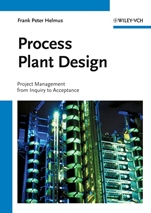
Process Plant Design: Project Management from Inquiry to Acceptance
ISBN 9783527313136
Autor: Frank Peter Helmus
Wydawca: Wiley
Dostępność: 3-6 tygodni
Cena: 584,85 zł
Przed złożeniem zamówienia prosimy o kontakt mailowy celem potwierdzenia ceny.
ISBN13: |
9783527313136 |
ISBN10: |
3527313133 |
Autor: |
Frank Peter Helmus |
Oprawa: |
Hardback |
Rok Wydania: |
2008-01-24 |
Ilość stron: |
204 |
Wymiary: |
251x174 |
Tematy: |
PN |
This book describes the fascinating wealth of activities as they occur in the design, construction and commissioning of a chemical plant—a jigsaw puzzle of the work of chemical engineers, chemists, constructors, architects, electrical engineers, process automation engineers, economists and legal staff.
The author first takes the reader through the conceptual phase, in which the economic relevance and environmental impact need to be considered and supplemented by accurate estimates of capital requirements and profitability.
This so called feasibility study results in the choice of an appropriate engineering firm and the conclusion of the contract. The engineering company will have to perform the so called basic engineering which includes a large variety of engineering activities such as mass, material and energy balances, the basic and flow diagrams, the basic civil engineering, the design of the main components, the materials concept, the layout, the electrical and control part and finally the determination of the offer price.
With respect to the contract process engineers are required to have a basic knowledge of business administration. The most important sections usually included in sales contracts for process plants are explained in a way comprehensible to an engineer and aligned with his tasks and obligations. Special emphasis is laid on the important field of variations and claims.
In the next step the reader is guided through all aspects of the execution phase from the so called detail engineering of the process plant to equipment and material procurement, the erection phase, the commissioning and the successful test run, after which the new facility is handed over to its owner.
The book also illustrates many potential sources of errors by means of examples from practice, and how, aside professional skills, teamwork and communication are also absolutely essential to keep such a complex project on track.
Spis treści:
Preface.
Acknowledgements.
1 Introduction.
1.1 General remarks on process plant design.
1.2 Project.
1.3 Demands on project engineers.
1.4 Overview of activities.
2 Project Planning.
2.1 Operator.
2.1.1 Product development.
2.1.2 Plant type.
2.1.2.1 Location/kind of premises.
2.1.2.2 Capacity/availability/lifespan.
2.1.2.3 Degree of automation.
2.1.2.4 Legal requirements.
2.1.3 Costs.
2.1.3.1 Investment.
2.1.3.2 Operating costs.
2.1.4 Inquiry/invitation to tender.
2.1.5 Project controlling.
2.2 Plant manufacturer.
2.2.1 Risk analysis.
2.2.2 Basic engineering.
2.2.2.1 Process development.
2.2.2.2 Balancing.
2.2.2.3 Basic and process fl ow diagram.
2.2.2.4 Materials concept.
2.2.2.5 Main apparatus.
2.2.2.6 Layout.
2.2.3 Quotation.
2.2.3.1 Quotation price.
2.2.3.2 Optimization.
2.2.3.3 Contract negotiations.
3 Contract.
3.1 General.
3.1.1 Defi nitions.
3.1.2 Order basis.
3.1.3 Regulations.
3.1.4 Labour employment.
3.1.5 Subcontractors.
3.1.6 Project documentation.
3.2 Technical part.
3.2.1 Contractor’s scope of supply and services.
3.2.2 Employer’s scope of supply and services.
3.3 Commercial part.
3.3.1 Deadlines/penalties.
3.3.2 Warranties/penalties.
3.3.3 Defects/acceptance.
3.3.4 Prices/terms of payment/bonds.
3.3.5 Alterations/claims.
3.3.6 Termination/suspension.
3.3.7 Insurance.
3.3.8 Secrecy.
3.3.9 Severability clause.
3.3.10 Coming into effect.
3.3.11 Signature policy.
4 Project execution.
4.1 Project organization.
4.1.1 Project structures.
4.1.2 Systematics.
4.1.2.1 Project manual.
4.1.2.2 Correspondence system.
4.1.2.3 Revision service.
4.1.3 Cost monitoring.
4.1.4 Time scheduling/monitoring of dates.
4.1.5 Computers in plant manufacturing.
4.2 Approval planning.
4.3 Component procurement.
4.3.1 Vessels
.
4.3.2 Pumps.
4.4 Piping and instrumentation diagrams.
4.5 E/MC–technology.
4.5.1 Electrical engineering 136
4.5.2 Measurement engineering.
4.5.3 Control engineering.
4.6 Layout and building design.
4.6.1 Layout design.
4.6.2 Building design.
4.7 Piping planning.
4.8 Documentation.
4.9 Erection.
4.9.1 Excavation and civil works.
4.9.2 Component assembly.
4.9.3 Pipe assembly.
4.9.4 Assembly E/MC technology.
4.9.5 Insulations.
4.9.6 Plant marking.
4.10 Commissioning.
4.10.1 Training.
4.10.2 Cleaning.
4.10.3 Pressure tests.
4.10.4 Functional tests.
4.10.5 System tests.
4.10.6 Cold commissioning.
4.10.7 Warm commissioning.
4.11 Warranty run/acceptance.
Index.
Nota biograficzna:
Frank Peter Helmus studied chemical engineering in Aachen, Germany and obtained the PhD for his work on membrane processes. Afterwards he worked as a project manager in the Babcock Balcke–Dürr Company. During his industrial career he carried out several medium sized projects (waste water treatment plants up to 18 million Euro), some of them abroad, as a project manager from the beginning to the end. Since 1998 he is professor for chemical engineering at the University of Applied Sciences in Osnabr?is main field of activity is mechanical processes and process plant design. He is related to his former field of activities by performing claims management courses for senior engineers. His research activities focus on waste water treatment.
Okładka tylna:
This book describes the fascinating wealth of activities as they occur in the design, construction and commissioning of a chemical plant—a jigsaw puzzle of the work of chemical engineers, chemists, constructors, architects, electrical engineers, process automation engineers, economists and legal staff.
The author first takes the reader through the conceptual phase, in which the econ
omic relevance and environmental impact need to be considered and supplemented by accurate estimates of capital requirements and profitability.
This so called feasibility study results in the choice of an appropriate engineering firm and the conclusion of the contract. The engineering company will have to perform the so called basic engineering which includes a large variety of engineering activities such as mass, material and energy balances, the basic and flow diagrams, the basic civil engineering, the design of the main components, the materials concept, the layout, the electrical and control part and finally the determination of the offer price.
With respect to the contract process engineers are required to have a basic knowledge of business administration. The most important sections usually included in sales contracts for process plants are explained in a way comprehensible to an engineer and aligned with his tasks and obligations. Special emphasis is laid on the important field of variations and claims.
In the next step the reader is guided through all aspects of the execution phase from the so called detail engineering of the process plant to equipment and material procurement, the erection phase, the commissioning and the successful test run, after which the new facility is handed over to its owner.
The book also illustrates many potential sources of errors by means of examples from practice, and how, aside professional skills, teamwork and communication are also absolutely essential to keep such a complex project on track.
Koszyk
Książek w koszyku: 0 szt.
Wartość zakupów: 0,00 zł
Informacje


Kontakt
Gambit
Centrum Oprogramowania
i Szkoleń Sp. z o.o.
Al. Pokoju 29b/22-24
31-564 Kraków
Siedziba Księgarni
ul. Kordylewskiego 1
31-542 Kraków
+48 12 410 5991
+48 12 410 5987
+48 12 410 5989
Subskrypcje
Administratorem danych osobowych jest firma Gambit COiS Sp. z o.o. Na podany adres będzie wysyłany wyłącznie biuletyn informacyjny.
Autoryzacja płatności

Informacje na temat autoryzacji płatności poprzez PayU.

© Copyright 2012: GAMBIT COiS Sp. z o.o. Wszelkie prawa zastrzeżone.
Projekt i wykonanie: Alchemia Studio Reklamy