


Wydawcy
Katalog tematyczny
- Archeologia (109)
- Ekonomia, finanse, business (13704)
- Filozofia (1445)
- Historia (3040)
- Języki i językoznawstwo (2356)
- Lifestyle, hobby i rozrywka (475)
- Medycyna (9704)
- Nauki humanistyczne (4)
- Nauki o Ziemi i środowisku (2638)
- Nauki ścisłe (20412)
- Nauki społeczne (8486)
- Nauki techniczne (13450)
- Prawo (1696)
- Publikacje informacyjne i interdyscyplinarne (1288)
- Religia i wierzenia (917)
- Technika komputerowa (4067)
- Zdrowie, relacje międzyludzkie i rozwój osobisty (657)





Informacje szczegółowe o książce
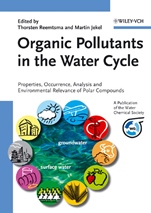
Organic Pollutants in the Water Cycle: Properties, Occurrence, Analysis and Environmental Relevance of Polar Compounds
ISBN 9783527312979
Autor: Thorsten Reemtsma, Martin Jekel
Wydawca: Wiley
Dostępność: 3-6 tygodni
Cena: 1 098,30 zł
Przed złożeniem zamówienia prosimy o kontakt mailowy celem potwierdzenia ceny.
ISBN13: |
9783527312979 |
ISBN10: |
3527312978 |
Autor: |
Thorsten Reemtsma, Martin Jekel |
Oprawa: |
Hardback |
Rok Wydania: |
2006-07-21 |
Ilość stron: |
368 |
Wymiary: |
244x174 |
Tematy: |
AT |
This first in–depth and comprehensive reference on the most pertinent polar contaminant classes and their behavior in the whole water cycle includes, among others, industrial chemicals, consumer products, polar herbicides and pharmaceuticals. All chapters are uniformly structured, covering properties, pollution sources, occurrence in wastewater, surface water, and groundwater as well as water treatment aspects, while ecotoxicological and assessment aspects are also covered. Among the authors are leading experts in their relevant fields, many of whom provide here groundbreaking research results.
The result is an up–to–date information source for researchers and professionals working in water quality monitoring, water supply, or wastewater treatment, as well as environmental and water chemists, geochemists, ecologists, chemists and engineers.
Thorsten Reemtsma is a lecturer in environmental chemistry and analytical chemistry at the Technical University of Berlin and senior researcher in the Department of Water Quality Control. His research is focused on the fate of polar organic pollutants in industrial and municipal wastewater treatment and in the environment. To this end, he has developed analytical methods using liquid chromatography–mass spectrometry for the determination of many classes of polar pollutants at trace level as well as for metabolite identification.
Martin Jekel is Full Professor for Water Quality Control at the Technical University of Berlin. After gaining his PhD in chemical engineering from the University of Karlsruhe he began investigating water quality problems in wastewater reuse during his post–doc research at Stanford University, among others. After moving to Berlin in 1988, he investigated physico–chemical water and such wastewater treatment processes as coagulation, oxidation, adsorption and membrane processes, including natural systems, such as bank filtration and groundwater recharge. He is a
member of many national and international organizations such as IWA, AWWA and DVGW, and since 2003 Chairman of the German Water Chemical Society.
The Water Chemical Society was founded in 1926 and is a division of the German Chemical Society. Its international membership combines scientists of all disciplines involved in water research as well as engineers working on its treatment, from academia and authorities, from public and private companies. The members concentrate on maintaining and improving the quality of all kinds of water, from springs to seawater, improving its treatment by appropriate techniques and processes, and developing the analysis and evaluation of water quality. With these activities, the Society aims to protect water and aqueous systems as part of our environment as well as a resource for human use and development.
Spis treści:
Preface.
1 Analytical Methods for Polar Pollutants (Thorsten Reemtsma and José Benito Quintana).
1.1 Introduction.
1.2 The Analytical Process.
1.3 Sample Pretreatment and Analyte Extraction.
1.4 Gas Chromatographic Methods.
1.5 Liquid Chromatography–Mass Spectrometry.
1.6 Conclusions.
References.
2 Residues of Pharmaceuticals from Human Use (Thomas Heberer and Thomas Ternes).
2.1 Introduction.
2.2 Routes into the Environment.
2.3 Wastewater.
2.4 Surface Water.
2.5 Groundwater and Underground Passage.
2.6 Drinking Water Treatment.
References.
3 Antibiotics for Human Use (Radka Alexy and Klaus Kümmerer).
3.1 Introduction.
3.2 Use of Antibiotics.
3.3 Emissions into the Environment.
3.4 Occurrence and Fate of Antibiotics.
3.5 Elimination and Degradation in the Aquatic Environment.
3.6 Effects on Aquatic Organisms.
3.7 Conclusion.
Acknowledgments.
References.
4 Iodinated X–ray Contrast Media (Anke Putschew and Martin Jekel).
4.1 Introd
uction.
4.2 Source.
4.3 Wastewater Treatment.
4.4 Receiving Water.
4.5 Groundwater/Exposed Groundwater.
4.6 Treatment.
4.7 Summary.
References.
5 Veterinary Pharmaceuticals (Gerd Hamscher).
5.1 Introduction.
5.2 Substance Classes.
5.3 Pathways to the Environment.
5.4 Occurrence in Wastewater Treatment Plants.
5.5 Surface Waters.
5.6 Groundwater.
5.7 Water Treatment.
5.8 Summary.
Acknowledgments.
References.
6 Polar Herbicides and Metabolites (Rita Fobbe, Birgit Kuhlmann, Jürgen Nolte, Gudrun Preuß, Christian Skark, and Ninette Zullei–Seibert).
6.1 General.
6.2 Entry into the Environment.
6.3 Polar Herbicides in Wastewater.
6.4 Polar Herbicides in Surface Water.
6.5 Polar Herbicides in Groundwater.
6.6 Water Treatment.
6.7 Summary.
References.
7 Aminopolycarboxylate Complexing Agents (Carsten K. Schmidt and Heinz–Jürgen Brauch).
7.1 Introduction.
7.2 Applications and Consumption.
7.3 Occurrence and Fate in Wastewaters.
7.4 Occurrence and Fate in Surface Waters.
7.5 Occurrence and Fate in Groundwater.
7.6 Behavior during Drinking Water Processing.
7.7 Conclusions.
References.
8 Amines (Hilmar Börnick and Torsten C. Schmidt).
8.1 Introduction.
8.2 Production.
8.3 Emission.
8.4 Wastewater and Wastewater Treatment.
8.5 Surface Water.
8.6 Groundwater.
8.7 Drinking Water and Drinking Water Treatment.
8.8 Conclusions.
References.
9 Surfactant Metabolites (Thomas P. Knepper and Peter Eichhorn).
9.1 Introduction.
9.2 Aerobic Biodegradation of Surfactants.
9.3 Surfactants and Metabolites in Wastewater Treatment Plants.
9.4 Surfactants and Metabolites in Surface Waters.
9.5 Surfactants and Metabolites in Subsoil/Underground Passage.
9.6 Surfactants and Metabolites in Drinking Waters.
9.7 Risk Assessment.
9.8 Conclu
sions.
References.
10 Trihalomethanes (THMs), Haloacetic Acids (HAAs), and Emerging Disinfection By–products in Drinking Water (Christian Zwiener).
10.1 Introduction.
10.2 Regulations.
10.3 Reactants Leading to DBP Formation.
10.4 Occurrence of DBPs.
10.5 Measures to Control DBPs.
10.6 Conclusions.
Acknowledgments.
References.
11 Toxicology and Risk Assessment of Pharmaceuticals (Daniel R. Dietrich, Bettina C. Hitzfeld, and Evelyn O’Brien).
11.1 Introduction.
11.2 A Comparison of International Risk Assessment Procedures.
11.3 The Toxicological Data Set for Environmental Risk Assessment.
11.4 Conclusions.
References.
12 Assessment and Management of Chemicals – How Should Persistent Polar Pollutants be Regulated? (Klaus Günter Steinhäuser and Steffi Richter).
12.1 Chemicals Assessment and Management Today.
12.2 Future Chemicals Management in Europa with REACH.
12.3 Persistent Organic Pollutants (POPs) and Persistent Polar Pollutants (PPPs) – A Comparison.
Acknowledgments.
References.
Subject Index.
Nota biograficzna:
Prof. M. Jekel is full professor for: Water Quality Control, Technical University of Berlin, Germany and also President of German Water Chemical Society; Chairman of DVGW–Technical Committee on Water Treatment; Chairman of IWA–Specialist Group on Particle Separation; Chairman of research network "Water in Urban Areas" of the Technical University Berlin; Editor–in–chief of "Vom Wasser – Das Journal".
Dr. Thorsten Reemtsma is Senior Researcher at the Department of Water Quality Control and Lecturer for Environmental Chemistry at the Technical University of Berlin.
Okładka tylna:
This first in–depth and comprehensive reference on the most pertinent polar contaminant classes and their behavior
Koszyk
Książek w koszyku: 0 szt.
Wartość zakupów: 0,00 zł
Informacje


Kontakt
Gambit
Centrum Oprogramowania
i Szkoleń Sp. z o.o.
Al. Pokoju 29b/22-24
31-564 Kraków
Siedziba Księgarni
ul. Kordylewskiego 1
31-542 Kraków
+48 12 410 5991
+48 12 410 5987
+48 12 410 5989
Subskrypcje
Administratorem danych osobowych jest firma Gambit COiS Sp. z o.o. Na podany adres będzie wysyłany wyłącznie biuletyn informacyjny.
Autoryzacja płatności

Informacje na temat autoryzacji płatności poprzez PayU.

© Copyright 2012: GAMBIT COiS Sp. z o.o. Wszelkie prawa zastrzeżone.
Projekt i wykonanie: Alchemia Studio Reklamy