


Wydawcy
Katalog tematyczny
- Archeologia (109)
- Ekonomia, finanse, business (13704)
- Filozofia (1445)
- Historia (3040)
- Języki i językoznawstwo (2356)
- Lifestyle, hobby i rozrywka (475)
- Medycyna (9704)
- Nauki humanistyczne (4)
- Nauki o Ziemi i środowisku (2638)
- Nauki ścisłe (20412)
- Astronomia (294)
- Biologia (5119)
- Chemia (6540)
- Chemia analityczna (361)
- Chemia fizyczna (346)
- Chemia nieorganiczna (137)
- Chemia organiczna (535)
- Krystalografia (27)
- Minerologia (46)
- Fizyka (3309)
- Matematyka (4574)
- Nauki ścisłe, ogólnie (503)
- Nauki społeczne (8486)
- Nauki techniczne (13450)
- Prawo (1696)
- Publikacje informacyjne i interdyscyplinarne (1288)
- Religia i wierzenia (917)
- Technika komputerowa (4067)
- Zdrowie, relacje międzyludzkie i rozwój osobisty (657)





Informacje szczegółowe o książce
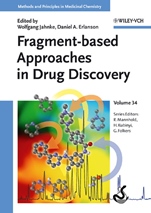
Fragment–based Approaches in Drug Discovery
ISBN 9783527312917
Autor: Wolfgang Jahnke, Daniel A. Erlanson, Raimund Mannhold, Hugo Kubinyi, Gerd Folkers
Wydawca: Wiley
Dostępność: 3-6 tygodni
Cena: 1 179,15 zł
Przed złożeniem zamówienia prosimy o kontakt mailowy celem potwierdzenia ceny.
ISBN13: |
9783527312917 |
ISBN10: |
3527312919 |
Autor: |
Wolfgang Jahnke, Daniel A. Erlanson, Raimund Mannhold, Hugo Kubinyi, Gerd Folkers |
Oprawa: |
Hardback |
Rok Wydania: |
2006-08-04 |
Ilość stron: |
391 |
Wymiary: |
248x180 |
Tematy: |
PN |
Based on recent successes in the modular design of pharmaceutically active ligands, the concept and technology of fragment–based design has quickly pervaded the research departments of pharma companies, large and small. Drug developers everywhere are currently struggling to keep ahead of the competition by applying these methods to speed up the drug discovery.
This first systematic summary of the impact of such approaches on the drug development process provides essential information that was previously unavailable. Adopting a practice–oriented approach, this book by professionals for professionals is indispensable for drug developers in the pharma and biotech sector who need to keep abreast of the latest technologies and strategies in pharmaceutical ligand design. Clearly divided into sections on ligand design, spectroscopic techniques, and screening and drug discovery, the text is backed by numerous case studies.
Spis treści:
Preface.
A Personal Foreword.
List of Contributors.
Part I: Concept and Theory.
1 The Concept of Fragment–based Drug Discovery (Daniel A. Erlanson and Wolfgang Jahnke).
1.1 Introduction.
1.2 Starting Small: Key Features of Fragment–based Ligand Design.
1.3 Historical Development.
1.4 Scope and Overview of this Book.
References.
2 Multivalency in Ligand Design (Vijay M. Krishnamurthy, Lara A. Estroff, and George M. Whitesides).
2.1 Introduction and Overview.
2.2 Definitions of Terms.
2.3 Selection of Key Experimental Studies.
2.4 Theoretical Considerations in Multivalency.
2.5 Representative Experimental Studies.
2.6 Design Rules for Multivalent Ligands.
2.7 Extensions of Multivalency to Lead Discovery.
2.8 Challenges and Unsolved Problems in Multivalency.
2.9 Conclusions.
Acknowledgments.
References.
3 Entropic Consequences of Linking Ligands (Christopher W. Murra
y and Marcel L. Verdonk).
3.1 Introduction.
3.2 Rigid Body Barrier to Binding.
3.2.1 Decomposition of Free Energy of Binding.
3.2.2 Theoretical Treatment of the Rigid Body Barrier to Binding.
3.3 Theoretical Treatment of Fragment Linking.
3.4 Experimental Examples of Fragment Linking Suitable for Analysis.
3.5 Estimate of Rigid Body Barrier to Binding.
3.6 Discussion.
3.7 Conclusions.
References.
4 Location of Binding Sites on Proteins by the Multiple Solvent Crystal Structure Method (Dagmar Ringe and Carla Mattos).
4.1 Introduction.
4.2 Solvent Mapping.
4.3 Characterization of Protein–Ligand Binding Sites.
4.4 Functional Characterization of Proteins.
4.5 Experimental Methods for Locating the Binding Sites of Organic Probe Molecules.
4.6 Structures of Elastase in Nonaqueous Solvents.
4.7 Organic Solvent Binding Sites.
4.8 Other Solvent Mapping Experiments.
4.9 Binding of Water Molecules to the Surface of a Protein.
4.10 Internal Waters.
4.11 Surface Waters.
4.12 Conservation of Water Binding Sites.
4.13 General Properties of Solvent and Water Molecules on the Protein.
4.14 Computational Methods.
4.15 Conclusion.
Acknowledgments.
References.
Part 2: Fragment Library Design and Computional Approaches.
5 Cheminformatics Approaches to Fragment–based Lead Discovery (Tudor I. Oprea and Jeffrey M. Blaney).
5.1 Introduction.
5.2 The Chemical Space of Small Molecules (Under 300 a.m.u.).
5.3 The Concept of Lead–likeness.
5.4 The Fragment–based Approach in Lead Discovery.
5.5 Literature–based Identification of Fragments: A Practical Example.
5.6 Conclusions.
Acknowledgments.
References.
6 Structural Fragments in Marketed Oral Drugs (Michal Vieth and Miles Siegel).
6.1 Introduction.
6.2 Historical Look at the Analysis of Structural Fragments of Drugs.
6.3 Methodology Used
in this Analysis.
6.4 Analysis of Similarities of Different Drug Data Sets Based on the Fragment Frequencies.
6.5 Conclusions.
Acknowledgments.
References.
7 Fragment Docking to Proteins with the Multi–copy Simultaneous Search Methodology (Collin M. Stultz and Martin Karplus).
7.1 Introduction.
7.2 The MCSS Method.
7.3 MCSS in Practice: Functionality Maps of Endothiapepsin.
7.4 Comparison with GRID.
7.5 Comparison with Experiment.
7.6 Ligand Design with MCSS.
7.7 Protein Flexibility and MCSS.
7.8 Conclusion.
Acknowledgments.
References.
Part 3: Experimental Techniques and Applications.
8 NMR–guided Fragment Assembly (Daniel S. Sem).
8.1 Historical Developments Leading to NMR–based Fragment Assembly.
8.2 Theoretical Foundation for the Linking Effect.
8.3 NMR–based Identification of Fragments that Bind Proteins.
8.4 NMR–based Screening for Fragment Binding.
8.5 NMR–guided Fragment Assembly.
8.6 Combinatorial NMR–based Fragment Assembly.
8.7 Summary and Future Prospects.
References.
9 SAR by NMR: An Analysis of Potency Gains Realized Through Fragmentlinking and Fragment–elaboration Strategies for Lead Generation (Philip J. Hajduk, Jeffrey R. Huth, and Chaohong Sun).
9.1 Introduction.
9.2 SAR by NMR.
9.3 Energetic Analysis of Fragment Linking Strategies.
9.4 Fragment Elaboration.
9.5 Energetic Analysis of Fragment Elaboration Strategies.
9.6 Summary.
References.
10 Pyramid: An Integrated Platform for Fragment–based Drug Discovery (Thomas G. Davies, Rob L. M. van Montfort, Glyn Williams, and Harren Jhoti).
10.1 Introduction.
10.2 The Pyramid Process.
10.3 Pyramid Evolution – Integration of Crystallography and NMR.
10.4 Conclusions.
Acknowledgments.
References.
11 Fragment–based Lead Discovery and Optimization Using X&#
8211;Ray Crystallography, Computational Chemistry, and High–throughput Organic Synthesis (Jeff Blaney,Vicki Nienaber, and Stephen K. Burley).
11.1 Introduction.
11.2 Overview of the SGX Structure–driven Fragment–based Lead Discovery Process.
11.3 Fragment Library Design for Crystallographic Screening.
11.4 Crystallographic Screening of the SGX Fragment Library.
11.5 Complementary Biochemical Screening of the SGX Fragment Library.
11.6 Importance of Combining Crystallographic and Biochemical Fragment Screening.
11.7 Selecting Fragments Hits for Chemical Elaboration.
11.8 Fragment Optimization.
11.9 Discussion and Conclusions.
11.10 Postscript: SGX Oncology Lead Generation Program.
References.
12 Synergistic Use of Protein Crystallography and Solution–phase NMR Spectroscopy in Structure–based Drug Design: Strategies and Tactics (Cele Abad–Zapatero, Geoffrey F. Stamper, and Vincent S. Stoll).
12.1 Introduction.
12.2 Case 1: Human Protein Tyrosine Phosphatase.
12.3 Case 2: MurF.
12.4 Conclusion.
Acknowledgments.
References.
13 Ligand SAR Using Electrospray Ionization Mass Spectrometry (Richard H. Griffey and Eric E. Swayze).
13.1 Introduction.
13.2 ESI–MS of Protein and RNA Targets.
13.3 Ligands Selected Using Affinity Chromatography.
13.4 Direct Observation of Ligand–Target Complexes.
13.5 Unique Features of ESI–MS Information for Designing Ligands.
References.
14 Tethering (Daniel A. Erlanson, Marcus D. Ballinger, and James A. Wells).
14.1 Introduction.
14.2 Energetics of Fragment Selection in Tethering.
14.3 Practical Considerations.
14.4 Finding Fragments.
14.5 Linking Fragments.
14.6 Beyond Traditional Fragment Discovery.
14.7 Related Approaches.
14.8 Conclusions.
Acknowledgments.
References.
Part 4: Emerging Technologies in Chemistry.
1
5 Click Chemistry for Drug Discovery (Stefanie Röper and Hartmuth C. Kolb).
15.1 Introduction.
15.2 Click Chemistry Reactions.
15.3 Click Chemistry in Drug Discovery.
15.4 In Situ Click Chemistry.
15.5 Bioconjugation Through Click Chemistry.
15.6 Conclusion.
References.
16 Dynamic Combinatorial Diversity in Drug Discovery (Matthias Hochgürtel and Jean–Marie Lehn).
16.1 Introduction.
16.2 Dynamic Combinatorial Chemistry –The Principle.
16.3 Generation of Diversity: DCC Reactions and Building Blocks.
16.4 DCC Methodologies.
16.5 Application of DCC to Biological Systems.
16.6 Summary and Outlook.
References.
Index.
Nota biograficzna:
Wolfgang Jahnke studied Chemistry at the University of Tübingen (Germany) and obtained a Ph.D. degree from the University of M? with Horst Kessler in 1994.
He then joined the pharmaceutical industry and is currently head of a drug discovery group at Novartis Pharma AG in Basel (Switzerland). His main expertise is on the application of NMR spectroscopy for drug discovery. In recent years, this has included the development of novel methods for fragment–based ligand design and the characterization of protein–ligand interactions.
Okładka tylna:
Based on recent successes in the modular design of pharmaceutically active ligands, the concept and technology of fragment–based design has quickly pervaded the research departments of pharma companies, large and small. Drug developers everywhere are currently struggling to keep ahead of the competition by applying these methods to speed up the drug discovery.
This first systematic summary of the impact of such approaches on the drug development process provides essential information that was previously unavailable. Adopting a practice–oriented approach, this book by professionals for professionals is indisp
ensable for drug developers in the pharma and biotech sector who need to keep abreast of the latest technologies and strategies in pharmaceutical ligand design. Clearly divided into sections on ligand design, spectroscopic techniques, and screening and drug discovery, the text is backed by numerous case studies.
Koszyk
Książek w koszyku: 0 szt.
Wartość zakupów: 0,00 zł
Informacje


Kontakt
Gambit
Centrum Oprogramowania
i Szkoleń Sp. z o.o.
Al. Pokoju 29b/22-24
31-564 Kraków
Siedziba Księgarni
ul. Kordylewskiego 1
31-542 Kraków
+48 12 410 5991
+48 12 410 5987
+48 12 410 5989
Subskrypcje
Administratorem danych osobowych jest firma Gambit COiS Sp. z o.o. Na podany adres będzie wysyłany wyłącznie biuletyn informacyjny.
Autoryzacja płatności

Informacje na temat autoryzacji płatności poprzez PayU.

© Copyright 2012: GAMBIT COiS Sp. z o.o. Wszelkie prawa zastrzeżone.
Projekt i wykonanie: Alchemia Studio Reklamy