


Wydawcy
Katalog tematyczny
- Archeologia (109)
- Ekonomia, finanse, business (13704)
- Filozofia (1445)
- Historia (3040)
- Języki i językoznawstwo (2356)
- Lifestyle, hobby i rozrywka (475)
- Medycyna (9704)
- Nauki humanistyczne (4)
- Nauki o Ziemi i środowisku (2638)
- Nauki ścisłe (20412)
- Astronomia (294)
- Biologia (5119)
- Chemia (6540)
- Chemia analityczna (361)
- Chemia fizyczna (346)
- Chemia nieorganiczna (137)
- Chemia organiczna (535)
- Krystalografia (27)
- Minerologia (46)
- Fizyka (3309)
- Matematyka (4574)
- Nauki ścisłe, ogólnie (503)
- Nauki społeczne (8486)
- Nauki techniczne (13450)
- Prawo (1696)
- Publikacje informacyjne i interdyscyplinarne (1288)
- Religia i wierzenia (917)
- Technika komputerowa (4067)
- Zdrowie, relacje międzyludzkie i rozwój osobisty (657)





Informacje szczegółowe o książce
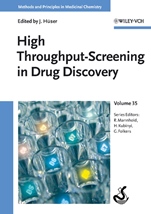
High–Throughput Screening in Drug Discovery
ISBN 9783527312832
Autor: Jörg Hüser, Raimund Mannhold, Hugo Kubinyi, Gerd Folkers
Wydawca: Wiley
Dostępność: 3-6 tygodni
Cena: 1 071,00 zł
Przed złożeniem zamówienia prosimy o kontakt mailowy celem potwierdzenia ceny.
ISBN13: |
9783527312832 |
ISBN10: |
3527312838 |
Autor: |
Jörg Hüser, Raimund Mannhold, Hugo Kubinyi, Gerd Folkers |
Oprawa: |
Hardback |
Rok Wydania: |
2006-10-06 |
Ilość stron: |
362 |
Wymiary: |
244x179 |
Tematy: |
PN |
In present–day drug discovery, bioactive molecules with a sought–after physiological effect are identified by screening large libraries of drug candidates for a quantifiable effect on a biological target. Because of the large number of candidate molecules involved, screening assays with high compound throughput have been developed that yield high–quality results in a short time.
Backed by leading authorities, this is a professional guide to successful compound screening in pharmaceutical research and chemical biology, including the chemoinformatic tools needed for correct data evaluation. Chapter authors from leading pharmaceutical companies as well as from Harvard University discuss such factors as chemical genetics, binding, cell–based and biochemical assays, the efficient use of compound libraries and data mining using cell–based assay results.
For both academics and professionals in the pharmaceutical and biotech industries working on small molecule screening.
Spis treści:
Preface.
List of Contributors.
Part I: Concept of Screening.
1 Chemical Genetics: Use of High–throughput Screening to Identify Small–molecule Modulators of Proteins Involved in Cellular Pathways with the Aim of Uncovering Protein Function (Sa L. Chiang).
1.1 Introduction.
1.2 Classical and Chemical Genetics.
1.3 Identifying Bioactive Molecules.
1.4 Target Identification.
1.5 Discovery for Basic Research Versus Pharmacotherapy Goals.
1.6 Chemical Genetic Screens in the Academic Setting.
1.7 Conclusions.
2 High–throughput Screening for Targeted Lead Discovery (Jörg Hüser, Emanuel Lohrmann, Bernd Kalthof, Nils Burkhardt, Ulf Brüggemeier, and Martin Bechem).
2.1 Chemical Libraries for High–throughput Screening.
2.2 Properties of Lead Structures.
2.3 Challenges to High–throughput Scr
eening.
2.4 Assay Technologies for High–throughput Screening.
2.5 Laboratory Automation.
2.6 From Target Selection to Confirmed Hits – the HTS Workflow and its Vocabulary.
2.7 Separating Specific Modulators from Off–Target Effects.
2.8 Data Analysis and Screening Results.
2.9 Conclusions.
Part II: Automation Technologies.
3 Tools and Technologies that Facilitate Automated Screening (John Comley).
3.1 Introduction – the Necessity to Automate.
3.2 Sample Carriers.
3.3 Liquid Handling Tools.
3.4 Detection Technologies.
3.5 Laboratory Robotics.
Part III: Assay Technologies.
4 Functional Cell–based Assays for Targeted Lead Discovery in High–throughput Screening (Jörg Hüser, Bernd Kalthof, and Jochen Strayle).
4.1 Introduction.
4.2 Reporter Gene Technologies.
4.3 Membrane Potential Indicators.
4.4 Ca2+ Indicators.
4.5 Conclusions.
5 Biochemical Assays for High–throughput Screening (William D. Mallender, Michael Bembenek, Lawrence R. Dick, Michael Kuranda, Ping Li, Saurabh Menon, Eneida Pardo and Tom Parsons).
5.1 General Considerations for Biochemical High–throughput Screening.
5.2 Expression and Purification of Recombinant Enzymes.
5.3 Peptidases.
5.4 Oxidoreductases.
5.5 Transferases, Synthetases and Lipid–modifying Enzymes.
5.6 Kinases.
5.7 Pitfalls and Reasons for Assay Development Failures.
6 Image–based High–content Screening – A View from Basic Sciences (Peter Lipp and Lars Kaestner).
6.1 Introduction.
6.2 HCS Systems Employing Confocal Optical Technologies.
6.3 Single–point Scanning Technology.
6.4 Line Scanning Technology.
6.5 Multi–beam Technology.
6.6 Structured Illumination.
6.7 Summary and Perspectives.
Part IV: Data Analysis.
7 Methods for Statistical Analysi
s, Quality Assurance and Management of Primary High–throughput Screening Data (Hanspeter Gubler).
7.1 Introduction.
7.2 Statistical Considerations in Assay Development.
7.3 Data Acquisition, Data Preprocessing, and HTS Data Analysis Environment.
7.4 Data Normalization.
7.5 Robust Statistics in HTS Data Analysis.
7.6 Measures of HTS Data Quality, Signaling of Possible QC Problems, Visualizations.
7.7 Correction of Position–dependent Response Effects.
7.8 Hit Identification and Hit Scoring.
7.9 Conclusion.
8 Chemoinformatic Tools for High–throughput Screening Data Analysis (Peter G. Nell and Stefan M. Mundt).
8.1 Introduction.
8.2 Workflow of High–throughput Screening and Use of Chemoinformatics.
8.3 Chemoinformatic Methods Used in HTS Workflow.
8.4 Chemoinformatic Methods in the Design of a Screening Library.
8.5 Integrated Software Packages.
8.6 Conclusions.
9 Combinatorial Chemistry and High–throughput Screening (Roger A. Smith and Nils Griebenow).
9.1 Introduction.
9.2 Categories of Compound Libraries for High–throughput Screening.
9.3 Synthesis Techniques and Library Formats.
9.4 Library Design and Profiling Approaches.
9.5 Impact of Combinatorial Libraries on Drug Discovery.
9.6 Conclusion.
10 High–throughput Screening and Data Analysis (Jeremy S. Caldwell and Jeff Janes).
10.1 Introduction.
10.2 Analysis of Cellular Screening Data.
10.3 Massively Parallel Cellular Screens.
10.4 Systematic Serendipity.
10.5 Conclusion.
Appendix.
Index.
Nota biograficzna:
Dr. Jörg Hüser Director of HTS Technologies at the Healthcare Division of Bayer AG in Wuppertal (Germany).
Okładka tylna:
In present–day drug discovery, bioactive molecules with a sought–after physiological effect are identif
ied by screening large libraries of drug candidates for a quantifiable effect on a biological target. Because of the large number of candidate molecules involved, screening assays with high compound throughput have been developed that yield high–quality results in a short time.
Backed by leading authorities, this is a professional guide to successful compound screening in pharmaceutical research and chemical biology, including the chemoinformatic tools needed for correct data evaluation. Chapter authors from leading pharmaceutical companies as well as from Harvard University discuss such factors as chemical genetics, binding, cell–based and biochemical assays, the efficient use of compound libraries and data mining using cell–based assay results.
For both academics and professionals in the pharmaceutical and biotech industries working on small molecule screening.
Koszyk
Książek w koszyku: 0 szt.
Wartość zakupów: 0,00 zł
Informacje


Kontakt
Gambit
Centrum Oprogramowania
i Szkoleń Sp. z o.o.
Al. Pokoju 29b/22-24
31-564 Kraków
Siedziba Księgarni
ul. Kordylewskiego 1
31-542 Kraków
+48 12 410 5991
+48 12 410 5987
+48 12 410 5989
Subskrypcje
Administratorem danych osobowych jest firma Gambit COiS Sp. z o.o. Na podany adres będzie wysyłany wyłącznie biuletyn informacyjny.
Autoryzacja płatności

Informacje na temat autoryzacji płatności poprzez PayU.

© Copyright 2012: GAMBIT COiS Sp. z o.o. Wszelkie prawa zastrzeżone.
Projekt i wykonanie: Alchemia Studio Reklamy