


Wydawcy
Katalog tematyczny
- Archeologia (109)
- Ekonomia, finanse, business (13704)
- Filozofia (1445)
- Historia (3040)
- Języki i językoznawstwo (2356)
- Lifestyle, hobby i rozrywka (475)
- Medycyna (9704)
- Nauki humanistyczne (4)
- Nauki o Ziemi i środowisku (2638)
- Nauki ścisłe (20412)
- Astronomia (294)
- Biologia (5119)
- Chemia (6540)
- Chemia analityczna (361)
- Chemia fizyczna (346)
- Chemia nieorganiczna (137)
- Chemia organiczna (535)
- Krystalografia (27)
- Minerologia (46)
- Fizyka (3309)
- Matematyka (4574)
- Nauki ścisłe, ogólnie (503)
- Nauki społeczne (8486)
- Nauki techniczne (13450)
- Prawo (1696)
- Publikacje informacyjne i interdyscyplinarne (1288)
- Religia i wierzenia (917)
- Technika komputerowa (4067)
- Zdrowie, relacje międzyludzkie i rozwój osobisty (657)





Informacje szczegółowe o książce
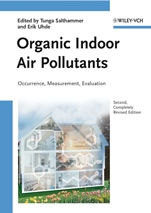
Organic Indoor Air Pollutants: Occurrence, Measurement, Evaluation
ISBN 9783527312672
Autor: Tunga Salthammer, Erik Uhde
Wydawca: Wiley
Dostępność: 3-6 tygodni
Cena: 1 043,70 zł
Przed złożeniem zamówienia prosimy o kontakt mailowy celem potwierdzenia ceny.
ISBN13: |
9783527312672 |
ISBN10: |
3527312676 |
Autor: |
Tunga Salthammer, Erik Uhde |
Oprawa: |
Hardback |
Rok Wydania: |
2009-09-23 |
Numer Wydania: |
2nd Edition |
Ilość stron: |
464 |
Wymiary: |
241x175 |
Tematy: |
PN |
With the quality of indoor air ranking highly in our lives, this second, completely, revised edition now includes 12 completely new chapters addressing both chemical and analytical aspects of organic pollutants.
This book is divided into four clearly defined parts: measuring organic indoor pollutants, investigation concepts and quality guidelines, field studies, and emission studies. The authors cover physico–chemical fundamentals of organic pollutants, relevant definitions and terminology, emission sources, sampling techniques and instrumentation, exposure assessment as well as methods for control. Test methods and studies for various indoor environments are described, such as automobile interiors, museum environments, or rooms with air ventilation. Emission sources covered include household and consumer products as well as electronic devices and office equipment.
The book is aimed at chemists, physicists, biologists, and medical doctors at universities and research facilities, in industry and environmental laboratories as well as regulative bodies.
Spis treści:
Foreword.
Preface to the Second Edition.
List of Contributors.
List of Symbols and Abbreviations.
Part One. Measuring Organic Indoor Pollutants.
1. Application of Solid Sorbents for the Sampling of Volatile Organic Compounds in Indoor Air (Erik Uhde).
1.1 Introduction.
1.2 Solid Sorbents – A Brief Overview.
1.3 Active or Passive Sampling.
1.4 Thermal Desorption or Solvent Extraction.
1.5 Sampler Design.
1.6 Breakthrough Volumes.
1.7 Safe Sampling Volume.
1.8 Artifacts and Interferences.
1.9 Conclusions.
2. Sampling and Analysis of SVOCs and POMs in Indoor Air (Per Axel Clausen, Vivi Kofoed–Sørensen).
2.1 Introduction.
2.2 Definitions and Properties of SVOCs and POMs.
2.3 Compounds and Matrices in the Indoor Environment.
2.4 Sampling, Transport and
Storage of SVOC/POM Samples.
2.5 Preparation of SVOC/POM Samples for Analysis.
2.6 Analysis of SVOCs/POMs.
2.7 Quality Assurance and Control.
References.
3. Application of Diffusive Samplers (Derrick Crump).
3.1 Introduction.
3.2 Principles of Diffusive Sampling.
3.3 Selection of Appropriate Methods.
3.4 Performance of Diffusive Samplers for the Measurement of VOCs in Indoor Air.
3.5 Studies of VOCs in Indoor Air Using Diffusive Samplers.
3.6 Other Applications of Diffusive Samplers.
References.
4. Real–Time Monitoring of Indoor Organic Compounds (Yinping Zhang, Jinhan Mo).
4.1 Introduction.
4.2 Proton Transfer Reaction–Mass Spectrometer (PTR–MS).
4.3 Photo–acoustic Spectroscopy.
4.4 Flame Ionization Detection.
4.5 Photo–ionization Detection.
4.6 Metal Oxide Sensors.
4.7 Air Sampling and Data Recording.
4.8 Examples of Investigations Using Real–Time Monitoring.
4.9 Concluding Remarks.
Acknowledgments.
References.
5. Environmental Test Chambers and Cells (Tunga Salthammer).
5.1 Introduction.
5.2 Characteristics of Chambers and Cells.
5.3 Sink Effects.
5.4 Calculation of Emission Rates.
5.5 Kinetics and Mass Transfer.
5.6 Application of Test Chambers and Cells.
5.7 Final Remarks.
References.
Part Two. Investigation Concepts and Quality Guidelines.
6. Standardized Methods for Testing Emissions of Organic Vapors from Building Products to Indoor Air (Elizabeth Woolfenden).
6.1 Introduction: The Need for Standardization.
6.2 Materials Emissions Testing: A Challenge for Method Standardization.
6.3 Regulation, Standard Methods and Test/Certification Protocols.
6.4 Emissions Test Methods for VOCs: An Overview of Basic Principles.
6.5 The Total–VOC Debate.
6.6 Standard Methods and Protocols for Emissions Testing: Current Status.
6.7 Confidence Limits for Emissions Test Data
for Individual VOCs.
6.8 Concluding Remarks.
Acknowledgments.
References.
7. Standard Test Methods for the Determination of VOCs and SVOCs in Automobile Interiors (Michael Wensing).
7.1 Introduction.
7.2 Conditioning of the Automobile Interior.
7.3 Measurement Procedure.
7.4 Quantitative and Qualitative Results from Brand New Cars.
7.5 Emissions of Organophosphate Esters inside Automobiles.
7.6 Conclusion.
References.
8. Material and Indoor Odors and Odorants (Florian Mayer, Klaus Breuer, Klaus Sedlbauer).
8.1 Introduction.
8.2 Odor Evaluation.
8.3 Odor Analysis–Odorant Identification.
8.4 Conclusion and Outlook.
References.
9. Evaluation of Indoor Air Contamination by Means of Reference and Guide Values: The German Approach (Birger Heinzow, Helmut Sagunski).
9.1 Introduction.
9.2 Definition of Terms.
9.3 Values for Evaluating the Indoor Air Quality.
9.4 Evaluation of Indoor Air Quality with the Aid of Guide Values.
9.5 Health Evaluation with the Aid of the TVOC Concept.
9.6 Evaluation of Indoor Air Quality with the Aid of Reference Values.
9.7 Application of Measured Values in Order to Evaluate Indoor Air Quality.
9.8 Evaluation of Substances Without Reference Values From the IRK/AOLG Ad–hoc Working Group.
Acknowledgment.
References.
Part Three. Field Studies.
10. Effect of Ventilation of VOCs in Indoor Air (Kwok Wai Tham, S. Chandra Sekhar, Mohamed Sultan Zuraimi).
10.1 Introduction.
10.2 VOC Concentration Levels in Eight Singapore Buildings.
10.3 Apportionment of VOCs in Singapore Buildings.
10.4 Effects of Typical Ventilation Operations on TVOC Levels.
10.5 Effect of Purging on Indoor TVOC Levels.
10.6 Summary.
References.
11. Occurrence of Semi–Volatile Organic Compounds in the Indoor Environment (Werner Butte).
11.1 Introduction.
11.2 Concentrations of SVOCs in Indoor Air and House
Dust.
11.3 Sources of SVOCs Indoors.
11.4 The Indoor Environment: A Source for Exposure?
11.5 Summary.
References.
12. Indoor Pollutants in the Museum Environment (Alexandra Schieweck, Tunga Salthammer, Simon F. Watts).
12.1 The Museum Environment: An Introduction.
12.2 Climatic Conditions.
12.3 Inorganic Atmospheric Compounds.
12.4 Formaldehyde, Organic Acids (Formic Acid, Acetic Acid).
12.5 Volatile Organic Compounds (VOCs).
12.6 Semi–volatile Organic Compounds.
12.7 Occurrence of Biocides in the Museum Environment.
12.8 The Role of People.
12.9 Risk Assessment and Preservation Strategies.
12.10 Conclusion.
References.
13. Indoor Organic Chemistry (Glenn Morrison).
13.1 Introduction.
13.2 Relevance of Chemistry Using Indoor Air Models.
13.3 Homogeneous Chemistry.
13.4 Heterogeneous Chemistry.
13.5 Concluding Remarks.
References.
14. Human Responses to Organic Air Pollutants (Lars Mølhave).
14.1 Introduction.
14.2 VOC Exposures Indoors.
14.3 Summary of Experimental Evidence of Health Effects of VOC Exposure.
14.4 Conclusions.
References.
Part Four. Emission Studies.
15. Volatile Organic Ingredients in Household and Consumer Products (Godwin A. Ayoko).
15.1 Introduction.
15.2 Literature Survey.
15.3 Product Classes.
15.4 Conclusion.
References.
16. Building Products as Sources of Indoor Organic Pollutants (Stephen K. Brown).
16.1 Introduction.
16.2 Organic Pollutants Emitted from Major Building Products.
16.3 Interior Paints.
16.4 Floor Covering Systems.
16.5 Concrete and Plaster Products.
16.6 Wood–Based Panels.
16.7 Natural Wood.
16.8 Ovens and Heaters.
16.9 Concluding Remarks.
References.
17. Emission of VOCs ad SVOCs from Electronic Devices and Office Equipment (Tobias Schripp Michael Wensing).
17.1 Introduction.
17.2 Test Procedures.
17.3 VOC an
Koszyk
Książek w koszyku: 0 szt.
Wartość zakupów: 0,00 zł
Informacje


Kontakt
Gambit
Centrum Oprogramowania
i Szkoleń Sp. z o.o.
Al. Pokoju 29b/22-24
31-564 Kraków
Siedziba Księgarni
ul. Kordylewskiego 1
31-542 Kraków
+48 12 410 5991
+48 12 410 5987
+48 12 410 5989
Subskrypcje
Administratorem danych osobowych jest firma Gambit COiS Sp. z o.o. Na podany adres będzie wysyłany wyłącznie biuletyn informacyjny.
Autoryzacja płatności

Informacje na temat autoryzacji płatności poprzez PayU.

© Copyright 2012: GAMBIT COiS Sp. z o.o. Wszelkie prawa zastrzeżone.
Projekt i wykonanie: Alchemia Studio Reklamy